Tamina: Algerian Semolina Honey Dessert

Tamina is also known as “Bsisa” is famous as a popular dessert in the country that is prepared with morning breakfast which consists of milk and bread.

Algerians prepare this recipe by roasting semolina which is then added to couscous and some flour. Such an easy recipe!

What is Tamina?

Tamina (الطمينة) is a simple Algerian dessert mainly made of semolina. It is usually served during celebrations such as engagement parties, weddings, baby showers, or Mawlid.

It is an ultra semolina sweet that’s made from toasted semolina, fragrant orange blossom honey, and fresh butter.

Tamina Recipe

This dessert is also served on Mouloud, the celebratory birthday of our Prophet Mohammed (peace be upon him) as the 3 main ingredients represent semolina: sustenance, honey: the sweetness of love for each other, and the butter: rich blessings from our Creator.

The traditional recipe is made with fresh butter and honey, but due to economical reasons many have replaced butter with margarine and honey with sugar syrup.

This dish is prepared in large quantities at the birth of a child, as offering it to guests is an Algerian way of saying ‘we have a newborn child, please celebrate with us’.

Mothers and mother-n-laws of the new mother lovingly toasted vast amounts of semolina, in preparation for the massive crowds that will arrive to see the baby.

Toasted semolina can stay for months, and be thrown together last minute for when last-minute, unexpected guests pop up.

Recipe Variation

There are 4 different recipe from different regions of Algeria. Tamina el Ghars also called “Maakra” (in the South) “R’fiss Tmar” and in the Oran region, “Kaabouche” is a recipe version that uses toasted semolina, dates, and butter.

Halwa smid or Tamina Beïda translated as “white Tamina”  is prepared in the eastern region of Algeria and is based on lightly toasted semolina giving its white color, Tamina Allouez is prepared in Constatine.

This preparation uses ground almonds, rose water, milk and honey. And finally, the well-known preparation that is made from Algiers to Chlef, Tamina h’rour.

Traditionally h’rour is a spice mixture that consists of cinnamon, ginger, galangal, nutmeg, allspice, and cloves was used.

Modern cooks have replaced it with cinnamon and even other flavorings such as helva turc, coconut, and almonds.

Be Sure to Try These Other Authentic Algerian dishes!

Algerian Toasted Semolina with Butter and Honey – Tamina

The Algerian toasted semolina with butter and Honey called Tamina is a dessert usually prepared for the celebration of the the prophet Mohamed’s birthday (or Al Mawlid Anabawi Acharif) in the Algerian culture. Tamina is also prepared for the mothers who had babies and it is served for their guests for the same occasion. Tamina requires 3 basic ingredients such as 1 measurement toasted semolina, 1/2 measurement butter, 1/2 measurement honey. The decoration is optional, it can be cinnamon, nuts, and you name it.
Prep Time 10 minutes
Cook Time 30 minutes
Course Dessert
Cuisine Algerian
Servings 4

Ingredients
  

  • 1 cup medium semolina
  • 1/2 cup honey
  • 1/2 cup butter at room temperature
  • Cinnamon
  • Nuts M&M’s or any other type of candies (optional).

Instructions
 

  • First, place a cheesecloth in the top of a steamer.
  • Pour semolina on the cheesecloth.
  • Place the top of the steamer with semolina on a pot of boiling water.
  • Let the semolina steam for about 15 minutes.
  • Pour the steamed semolina in a large shallow dish and let cool.
  • Pour the steamed semolina in a large frying pan, over medium low heat.
  • Toast semolina until it gets that golden color. Set aside.
  • Place butter in a saucepan over medium heat and let it melt.
  • Add honey to the butter and let it just warm up ( not boil).
  • Turn off the heat.
  • Pour toasted semolina and mix it well.
  • Let set for about 5 minutes.
  • You will notice butter on top, mix it again and pour it in a serving plate.
  • Take a cookie cutter of your choice and dip it in the Tamina, then place the cookie cutter in another plate containing cinnamon.
  • Stamp the Tamina with the cookie cutter (with cinnamon).
  • Decorate with nuts, candies or anything you like (optional).
Notes

Several recipes don’t require the steaming of semolina but I recommend doing it for safety ( in case the semolina is not well toasted but it was steamed, it’s safe to eat it).
Tried this recipe?Let us know how it was!

Swabaa Zainab

Swabaa Zainab is a delicious oriental sweet. It consists of a mixture of semolina, flour, sugar, and butter that is then baked in an oven. Then, it can be fried in oil and then watered with sweet syrup.

It also can be served at all times, whether mornings or evenings. It is one of the popular desserts of Ramadan.

Origin Of Swabaa Zainab

Sawabe’ Zainab or Swabaa Zainab is one of the most popular Egyptian desserts, and there are two stories behind this name.

The first one is: that there was a very clever girl who invented this sweet. When she served it to the visitors, they said “Teslam Sawabe’ Zainab” which means May God bless Zainab’s fingers.

The second story is: that Sawabe’ Zainab is after the name of Ms. Zainab, Al-Hussain’s daughter (May Allah be pleased with him). Because Egyptian people love Ms. Zainab so much and because that sweet is very popular, they called it after her name.

It is a dough prepared by mixing semolina, flour, sugar, and other sweets ingredients that impart a great taste. It also has a sugared taste as it is dipped in syrup, and you can dress it as you wish.

Swabaa Zainab Recipe

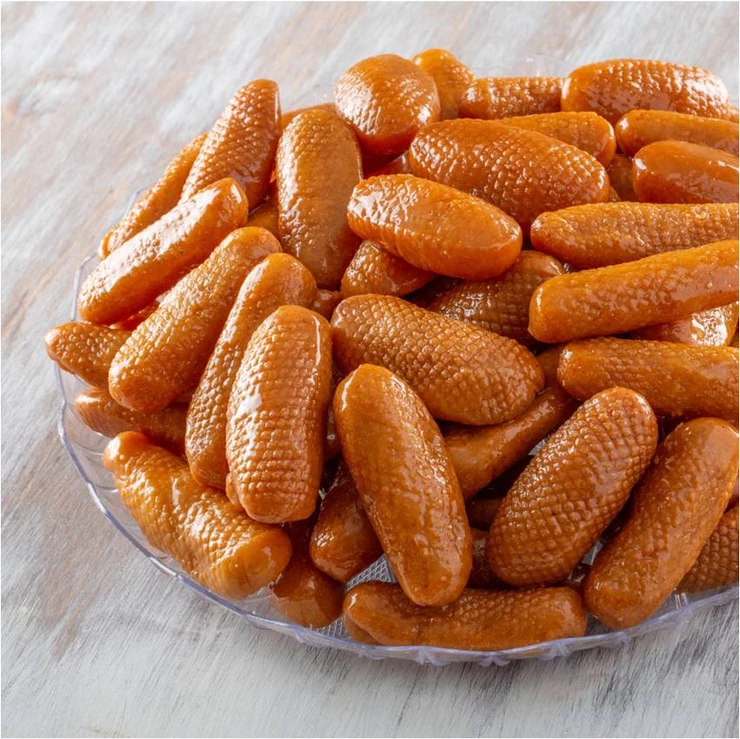
Zainab’s fingers are flour with semolina in the form of fingers that are crunchy on the outside and very soft on the inside and placed in sugar syrup.

The main ingredient for Zainab fingers is flour and semolina.

Middle Easterners eat Zainab’s fingers on many occasions, the most important of which is Eid al-Fitr, as well as popular celebrations.

Zainab’s fingers are considered one of the oldest sweets that were mastered by the Arabs in the old days and then spread around the world and many many lovers of oriental sweets innovated in it.

How to Make

  • Put all the ingredients in a wooden large bowl, or glass bowl and mix them well. Rub olive oil with the flour combination till they are mixed well.
  • Put the water and the combination in the electric kneader and mix till a moldable dough is formed. Let it stand for one hour.
  • Shape the dough in form of small, and short fingers then pass them through a strainer to take the desired shape.
  • Fry the fingers ” Sawabe’ Zainab “ in hot oil and stir them continuously until they are browned.
  • Take them out of the oil and dip them in the syrup immediately, then drain them to remove the excess syrup.

How to Serve

  • Place them on the serving plate
  • Serve them with juice, tea, Pepsi, or coffee.


Sawabe’ Zainab is one of the known popular dishes Egyptian people love too much, because of its great taste and because it relates to the popular heritage. So, below is our homemade Swabaa Zainab recipe and there is nothing better than homemade. Enjoy!

Egyptian Zainab fingers recipe- sawabe-zainab

Kaly
There are two ways make Zainab's fingers, the Arabic method, and the Egyptian method. The Arabic method relies on semolina more than flour. As for the Egyptian method, it relies on flour more than semolina. And here I will share with you the Egyptian recipe
Prep Time 30 minutes
Cook Time 15 minutes
Course Dessert
Cuisine Algerian, Egyptian, Mediterranean
Servings 15

Equipment

  • Frying pan
  • food strainer
  • big bowl

Ingredients
  

  • 1 kg syrup- of sugar
  • ½ liter syrup-water
  • 1 tablespoon syrup-lemon juice
  • 1 syrup- saffron optional
  • 2.5 cups Dough- flour 313 grams
  • Half cup Dough- melted ghee or oil or ghee on oil 100 grams
  • Half cup Dough- melted ghee or oil or ghee on oil 100 grams
  • 1 tablespoon Dough- sugar 10 grams
  • ¼ teaspoon Dough- salt 2 grams
  • ½ teaspoon Dough- yeast 3 grams
  • 1 &1/4 cups Dough - water for kneading ¼ Liter

Instructions
 

  • Syrup Preparation : In a medium saucepan, put sugar from half a liter of water
  • Syrup Preparation: Add some saffron (small amount)
  • Syrup Preparation: When the syrup mixture begins to boil, add lemon juice
  • Syrup Preparation: Leave the syrup mixture to cool completely for at least 3 or 4 hours
  • Dough Preparation: In a medium-sized bowl, add the flour and semolina
  • Dough Preparation :Add yeast, salt and sugar
  • Dough Preparation : Mix all ingredients together
  • Dough Preparation :Heat the ghee over a medium heat, then add it to the ingredients
  • Dough Preparation :Mix the mixture a little using a silicone spoon, then mix the mixture well with your hand
  • Dough Preparation : Note: you must make sure that the ingredient are fully companied
  • Dough Preparation :Add water and continue kneading - note that you do not need to knead a lot, just until the ingredients are mixed (about a minute and a half)
  • Dough Preparation :Cover the dough to rest for 10 minutes
  • Dough Preparation : Cut the dough into fingers about 10 grams
  • Dough Preparation :Take each finger and roll it into a hollow roll using the grater
  • Dough Preparation :Once you have finished the quantity, you must fry it directly in hot oil
  • Dough Preparation :After placing Zainab's fingers in the hot oil for two minutes, put the frying pan on a medium heat
  • Dough Preparation : Note-Do not leave Zainab's fingers after rolling them so that they do not ferment and lose their texture when frying (fry them directly)
  • Dough Preparation : Tip: You can know that the dough is of the right consistency when it floats on the surface of the oil
  • When Zainab's fingers reach a golden color, take them out of the pan and put them in a plastic strainer until they rest.
  • Soak Zainab's fingers in the syrup for 15 minutes until all the syrup is absorbed
Tried this recipe?Let us know how it was!

Makroud

Makroud is one of the tastiest Algerian sweets. It consists of a mixture of semolina and flour that is later kneaded and fried in abundant oil before being watered with syrup.

The syrup is made of lemon sugar, vanilla, water, and a fragrant aroma that gives it a memorable taste.

What is Makroud?

Makroud (المقروض), makroutmaqroudh, or maqrouth, is a North African pastry that is popular in Algeria and Tunisia as well as in some cities of Morocco, Libya, and Malta.

Origin Of Makroud

Some sources say that its origins are from the oases of Mzab and the steppes of Setif in Algeria and others say that its story would be linked to the city of Kairouan, the spiritual capital of Tunisia, a city ​​that hosted the first national makroud festival on May 20, 2008.

Makroud Recipe

Makroud is traditionally made from semolina dough that is packed with dates but can also include figs or almonds. 
Of course, there are variety of recipes: some are baked, while others contain almonds or sesame seeds and are fried in oil.
In any event, the traditional recipe is very much the same all over the world. After that, it’s rolled out and sliced into diamond shapes. 
Diamond is the literal meaning of the word. The pastry is then dipped in honey syrup made from sugar and lemon or orange blossom water.

Methods To Make Makroud

It can either be fried or baked in an oven

Baking Method

  • Preheat the oven to 350 F (180˚C), and bake the pan on the center rack for about 30 minutes (watch carefully so they evenly get a nice golden color).

Frying Method

  • Heat a large pot with oil and deep fry the makroud on each side until browned.
  • For both methods, the diamonds should be arranged close to each other to prevent the dates from burning.

Recipe Variations

It is in Algeria that most varieties of this rich North African pastry can be found. The Algerian version is fried or baked.

In Tunisia, even if the famous Kairouan makroud is prepared with dates, the most traditional Tunisian version and the oldest is a semolina-based version stuffed with fresh figs. However, both versions are equally famous and widely consumed in the country.

Moroccans also eat a lot of these delicate pastries, especially in the cities of Oujda, near the Algerian border, in Tetouan where it was introduced by Algerian immigrants, and in Fez where it was introduced by the Tunisians from Kairouan in the ninth century.

In Morocco, the most common version is the classic preparation with semolina and dates.

Be Sure to Try These Other Authentic Algerian dishes!

Below is our homemade Makroud recipe and there is nothing better than homemade.

Makrout (Algerian Semolina Pastries)

Allrecipes
Makrout is a traditional North African semolina pastry. Also spelled maqrout, makroudh, maqrut, mqaret, imqaret, or makroud. The word makrout in Arabic means "diamond-shaped", as are these small delights. They originated in Tunisia but have become popular from Algeria to Morocco, and there is even a variation found in Malta.
Prep Time 1 hour
Cook Time 45 minutes
Course Dessert
Cuisine Algerian, north african, Tunisian
Servings 40
Calories 260 kcal

Ingredients
  

  • 4 cups semolina flour
  • ½ cup vegetable oil
  • ½ cup unsalted butter
  • 1 pinch salt
  • cup warm water or as needed
  • 1 tablespoon orange flower water
  • 4 tablespoons all-purpose flour
  • 2 teaspoons vanilla sugar
  • 4 cups finely ground almonds
  • 1 ¼ cups white sugar
  • 1 tablespoon vanilla sugar
  • 2 pinches ground cinnamon
  • 1 dash almond extract
  • 1 12 ounce jar honey
  • 3 tablespoons orange flower water
  • 2 cups oil for frying or as needed
  • 2 tablespoons sesame seeds for garnish

Instructions
 

  • Combine semolina, oil, butter, and salt in a large bowl. Rub the grains of semolina between your fingers, so that all the grains are well coated. Cover with a kitchen towel and set aside. Let it rest like this for at least 2 hours, but ideally overnight. The mixture should be like wet, oily sand in the morning.
  • Combine warm water and orange blossom water when you are ready to make the makrout. Slowly add mixture to the semolina mixture along with flour and vanilla sugar and knead into a soft dough. Add just enough liquid for a soft, smooth dough. Don't overwork the dough-- knead it just enough to have a smooth and flexible dough that can easily be shaped into a ball. Set dough aside.
  • Combine ground almonds, sugar, vanilla sugar, cinnamon, and almond extract in a bowl for the filling. Roll mixture into 2 long logs and set aside.
  • Divide semolina dough into 2 balls, then flatten to pat into a rectangle, about 3 times the width of your filling logs. Press down in the center of the rectangle with your fingers to form an indentation. Set filling log into the indentation. Fold dough over the filling and press the edges together to seal. Roll the log back and forth gently to shape the dough around the filling and smooth log into a uniform shape. You can cut the logs in half for easier handling.
  • Cut each log into diagonal pieces, creating diamond-like shapes. Reshape the cut ends to have a nice uniform look. Set the makrout aside to rest, as you heat up a deep, heavy saucepan with oil - about 3 fingers deep.
  • Combine honey and orange flower water in a small saucepan for the syrup. Heat over low heat until just below simmering and keep warm.
  • Once the oil is hot, deep-fry makrout in small batches until golden on all sides, about 5 minutes. Remove with a slotted spoon and drain on paper towels. Continue frying until all the dough pieces are cooked.
  • Dip fried makrout into the hot honey syrup and submerge in the syrup for about 1 minute. Remove and drain on wire racks. Repeat the process, dunking each makrout into the syrup a second time. Remove and drain on wire racks. Sprinkle with sesame seeds, if using.

Notes

Medium-grain semolina is best for makrout. The original recipe is in metric. If you have a scale please use the following measures: 750 grams medium grain semolina, 120 ml oil, 110 g melted butter, 100 ml warm water, 500 grams ground almonds, 250 grams sugar, and 500 grams honey.
Makrout are best fresh, but will stay fresh and solid for about 3 to 5 days. After that they are still edible but will become crumbly. I don't advise freezing makrout as it will crumble apart.
For a nice presentation, place each makrout in a dainty little cupcake paper case. Makrout is best eaten with hot North African-style mint green tea!

Nutrition

Calories: 260kcal
Tried this recipe?Let us know how it was!

Rachta

Rachta is made of dough that is similar to pasta. It also has zucchini, chicken sauce, and chickpeas. The dish is a bit similar to Chekhchoukha but a lot lighter when it comes to thickness.

Rachta Recipe

Rachta or Rechta is a type of noodle that is usually prepared in Algeria with meat or chicken cooked in a vegetable sauce.

The noodles are made with a combination of flour, salt, water, and ghee, while the sauce is made with chicken pieces, onions, garlic, oil, chickpeas, ras el hanout, cinnamon, turnips, potatoes, and zucchini.

The sauce is perfumed with cinnamon flavor. The vegetables are mainly zucchinis, and parsnips added to chickpeas. Once cooked, the rechta noodles are placed into a large dish and topped with the sauce (marga).

Rechta is prepared on major occasions such as Al Mawlid Annabawi, Ashura, Eid Al Fitr (celebration of the end of Ramadan), marriages, etc.

Below is our homemade Rechta recipe and there is nothing better than homemade.

Algerian homemade Rechta (noodles)

Rachta is made of dough that is similar to pasta. It also has zucchini, chicken sauce, and chickpeas. The dish is a bit similar to Chekhchoukha but a lot lighter when it comes to thickness.
Prep Time 1 hour 15 minutes
Cook Time 10 minutes
Course Main Course
Cuisine Algerian
Servings 2

Ingredients
  

  • Ingredients
  • 3/4 cup fine semolina
  • 1/4 cup all purpose flour
  • 1/4 tsp salt
  • 1/2 water more or less
  • olive oil

Instructions
 

  • In a large bowl, mix semolina, flour and salt.
  • Sprinkle water over the semolina mixture, little by little.
  • Mix everything with your hand and stop adding water once the dough gets together. No need to knead the dough.
  • Cover the dough with plastic wrap and let rest on the counter for about 30 minutes.
  • Divide the dough into 3 pieces. You can do this step before letting the dough rest.
  • Dust your working board with flour and roll out each piece of dough into thin long strip or sheet, using a rolling pin (you may need to cut the long strip into half to make the work easy).
  • Pass each pasta sheet (slightly dusted with flour) in the pasta machine to get a thin sheet. You should set up your machine to the thickness close to that of your pasta sheets, then end up with the lowest setting to get the thinest sheet.
  • Place your thinnest sheets on a clean kitchen towel and let them dry for about 15 to 20 minutes.
  • Pass each pasta sheet in the part of the machine that makes thin noodles.
  • Place a plate underneath to catch the noodles or the Rechta.
  • Once you make about a plate of Rechta, start to steam it. Place the Rechta in the top of a steamer( the top of the steamer should be oiled with olive oil to avoid stickiness).
  • Steam for about 5 minutes or less.
  • Work on the other pasta sheets and make more Rechta.
  • Steam the Rechta in small batches.
  • Dump the steamed Rechta in a large shallow dish.
  • Drizzle with about 1 tbsp olive oil and start separating the noodles with hands. You may not need to add olive oil for the second batch of Rechta.
  • Once all the Rechta or noodles are separated, let cool then store in ziploc bags.
  • Place the bags in the freezer for later use.

Notes

I have used 3 measurements of semolina and 1 measurement of flour in this recipe ( I measured with 1/4 cup). If you want to make a big amount of Rechta, just chose a bigger measurement.
In this recipe, I have used 2 measurements of water, but the amount of water depends on your semolina and flour.
Tried this recipe?Let us know how it was!

Berkoukes

Berkoukes is an Algerian dish. It’s too chunky and thick to be considered a soup. But not quite a stew either. Maybe we should use the term “scoup” which is a brothy warm dish that’s a cross between a soup and a stew.

Berkoukes are made from several types of meats. Additionally, the dish consists of cubes of vegetables such as carrots, natural tomato sauce, paste, and turnip.

This is Algerian comfort food at its best, a winter must!

Berkoukes Recipe

Berkoukes also called Aïche or M’hamessa or Abazine in some regions – is a hand-rolled semolina-based pasta that is shaped like a little ball, but it is also an Algerian dish.

This traditional Berber dish is prepared using very large-grained couscous, meat, and seasonal vegetables. The berkoukes grains are made from semolina durum wheat and are rolled by hand in a large dish (traditionally wood or earth, but most commonly nowadays metal).

Berboukes are the larger balls, while M’hamsa is the smaller balls. It is consumed traditionally in Algeria or the North East of Morocco during the winter and mainly in January to celebrate the wealth of the Algerian harvest of beans and dried fruit and meats.

It is a dish of rich wealth, comfort, and generosity.  How it is prepared slightly varies from region to region, differently in 2 main ways. One prepares it in a savory dish or a sweetened version similar to rice pudding.

What To Serve With Berkoukes

Well, it depends on the region. In the areas in Kabylia, dried meats called Quedid or Achadhelouh in Kabyle are added and the dried mutton fat called Khlili and cultured smen give the Berkoukes of this region is very distinct flavor.

Berkoukes of the Alger region are much milder in flavor using either chicken or beef or mutton. And that the Oran region uses the pungent spices of the spice mixture called Ras el Hanout

Some cooks make their berkoukes with a lot of sauce, making it like a soup while others prefer it with less sauce.

This dish is worth to be discovered because it is user-friendly and not complicated to prepare. Of course, there is a multitude of different recipes, all of which are a selection of vegetables, spices, and more or less.

A taste when it is very cold outside, hot, sprinkled with a drizzle of excellent olive oil with a good homemade Kesra/ Khoubz Ft’ir or even a Khoubz Chaïr.

Be sure to recreate this incredible delicacy that is not only delicious but also full of proteins, fiber, and tons of vitamins like iron and calcium needed for your body. Bon appétit!

Some suggestions for Amazon links to “Whole Foods Market, Organic Orecchiette Rigate”.

Whole Foods Market Organic Orecchiette Rigate

Project Overview Docs Banner in Light Green Blue Vibrant Professional Style 1

Berkoukes b’lham

This pasta-based stew is a classic Algerian staple, in which giant couscous is paired with chicken, vegetables and legumes in a rich tomato sauce. It is usual to have it quite spicy by adding harissa paste – a blend of chilies and spices. You can find several variants with different veggies or type of protein but this is my favourite.
This is Algerian comfort food at its best, a winter must!
Total Time 45 minutes
Course Soup
Cuisine Algerian
Servings 6

Ingredients
  

  • 500 g package of Berkoukes or small ball shaped pasta called "plomb"or "anci de pepe"
  • 250 g beef cubed
  • Handful about 100g Quedid diced ๑۞๑ (optional)
  • 1 large onion minced
  • 2 carrot diced medium
  • 1 courgette diced medium
  • 2-3 garlic minced
  • 1 TBS tomato paste
  • 1 large potato diced medium
  • Harissa or dersa or any hot pepper paste to taste
  • 1 tsp paprika
  • 1 tsp cumin
  • pinch of ground caraway
  • 1 bay leaf
  • Half bunch about 1/4 cup chopped of chopped parsely and cilantro
  • Generous handful or two of green peas
  • Handful of precooked chickpeas
  • Handful of brown lentils I use Puy
  • olive oil/oil/smen
  • salt/ black pepper

Instructions
 

  • Chop up the vegetable and meat(s)
  • Brown the beef in oil. Once browned add in the aromatics - onions, garlic, carrots to sauté.
  • Push all these ingredients to one side of your pot, add in the tomato paste. Caramelize the tomato paste for a minute or two.
  • Then add in the water - about 2.5L
  • Now add in the spices, bay leaf, and lentils and Quedid if using .
  • Bring to boil, then lower the heat to a low simmer.
  • Once the meat is cooked tender, add in the half the herbs, chickpeas, courgettes, potatoes to cook for an additional 10m.
  • Then add in the peas and berkoukes into the broth.
  • The berkoukes generally will cook in about 15m, but keep a watchful eye on it, as it can easily soak up all the broth then burn. Do not hesitate to stir frequently.
  • Once the berkoukes is quite tender, not al-dente! - stir in the remaining herbs. There should still little thickened broth or really sauce.
  • Serve hot with bread like a Kesra or any rustic country style bread like Khoubz chaïr or Khoubz Ezraa

Notes

If you don't have Quedid on hand, and probably most of you won't, you can sub a halal smoky salami for a similar flavour here, or leave it out altogether.
Some cooks like to add diced turnips called luft in Algeria also.
You can use chickpea or lentils or even both in this dish. It depends on your preference and what you have on hand.
Tried this recipe?Let us know how it was!


Zlabia

Wondering how to make a delicious, juicy, and crunchy dessert at home? Hence, you should have a look at my Zlabia (Easy Jalebi Recipe) which will leave your sweet craving satisfied!

What is Zlabia?

Zlabia or Zalabia is a spiral-shaped sweet made from basic ingredients like flour, sugar, starch, and yeast. And after the dough is rested, Zalabias are deep-fried in oil and dipped in a simple syrup or honey!

These crispy and sugar-coated Zalabias are truly addictive and delicious! Trust me, everyone will love such a sweet dessert and even ask for more!

Ramadan is a month when Algerians like Muslims fast for a month. In the evening after almost half a day without eating; Algerian tables are adorned with Zalabias.

The oriental sweet is famous in the Arab community as a whole, but Algerians prepare it differently. It consists of sugar, starch, and flour which is then fried in abundant oil.

Zlabia Recipe

The first thing you want to do is to prepare the syrup. The syrup will need to be cooled while we make the batter.

To Prepare Syrup, Mix sugar, water, lemon juice, and rose water in a small saucepan. Stir over medium heat until sugar dissolves.

Bring to a slow boil for approximately ten minutes, or until it starts to have a syrupy consistency. (If it gets too thick, add a little more water and stir until it reaches the right consistency).

Allow the syrup to cool off while you work on the batter.

To prepare the batter, Mix yeast, sugar, and water, and allow to rest for 15 minutes.

Whisk in cornstarch, flour, salt, and baking powder. The batter consistency should resemble pancake batter. Cover and place in a warm location for one hour.

After this, you mold it into shape and fry it on both sides until golden brown. Drain on paper towels.

Why is My zlabia Soggy?

If the batter is too thick, it will turn soft and saggy. So make sure to have a pancake batter consistency

What Do Zlabia Taste Like?

The Zalabia dough doesn’t have much of a taste to it because it’s made with (corn starch, flour, yeast, salt, and baking powder).

However, the irresistible flavor comes from the fried, crispy batter, and the rosewater-flavored syrup that it is soaked into.

Think funnel cake, minus the powdered sugar, with a hint of roses.

Storage & Reheating

You can store them in a well-sealed container or sealable storage bag at room temperature for up to 7 days. Also, you can store them in an air-tight container in the fridge for 12 days.

To reheat, put in the microwave. On high heat, reheat them for about 10-15 seconds. If they’re still somewhat cold but crispy, you can try to microwave them for additional 10 seconds.

Be Sure to Try These Other Authentic Algerian dishes!

Below is the step-by-step recipe, Enjoy!

Zlabia

Hilda Sterner
Perfect Zlabia or Zalabia recipe, which yields light, crisp, and absolutely addicting mini funnel cakes drenched in a rose-water flavored syrup!
Prep Time 1 hour
Cook Time 45 minutes
Course Dessert
Cuisine Algerian
Servings 40
Calories 80 kcal

Ingredients
  

  • 1 cup sugar
  • ½ cup water
  • 1 tsp. lemon juice
  • 1 tsp. rosewater
  • 1 tsp. yeast
  • ¾ cup water
  • 1 tsp. sugar
  • ½ cup cornstarch
  • ½ cup flour
  • ¼ tsp. salt
  • 1 tsp. baking powder
  • 1 cup vegetable oil for frying or more as needed

Instructions
 

  • Mix sugar, water, lemon juice, and rose water in a saucepan. Stir over medium heat until sugar dissolves.
  • Bring to a slow boil for approximately ten minutes, or until it starts to have a syrupy consistency.
  • Allow the syrup to cool off while you work on the batter.
  • Mix yeast, sugar, and water. Cover, and allow to rest for 15 minutes.
  • Mix in cornstarch, flour, salt, and baking powder.
  • Cover and place in a warm location for one hour.
  • Heat vegetable oil to 375 degrees F.
  • Place batter in a squeeze bottle, cut the tip of the bottle if necessary.
  • Squeeze batter out of the bottle, into the hot oil, forming 3″ circles resembling funnel cakes.
  • Drain on paper towels. While still warm, dip the Zalabia in the syrup and allow excess to drip off.
  • Continue until the batter is used up. Enjoy!

Notes

Be sure to have a bottle of rosewater on hand before starting on this recipe.
Another helpful item would be a plastic condiment squeeze bottle. You will use the bottle to squeeze out the batter into swirls as you fry them.
It's helpful to have someone help you when it's time to fry the Zalabia. While one of you fries and drains the Zalabia, the other can dip them in the syrup, while still warm, and plate them.

Nutrition

Calories: 80kcal
Tried this recipe?Let us know how it was!

Usban

Tunisian Eid Al Adha Osban (Usban) is one of the most popular North African delicacies, which is characterized by its high nutritional value because it contains numerous nutrients.

This dish is usually served alongside the main meal of rice or couscous, often on special occasions.

What is Usban?

Usban (or osban) (Arabic: عصبانpronounced [ʕusˤbɑːn]) is a traditional kind of sausage in some North African countries Algeria, Tunisia, and Libya, stuffed with a mixture of rice, herbs, lamb, chopped liver and heart.

The preparation of this recipe is linked to Eid al-Adha, as it requires the availability of meat in large quantities.

Osban (Usban) is the most prominent dish that distinguishes Tunisian cuisine, and the Tunisian mother is keen to cook it on the day of Eid al-Adha, despite the great effort it requires

The Osban, which was mentioned in the historical references in the 13th century AD, remains one of the dishes that show the skill and skill of Tunisian women and their ability to employ the various parts of the Eid sacrifice in their place

Usban Recipe

Several varieties of usban exist, and the herbs and spices used can vary but typically include cayenne pepper, black pepper, turmeric, and cinnamon, as well as dried mint, parsley, and dill.

This is added to spring onion, tomato, vegetable oil, and rice. The mixture is stuffed into sheep intestines or commercial sausage casings and then tied off at the ends using thread.

The sausages cook for an hour in a pot and are then browned in a frying pan or oven.

The nerves consist mainly of the zygotes, which are all that are found in the ram’s belly, such as the lungs, liver, and intestines, which are cleaned and cut into small pieces.

Vegetables (parsley, garlic, and onions) and various spices are added to it. All these ingredients are mixed to prepare the Osban.

This dish is usually served alongside the main meal of rice or couscous, often on special occasions.

Tunisian Eid Al Adha Osban (Usban)

Asma
This Tunisian Eid Al Adha Osban (Usban) recipe is packed with carbohydrates, proteins, vitamins, etc. It also contains an appropriate amount of calories that provide the body with energy.
Prep Time 1 hour
Cook Time 30 minutes
Course Main Course
Cuisine Tunisian
Servings 7
Calories 348 kcal

Ingredients
  

  • Ingredients for the pouches:
  • 1 stomach of lamb
  • 1 Liver of lamb
  • 1 Pound of minced lamb or beef
  • 1 cup of chickpeas
  • 1 Finely chopped onion
  • 4 cloves of garlic
  • 2 cups of cooked rice
  • 2 teaspoons of tomato paste
  • 1 bunch of parsley
  • 1 bunch of cilantro
  • 2 tablespoons of dry mint ground
  • 1 teaspoon of sweet paprika
  • 1 teaspoon of ground caraway
  • 1 teaspoon of cumin
  • 1 teaspoon of ground black pepper
  • 2 tsp of Ras el Hanout
  • 1 Pinch of salt to taste
  • Ingredients for the sauce:
  • 1 Tablespoon of tomato paste
  • 1 teaspoon of paprika
  • 1 teaspoon of cumin
  • 3 to 4 cloves of garlic
  • 1 1/4 cups of oil
  • Optional: 1 Cup of chickpeas
  • Finely chopped parsely
  • Finely chopped cilantro for garnishing
  • 1 Pinch of salt and 1 pinch of pepper to taste

Instructions
 

  • For the cleaning:
  • Start by boiling a large pot of water over a medium-high heat
  • Wash the stomach of the lamb very well with the help of the cold water; making sure that you remove any debris very well
  • Once the water starts boiling, put the stomach into the water a few times; but make sure not to burn your hands; this step of boiling water will help you to firm up the stomach of the lamb and will facilitate the process of cutting
  • Now scrap the inner part of the stomach; make sure to remove the grey lining; then keep the dipping the scrapping until the stomach of the lamb becomes white
  • Now cut the stomach of the lamb into the size you desire.
  • With the help of a needle and a butcher twine, sew the stomach into the shape of a pouch.
  • For the filling:
  • Start by cutting the liver, and the lungs into small pieces; then finely chop the onion and the garlic
  • Chop the herbs fine
  • Place all of your ingredients in a large bowl, and mix all very well
  • Now, wear gloves and gently fill the pouches with the filling, make sure each pouch is filled very well
  • Carefully sew close all the pouches.
  • Now the Osban is ready for you to cook in a sauce; it is better to use a pressure cooker for that:
  • So to cook the sauce; sauté the garlic and the onion in the oil.
  • Add all the spices, the tomato paste, the chickpeas and the pouches.
  • Now add in enough quantity of water to cover the pouches.
  • Cover with a lid and cook until everything becomes tender for about 30 to 35 minutes.
  • Serve and enjoy your Osban

Nutrition

Calories: 348kcal
Tried this recipe?Let us know how it was!

Mhanncha

0

M’hanncha is also known as snake cake and it is made of rolled phyllo pastry that has been coiled into a serpent shape. Every meal in Morocco is a special occasion, and almond-paste sweets are always on the table. The orange-flower water and cinnamon flavorings are distinctly North African, revealing the region’s Persian influences.

What is Mhanncha

M’hanncha is a traditional Moroccan dessert in which a delicious almond paste is filled into warqa pastry and then shaped into a snake-like shape. Almond paste is typically made with almonds, sugar, cinnamon, mastic powder, butter, and orange flower water, though there are many different recipes for it.

How To Prepare Mhanncha

M’hanncha can be shaped into small coils, but it is usually made in a large version for social gatherings and festive occasions so that guests can break off smaller portions from the end of the coil. The pastry is frequently dusted with powdered sugar or brushed with warm honey after baking. The snake cake should be topped with sliced or ground almonds and served with a cup of sweet mint tea.

M’hanncha

Prep Time 15 minutes
Cook Time 15 minutes
Servings 0

Ingredients
  

  • 8 sheets of Filo Pastry
  • 4 TBS Butter melted
  • 1 Egg beaten
  • 1 tsp Cinnamon
  • Powdered Sugar for dusting

For the almond paste

  • 4 TBS Butter melted
  • 2 cups Ground Almonds
  • 1/2 tsp Almond Essence or extract
  • 1/2 cup Powdered Sugar
  • 1 Egg Yolk beaten
  • 1 TBS Rose Water optional

Instructions
 

  • First make the almond paste. Blend the melted butter with the ground almonds and almond essence. Add the sugar, egg yolk, and rose water if using, mix well and knead until soft and pliable. Chill for about 10 minutes.
  • Bread the almond paste into 10 even-sized balls and roll them into 4in ‘sausages’. Chill again.
  • Preheat your oven to 350 degrees. Place two sheets of filo pastry on the work surface so that they overlap to form a 7 x 22 inch rectangle. Brush the overlapping pastry to secure and then brush all over with the butter. Cover with another two sheets of filo and brush again with the butter.
  • Place five ‘sausages’ of almond paste along the lower edge of the filo sheet and roll the pastry tightly, tucking in the ends. Shape the roll into a loose coil. Repeat with the remaining filo and almond paste, so that you have two coils.
  • Brush a large baking sheet with butter and place the coils together to make a ‘snake’.
  • Beat the egg and half of the cinnamon. Brush over the pastry snake and then bake in the oven for 20 – 25 minutes, or until golden brown. Carefully invert the snake onto another baking sheet and return to the oven for another 5-10 minutes until golden.
Tried this recipe?Let us know how it was!

Mhadjeb

0

Mhadjeb or Mahjouba is a traditional Algerian dish consisting of a fine crepe-like semolina-based flatbread stuffed with onion, garlic, tomato, peppers, and spices.

Origin of Mhadjeb

It was first made by a woman who never went out and no one knew anything about her. She was called Mahjouba, and for Algerians, this word means both the unknown woman who does not leave the house and the honorable woman.

She used to prepare it and send it along with one of her children. To sell it in the market and claim that it is the hottest and hottest of the veiled people, and people circulated it and began to love it, giving it the name Mhadjeb.

Although there is dough in it, it is very thin and contains a well-cooked mixture of vegetables. This traditional, popular dish has long been popular among Algerian families, and the women of Algeria have mastered it. Its fame stems from the simplicity of its ingredients.

How To Make Mhadjeb

This Algerian recipe is a flaky pancake made from semolina that is traditionally stuffed with onion, tomatoes, and even dried meat or we can substitute for the minced meat and then add harissa, the success of the dough is solved in its kneading which must be long enough and then the quantity of water incorporated if these two stages are respected the shaping is a breeze.

If you don’t have semolina flour on hand, use the finest semolina you can find or quickly grind the semolina in the mixer. Making the Mahjouba with only semolina can be tricky, and the dough may tear a little when stretching.

Some suggestions for Amazon links to “Freshware Food Storage Containers”.

Freshware Food Storage ContainersProject Overview Docs Banner in Light Green Blue Vibrant Professional Style 1

Mhadjeb

Kaoutar
The Mahajeb dish is one of the oldest Algerian dishes that is still prepared to this day and is very popular not only in Algeria but also in many Arab countries. The preparation of Mhajeb has spread in some Western countries because of the many nutritional benefits it contains; It consists of a dough made of flour and semolina, stuffed with cooked vegetables and drizzled with olive oil
Prep Time 30 minutes
Cook Time 28 minutes
Servings 0

Ingredients
  

The Dough

  • 1 cup semoline
  • 1/2 cup flower
  • 1 pinch salt
  • 1 1/2 cup warm water
  • plastic bag
  • oil to roll the dough

The Filling

  • 4 onions
  • 2 to matoes
  • salt
  • 2 tablespoons oil
  • black peppere
  • chili pepper

Instructions
 

The Dough

  • In a bowl Put semolina, flour, salt then mix the ingredients together,
  • After that add the water gradually,
  • then knead with your hand until the dough is consistent and soft, while adding water gradually
  • the most important step is to take a plastic bag and dip it in warm water
  • And directly while it’s still dripping wet, we put the dough in it and cover it And let her rest.
  • After it rest take out the dough and knead in lightly for a couple of minutes
  • After it rest take out the dough and knead in lightly for a couple of minutes
  • Wet your hands with oil and form balls of dough and put them next to each other, remembering the order, and let them rest again, the more the dough rest, the better the results are

The Filling

  • Cut the onions into thin, long slices and cook them in some oil over medium to low heat and cover with constant stirring until they become translucent and soft.
  • Remove the peel of the tomatoes and chop them thinly, add them to the onions with salt and spices, cover and leave to cook over low heat, stirring occasionally, so that they do not stick.

Shaping Mhajeb

  • On an oiled work surface, spread the first ball of dough. Sprinkle lightly with oil to help you form a big circle
  • Put the filling of onions and tomatoes in the middle preferably cold
  • Fold over each side to enclose the stuffing and get a square.
  • Lightly oil the surface of the square you got and gently place it on a baking sheet or a pan over medium-low heat
  • Cook the first side well browned, turn over, and do the same for the second.
  • Enjoy it hot
Tried this recipe?Let us know how it was!

Matbucha

0

Matbucha is a Jewish, Moroccan tomato and pepper dip, that is served in nearly every North African and/or Middle Eastern meal starter.

Tomatoes, peppers, garlic, olive oil, and paprika are used to make matboucha. It is traditionally a spicy dip, with the heat coming from either jalapeno peppers or other fresh hot peppers, or from the addition of dry hot peppers such as Aleppo pepper, hot pepper flakes, or cayenne.

For decades, commercially produced matboucha has been widely available in most Israeli grocery stores, in both refrigerated and shelf stable varieties. Sabra, Osem, and other brands are available. Matboucha has recently become available in the United States under the NY Shuk brand, among others.

Matboucha
Image Credit: Woolsworth

Origin Of Matbucha

Though it is thought to have originated in Morocco, matbucha is also popular in Israel, where it was brought by Jewish immigrants. The dish is made up of roasted bell peppers and tomatoes that have been seasoned with garlic and ground paprika. In Morocco, it is typically served as meze (a variety of small dishes), whereas Israelis consider it an appetizer.

How To Make Matbucha

Matbucha is made by slow-cooking tomatoes, bell peppers, chilis, and garlic for many hours until they become a smooth, thick spread with the consistency of jam.

What To Serve Matboucha with

Matboucha should always be served with a generous drizzle of olive oil and a warm flatbread on the side. It can also be used in the following instances according to “May I Have That Recipe’;

  • Right out of the jar with toasted baguette or fresh pita bread
  • Add to eggs or omelet
  • Use as pasta sauce
  • Add to your pizza
  • Add it to your sandwich or wrap
  • Add it to your falafel sandwich

Matbucha

May I Have That Recipe
Prep Time 10 minutes
Cook Time 1 hour
Servings 0

Ingredients
  

  • 3 large red bell peppers see note 1
  • 6 large cloves of garlic peeled
  • 2 tbsp olive oil
  • 1 tbsp sweet Spanish paprika
  • ½ tsp salt more or less to taste
  • ½ tsp-1 tsp Aleppo pepper - you can sub hot red pepper flakes but be mindful that Aleppo pepper is less spicy that red pepper flakes. (Optional, but recommended)
  • 1-28- ounce can crushed tomatoes

Instructions
 

  • Cut the peppers into medium-large pieces
  • Place the peppers and garlic in a food processor and chop until it almost becomes a puree
  • Heat the olive oil in a deep skillet. Add the pepper and garlic puree and cook on high, uncovered, for 7-10 minutes. Stir often to prevent from burning. Lower the temperature to medium high if it starts to burn (hat will depend on how juicy the peppers are)
  • Add paprika, salt and Aleppo pepper, if using, and the crushed tomatoes
  • Reduce the heat to medium low, cover leaving the lid a crack open to allow steam to escape, and cook for 30-60 minutes, or until reduced in half, stirring every 10 minutes and watching that it doesn't burn or stick to the bottom of the pan. If that happens, reduce the heat
  • Let the matbucha cool a little and transfer to 3 glass/mason jars with a lid (we usually fit about one cup in each jar. Do not fill the jars to the very top). We place one jar in the refrigerate to use right away and freeze the rest for up to a year. To defrost, simply let the matbucha defrost at room temperature on your kitchen counter. Once defrosted, place it in the fridge and use within 5-7 days
  • We find that adding a layer of olive oil to the top helps to keep it fresh for a longer period of time. Be sure to use a clean utensil when serving it from the glass/mason jar to prevent spoilage

Notes

Red peppers are sweeter than green peppers, which tend to be bitter in matbucha. You can increase the heat of your matbucha by adding 1-2 jalapeno peppers or any other hot pepper to the bell peppers.
Tried this recipe?Let us know how it was!

QUICK RECIPES