Asida (Flour Pudding)

Let me treat you to a magnificent dish from the Maghreb. Asida is a soft, boiled dough with a beautiful sweet flavor.

This tasty recipe will make it to your top favorite food for sure.


Origin of Asida

The dish’s first recognition was in the Arabic cookbook called ‘ Kitab al-Ṭabīḫ’ around the 10th century. It is also referred to as the Arabic boiled flour pudding.

Like bazeen, this dish is a communal meal served on a large flat plate or gas’a, and it is generally eaten with the fingers, although spoons can be used.

While Bazeen has Amazigh origins and is a purely North African dish, this boiled flour pudding has an Arabi,c name, and versions of this recipe are made in the Arabian Peninsula.

The dish is a fantastic dessert choice for your family table. The dish is traditionally used for breakfast to fill your energy for an exciting working day in Libya.

Libyans often make this dish to celebrate birth, Eid, or Mawlid.

Asida Recipe

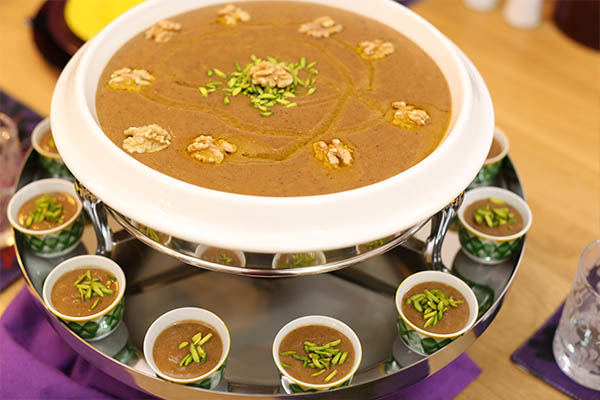
It is a boiled flour pudding cooked directly in water. The flour is made of wheat or whole-meal flour dough cooked in water.

It is made of wheat flour or whole-meal flour dough cooked in water and is eaten with honey or date syrup and melted butter.

What to Serve  With Asida

After you’ve flipped over the asida to the smooth surface, you can serve it with either honey or date syrup. You can also use melted butter or ghee (a clarified butter originating from India)

  • Pour the melted butter or ghee around the asida.
  • Pour honey or date syrup in the hollow. Serve immediately.

What makes Asida different from the regular flour pudding is that it is eaten with honey or date syrup and melted butter.

Some people use olive oil or ghee instead of butter. It is usually eaten for breakfast. People usually enjoy the dish by hand (right hands).

Be Sure to Try These Other Libyan Dishes!

Be sure to recreate this incredible delicacy. Enjoy!

Asida Recipe

baidoone
Asida (Arabic: عصيدة‎ ‘aṣīdah) is a dish made up of a cooked wheat flour lump of dough, sometimes with added butter or honey. It is considered one of the most popular desserts and traditional dish in many Arab countries. Often served during religious holidays.
Prep Time 10 minutes
Cook Time 20 minutes
Servings 8

Ingredients
  

  • 1 cup flour
  • 1 tsp cardamom grounded
  • 1/2 cup butter
  • 1/2 cup corn oil
  • 1 tbsp cardamom grounded
  • 1 tbsp cinnamon
  • 1 tbsp fenugreek grounded
  • 1 tsp black pepper
  • 1 lbs 500 grams dates
  • 3 cups water
  • 1/2 cup butter
  • 1 cup walnuts
  • 1 teaspoon saffron
  • 2 tbsp rose water

Instructions
 

  • 1 Remove the seeds from the dates. In the blender jug, put the dates and about 2 cups of water to get a liquid paste.
  • 2 Put saffron in rose water. Put it aside.
  • 3 In a saucepan put the flour and cardamom then stir over medium heat for a few minutes.
  • 4 In a saucepan put the butter and oil, warm quietly until the butter melts.
  • 5 Add cardamom, cinnamon, fenugreek and pepper and leave it for a few seconds to soak in the grease.
  • 6 Add the flour gradually to the butter while still stirring quietly, adding a little hot water gradually to get a mixture like heavy bechamel
  • 7 Add the date mixture, then continue cooking and stirring, to combine the ingredients together, while adding more water as needed.
  • 8 Let it boil quietly while stirring for a few minutes, until the ingredients mix together.
  • 9 Add rose water, saffron and stir until the mixture becomes like heavy bechamel.
  • 10 Transfer asida to suitable dishes, pour ghee and decorate with nuts.
Tried this recipe?Let us know how it was!

Kunafa

If you love pasta soaked in sugar-based syrup, Kunafa is a beautiful recipe for you. The dessert is layers of pastry with cheese and nuts soaked in sweetened syrup. The moist texture of this dish will allure you and your family members.

What is Kunafa?

The Kunafa, also known as Kanafeh or Knafeh, is a popular dessert in the Middle East and commonly eaten in the Arab world.

It is popularly consumed during the Muslim Ramadan period. However, it is a nice dessert one can consume at any time of the year.

Kataifi dough is also used in various other desserts like baklava, and you can typically find it in the frozen section of your local middle eastern shop.

Origin of Kunafa

The origin of this sweet treat is in the Middle East, especially in Egypt, the Levant, and Libya. Kunafa is the best representative for sweet courses in Palestinian cuisine. You will find Libyans make this treat a lot during the Ramadan months.

Kunafa has tons of variants because each country has a different way to shape, flavor, and even cook the cake. However, baking the cake in the oven is one of the most typical ways to create Kunafa’s authentic flavor.

Kunafa Recipe

Here is what you will need;

  • Kataifi dough: You can buy packets specifically labeled kataifi dough. Alternatively, look for shredded phyllo dough strands.
  • Ghee: you can use ghee or unsalted butter.
  • Sugar syrup: I recommend using a ratio of 2:1 sugar to water.
  • Mozzarella: Kunafa is traditionally made with a “sweet cheese” or Nabulsi/Akkawi.
  • Pistachios: (optional) you can use raw or roasted pistachio kernels (crushed/chopped) to top the kunafa.

You can garnish the dessert with pistachios, cinnamon, or powdered sugar, and enjoy it with tea. The Kunafa is a highly nutritious dessert.

Make your simple syrup and set it aside to cool. For the Kunafa, start by either grating or chopping up the cheese into small cubes. Then mix it with the can of thick cream and set aside.

Next, prepare your kataifi dough. If it is frozen, make sure that you thaw it overnight in the fridge, and take it out an hour or so before you plan to use it. Open the packaging and break it up using your hand and place it in a food processor. Whizz it a few times until it’s finely shredded.

If you don’t have a food processor, you can also shred it with your hand. Pour the melted butter on top and use your hands to massage the butter into every strand of dough. Make sure you fully saturate it and incorporate it well! This will ensure it gets extra crispy.

Next, brush your pan with some of the melted butter and pack it with half of the kataifi dough. I used a 9-inch pan for this recipe; you can use a slightly larger pan and your kunafa will just be less thick, which is fine. Use the back of a cup to pack in the dough and bring it up along the sides so it forms an edge. Then, spoon in the cheese and cream mixture and evenly spread it out.

Finally, spread over the rest of the kataifi dough to cover the cheese completely and press it down lightly. Bake it in a preheated oven at 350F for about 40-50 minutes, until the edges and top are deeply golden. To serve, flip it over onto a serving platter, drizzle with simple syrup and garnish with crushed pistachios.

How is Kunafa served?

Kunafa is typically served either on its baking sheet or flipped onto a serving platter, with lots of simple syrup drizzled on top and garnished with pistachios.

It is also served with extra syrup on the side for those who like it, extra sweet. You cut them up into smaller square or triangular slices and serve them on individual platters.

Storage & Reheating

In case of any leftovers, simply transfer them to an airtight vessel and keep them in your refrigerator. It should last for 3-4 days in there. When you are ready to consume your dessert, simply reheat it.

Kunafa / kunafe is super crunchy and best the day it is made. But you can store it in the fridge for up to 4 days.

You can reheat kunafa in the preheated oven to 180 C/ 356 F for 10-15 minutes or until hot. Alternatively, you can microwave it for 30 seconds just before serving.

If you want something to satisfy your sweet tooth, you must try this Kunafa recipe. It is an iconic, devilishly delicious dessert. Enjoy!

Kunafa recipe

Chefjar
If you want something to satisfy your sweet tooth, you must try this Kunafa recipe. It is an iconic, devilishly delicious Middle Eastern dessert, made with shredded Kataifi, creamy filling and soaked in condensed milk.
Total Time 45 minutes
Course Dessert
Cuisine Middle Eastern
Servings 4

Ingredients
  

  • FOR THE SYRUP
  • Condensed milk- ½ can 400 gm
  • FOR THE KUNAFA FILLING
  • Full fat milk-¾ cup
  • Heavy cream- 1 ¾ cup
  • Sugar- 1 ½ tbsp.
  • Cornstarch -2 tbsp.
  • FOR KUNAFA CRUST
  • Semi-frozen Kunafa dough shredded phyllo pastry- 250 gm or 0.5 lbs
  • Unsalted butter/ Ghee melted, room temperature-½ cup

Instructions
 

  • Preheat your oven to 180 C/ 356 F with the rack on the bottom of the oven.
  • Kunafa crust. Coat your 22 cm/ 9 inch baking tray with some butter/ghee.
  • Shred semi-frozen kunafa dough into 1.5 inch/ 4 cm long pieces over a large bowl. Add the remaining butter and mix with kunafa shreds to coat evenly. Transfer half of the dough to the tray and press firmly ,lining sides of the tray so it will hold the cream filling and prevent it from burning.
  • Making cream filling. In a medium saucepan heat milk and heavy cream; then add sugar and cornstarch and whisk until completely dissolved over medium heat. Bring to a boil, stirring constantly. Boil until the mixture thickens. Remove from the stove and pour over the crust, spread with a spatula.
  • Top with the remaining kunafa shreds evenly and bake 30-40 minutes or until golden.
  • Remove kunafa from the oven and pour condensed milk, covering the entire surface. You might not need the whole can.
  • Garnish with ground pistachio.
  • Allow kunafa rest for 10-15 min to absorb the condensed milk.
Tried this recipe?Let us know how it was!

Ghoriba Bahla

Ghoriba Bahla is a tasty shortbread-type biscuit with an enchanting crumbiness and sweetness.

The dish is insanely popular in Egypt, Morocco, Libya, and other nations in the neighboring region.

The cookies are a perfect companion for Libyan tea, Maghrebi mint tea, and Arabic coffee. There are plenty of Ghoriba variants throughout the region, but they all share a signature crumbly texture.

What is Ghoriba Bahla?

Ghoriba is the Arabic word for cookie. It’s a generic term that can mean any of several different types of Moroccan cookies.

Cracks in the surface of the cookie have led to the cookies being known as ghoriba bahla (ghriba behla), a name that loosely translates to “silly” cookies but means “silly stranger.”

Others may offer you a different translation. For example, a Moroccan tour guide refers to bahla as “stupid” cookies, such a funny description that her guests often want to try them!

The word ghoriba itself means stranger and is used to refer to several round Moroccan cookies which are traditionally shaped by hand.

For this particular version, the cracks are essential for the cookie to earn its name of silly, or bahla; otherwise, it is simply a ghoriba.

Ghoriba Recipe

The traditional pan for making ghoriba bahla is a molded baking sheet.

It’s large enough to make a full batch of the shortbread cookies, and although it’s not a must, using it will allow the cookies to bake with a desirably concave, cup-shaped bottom.

If you don’t have the mold, a regular baking sheet will work fine, although your cookies will, of course, have a flat bottom.

Neither pan requires greasing, but I’m using parchment paper for the regular pan for the sake of easy cleanup.

Ghoriba bahla is pale on top, golden on the bottoms, and crumbly like shortbread. Not too sweet, they are a wonderful Moroccan cookie you should get to know! Check the recipe card below for the full recipe.

Storing and Serving Suggestions

Allow the ghoriba bahla to cool completely before storing it in an airtight container. You’ll want to use waxed paper, plastic wrap, or foil between the layers to avoid crumbs from cookies above ruining the appearance of the cookies underneath.

The cookies will keep well at room temperature for a week or two, but freezing will ensure the best flavor if they aren’t likely to be consumed in the first week.

They make an excellent addition to a Moroccan tea timetable and are generally served alongside other Moroccan ghoribas, cookies, or pastries.

Be sure to recreate this incredible delicacy. Enjoy!

GHORIBA BAHLA RECIPE | MOROCCAN “SILLY” SHORTBREAD COOKIES

Jenni
This ghoriba bahla recipe is just sweet enough, super crunchy and crumbly and studded with ground fried almonds and toasted sesame seeds. I dare you to eat just one! Please use a scale to measure out your ingredients.
Prep Time 30 minutes
Cook Time 13 minutes
Course Dessert
Cuisine Moroccan
Servings 30

Ingredients
  

  • 40 grams sesame seeds
  • 40 grams blanched slivered almonds
  • For Frying almonds: about 1/2 cup of neutral vegetable oil
  • 125 grams granulated sugar
  • 1 Tablespoon vanilla sugar or 1/2 teaspoon vanilla extract and 1 Tablespoon granulated sugar
  • 125 grams unsalted butter softened
  • 97 grams neutral vegetable oil
  • 28 grams sesame oil (not toasted) or, for a lighter sesame flavor, use a total of 125 grams neutral oil
  • 1/4 teaspoon kosher salt
  • 500 grams approximately--I used 450 grams all-purpose flour
  • 1 1/2 teaspoons baking powder

Instructions
 

  • Set a rack in the top third of the oven and preheat to 400F.
  • Line 2 cookie sheets with parchment and set aside.
  • Put the sesame seeds in a dry skillet and heat over medium heat, stirring occasionally and then constantly as the sesame seeds begin to take on a bit of color. Toast the sesame seeds to a light golden brown. Spread out on a paper towel to cool.
  • Wipe out the skillet in case any sesame seeds are stuck to the bottom (just to be safe) and fill with about 1/4" vegetable oil. Allow the oil to get hot. Test by dropping in a piece of slivered almond. It should begin to gently bubble in 1-2 seconds.
  • Add the rest of the almonds and fry, stirring constantly, until a very pale golden color. The nuts will continue to take on color for an additional couple of minutes, so be sure to remove them from the oil before you think they're ready.
  • Pour the nuts into a strainer set over a heat-safe bowl and then spread them out to cool completely.
  • Coarsely grind the nuts in a small food processor or mini chopper. Set aside.
  • In the bowl of a stand mixer, combine the granulated sugar, vanilla sugar (or extra granulated sugar plus 1/2 teaspoon vanilla extract), butter, oils, and salt.
  • Beat until reasonably well combined (it may look a bit lumpy. That's okay).
  • Mix in the sesame seeds and ground almonds.
  • Whisk together about half the flour and baking powder, and then add that to the mixer. Mix on low speed until you have a sticky dough.
  • Add enough of the remaining flour to make a stiff, crumbly dough that holds together when you squeeze it. I ended up using 450 grams of the total of 500 grams of flour. You may need a bit more or less depending on your flour and the humidity.
  • Once the dough is the right consistency (and even if it doesn't crack, it will be delicious, so don't get upset), weigh it and divide the weight by 40. I ended up needed 22 3/4 grams of dough per cookie, so some I scaled at 22 grams and some at 23 grams and it all worked out just fine.
  • Form each piece of dough into a fairly smooth ball (you won't be able to roll it, because it will crumble, so just form it with your hands). Flatten each ball of dough between your palms so the edges are thinner than the centers. Try to make them as round as you can, but it's not the end of the world if they're lopsided.
  • Place each shaped cookie on the prepared sheets--20 per sheet.
  • Bake one tray at a time for 7 minutes. Then rotate the pan 180 degrees, reduce the heat to 375F and bake an additional 3-6 minutes (depending on your oven) until very pale golden around the edges. With all the seed and nut oils, they'll take on color quickly, so keep an eye on them.
  • Remove the sheet from the oven and carefully transfer to a cooling rack. The cookies will be soft, but they will crisp and crunch up as they cool. By the time they are completely cool, they'll be perfect!
  • Bake the second sheet (remember to turn the oven back up to 400 first). The second batch might take slightly less time to bake than the first batch. Mine did.
  • Try not to eat all of them. Enjoy!

Notes

HOW TO SHAPE YOUR GHORIBA
As to the shaping of the cookies, you:
form/press them into balls (you can’t really roll them or they crumble)
flatten them between your palms so the edges are thinner than the middles.
Traditionally, there’s a special pan you are supposed to bake them on so they end up with concave backs.
I think that might also encourage even more cracking, but shaping them by hand and baking them on plain old parchment-lined sheets works just fine.
Tried this recipe?Let us know how it was!

Basbousa (Semolina Cake)

Basbousa, an Egyptian semolina cake with yogurt is one of the best Egyptian desserts that come out fairly quickly. One bowl, mix and dump kind of recipe, yet is hard to make perfect.

What is Basbousa?

Basbousa/basboosa is a term in the Middle East that refers to very sweet semolina – sort of- cake.

It is a semolina-based cake with a delightful sweetness. The sweet taste is a result of soaking the dish in sweetened syrup.

Basbousa Recipe

Egyptian desserts often consist of a cake or pastry and syrup (baklawa and kunafa), and basbousa is the same idea; in this dish, the addition of yogurt mellows out the sweetness, yielding a cake that’s super-satisfying but still light enough that you’ll have room for seconds.

In Libya, people usually add desiccated coconut into the cake mixture for a lovely rich flavor.

The syrup for the cake is usually a fragrant one like rose water or orange blossom water. The fragrance is one of the critical features of the cake that makes everyone love it.

Using ghee (or samna, as it’s called in Egypt) as the cooking fat here is key. While you can use melted unsalted butter as a substitute, ghee, which is essentially clarified butter, has a richer, nuttier flavor that makes this dessert stand out in a crowd.

There are a variety of ways to make basbousa—some recipes may include adding shredded coconut or doing away with the yogurt altogether. Best of all, it’s a one-bowl wonder.

This is a relatively forgiving bake, but the secret to making the perfect basbousa is getting the timing of the syrup right: You want the syrup to be hot and ready to pour just as the cake comes out of the oven, so keep your eye on the timer.

Customarily, the cake is garnished with almonds for an exciting texture and nutty flavor.

The cake is often paired with Arabic cardamom coffee and Qashta cream.

Be sure to recreate this incredible delicacy. Enjoy!

Basbousa Recipe

Food.ndtv
Basbousa also known as Hereessa is a traditional dessert from the Middle East which is made up of Semolina drenched in sugar syrup.
Prep Time 15 minutes
Cook Time 15 minutes
Course Dessert
Cuisine Egyptian, libyan, Middle Eastern
Servings 4

Ingredients
  

  • 2 Semolina
  • 1 cup Sugar
  • 2 tbsp Honey
  • 1 tsp Baking Powder
  • 8-10 Almonds chopped
  • 1/2 cup Melted butter
  • For the Syrup: 1 cup Sugar
  • 1 cup Water
  • 1 tbsp Lemon Juice
  • 1 tbsp Dried Rose Petals

Instructions
 

  • 1.Whisk the semolina, sugar and baking powder together in a large container.
  • 2.Then add the yogurt, melted butter and combine well to make a thick batter.
  • 3.Pour the batter into the greased baking pan. Bake for 30-45 minutes until crispy and golden brown.
  • For Lemon & Rose Syrup :1.Boil water in a pan and add lemon extracts, juice, sugar and dried rose petals
  • 2.Boil for 5-10 minutes until the syrup thickens.
  • 3.Pour the syrup over the still hot cake and allow it to be absorbed, at least an hour.
  • 4.Serve after a complete full-fledged meal or as an evening snack with a cup of black coffee or tea.

Notes

You can also add vanilla, orange extract or saffron according to your preference.
Tried this recipe?Let us know how it was!

Libyan Haraimi (Spicy Fish Stew)

Libyan Haraimi will change your perception of fish stew. You can make this dish to warm your family table on freezing winter days.

It’s perhaps the Libyan dish par excellence, the most loved and well-known by anyone who has experienced the local cuisine. Try this Haraimi immediately because it is so tasty!

What is Haraimi?

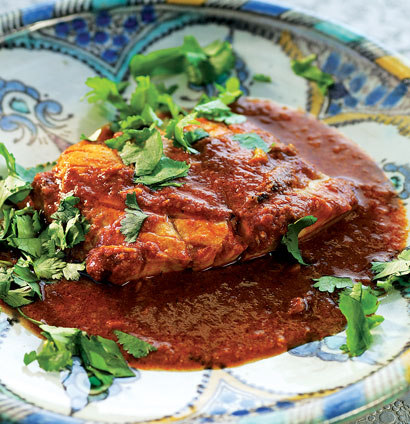
Libyan Haraimi is a Mediterranean fish stew that is made up of a rich spicy tomato sauce, fish steaks, and potatoes ( optional) and seasoned with a delicious spice blend.

The dish has a spicy tomato sauce that you can pair with bread, rice, or Couscous.

If you are afraid of the fishy smell, don’t be worried. Fragrant spices like onions, garlic, and pepper will eliminate the smell of the dish. The spicy flavor will complement the fish flavor, giving you the most sophisticated taste.

Origin of Libyan Haraimi

This stew dish can be traced back to when the Italians colonized Libya. The origins of this dish came from the Libyan Jews.

Currently, there aren’t that many Jews living in Libya but there once used to be over 6,000. Now, this dish is a staple in every Libyan household.

The stew is served with bread but you can make rice on the side as well or couscous.

Be Sure to Try These Other Libyan Dishes!

Haraimi is essentially a dish of fish fillets in an extremely spicy sauce.
 Do you think your palate can take it? Try this recipe, and you will most likely change your mind. Your taste buds will be on fire!

Haraimi

Labna
A Libyan recipe for marinated white fish.
Prep Time 10 minutes
Cook Time 20 minutes
Course Sauces and Soup, Soup, stew
Cuisine libyan
Servings 4

Ingredients
  

  • 3 slices fresh tuna or other chunky fish *
  • 1 finely chopped onion
  • 1/2 glass olive oil
  • 2 full tablespoons of tomato paste
  • 1/2-1 teaspoon chili powder careful!
  • 2 crushed garlic cloves
  • 1/2 teaspoon salt
  • 1/2 teaspoon ground caraway
  • juice of 1/2 a lemon

Instructions
 

  • Fry the finely chopped onion in plenty of olive oil; you should use a large non-stick pan with a high edge, if possible.
  • While still on low heat, add pepper, tomato paste and 2 cloves of crushed garlic; then, add a large glass of water and 1/2 teaspoon of salt.
  • When the sauce starts to simmer, put the fish in the pan and cook over medium heat until you obtain a thick sauce. (*) You can also use 300 g of tuna fillets in oil, to speed up the recipe in an unorthodox way, but these must be of excellent quality, very large and compact.
  • Add a scant 1/2 teaspoon of ground caraway to the sauce, and cook for a few more minutes, then at the end of cooking, add the juice of 1/2 a lemon.
  • Serve as an appetizer, at room temperature, with plenty of bread (the sauce, if it is well made, is usually a huge success!).
Tried this recipe?Let us know how it was!

Mbakbaka (Libyan Pasta Stew)

Mbakbaka is a North African specialty that is influenced by Italian cuisine. In Libya, people usually make the dish in just one pot, so convenient, right?

Traditionally, the pasta is paired with tomatoes, spices, and chicken. Although sometimes, other types of meat are used for this dish too.

The pasta is a perfect dish to treat your family on winter days. Let’s get to the recipe.

What is Mbakbaka?

Unless you are very familiar with Egyptian or Libyan cuisine, you may not have heard of Mbakbaka before. But don’t be intimidated by the unfamiliar name! It is absolutely delicious.

Sometimes also called Imbakbaka, Mbakbaka is common in Egyptian and Libyan cultures. It is naturally a one-pot pasta dish and is quite similar to the concept of an Italian Minestrone.

In the early to mid-20th century, pasta arrived in Libya, and this specialty was born.

Mbakbaka Recipe

Mbakbaka is essentially a tomato-based noodle recipe that is hearty and flavorful!

Harissa is often a top-chosen sauce to make this Mbakbka tastier. However, if you love a mild taste, you can adjust the number of piquant ingredients.

To make your one-pot pasta, you cook pasta in heavily salted water. The reason you need to salt your pasta water is to make sure that the pasta absorbs some flavor. That is because when you cook pasta, it absorbs all the liquid it is cooking in.

When you cook noodles directly in the sauce, it has a chance to absorb those flavors making them tastier!

Instead of using separate pots to cook your pasta and your sauce, they can all come together in one pot. So not only does our method of pasta making create a more flavorful dish overall, but it also means less time in the kitchen AND less mess. Win-win!

Kind of Pasta to Use

There are loads of pasta that work well for this recipe. While we find that this recipe lends itself better to smaller pasta, also called pastinas, you can use anything!

Here are some of the best pasta to use for this dish:

  • Ditalini pasta, which is commonly used for Minestrone Soup, is a natural fit for this dish! Ditalini pasta is just a bunch of small short tubes of pasta.
  • Gemelli pasta is another great option for this dish. It is a thicker pasta noodle that is similar to Rotini pasta. Both of these twisted noodle pasta would work well to absorb the flavors of Mbakbaka
  • Macaroni elbows are the noodles traditionally used for this recipe in Egypt and Libya. Similar to the Ditalini pasta, the tube shape of the macaroni helps to absorb the flavors of this dish well!

How to Make One Pot Mbakbaka

  1. Heat the stock and water together in a large pot on the stove over medium heat. Add the garlic powder, onion powder, paprika, coriander, salt, and olive oil to the pot and mix it all. Follow by stirring in the marinara sauce.
  2. Bring the seasoned liquid up to a boil. Add in the pasta, chiles, and sugar. Give it another quick mix.
  3. Allow the pasta to boil on high for about 15 minutes. You want your pasta to cook to al dente!
  4. Cook pasta until the liquid is absorbed. Serve hot!

Be Sure to Try These Other Libyan Dishes!

Be sure to recreate this incredible delicacy. Enjoy your Libyan Mbakbaka!

Some suggestions for Amazon links to “Barilla Thin Spaghetti Pasta”.

Barilla Thin Spaghetti PastaProject Overview Docs Banner in Light Green Blue Vibrant Professional Style 1

Pasta Stew (Mbakbak)

Asma
Mbakbka one of the famous foods in Libya, which many prepare especially singles, in winter. This recipe is quick to prepare and has many nutritional benefits.
Prep Time 10 minutes
Cook Time 18 minutes
Course Main Course
Cuisine libyan
Servings 5
Calories 266 kcal

Ingredients
  

  • 1 lb of penne pasta or snails.
  • 1 lb of lamb or beef meat cut into very small cubes or shredded chicken breasts, or minced meat
  • 2 medium size potatoes peeled and cut into cubes.
  • 1 Large onion sliced
  • 2 cloves garlic mashed
  • 1 Teaspoon of hot red pepper to taste
  • 6 cups of water
  • 1 ½ cup fresh and filtered tomato juice
  • 2 tablespoons of tomato sauce
  • 2 tablespoons of olive oil
  • 1 tablespoon butter
  • 1 tablespoon of chopped parsley
  • 1 teaspoon of curry
  • ½ teaspoon of ginger powder
  • ½ teaspoon of mixed spices
  • 1 pinch of salt and 1 pinch of black pepper.

Instructions
 

  • On medium heat, heat the oil and butter together, then add the meat, salt and black pepper, and stir for 5 minutes.
  • Add the onions, and stir with the meat until it wilts, then add the garlic and stir
  • Add the tomato juice, ginger, curry, spices and sauce, and stir very well.
  • Add the water, leave it until the meat is cooked, then add the potatoes, pasta, salt and black pepper, and stir well.
  • Cover the pot, and leave it on a low heat until the pasta and potatoes are tender.
  • Put the pasta stew or Mbakbka in a serving dish, and garnish with parsley leaves
  • Serve and enjoy your dish!

Nutrition

Calories: 266kcal
Tried this recipe?Let us know how it was!

Rishta (Libyan-Style Pasta)

In the North of Africa, Rishta or Rishda is a spaghetti-like dish with an exquisite flavor. In Libya, it is a popular pasta dish with thin noodles bathed in Busla – onion-rich sauce in this country.

Rishta in Libya is often known as Rishdat Cascas (Couscousiere Rishda) and Rishda Imbaukha (steamed Rishda). In Tripoli (the capital city of Libya), the dish is loved among the local citizens.

A dish called ‘Makaruna Imbaukha’ (steamed pasta) can be misrecognized with Rishta. However, they are quite different because Makaruna Imbaukha uses a special pasta called ‘dry angel-hair pasta’.

Rishta Recipe

This meal requires soaking the fava beans and chickpeas in cold water for at least 2 hours before cooking. You can soak your beans overnight.
Sometimes you can even soak and boil the beans in general and freeze them for immediate use later during each month’s meal planning.
In North African Traditional Cuisine, they use dry meat quite a lot. Which I guess come from the Amazigh / Berber culture.
This dry meat known as Gedid is meat salted and dried by the sun to be preserved for longer periods. Its often used to add a special smoky taste to lots of traditional dishes just like the purpose of beef or chicken stock/bouillon cubes.

Suggestions for Amazon links to “Libyan Food”

Near East Wild Mushrooms Herb Couscous Mix

Project Overview Docs Banner in Light Green Blue Vibrant Professional Style 1

I hope you guys enjoy this Rishta Recipe.

Rishta recipe

libyan food
Rishta or Rishda is a favorite Libyan/North African dish.
Course Main Course
Cuisine libyan
Servings 4

Ingredients
  

  • For the pasta:
  • 750 g white flour
  • 1 egg beaten
  • 1 tea spoon salt
  • 200 ml water enough to make a hard dough
  • Base sauce to cook meat:
  • 4-6 lamb meat pieces
  • 1 medium onion finely chopped
  • 3-4 table spoon tomato paste
  • 1 tea spoons each of:
  • black pepper
  • turmeric
  • red chili powder
  • ginger
  • cinnamon
  • 11/2 liter boiling water
  • Busla/Onion sauce:
  • 4-5 medium onion cut into thin wings
  • 2 cups chick peas soaked over night
  • 1 tea spoon ground cloves
  • 2 sticks cinnamon or 2 teaspoons ground cinnamon

Instructions
 

  • Mix the flour with the egg and salt. Add water gradually till you get a hard dough.
  • Knead the dough. On a clean surface sprinkle cornflour under and over the dough, and roll out.
  • Cut into strips and put through a pasta machine repeatedly, first to thin out and the second time to produce thin noodles similar to angel hair pasta.
  • Put onions, spices, tomato paste and oil at the bottom part of the couscousiere.
  • Stir and add the meat till the meat is cooked.
  • Cook the chickpeas. Slice the onions into rings and add to the sauce.
  • Place the rishda in the couscousiere and cook uncovered for around 15 minutes. Take down the couscousiere and pour the rishda into a bowl to fluff or separate the noodles to make sure they are not clumping. Put the rishda back in the couscousiere and cook again till fully cooked, around 20 minutes.
  • Add potatoes and pumpkin to the sauce at the bottom part of the couscousiere.
  • Take off the rishda, pour into a wide bowl if communal or separate plates. Pour the sauce over the noodles/pasta, and then add the meat and potatoes and pumpkin.
Tried this recipe?Let us know how it was!

Aslooz (Libyan Couscous-Based Dish)

Aslooz is a special dish in Libya that you can only enjoy its best flavor in spring or summer. Cheap and Cheerful are the best words to introduce this lovely meal.

This dish is a family dish that you can enjoy with your beloved one after a hard-working week. Couscous and Aslooz are flavored with a special carrot sauce that usually has a piquant flavor from chili pepper.

What is Aslooz?

Aslooz is a popular Libyan dish, especially in the west region of the country. It Is a vegetarian (and vegan!) dish that consists of steamed couscous, a tomato-based sauce, and the aslooz plant.

The dish is called ‘Aslooz’; this is also the name of a seasonal plant in Libya that has a unique flavor.

You can find this plan almost everywhere in the countryside or the mountain area of Libya. The plant is harvested during January and February, and people pair this plant with Couscous for an extraordinary flavor.

The Aslooz weed grows wild and is not a cultivated farm crop; it can be picked off the side road in the countryside or the mountains.

Since it has a short growing season between January and February and apparently, it is not available in America and European countries.

You could enjoy Couscous Aslooz at any time of year and anywhere by using other similar weeds, for instance, you could use carrots and cumin leaves, or If you are a resident of Europe you could try asparagus or broccoli that will give you similar results.

Aslooz Recipe

This recipe is considered a perfect family food that was meant to be prepared, cooked, and served with the family.

For preparing the meal we use only the tender twigs and the flowery branches, after washing them several times and chopping them firmly.

It is placed in a steamer with a pinch of salt and steamed for a while before adding the Couscous on top of it and steamed again until the twigs are nicely cooked and tender.

To prepare the carrot sauce, boil the carrots in the water under the steamer while cooking the Couscous, and then mash them and season them with a generous quantity of lemon juice, garlic, spherical, Asperger, tomato paste, and chili pepper to give it a spicy twist.

Lower your ingredients from the heat and just bring them together and mix, leaving some of the sauce for topping and decoration.

Be Sure to Try These Other Libyan Dishes!

Be sure to recreate this incredible delicacy. Enjoy!

Aslooz

A summertime asparagus, dill and couscous dish from the Nafusa mountain region of Libya.
Total Time 45 minutes
Course Main Course
Cuisine libyan
Servings 4

Ingredients
  

  • 1 1/2 cups couscous
  • 1 bunch asparagus spears
  • 1 bunch fresh dill
  • 2-3 tablespoons olive oil
  • 1 onion finely diced
  • 3 cloves garlic minced
  • 14 oz can crushed tomatoes or diced tomatoes
  • 1 teaspoon tomato paste
  • 1 1/2 cup water
  • 1 tablespoon paprika sweet, not smoked
  • 1 teaspoon Libyan bzaar spice mix if you don’t have any, use Arabic 7-spice and a pinch of turmeric
  • cayenne pepper to taste
  • black pepper to taste
  • 1 1/2 teaspoons salt adjust to taste

Instructions
 

  • First, dice the onions and crush the garlic. In a medium saucepan, sautee the onions and garlic in the olive oil over medium heat for a few minutes. Then add the crushed tomatoes, tomato paste, water and spices.
  • Allow this to simmer over medium heat, stirring occasionally. If it is splattering all over your stove, you can place a lid on the pot at slight angle which will allow the steam to escape as it simmers.
  • Pull out your steamer pot (it should consist of a base pot, a steamer pot that fits on top and a lid…a basket-type steamer will not work for this) and fill the base pot halfway with water. Place it on the stove to heat the water to a boil. As you are waiting for the water to heat up, wash and trim the asparagus stems. Then chop the asparagus into 1/2-inch pieces.
  • In a bowl, mix the dry couscous with 1/4 cup water. It will clump initially, but just keep mixing and breaking up the clumps.
  • In the steamer portion of the pot, distribute the chopped asparagus across the bottom…be sure to cover all the little holes of the steamer with the asparagus. Then spread the couscous over the asparagus.
  • Place the steamer pot over the water pot that should be boiling by now, cover with the lid and reduce the heat to medium. Set a timer for 15 minutes.
  • After 15 minutes have elapsed, you will need to carefully remove the lid (Caution: Hot steam will release, so be very careful!). Using a spoon or a spatula, gently mix together the asparagus and couscous.
  • Replace the lid and set your timer for 15 minutes. Give the tomato sauce a stir, add water if needed. The tomato sauce should have a slightly thick consistency, but it should be little thinner than a marinara sauce. Next, wash and finely chop the dill.
  • When your 15 minute timer goes off, remove the lid of the steamer (very carefully!) and give the couscous a taste using a small spoon. It will be hot, so let it cool on your spoon for a few seconds and maybe even blow on it to cool it off before tasting. If it is soft, the couscous is ready! If it still has a little bite to it, allow it to steam for a few more minutes. Once the couscous is ready, carefully transfer it from the steamer to your serving dish. Stir in the chopped dill.
  • Taste the salt-level of your tomato sauce, adjust as needed. The salt in your tomato sauce is very important as it will be seasoning your couscous. Once the tomato sauce salt level is ready and the sauce consistency is good (slightly thinner than a marinara sauce!), remove it from the heat and take a few spoonful's of the sauce and mix them into the couscous. Your couscous should be slightly orange now, otherwise add more sauce.
  • Next, smooth the top of the couscous with the back of the spoon. Spoon the remainder of the tomato sauce over the top of the couscous and do your best to evenly distribute it across the entire surface. And the Aslooz is ready! If you are feeling fancy, garnish with some flatleaf parsley. Serve it with a Mediterranean-style salad of tomatoes, cucumbers, onions, peppers, lemon juice, olive oil and salt.
Tried this recipe?Let us know how it was!

Libyan Mafrum

Jews in Libya have created a unique dish that you will admire for its sophisticated and savory flavor. Mafrum combines juicy meat stuffed in potatoes and bathed in a tasty sauce.

I totally encourage you to try this stuffed vegetable recipe, it’s a game-changer!

What is Mafrum?

Mafrum is a dish from Libyan cuisine. A mixture of ground beef and spices is sandwiched inside a potato and cooked in tomato sauce.

It is made out of ground beef sandwiched in assorted vegetables, the most known ones being potatoes, eggplant and cauliflower, which are then dipped in flour and egg, fried in oil and then cooked in a red sauce.

Some versions of Mafrum even use eggplant and cauliflower to substitute potatoes Or, if you are a veggie-lover, you can make a dish full of these spectacular ingredients.

The sauce for Mafrum usually has a beautiful red color, and the entire dish is perfect to pair with Couscous.

Libyan Mafrum Recipe

It’s not a weekday dinner, I’ll admit that. This dish is often a weekend meal instead of a weekday meal because of the preparation and cooking duration. However, the fruits of your effort are a dazzling meal for your family.

There are some steps to be taken to get this dish done, and it takes some time, but it’s not difficult and it’s totally worth it, you have my word.

The first step, is to choose the vegetables you would like to make. You can use potatoes, eggplants, and cauliflower, and you can choose all or just one, whatever you like.

Anyway, get your vegetables washed and clean. If you’re using potatoes, peel them and slice them into 2-3.

In each slice, create a cut in the middle like you’d open a baguette, but cut only 3/4 through.

Then place them in a bowl with salted water for 30 minutes. This will allow them to soften up and become more flexible, making your life a lot easier when filling.

Slice your eggplant the same way, and salt it slightly on both sides so the moisture will come out, place it on a paper towel for 30 minutes.

Break small florets from your cauliflower and in the middle of the chunky part, create a small cut.

Once your vegetables are ready, drain the water out of the potatoes and let them dry for a few minutes. Wipe the moisture and salt from the eggplants.

Make a medium ball from the meat mixture and stuff it inside each piece of vegetable, be gentle, and once it’s in there, press the sides of the vegetables to sandwich it up tightly but without pressing the mixture out.

Use your intuition here, it’s easier than it sounds! Check the recipe card below for the full recipe. Enjoy!

Mafrum (Libyan Stuffed Vegetables)

Vered Guttman
From the Libyan cuisine, a mixture of ground beef and spices is sandwiched inside a potato and cooked in tomato sauce.
Prep Time 1 hour
Cook Time 2 hours
Course Main Dish
Cuisine libyan
Servings 10

Ingredients
  

For the filling:

  • 1.5 lb. ground beef chuck
  • 1/4 cup bread crumbs or matzo meal
  • 1/2 yellow onion grated
  • 1/2 teaspoon cinnamon
  • Pinch nutmeg
  • 1 teaspoon salt
  • 1/4 teaspoon black pepper

For the mafrum

  • 5 large potatoes Yukon Gold
  • 1 cup flour or matzo meal
  • 2 eggs lightly beaten
  • 1/2 teaspoon salt
  • Oil for frying

For the sauce:

  • 2 tablespoons olive oil
  • 2 carrots sliced to 1/4 rounds
  • 2 garlic cloves sliced
  • 2 tablespoons tomato paste
  • 1 teaspoon paprika
  • 2 cups boiling water
  • 1/2 teaspoon salt

Instructions
 

  • Mix the ingredients of the filling.
  • Peel the potatoes. Slice the potatoes lengthwise to about 1/2 slices. Each slice you then slice again lengthwise, but leave the two slices intact, so you can get a V shape if you gently open them. (The filling will go inside the V). Keep the potato leftovers.
  • Divide the filling to the number potato slices you have and shape the meat into large meatballs. Fill each potato slice with the filling to get a triangular shape.
  • Put the flour in a medium size bowl and the eggs in another. Mix the eggs with the salt. Deep each mafrum with flour and then with the eggs and put on a tray.
  • Heat 1/4 oil in a nonstick frying pan over medium-high heat and fry the mafrum on both sides. Fry in 2-3 batches. Transfer the mafrum back to the tray.
  • In a large pan with a lid that can hold all the mafrum heat the olive oil over medium heat. Add the carrots, garlic and potato leftovers and fry for a couple of minutes. Add tomato paste and paprika and fry for a minute more. Now add 2 cups of boiling water and mix to get a smooth sauce. Add salt, and then arrange the mafrum in the sauce.
  • Bring to boil, lower the heat to minimum, cover and cook for 30 minutes. Remove the lid and cook for 15 minutes longer. Serve the mafrum with its sauce over couscous.
Tried this recipe?Let us know how it was!

Libyan Imbakbaka

Want to twist your dinner table with a Libyan dish? Imbakbaka will change your perception of ordinary pasta. This dish proves that Italian cuisine plays an important role in Libyan culinary culture.

Italian food culture was adapted in Libya between 1910 and 1947. The dish is a simple recipe that you only need one pot to cook. Sweet and spicy flavors harmonize splendidly in this spectacular dish.

Traditionally, people use chicken to add a savory flavor to the dish, but the veggies version like peas, chickpeas, and carrots will fit your ‘green’ diet.

If you want a unique pasta recipe, Imbakbaka will meet your desire.

Imbakbaka Recipe

The combination of sweeter spices like nutmeg and caraway powder with spicy cumin and paprika in a tomato broth makes an unbeatable flavor explosion.

Simmering the chicken thighs in the spice broth infuses them with great flavor and gives them a tender, fall-off-the-bone texture.

Here are the Ingredients & Substitutions:

  • Pasta – traditionally, this recipe uses spaghetti, broken into 2-inch pieces.
  • Whole chicken – This recipe uses a whole chicken, cut into 8 parts. You can also choose your favorite chicken parts and just use that. Using a whole chicken can be a more economical choice.
  • Spices – it is important to use fresh, high-quality spices. Dried spices expire and are much less potent when they do.
  • Jalapeños – I have made this dish with other spicy peppers, so choose your own adventure. I would recommend using peppers with a similar heat level to jalapeños.

FAQs

Is Imbakbaka Spicy?

Yes, it is quite spicy. If you’re not a fan of spice, this isn’t the dish for you unfortunately!

Can I use any Pasta for Imbakbaka?

Traditionally, the right pasta to use are small pieces that you can get by breaking up spaghetti pasta with your hands into two-inch sections.

Do I have to use a Whole Chicken in Imbakbaka?

You could use any cut of chicken like thighs, breasts, or legs, whichever you prefer. I like to use a whole chicken as it’s the most economic and sustainable way to have plenty of food plus great leftovers!

Be Sure to Try These Other Libyan Dishes!

Be sure to recreate this incredible delicacy. Enjoy your Libyan Imbakbaka!

Imbakbaka - Libyan Chicken Pasta Dish

fig and olive platter
You’ll love this delicious Libyan pasta and chicken dish flavored with a classic Libyan spice blend and cooked in a tasty tomato broth. 
Prep Time 10 minutes
Cook Time 25 minutes
Course Main Course
Cuisine libyan
Servings 5
Calories 881 kcal

Ingredients
  

  • 3 tablespoons tomato paste
  • 5 cups water
  • salt to taste
  • black pepper to taste
  • 1 teaspoon ground cinnamon
  • 1 teaspoon ground turmeric
  • 1/2 teaspoon chili powder
  • 1 teaspoon paprika
  • 1/4 teaspoon smoked paprika
  • 2 jalapeños optional
  • 2 &1/2 cups pasta shells or macaroni
  • 2 large tomatoes pureed
  • 1 medium onion diced diced
  • 1/2 cup mix of frozen peas carrots and chickpeas you can add beans as well
  • 1 medium potato cut into small cubes
  • 7 springs fresh basil finely chopped – leave some to garnish
  • 2 minced garlic
  • 2 tablespoons olive oil

Instructions
 

  • In a medium size pot on medium heat, add olive oil and onions and sauté until they get translucent.
  • Then add the tomato paste, and cook for another 1 -2 minutes.
  • Then add the tomato puree and bring the mixture to a boil. Then add the frozen peas, carrots , minced garlic and chickpeas. Cook for about 3 minutes then add 2 cups of boiling water. Add the spices and jalapeños and stir and allow the mixture to come to a rolling boil and then cover the pot and cook for 5-7 minutes.
  • After about 5 minutes, add additional 2 cups of boiling water and add the potatoes and cook for 5 minutes.
  • Add another 1 cup of water and bring the mixture to a rolling boil and then add the pasta and stir. Cook the mixture until the pasta is cooked. If you find the mixture is thick , add an additional 1 cup of water. Make sure to taste the sauce and add additional seasoning to your liking.
  • Add the fresh basil the last 2 minutes of cooking.
  • Pasta is best served immediately! I love it really saucy. You can garnish the pasta with some fresh basil and harissa.

Nutrition

Calories: 881kcal
Tried this recipe?Let us know how it was!

QUICK RECIPES