Baseema

0

Baseema is a hard-to-put-down traditional cake or dessert from the Sudan that features heightened flavors of coconut, yogurt, and lemon.

Baseema means scrumptious in Sudan. Baseema lives up to its name and doesn’t let you down. Although it’s easy to prepare, it tastes amazing. One of the highly regarded specialty sweets in Sudan and elsewhere is the pastry.

Coconut, cinnamon, vanilla, and yogurt combine to give baseema its distinctive flavor. To enhance the flavor, some varieties incorporate rose water.
One of those dishes that you can make quickly is the pastry. To ensure you get everything right, you must be vigilant.

Baseema

Better Butter
Servings 0

Ingredients
  

  • 5 eggs
  • 1 3/4 cup All Purpose Flour
  • 1 cup Icing sugar
  • 1/2 Cup Butter
  • 1/4 cup oil
  • 500 g Yoghurt /Curd
  • 3/4 cup desiccated coconut
  • 2 tsp baking powder
  • 2 tsp vanilla essence
  • For the syrup :
  • 1 1/2 cup sugar
  • 1 Cup water
  • 1 tbsp lemon juice

Instructions
 

  • Prepare the sugar syrup by mixing all the ingredients given under sugar syrup. Let it boil until the sugar melts. Set aside.
  • Preheat the oven @ 180° C. Grease a cake tin.
  • Beat together the eggs and icing sugar until pale and frothy. Add in butter, oil, yogurt and vanilla.
  • Sieve the flour & baking powder. Gently fold this into the wet ingredients along with coconut. Pour this into the prepared tin.
  • Bake for 35-40 min or until the inserted toothpick comes out clean.
  • Once the cake is out, immediately pour the syrup all over the cake. Slice it & enjoy!
Tried this recipe?Let us know how it was!

Hertzoggies

0

This is a jam-filled tartlet or cookie with a coconut topping known as a Hertzoggie, sometimes called a Hertzogkoekie in Afrikaans or a Hertzog Cookie in English.

Hertzoggies are a classic tartlet that have been around since the 1920s, when the Hertzoggie cookie (or Hertzogkoekie in Afrikaans).

It was created by supporters of the then South African Prime Minister and Boer War General J. B. M. Hertzog, better known as Barry to his friends.

The Hertzoggies have light pastry bases, pop of apricot jam, and chewy crunch of coconutty meringue. Hertzoggie biscuits are still widely consumed in South Africa today, typically consumed with a cup of tea or offered as a treat during Eid in the Cape-Malay community. because they are just fantastic.

In South Africa, the cookie is a common delicacy that’s frequently enjoyed with a cup of English tea. The dessert is frequently consumed during Eid in the Cape Malay population.

It is frequently made at home as part of the nation’s cottage dessert-baking business and served alongside other well-known South African desserts like Koeksisters.

Hertzoggies

Servings 0

Ingredients
  

For the pastry

  • 2 cups of self-raising flour
  • 1 teaspoon of baking powder
  • 150 gm castor sugar
  • A pinch of salt
  • pinch of nutmeg
  • ½ cup of cubed butter
  • 3 egg yolks
  • 1 tablespoon cold water

For the filling

  • 3 large egg whites
  • 1 cup of castor sugar
  • ½ tsp of vanilla essence
  • 2 cups of desiccated coconut
  • ½ cup apricot jam

Instructions
 

  • Preheat oven to 180 °C.
  • Grease a mini muffin baking tray.
  • Sift the flour, baking powder, nutmeg and salt into a large mixing bowl
  • Add the castor sugar and cubed butter, massaging the butter in to the flour mix until it forms fine crumbs.
  • Add eggs and mix, adding a touch of water if needed, to bring the dough together.
  • Knead the dough on a clean floured surface until smooth, then roll in a ball and cover in a bowl to rest for about 20 minutes.
  • In a separate bowl, whisk the egg whites to soft peak stage, then incorporating the vanilla essence and sugar in stages until it reaches glossy firm peaks.
  • Carefully fold in the coconut and set aside.
  • Press pastry mix directly into each of the muffin trays so that each tray is filled with a 5mm thick base
  • Add two teaspoons of jam onto the pastry, then top each with the meringue mixture.
  • Pop the tarts into the oven and bake for 25 minutes until the tops are crisp and golden.
  • Allow to cool slightly, then carefully lift them out the tray and onto a cooling rack.
Tried this recipe?Let us know how it was!
 

Basbousa

0

This Egyptian dessert, Basbousa, is essentially a sweet semolina cake. In some regions, it is also known as revani, Hareesa, or namoura.

It is a customary Middle Eastern cake that is sweet and delicious, typically baked with semolina and drenched in simple syrup. The Arabic word “basbousa” means “Just a Kiss,” and this delicious cake more than lives up to its moniker.

Basbousa

Servings 0

Ingredients
  

  • 1 3/4 cups coarse semolina/sooji
  • 1/4 cup all purpose flour
  • 3/4 cup sugar
  • 1 1/2 tsp baking powder
  • 1/2 cup dessicated coconut
  • 1/2 cup butter melted
  • 1 cup plain yoghurt or you can mix half yoghurt and half milk
  • 2 eggs lightly beaten
  • 2 tsp vanilla essence
  • 1/4 tsp salt
  • 1/2 cup almonds blanched and peeled

For Syrup

  • 1 1/2 cups sugar
  • 1 1/4 cups water
  • 1 tsp lemon juice
  • 1 tsp vanilla or rosewater you can even use any other flavouring that you prefer, like saffron or cardamom

Instructions
 

  • First, prepare the syrup. Combine the water, sugar and lemon juice in a small pan and bring to a boil. Lower the heat and gently simmer for about 5-8 minutes.Then turn off the heat, stir in the rosewater or vanilla essence and set the syrup aside to cool down.
  • In a large bowl, mix together the semolina, flour, baking powder, sugar, coconut and salt. In a small jug, mix the liquid ingredients, yoghurt, melted butter, eggs and vanilla. Make a well in the centre of the dry ingredients and then gradually add the liquid ingredients while mixing with a spatula or wooden spoon to form a thick batter.
  • Pour and level out the batter in a greased 11×7 inch pan and lightly score the top with diamond or square shaped cuts. Press a whole almond in the middle of each square or diamond. Then cover and set the pan aside for half an hour. This helps the semolina to absorb the liquids. In the meantime, preheat the oven at 180 C.
  • Uncover the pan and bake in the preheated oven for 40 minutes. Then remove from the oven and carefully cut all the way through the marks you had made earlier. Pour the cooled syrup as evenly as possible all over the hot basbousa. Then place the pan back in the oven and bake for an additional 5 minutes. Remove and let it rest for at least 30 minutes before cutting out the pieces and serving.
  • Enjoy!
Tried this recipe?Let us know how it was!

Sonhos De Banana

0

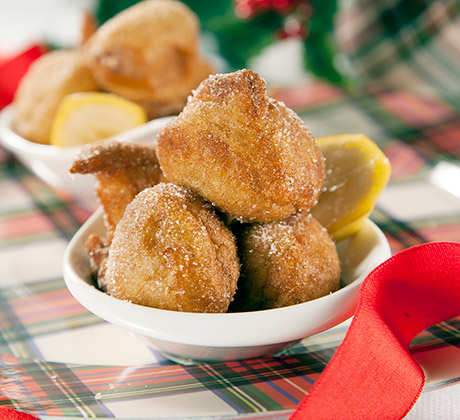
The wonderful and decadent dish Sonhos de Banana originates from the islands of Soa Tomé and Prncipe. By the same name, it is also consumed in Brazil. This is a typical fried banana delight in the beignet style that is straightforward to prepare and is sure to please anyone with a sweet craving.

These tasty fritters are referred to as banana dreams. They are thought to have their roots in the Portuguese-influenced islands of So Tomé and Prncipe. Bananas are mashed before being blended with sugar, flour, eggs, baking powder, and cinnamon to make the fritters.

They are best enjoyed as a substantial dessert or a sweet snack and are finest served dusted with cinnamon sugar.

Sonhos De Banana

Easy Portuguese Recipes
Servings 0

Ingredients
  

  • 4 bananas peeled
  • 2 tablespoons sugar
  • 1.5 cups flour
  • ½ cup milk
  • 1 egg
  • cinnamon & sugar to dust
  • oil for frying

Instructions
 

  • Mash the bananas with a fork and mix with the 2 tablespoons sugar and 1.5 cups flour.
  • Whisk together the milk and egg, then stir in the banana mixture to form a batter. Set aside.
  • Mix together cinnamon and sugar to taste in a separate bowl and set aside.
  • Heat oil in a deep fryer or saucepan to 350 degrees Fahrenheit. (If in a saucepan leave on low heat once it reaches 350 degrees Fahrenheit)
  • Pour the batter 1.5 tablespoons at a time into the hot oil and fry for about 4 and a half minutes, turning halfway through cooking, until the donuts are golden brown.
  • Drain the sonhos on paper towels and serve dusted with the cinnamon and sugar to taste. Enjoy.
Tried this recipe?Let us know how it was!

Makroud el louse (Almond Cookies)

0

The wonderful Algerian cookie known as Makroud El Louse has a delicious almond flavor and is dusted with powdered sugar. It tends to melt in your mouth. They’re also one of my favorite cookies, by the way! They’re also flourless, making them ideal for anyone following a gluten-free diet. These simple to prepare flourless biscuits taste great with tea or coffee. In a tightly sealed container, they can be kept for more than a month.

Makroud el Louse (Almond Cookies)

Food
Servings 0

Ingredients
  

  • 1 1 ⁄4 lbs almonds whole, blanched
  • 1 cup sugar
  • 2 eggs beaten lightly
  • 2 cups water
  • 1 ⁄2 cup sugar
  • 1 tablespoon orange flower water
  • 3 cups confectioners' sugar

Instructions
 

  • Preheat oven to 350°F.
  • Place the almonds and sugar in a food processor and process until the almonds are finely pulverized. Remove to a bowl.
  • Make a well in the center of the almonds and stir in the eggs with a wooden spoon until the dough starts to come together. Then knead the dough with clean hands until smooth.
  • Cut the dough into 4 equal portions and remove to a floured work surface. Roll one portion out into a rope about 3/4 inch in diameter. Press down with your palm to flatten the rope to about 1/2-inch thickness. Cut the rope on a diagonal into 1-inch pieces and remove to an ungreased cookie sheet. Repeat with the remaining dough.
  • Bake cookies for about 12-15 minutes, or until they are lightly browned on top. Remove to racks and cool completely.
  • While the cookies bake, bring the water and 1/2 cup sugar to a rapid boil in a saucepan over high heat. Stir to dissolve sugar and let boil for 10-15 minutes. Remove and cool to room temperature. Stir in the orange flower water.
  • Put powdered sugar in a large bowl. To finish, dip each cookie first in the sugar syrup to wet. Then toss each cookie in the confectioner's sugar to coat well. Place on a rack to dry and repeat with the rest of the cookies.

Notes

For variation, Add 1 tablespoon lemon zest to the almond dough if you like.
If you are unable to find orange flower water to flavor the syrup, try using 1 teaspoon of lemon essence instead.
Tried this recipe?Let us know how it was!

Akwadu

0

Popular in many African nations, particularly in Equatorial Guinea, is the dish akwadu. It is made with sliced bananas that have been drizzled with brown sugar, coconut, orange juice, and lemon juice. This recipe is excellent for trying if you’ve never traveled to Equatorial Guinea in order to get a feel for the place. Without ever leaving your house, you can enjoy the local “culture.”

Using this simple method, banana halves are coated with coconut oil, coconut sugar, spices, and lemon juice before being baked till brown and topped with toasted coconut flakes. This recipe for akwadu is simple, fast, and delicious.

Akwadu

196 Flavors
Prep Time 10 minutes
Cook Time 24 minutes
Servings 4

Ingredients
  

  • 4 bananas or plantains
  • 1 cup shredded coconut
  • ½ cup orange juice
  • ¼ cup sugar
  • 3 tablespoons unsalted butter melted
  • Juice of 2 lemons
  • Cinnamon optional
  • Honey

Instructions
 

Plantain with skin version

  • Preheat oven to 400F/200C (convection mode).
  • Cut the bananas in half lengthwise without removing their skin.
  • Score the flesh of the bananas. Arrange them in a baking dish.
  • Pour the butter. Drizzle the orange and lemon juices.
  • Sprinkle with cinnamon (optional). Sprinkle generously with brown sugar and coconut.
  • Bake for 20 minutes, basting regularly with the banana juice flowing into the baking dish.
  • Remove the bananas from the oven. Put a little honey on each.
  • Return to oven on grill position and brown the top (about 5 minutes but watch closely).
  • Baste with juice again.

Skinless standard bananas version

  • Preheat oven to 400F/200C.
  • Cut the bananas into thick slices. Arrange them in a baking dish.
  • Pour the butter. Drizzle the orange and lemon juices.
  • Sprinkle with cinnamon (optional). Sprinkle generously with brown sugar and coconut.
  • Bake for 10 minutes.
  • Remove the bananas from the oven.
  • Put a little honey on each.
  • Return to oven in grill position and brown the top (about 2 minutes but watch closely).
Tried this recipe?Let us know how it was!

Mescouta (Moroccan Yoghurt Cake)

0

Meskouta is a deliciously moist yogurt cake that is quite simple to make. If you like, you are welcome to substitute lime zest for the lemon. Many Moroccans still measure ingredients with bowls and glasses, particularly when baking desserts.

With your kids, try baking this luscious meskouta (Moroccan yogurt cake). They’ll like using the empty yogurt cup as a measuring device. The cake is typically served plain or with jam on the side to spread, making it a convenient snack or teatime treat.


Meskouta (Moroccan Yogurt Cake)

The Spruce Eats
Servings 0

Ingredients
  

  • 3 large eggs
  • 1 small container unsweetened plain yogurt (approx. 110 g or 1/2 cup)
  • 1 measure vegetable oil
  • 2 measures sugar
  • 3 measures flour
  • 4 teaspoons baking powder
  • 1/2 teaspoon salt
  • 2 teaspoons vanilla or 2 packets vanilla sugar​

Instructions
 

  • Preheat your oven to 350 F (180 C). Grease and flour a Bundt or small tube pan.
  • If desired, separate the eggs. In a large bowl, beat the egg whites with an electric mixer until stiff. Set aside. (This step is optional; you can add whole eggs in the next step if you prefer.)
  • In another large bowl, beat together by hand or with a mixer the yogurt (reserve the empty container to use as your measure), the vegetable oil, sugar and egg yolks (or whole eggs, if you chose not to separate the eggs).
  • Stir in the vanilla, flour, baking powder and salt; beat briskly by hand or with an electric mixer until smooth.
  • If you separated the eggs, gently fold the beaten egg whites into the cake batter, being careful to incorporate all of the whites evenly.
  • Pour the batter into the prepared cake and bake for 40 to 45 minutes, or until the cake tests done.
  • Allow the cake to cool in the pan for five to 10 minutes before inverting onto a plate. The cake may be served warm, but it will improve in flavor and texture as it sits. Allow it to cool completely before storing in an airtight container.
Tried this recipe?Let us know how it was!

Chebakia (Moroccan Sesame Cookies)

0

Chebakia, a Moroccan sesame cookie with a honey coating that is well-known for being associated with Ramadan and special occasions.

The cookie, which is also referred to as griouech or mkharka, is formed by folding dough into the shape of a flower, frying the dough, and then dipping the biscuits in hot honey that has been spiced with orange blossom water.

Many Moroccans break their fast with a bowl of harira soup and chebakia during Ramadan, when the cookies are especially well-liked. Additionally, they are served at special events like weddings and baby showers, and you can buy them all year long at bakeries and market stalls.

How To Make Chebakia

They are traditional Moroccan sweets that are formed like elongated roses. Sesame seeds, sugar, and the cookies are fried until they are golden brown. These delectable biscuits are typically eaten during Ramadan and other festive events in the Middle East. You may, however, prepare them at any time of the year. Serve with Turkish coffee or Chai.

Chebakia (Moroccan Sesame Cookies)

Servings 0

Ingredients
  

  • For the Chebakia Dough
  • 1 cup sesame seeds toasted
  • 1 pinch mastic gum grains
  • 1/4 teaspoon sugar
  • 4 cups all-purpose flour plus additional if necessary
  • 1/2 teaspoon baking powder
  • 1/2 teaspoon salt
  • 1 1/2 teaspoons ground anise
  • 1 1/2 teaspoons ground cinnamon
  • 1/2 teaspoon saffron threads crumbled
  • 1/8 teaspoon Moroccan yellow colorant or 1/2 teaspoon turmeric
  • 1 extra-large egg
  • 1/4 cup 4 tablespoons unsalted butter, melted
  • 1/4 cup olive oil
  • 1/4 cup vinegar
  • 1/4 cup orange flower water
  • 1 teaspoon active dry yeast dissolved in 1/4 cup warm water
  • For Frying
  • 6 1/2 cups vegetable oil for frying
  • 5 cups 4 pounds honey
  • 2 tablespoons orange flower water
  • 1/2 cup sesame seeds toasted, for decorating

Instructions
 

  • Gather the dough ingredients.
  • Grind the toasted sesame in a food processor until it turns powdery. Keep grinding until the powder becomes moist enough to press or pack.
  • Mix the grains with the sugar and crush it into a powder.
  • Mix the grain mixture, ground sesame, flour, and other dry ingredients in a large bowl.
  • Add the remaining ingredients and mix with your hands to form a dough. Add more flour if necessary to achieve a dough that is rather stiff but pliable.
  • Knead the dough by hand for seven to 8 minutes or in a mixer with dough hook for 4 to 5 minutes.
  • Divide the dough into four portions, shape each into a smooth mound, and place the dough in a plastic bag to rest for 10 to 15 minutes.
  • Take one of the portions of dough, and roll it out to the thickness of a thin piece of cardboard. Lightly flour your work surface if necessary.
  • Use a pastry cutter to cut the dough into rectangles approximately the size of your palm.
  • Make four evenly spaced cuts lengthwise in each rectangle. These cuts should be almost the length of the rectangle, but should not cut through to the edges of the dough. The resulting rectangle will have five strips of attached dough.
  • Take a rectangle, and thread the middle finger of your right hand through alternating strips of dough. This enables the rectangle to drape over your finger.
  • With your left hand, pinch together the outer corners of dough which hang over the tip of your finger. This will form the center of the flower shape.
  • While holding the pinched corners with your left hand, allow the strips of dough to slide down off your right finger while gently turning them inside-out around the pinched portion. Gently pinch the opposite corners closed once the dough is turned inside out. If done correctly, you'll have formed the dough into an elongated flower shape.
  • Place the folded piece of dough on a baking sheet or tray. Repeat the process with the remaining rectangles and mounds of dough.
  • Gather together the scraps of dough as you work, mold them together into a mound, and return them to the bag to rest before you try rolling them out again.
  • Use up all of your dough in this manner. Cover the trays of folded dough with a towel until ready to fry.

Frying the Chebakia

  • Gather remaining ingredients.
  • Heat one inch of oil in a large, deep frying pan over medium heat.
  • At the same time, heat the honey almost to boiling in a large pot.
  • When the honey is frothy but not bubbling, add the orange flower water to the honey and turn off the heat.
  • When the oil is hot, cook the chebakia in batches. Adjust the heat as necessary to slowly fry each batch of chebakia to a medium brown color. This should take about 10 minutes if the oil is the correct temperature. If the oil is too hot, the chebakia will color quickly but the insides will not be cooked crispy.
  • Soaking the Chebakia in Honey
  • When the chebakia are cooked to a medium golden brown, use a slotted spoon or strainer to transfer them from the oil directly to the hot honey. Gently push down on the chebakia to submerge them in the honey, and allow them to soak for 5 to 7 minutes. They'll turn a rich, glossy amber color as they absorb the honey. In the meantime, you can begin frying another batch of cookies.
  • When the chebakia have finished soaking, remove them from the honey to a strainer or colander, and allow them to drain for only a few minutes.
  • Gently transfer them while hot to a large platter or tray, and sprinkle the centers with sesame. As you finish soaking other batches of chebakia in the honey, simply drain and add them to the platter in a mound, garnishing each batch with sesame.

Storing and Serving the Chebakia

  • Allow the chebakia to cool for several hours before putting them in an airtight container for storage. They'll keep at room temperature for a month or longer, and will freeze well for four or five months.
  • Serve chebakia with harira, at iftar for Ramadan, or with tea or coffee.

Notes

Toasting Sesame Seeds:
Spread sesame seeds on a baking pan and toast in a 400 F (200 C) oven for 10 to 15 minutes, or until the sesame seeds are crunchy and nutty-flavored. Allow them to cool thoroughly, and then store in an airtight container until ready to use.
The longer you soak the chebakia, the more honey they will absorb, and the sweeter and less crispy they become. How long to soak them is a matter of personal preference. However, too short of a soaking will result in pale-colored chebakia that eventually lose their glossy coating.
If the honey cools and thickens before you've finished making all the cookies, simply reheat it briefly over medium-low heat. This can be done even if some chebakia are in the pot soaking.
Tried this recipe?Let us know how it was!

West African Lime Cake

0

With sufficient adult supervision, even children can create this delightful West African cake, which has a delicate lime flavor.


West African Lime Cake

Servings 0

Ingredients
  

  • 1 cup white sugar
  • 2 ½ tablespoons butter softened
  • 2 eggs beaten
  • 1 lime juiced
  • 1 ½ cups all-purpose flour
  • 2 ¼ teaspoons baking powder
  • 1 teaspoon chopped peanuts or to taste (Optional)

Instructions
 

  • Preheat the oven to 300 degrees F (150 degrees C). Grease and flour an 8x8-inch baking dish.
  • Beat sugar and butter together until light and fluffy, about 3 minutes; beat in eggs and lime juice. Stir flour and baking powder into butter mixture until combined. Pour batter into the prepared baking dish.
  • Bake in the preheated oven until brown and a toothpick inserted in the center comes out clean, about 25 minutes. Garnish with chopped peanuts.
Tried this recipe?Let us know how it was!

Ka’ak Ring Bread | Kaak

You can not miss this Libyan specialty because it is so tasty. Kaak is a delicate bread that is famous in the Arabic world. It is also known as ‘Kahqa’ and is a must-have dish when traveling to Libya.

What is Kaak?

Kaak is a type of bread that is commonly baked in places such as Egypt, Libya, Iraq, Iran, Jordan, Lebanon, Palestine, and Syria.

The bread is made into a large ring shape that resembles a large donut or bagel but with a bigger opening.

Since Roman times, Ka’ak has been an indispensable dish for the local citizens. At this time, the bread often has an incredibly crispy cover and soft interior.

In modern days, you will also find Ka’ak, which looks like a hardened biscuit.

The bread often has a ring shape and is usually sold by street vendors every day.

Libyans enjoy Ka’ak for breakfast as companions for other dishes like hummus and falafel. You can have it in both savory and sweet versions.

Ka’ak Recipe

This recipe is very easy to make. To start, mix bread flour, salt, yeast, and powdered milk.

To this mixture add the olive oil and water, and mix using your hand to bring the dough together. You can also use a stand mixer utilizing the dough hook to mix and knead.

Knead for 10 minutes and if you notice the dough is too wet, add some flour and if too dry add a dash of water.

You want a dough that is just a tad sticky, and not too dry. After mixing, cover the dough and put, it in a warm place, and allow it to double in size.

Pour to a well-floured surface. Cut the dough into four even pieces.

With flour on the hole, hands make a hole in the middle of each piece of dough and shape each into a circle.

Slowly stretch and shape the kaak, going slowly so as not to tear the dough. Place them on a parchment paper-lined baking sheet.

Cover with a damp kitchen towel and let rise. Preheat your oven to 450°F (230°C).

For the egg wash, separate an egg, place the white into a small bowl, add the water, and whisk.

Using a pastry brush gently cover each piece of dough with the wash, once done rising. Generously sprinkle the sesame seeds onto the rings of dough.

Finally, bake for 30 minutes or until the kaak is a golden brown color. You are now ready to enjoy a most wonderful experience! Check the recipe card below for the full recipe!

Ka’ak Bread

Sandhya Ramakrishnan
Ka'ak Bread is a very popular flatbread found in the streets of Libyan. The bread is often shaped in a tear drop shape with a hole in the center making it look like a purse.
Prep Time 15 minutes
Cook Time 12 minutes
Course bread
Cuisine libyan
Servings 4

Ingredients
  

  • All purpose flour - 1 ¾ cup
  • Whole wheat flour - ½ cup
  • Active dry yeast - ½ TBSP
  • Sugar - 2 TBSP
  • Salt - 1 tsp
  • Warm milk - ¾ cup
  • Warm water - as needed to make a soft dough
  • Olive oil - 1 TBSP
  • Milk / Egg Wash - for brushing over the dough
  • Sesame seeds - about 2 TBSP

Instructions
 

  • Making the Dough -
  • Measure the milk and warm it just enough to proof the yeast. Add the sugar and the yeast and mix well. Cover the bowl and let it rise for 10 minutes. At the end of 10 minutes, the mixture should be frothy. If not, the yeast is not active and you will need to start with a new batch of yeast.
  • I made my dough in the stand mixer. Add the flours, salt, oil and the yeast mixture to the bowl of the mixer. Using a dough hook, start mixing the flour until they come together. you might need a little more warm water to make a soft dough.
  • The dough should be quite soft, but not sticky. Knead the dough for about 7 to 8 minutes and then place it in a greased bowl to rise. Cover the bowl and let the dough rise until it doubles in volume. I love using the proof setting in my oven. The dough every time proofs perfectly in the setting and does not take more than an hour.
  • Bring the dough out after the first rise and knead it gently for a minute. Form it into a ball and place it in a greased bowl for the second rise. It took me less than an hour for the second rise.
  • Shaping an Baking -
  • After the second rise, place the dough on a floured surface. Divide it into 4 equal sized ball.
  • Prepare 2 baking sheet lined with parchment paper.
  • Working with one piece of dough, flatten it and roll it into a tear drop shape. Keep the thickness of the dough to about ½ inch. My dough was rolled to about 6 inches long.
  • Using a cookie cutter, cut out a ring from the narrow part of the rolled dough. Slightly pull the dough to elongate the shape and place it on the prepared baking sheet.
  • Repeat the same with the rest of the dough, keeping 2 pieces per tray.
  • Cover the trays and let the shaped bread proof for about 30 minutes or until slightly puffy.
  • In the meantime, preheat the oven to 425 F. I used steam to bake the bread. To create steam, I place a aluminum tray half filled with water in the bottom most shelf of the oven when it is preheating. The water also heats up and there is enough steam inside the oven when we are ready to place the bread inside.
  • When the bread is done rising, brush it with egg wash or I just use milk to brush my breads. Sprinkle with sesame seeds.
  • When the oven has preheated, bake one tray at a time for about 10 to 12 minutes, rotating once in between for even baking.
  • The bread should appear golden brown when done.
Tried this recipe?Let us know how it was!

QUICK RECIPES