

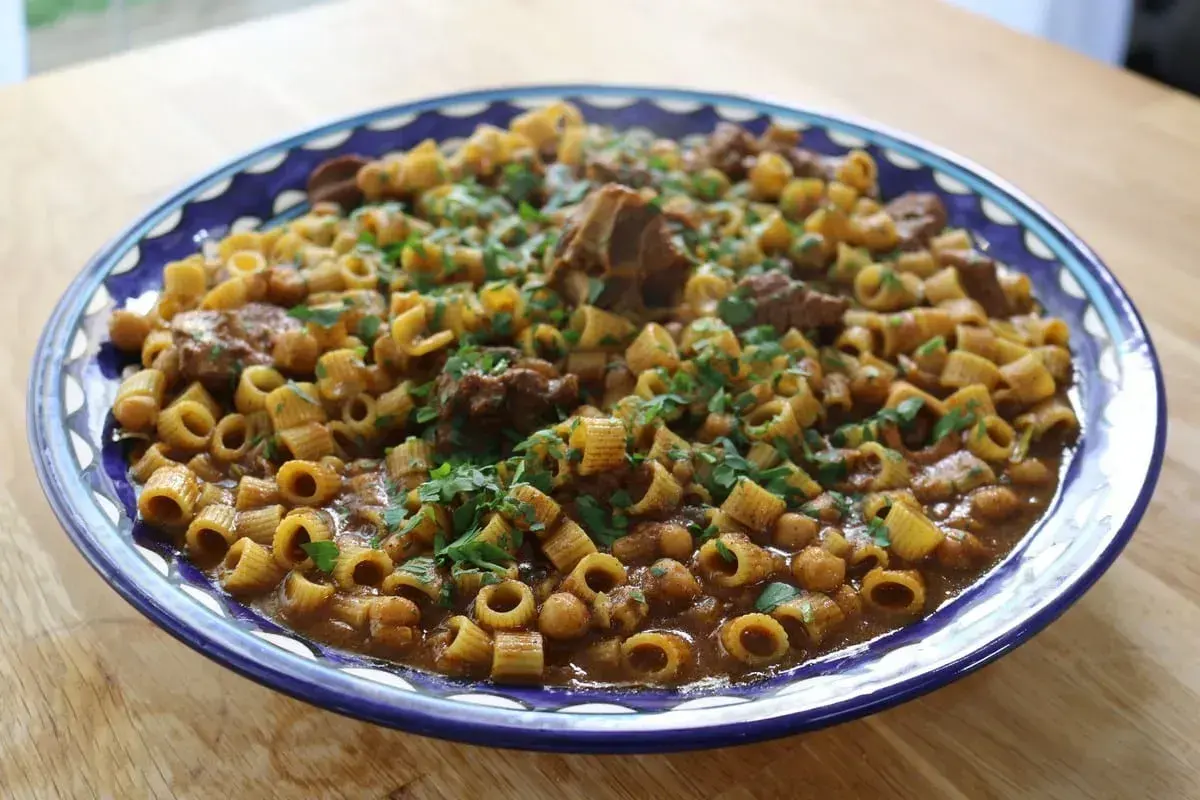
Mbakbaka (Libyan Pasta Stew)
Overview
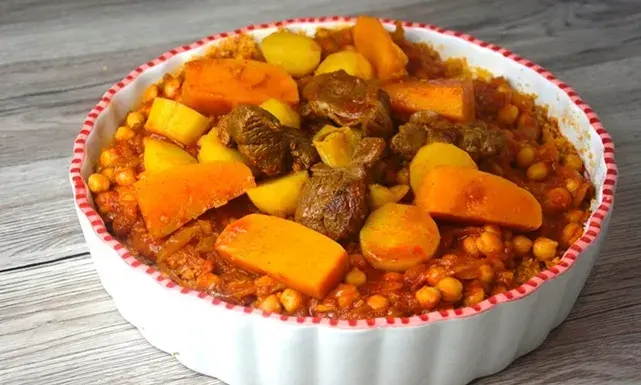
Mbakbaka, also written imbakbaka, is Libya's one pot pasta stew and it is a direct product of Italian colonisation. Italy occupied Libya from 1911 to 1943, pasta arrived with the occupation, and Libyan cooks absorbed it into a North African spice framework rather than adopting Italian technique alongside it. The result is a pasta dish that no Italian would recognise. Turmeric, ginger, curry powder, chilli and mixed spices go into a tomato base with lamb or beef, and the pasta cooks directly in that liquid rather than being cooked separately and sauced afterwards. Potatoes go in too. Cooking the pasta in the sauce is the defining decision: the starch thickens the liquid and the pasta absorbs the spice, which is what makes it a stew rather than pasta with sauce on it. Macaroni elbows are the traditional shape, and ditalini, gemelli and other small pastas all suit it for the same reason: the tubes and twists hold the sauce. Harissa is a common addition for heat. The comparison people reach for is minestrone, which captures the one pot logic and misses the spicing entirely. It is winter food and family food, and it is eaten across Libya and among the Libyan diaspora.
AFN Heritage Note
Pasta reached Libya during the Italian occupation of 1911 to 1943 and was absorbed into North African cooking, producing mbakbaka, in which the pasta is cooked directly in a spiced tomato and meat stew rather than boiled separately.
Ingredients
Directions
- 1
Over medium heat, warm the oil and butter together, then add the meat, salt and black pepper, and stir for 5 minutes.
- 2
Add the onions and stir with the meat until they soften, then add the garlic and stir.
- 3
Add the tomato juice, ginger, curry powder, mixed spices and tomato sauce, and stir well.
- 4
Add the water and cook until the meat is done.
- 5
Add the potatoes, pasta, and more salt and black pepper, and stir well.
- 6
Cover the pot and leave over low heat until the pasta and potatoes are tender.
- 7
Transfer to a serving dish and garnish with parsley.
Africook’s Notes
- Cook the pasta in the stew rather than separately. That is the whole point of the dish: the pasta absorbs the spiced liquid and its starch thickens the sauce.
- Watch the liquid once the pasta goes in. Pasta absorbs a great deal, and mbakbaka can go from stew to solid quickly, so keep hot water to hand.
- Salt the liquid properly before the pasta goes in. It is the only chance the pasta has to take up salt, since it never touches separately salted water.
- Small shapes work best: macaroni elbows are traditional, and ditalini and gemelli suit it for the same reason. Long pasta does not.
- Harissa is a common addition for heat and suits the spice profile better than plain chilli.
Questions cooks ask
How did pasta end up in Libyan cooking?
Through the Italian occupation of Libya between 1911 and 1943. Pasta arrived with the occupation and Libyan cooks absorbed it into their own spice framework rather than adopting Italian technique. Mbakbaka is the clearest result: an Italian ingredient cooked entirely on North African terms, with turmeric, ginger, curry powder and chilli.
What pasta should I use for mbakbaka?
Small shapes that hold sauce. Macaroni elbows are traditional in Libya and Egypt. Ditalini, the small tubes used in minestrone, works well, as does gemelli or any short twisted shape. Penne is used here and is fine. Avoid long pasta, which does not suit a one pot stew.
Is mbakbaka Libyan or Egyptian?
It is Libyan, and that is where it is most strongly associated. The source describes it as common in both Egyptian and Libyan cooking, which overstates the Egyptian connection. The dish belongs to Libya and to the Libyan diaspora, and the Italian colonial history that produced it is specifically Libyan.
Why is my mbakbaka dry?
The pasta absorbed more liquid than expected, which happens readily in a one pot dish. Keep hot water beside the pot and add it in small amounts as the pasta cooks. It should finish as a loose stew rather than a dry pasta bake, so err towards more liquid than you think you need.
Reviews
3 reviews
You Might Also Like
Browse all Libyan recipes →
Aslooz (Libyan Couscous-Based Dish)
Haraimi (Libyan Spicy Fish Stew)
My Libyan friend back in university made this with fresh lamb and penne. The ginger powder and curry blend with the tomato juice gives it such a nice aroma paa, very different from our red stew. But herh, 18 minutes cook time is way too short for beef or lamb to get soft unless you cut the meat tiny tiny oo.
I made this with beef cubes yesterday night. Was a bit worried about throwing the dry penne straight into the tomato broth without parboiling first, thought it would turn sticky sha. But the pasta absorbed all the red pepper and spice flavor proper. E sweet bad!
couldnt find fresh lamb shoulder at Trader Joes so I bought chuck roast from Ralphs instead and cubed it small. The starch from the potatoes cooked right in the pot thickened the tomato sauce nicely. Butter and olive oil together at the start smelled lekker.