Amasi is Southern African fermented milk: cow's milk left to sour and thicken until it's tangy, spoonable and a bit like plain yoghurt, only sharper. In English, amasi is simply called fermented milk or sour milk. Afrikaans speakers call it maas, and in South Africa it's most often poured over pap.
If you didn't grow up with it, the first spoonful can be a surprise. It's thick, cool and properly sour, and spooned cold over warm, plain maize porridge, the sourness is exactly the point. It was traditionally made in a calabash, it's now sold in South African supermarkets, and you can make it in a jar at home, too.
What is amasi (maas) in English?
Amasi in English is fermented milk or sour milk. Wikipedia describes it as a thick curdled sour fermented milk product that's sometimes compared to cottage cheese or plain yoghurt but has a much stronger flavour. A 2022 study from the University of Johannesburg defines it as traditional fermented cow's milk made in Zimbabwe, South Africa, Lesotho and other Southern African countries.
It has a name in most of the region's languages.
| Language | Name |
|---|---|
| isiZulu, isiXhosa, Ndebele | amasi |
| siSwati | emasi |
| Afrikaans | maas |
| Sesotho | mafi |
| English | fermented milk, sour milk |
The Sesotho name mafi is confirmed by a study of traditional fermented foods of Lesotho, which describes it as spontaneously fermented milk with a thick consistency. The 2022 study also gives the names maswi and sethemi, without saying which languages they come from.
How amasi is made the traditional way
Traditional amasi is raw milk left to ferment on its own. A 2021 review notes that it's usually made at a household level from unpasteurised milk. The milk goes into a calabash, called iselwa in isiXhosa and igula in isiZulu, or into a hide sack, and the calabash is often smoked first. It's left for 1 to 5 days until it turns sharply sour.
As it sours, a watery whey called umlaza separates out. That's drained off, and the thick curd left behind is amasi. The tools are changing. In Lesotho, researchers found that across the country's fermented foods, traditional practices such as use of earthenware pots, are being replaced, and plastic utensils are coming in.
How shop-bought amasi is made
The amasi in a South African supermarket fridge is made with pasteurised milk and a chosen starter culture, usually strains of Lactococcus lactis. The 2022 study says the fermentation usually takes 12 to 18 h between 20 and 30 °C before the product is packed. Using a set culture means every carton tastes the same, which is hard to promise with a calabash.
The same paper explains why amasi keeps longer than fresh milk. The bacteria that sour it improve the shelf life of milk by increasing the acidity level. That acid is also what gives amasi its tang and its thickness.
How to make amasi at home
Shop milk is pasteurised, so the bacteria that would sour raw milk have gone, and you need a starter: two tablespoons of shop-bought maas or your last batch will do the job. Keep two tablespoons back from each batch and it becomes the starter for the next one. The jar, the timing and the set test are all in our amasi recipe.
How to eat amasi
Amasi is eaten with a spoon, drunk from a cup or poured over maize porridge. Wikipedia notes that it's mostly poured over mealie meal porridge called pap, and that people were eating it long before colonial rule. It also carries cultural weight: Wikipedia records a Zulu belief that amasi makes a man strong, healthy and desirable.
Amasi works in cooking too. Our recipes use it in place of milk in a fried dough and as a creamy sauce for pasta, and it can stand in for buttermilk in baking.
Pap and amasi
Pap and amasi is the classic pairing, and the contrast is the point: warm, plain maize against cold, sour milk. Make the thick pap from our pap and sous recipe and spoon the amasi over it instead of the sauce.
Vetkoek (amagwinya) and beef mince curry
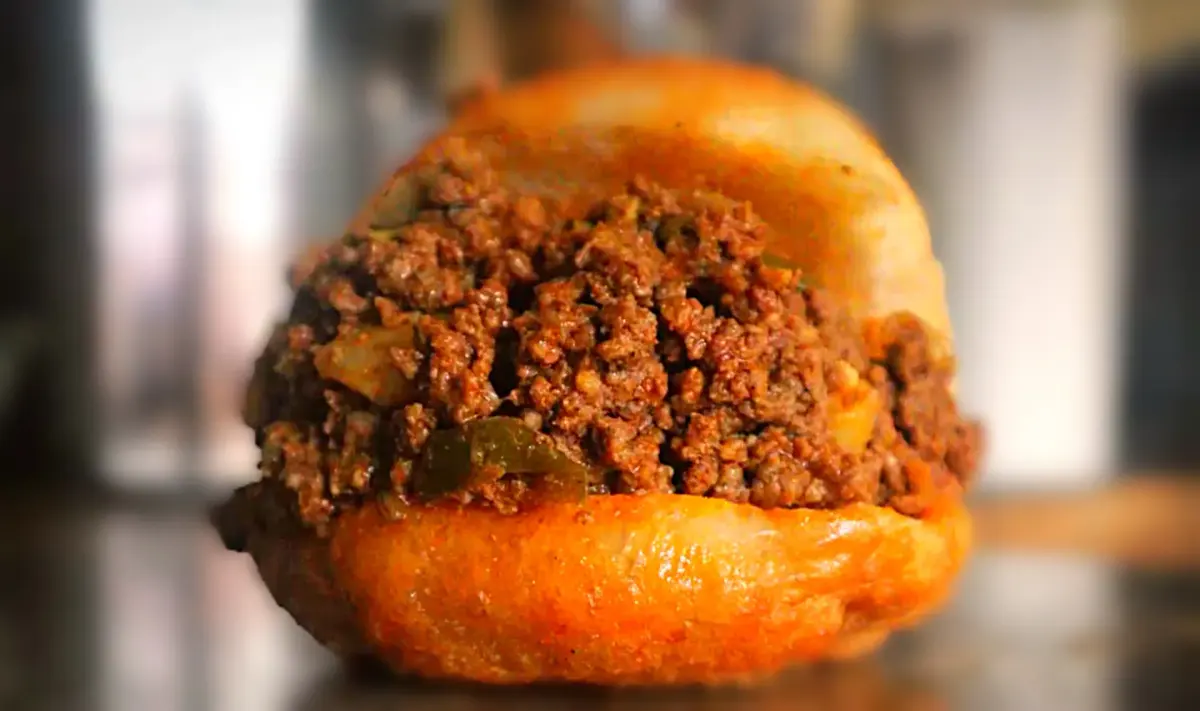
The dough for these fried breads takes 100 g of milk or amasi, and the amasi gives it a gentle tang. Make them with our vetkoek and beef mince curry recipe.
For something less traditional, our Nigerian amasi spaghetti stirs a cup of amasi into a spiced tomato and pepper sauce.
Is amasi the same as yoghurt, buttermilk or kefir?
No, though they're cousins. Amasi is soured by lactic acid bacteria into a thick, tangy curd. Cultured buttermilk stays pourable. Kefir is made with kefir grains, which hold yeasts as well as bacteria, so it's thinner and a little fizzy. Of the three, amasi is the thickest and the most sour. Compared with plain yoghurt, it has a sharper, stronger flavour.
Amasi nutrition
Amasi starts as cow's milk, so it brings the protein, fat and calcium of whatever milk it was made from. Fermentation changes the mix a little. In the 2022 study, fermentation increased the contents of most of the essential and non-essential amino acids, and potassium was the most abundant mineral. Those samples were freeze-dried for testing, so the figures don't translate into a per-cup number for amasi as you'd eat it.
How to store amasi
Keep set amasi covered in the fridge. Our home method chills it once it's set, and shop-bought amasi should be kept cold and used by the date on the pack. If it smells off, changes colour or grows mould, throw it away.
Amasi questions
What is amasi in English?
Amasi is fermented milk, also called sour milk. In Afrikaans it's maas, and in Sesotho it's mafi.
Is maas the same as buttermilk?
No. Maas is the Afrikaans name for amasi, and it's soured into a thick, tangy curd, while cultured buttermilk stays pourable. You can use amasi in place of buttermilk in baking, but expect it to be thicker and more sour.
Is amasi the same as yoghurt?
No. Both are soured milk, but amasi has a sharper, stronger taste than plain yoghurt, and it's often compared to cottage cheese too.
Can I make amasi without a starter culture?
Not reliably with shop milk. Pasteurising kills the bacteria that would sour it, so use two tablespoons of shop-bought maas or a previous batch as your starter.
How do you eat amasi with pap?
Cook plain maize meal porridge, let it cool slightly, and pour cold amasi over the top. Some people eat it with crumbly pap, which isiXhosa speakers call umphokoqo.