
Tagine (North African Slow-Cooked Stew)
London, United Kingdom · Voir toutes les recettes
Aperçu
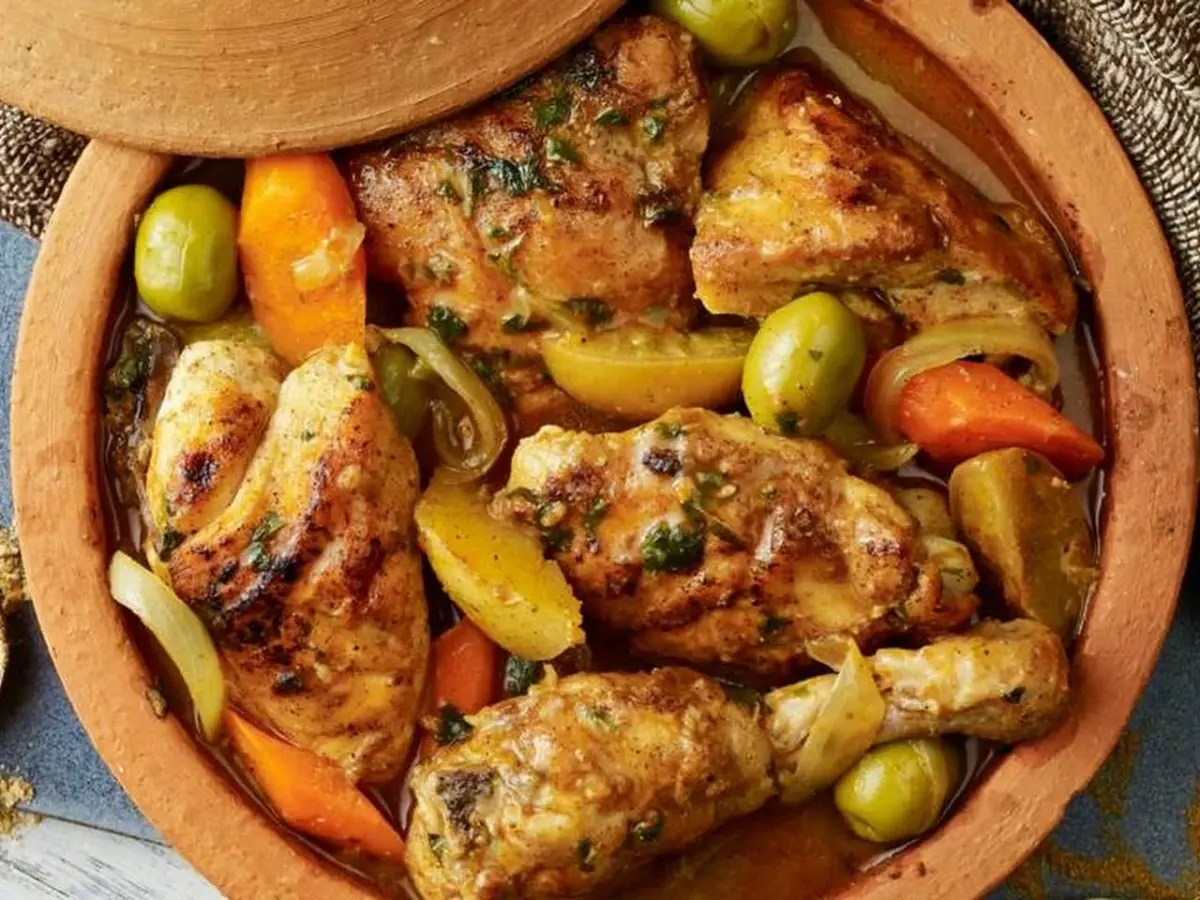
A tagine is both a conical earthenware pot and the slow-cooked stew made in it. It is North African, Moroccan and Algerian above all, and no single country is claimed. **This page had no recipe card at all in the source: no ingredients and no method.** Both have been reconstructed from what its article describes, and that is flagged. The pot is the reason the dish works. The wide shallow base sits over low heat while the tall cone above it collects rising steam, condenses it on the cool inner surface and returns it to the food. That means a tagine cooks in very little liquid over a long time without drying out, and the flavour concentrates rather than diluting. A heavy casserole with a tight lid approximates it. The variations are enormous, and the source lists them well: lamb, beef, chicken or fish; dried fruit and nuts in some, fresh herbs, olives and preserved lemon in others. Ginger, cumin, turmeric, cinnamon and saffron are the common spices. Berber tagine is distinguished by the vegetables arranged around the meat rather than mixed through. One important note the source gets right: what Tunisians call a tajine is not this at all. Tunisian tajine is a baked egg dish closer to an Italian frittata, and it has its own page here.
Note de Patrimoine AFN
A tagine is a North African stew named after the conical earthenware pot in which it is cooked, and is also called maraq or marqa. The pot's shape returns condensed steam to the food, allowing long cooking with very little liquid. The Tunisian dish called tajine is unrelated, being a baked egg dish.
Ingrédients
Les mentions alimentaires sont fournies par les contributeurs à titre indicatif. Elles ne sont pas vérifiées par AFN et dépendent des produits que vous achetez. En cas d’allergie grave, vérifiez vous-même chaque ingrédient. Cuisine, allergies et votre propre jugement
Préparation
- 1
Combine the meat with the garlic, ginger, cumin, turmeric, cinnamon, saffron, salt and pepper, and leave it to sit while you prepare everything else.
- 2
Warm the olive oil in the base of a tagine or a heavy casserole over medium heat and cook the onions until softened.
- 3
Put in the seasoned meat and turn it to coat in the onions and spices.
- 4
Arrange the carrots and potatoes around the meat rather than mixing them through, this is the Berber arrangement and it also stops the vegetables breaking up.
- 5
Pour in the water or stock. You want far less than you would use for an ordinary stew: the pot returns its own steam, so the liquid does not cook away.
- 6
Cover with the tagine lid, or a tight-fitting casserole lid, and cook over low heat for around 2 hours, until the meat is tender.
- 7
Put in the dried fruit, or the preserved lemon and olives, for the final 20 minutes.
- 8
Scatter with fresh coriander and parsley and serve from the pot with bread or couscous.
Notes de l’Africook
 Notes personnelles de Nympha Nzeribe
- Use much less liquid than you would in an ordinary stew. The pot recycles its own steam, and drowning the food defeats the design.
- Keep the heat low throughout. A tagine is a slow pot and high heat cracks earthenware as well as toughening meat.
- Arrange the vegetables around the meat rather than mixing them in. It is traditional and it keeps them intact.
- Add dried fruit, preserved lemon or olives near the end. Long cooking dissolves fruit and dulls preserved lemon.
- Season an earthenware tagine before first use, soaked in water overnight, then oiled and warmed slowly, or it will crack.
- A heavy casserole with a tight lid works if you have no tagine. The result is close.
Questions fréquentes
Why doesn't this page have a proper recipe?
Because the original page had neither an ingredient list nor a method, only an article about what a tagine is. Both have been reconstructed here from what that article describes: the spices it names, the vegetables and fruits it mentions, and the slow-cooking technique. The reconstruction is flagged rather than presented as if it came from the source, and the quantities are working proportions.
What does the pot actually do?
It recycles moisture. The wide shallow base sits over low heat while the tall cone above collects steam rising from the food, condenses it against the cooler inner surface and returns it as liquid. That means the food cooks for hours in very little liquid without drying out, and the flavour concentrates rather than being diluted. It is a genuinely clever piece of design, and the reason tagine cooking works the way it does.
Is Tunisian tajine the same thing?
No, and the source is right to flag it. What Tunisians call a tajine is a baked dish of eggs, meat and cheese set firm and cut into squares, much closer to an Italian frittata or a Middle Eastern eggah than to a Moroccan stew. The two dishes share a name and nothing else. Tajine el bey, the Tunisian layered version, has its own page on this site.
What goes into a tagine?
Almost anything, within a recognisable frame. Lamb, beef, chicken and fish are all standard. Some versions carry dried fruit and nuts, apricots, prunes, almonds, and others go savoury with preserved lemon, olives and fresh herbs. Ginger, cumin, turmeric, cinnamon and saffron are the usual spices, with paprika and chilli in vegetable tagines. Berber tagine is distinguished by the vegetables being arranged decoratively around the meat.
Avis
Soyez le premier à noter cette recette
Vous l’avez cuisinée ? Votre note aide la personne suivante à se décider.
Aucun avis sur cette recette pour le moment. Si vous l’avez cuisinée, le vôtre serait le premier.
Vous Aimerez Aussi
Tripe (Mogodu)
Isombe
Mozambique Matapa Recipe