

Tapalapa
Aperçu
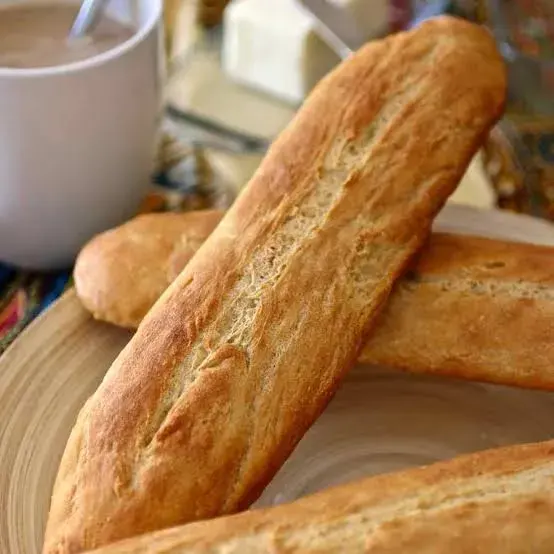
Tapalapa is a West African bread: a dense, chewy loaf with a firm crust, baked long and scored across the top, and sold from roadside ovens and small bakeries rather than from supermarkets. It is bought fresh in the morning, torn rather than sliced, and eaten with whatever the household has. Its role is that of daily bread in the most literal sense. In the countries where it is baked, the tapalapa loaf is a breakfast item, split and filled with beans, egg, fried fish or a spread, and it is also what appears alongside a stew at other times of day. Baked in a wood fired oven, which is how most of it is still produced, it takes on a crust and a faint smokiness that a domestic oven does not reproduce. The bread belongs to a wider West African tradition of European style leavened loaves that were absorbed into local baking and then developed independently, arriving somewhere quite distinct from any European original. Tapalapa is denser and chewier than a baguette, keeps considerably better, and is built to hold a filling without collapsing. The countries of the region that bake it treat it as their own, and the question of exactly where it began is not settled.
Note de Patrimoine AFN
Tapalapa belongs to the West African tradition of leavened wheat loaves developed from European baking introduced through colonial contact and adapted to local wood fired ovens and eating patterns. Its specific country of origin is not settled in the available record.
Ingrédients
Les mentions alimentaires sont fournies par les contributeurs à titre indicatif. Elles ne sont pas vérifiées par AFN et dépendent des produits que vous achetez. En cas d’allergie grave, vérifiez vous-même chaque ingrédient. Cuisine, allergies et votre propre jugement
Préparation
- 1
Preheat the oven to 220°C.
- 2
Mix the yeast, sugar and a couple of tablespoons of warm water in a small bowl. Leave for 5 to 10 minutes until frothy, which shows the yeast is active.
- 3
Combine the flour and salt in a large mixing bowl and make a well in the centre.
- 4
Pour the yeast mixture and the oil into the well.
- 5
Work the wet ingredients into the dry, adding the lukewarm water a little at a time.
- 6
Turn the mixture onto a floured surface and knead for about 10 minutes until smooth and elastic, or use a stand mixer with a dough hook.
- 7
Form the dough into a ball, return it to the bowl and cover with a clean kitchen towel or plastic wrap.
- 8
Leave to rise in a warm place for 1 to 2 hours, until doubled in size.
- 9
Knock the risen dough down and shape it into loaves or rolls.
- 10
Place on a baking sheet lined with parchment paper.
- 11
Score the tops with a sharp knife or cut patterns with scissors.
- 12
Bake for 20 to 25 minutes, until golden brown and hollow sounding when tapped underneath.
- 13
Cool on a wire rack before slicing.
Notes de l’Africook
 Notes personnelles de Laila Yetunde
- Melted butter can replace the vegetable oil for a richer crumb, which makes the loaf no longer vegan.
- Score the loaf deeply and confidently. The cuts across the top are the visual signature of tapalapa and they also control where the loaf expands, so a timid score gives a misshapen bread.
- Put a tray of water in the bottom of the oven for the first ten minutes. Steam early in the bake is what gives the firm, crackling crust that this loaf is judged on.
- If the yeast has not gone frothy in ten minutes it is dead. Start again rather than proceeding, because a tapalapa that has not risen is inedible rather than merely disappointing.
- It keeps considerably better than a soft loaf, which is part of its design. Two to three days at room temperature in paper rather than plastic, and it toasts well beyond that.
- Split and filled with beans, egg, fried fish or a spread is the standard breakfast treatment.
Questions fréquentes
What does tapalapa bread taste like?
Plain, in the way daily bread is plain, with a dense chewy crumb and a firm crust. It is much less airy than a baguette and much less soft than a sandwich loaf, and it carries a faint smokiness when baked in a wood fired oven. That neutrality is the point, because it is made to carry a filling rather than to be eaten alone.
How is tapalapa eaten?
Torn rather than sliced, most often at breakfast, split and filled with beans, egg, fried fish, mayonnaise or a spread. It is bought fresh in the morning from roadside ovens and small bakeries. It also appears alongside stews at other times of day, where its job is to take up sauce.
How long does tapalapa keep?
Two to three days at room temperature, which is longer than most soft breads, and it is designed that way. Store it in paper rather than plastic so the crust stays firm. Beyond that it toasts well, and stale tapalapa is used to take up sauce in the same way stale bread is used everywhere.
Can I make tapalapa without a wood fired oven?
Yes, and this recipe is written for a domestic oven. What you will not fully reproduce is the smokiness and the intensity of crust that a wood fired oven gives. Baking at a high temperature with steam in the oven for the first ten minutes gets you closest. A baking stone or a heavy preheated tray also helps.
Avis
4 avis
Vous Aimerez Aussi
Mozambique Matapa Recipe
Papaya Smoothie for Weight Loss
Tripe (Mogodu)
Quick question while my yeast mixture is frothing in the bowl... after I pour the oil and water into the well and work the dough, do I need to let it rise at all? The instructions go straight from mixing to baking at 220, but 60 min prep time makes me think I should let it prove somewhere warm?
Ja, Brian, definitely let it rise! Any yeast dough needs a good prove. That 60-minute prep time includes letting it rest in a warm spot. Just like when we make koesisters for Sunday breakfast here in Bo-Kaap, if you don't give the yeast time to work, the bread bakes flat and heavy. Give it about 45 minutes to double in size.
Made this last night to go with a peanut stew. I wasn't sure what texture to expect, but adding the 300ml water gradually gave me a really elastic dough. Baked it at 220C and the crust got so nice and crunchy while the inside stayed thick and dense. My husband ate half the loaf before dinner was even served.
The crust came out thick and firm, reminded me of the tapalapa I ate in Gambia years ago. But 1 teaspoon of salt for whole 500g flour was a bit plain for me sha, I had to slather salted butter on it while hot. Still e sweet o.