

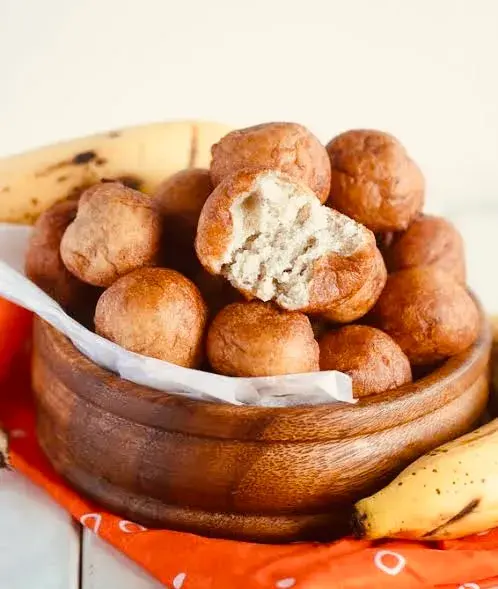
Rwandan Banana Beignets
Aperçu
Bananas are central to Rwandan agriculture and to Rwandan eating in a way that has no equivalent in most of the world. The country grows dozens of varieties, distinguished by whether they are for cooking, for eating fresh or for brewing, and the plant occupies hillside smallholdings across the country. A snack built on ripe banana is not a novelty in Rwanda; it is the obvious use of what is there. These beignets are small fried cakes of mashed ripe banana in a light batter, crisp at the edge and soft through the middle, sometimes spiced with cinnamon or nutmeg. They are sold from street stalls and market stands, fried in batches through the day, and eaten hot and standing up. At home they appear at gatherings and family celebrations. The variety of banana matters to the result. Rwandan cooks use small, sweet local bananas rather than the large export Cavendish, and the difference is not cosmetic: the smaller fruit is sweeter and denser, which means the batter needs less sugar and the finished beignet is less wet. Where those bananas are not available the recipe still works, but it works differently, and that is worth knowing before judging the result.
Note de Patrimoine AFN
Banana cultivation is documented as central to Rwandan smallholder agriculture, with distinct varieties maintained for cooking, for fresh eating and for brewing. The earliest documented date for the fried banana cake preparation is uncertain.
Ingrédients
Les mentions alimentaires sont fournies par les contributeurs à titre indicatif. Elles ne sont pas vérifiées par AFN et dépendent des produits que vous achetez. En cas d’allergie grave, vérifiez vous-même chaque ingrédient. Cuisine, allergies et votre propre jugement
Préparation
- 1
Peel the ripe bananas and mash them in a mixing bowl until smooth.
- 2
In a separate bowl, whisk together the flour, sugar, baking powder and a pinch of salt.
- 3
Add the mashed bananas, milk and vanilla extract to the dry ingredients. Stir until you have a smooth, thick batter.
- 4
Heat vegetable oil in a deep frying pan over medium high heat.
- 5
Drop small portions of the batter into the hot oil using a spoon or your hands, without crowding the pan.
- 6
Fry until golden brown on both sides, about 2 minutes per side.
- 7
Lift the beignets out and drain on a paper towel lined plate.
- 8
Dust with powdered sugar before serving, if using.
Notes de l’Africook
 Notes personnelles de Laila Yetunde
- Use bananas that are heavily spotted. Underripe fruit gives a starchy beignet with no sweetness of its own, and the sugar in the batter cannot compensate for it.
- Keep the oil at a steady medium high, around 170 to 180°C. Too cool and the batter drinks oil; too hot and the outside colours before the middle sets.
- Fry in small batches. Crowding the pan drops the oil temperature and every beignet in that batch comes out greasy.
- The batter should be thick enough to hold its shape on a spoon. If it spreads in the oil, add flour a tablespoon at a time.
- Cinnamon and nutmeg are common additions and suit the fruit. Add them with the dry ingredients rather than at the end.
Questions fréquentes
What kind of bananas should I use for these beignets?
Small sweet bananas give the closest result, because they are sweeter and denser than the large Cavendish sold in most supermarkets. If you can find apple bananas, lady finger or any of the small varieties sold by Caribbean, African or Asian grocers, use those. Ordinary bananas work, but use them very ripe and consider reducing the sugar slightly.
Can I bake these instead of frying them?
You can, and they will be pleasant, but they will not be beignets. Frying is what gives the crisp shell against the soft interior, and baking produces something closer to a small banana muffin. If you want to avoid deep frying, an air fryer with a brush of oil gets closer than an oven does.
Why are my beignets greasy?
The oil was not hot enough, or the pan was overcrowded, which amounts to the same thing. Batter dropped into cool oil absorbs it instead of sealing. Keep the oil around 170 to 180°C, fry in small batches, and let the temperature recover between batches.
Can I make the batter ahead of time?
Not usefully. The baking powder starts working as soon as the wet and dry ingredients meet, and mashed banana darkens and goes watery on standing. Mix the batter and fry it within about half an hour. If you need to work ahead, weigh out the dry ingredients in advance and mash the bananas at the last moment.
Avis
4 avis
These came out proper lekker for tea time. Used two large Cavendish bananas from Trader Joe's and fried them in canola oil. Just a small note, make sure your oil isn't too hot or the outside turns dark brown before the middle cooks through. A light dusting of powdered sugar on top makes all the difference.
my bananas were almost black on the counter so i mashed them into this batter instead of throwing them away. taste sweet die! only thing is i didnt have regular milk so i used evaporated milk i bought from the international shop and added a drop extra vanilla. soft inside, e sweet o
followed the exact recipe today but the 1/2 cup of milk made my batter way too watery sha. when I dropped it in the oil it just spread out into flat pancakes instead of puffing up like a proper beignet. had to add almost half a cup of plain flour extra to fix the texture.
quick question abeg... when dropping the batter into the hot oil with a spoon, does anyone else find it sticks badly to the metal? should I be dipping the spoon in warm oil or water first? reminds me of my auntys banana fritters but my shape came out all crooked lol