

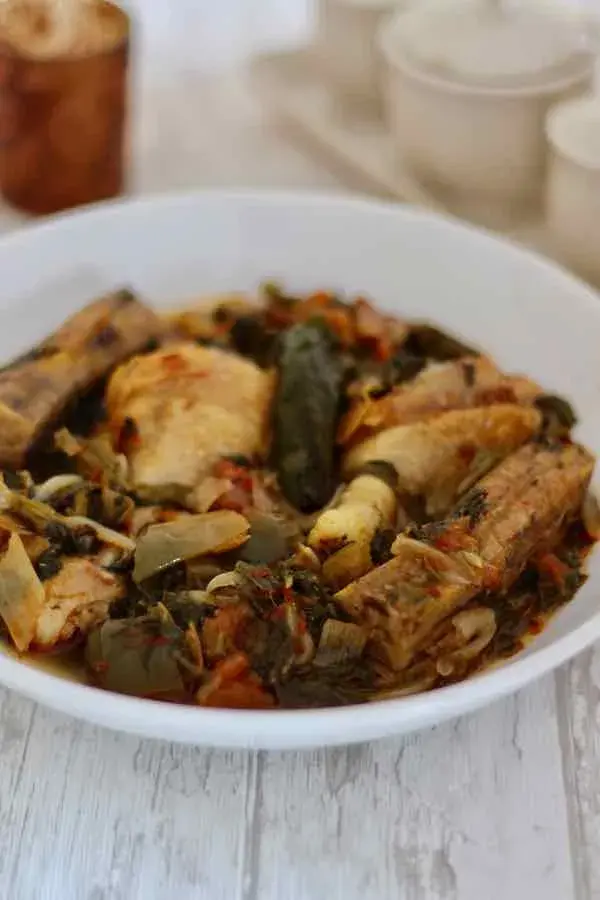
Igisafuri
Aperçu
Igisafuri means pot in Kinyarwanda, and the dish is named for its vessel in the same way potjiekos is in South Africa. Everything goes into one pot in stages, and what comes out is chicken, plantain and vegetables that have cooked into each other rather than alongside each other. The plantain is what makes it Rwandan. Cooking bananas and plantains are central to Rwandan agriculture and eating, grown on hillside smallholdings across the country in dozens of varieties, and a stew that uses them as its starch rather than serving rice beside it is doing something specific to the region. The plantains go in late and are submerged so they steam in the broth rather than boiling in water. It is unpretentious food. Rwandans describe it as a favourite precisely because the preparation asks so little of the cook, with everything going into one pot in stages and almost nothing to watch. The comparison people reach for is the Moroccan tagine, and it holds up as far as the method goes, though the ingredients are entirely different. Spinach goes over the plantains near the end and a whole hot pepper is dropped in for aroma rather than heat, which is a common way of handling chilli across the Great Lakes region.
Note de Patrimoine AFN
Igisafuri takes its name from the Kinyarwanda word for pot, describing the single vessel preparation. Cooking bananas and plantains, which form its starch component, are documented as central to Rwandan smallholder agriculture, with distinct varieties maintained for cooking, eating fresh and brewing.
Ingrédients
Les mentions alimentaires sont fournies par les contributeurs à titre indicatif. Elles ne sont pas vérifiées par AFN et dépendent des produits que vous achetez. En cas d’allergie grave, vérifiez vous-même chaque ingrédient. Cuisine, allergies et votre propre jugement
Préparation
- 1
In a pot with hot oil, sear the chicken over medium high heat to colour it on all sides.
- 2
Add the onion, leeks and peppers. Stir and leave for about 10 minutes, stirring occasionally.
- 3
Add the tomatoes, celery and tomato paste and mix well. Cook on medium heat for 15 minutes, stirring regularly.
- 4
Cover with water, season with salt and pepper, and bring to a boil. Reduce the heat to low and simmer for about 15 minutes.
- 5
Remove 2 pieces of chicken, place the plantains in the pot, cover them with the spinach, and return the chicken on top. Add water if necessary so the plantains are fully submerged.
- 6
Cover, add the whole hot pepper, and simmer over low heat for about 25 minutes.
Notes de l’Africook
 Notes personnelles de Debbie Obierika
- The plantains must be fully submerged. Any part left above the liquid steams unevenly and stays hard while the rest softens.
- Add the hot pepper whole and leave it whole. It perfumes the pot without releasing its full heat, which is the standard way of handling chilli across the Great Lakes region.
- Sear the chicken properly at the start. That browning is where the depth of the broth comes from, and pale chicken gives a thin stew.
- Use plantains that are still green or barely turning. Ripe ones collapse into sweetness and lose their structure in the broth.
- Rice is an optional accompaniment and genuinely not needed, since the plantains are the starch.
Questions fréquentes
What does igisafuri mean?
Pot, in Kinyarwanda. The dish is named after the vessel it is cooked in, which reflects the method: everything goes into a single pot in stages and cooks together. It is the same naming logic as South African potjiekos, which is also named for its pot rather than its contents.
What kind of plantains should I use?
Green or barely turning, not ripe. Green plantains hold their shape through the long simmer and stay starchy, which is what the dish needs. Ripe plantains break down into sweetness and lose their structure entirely. Cooking bananas, if you can find them, are closer still to what Rwandan cooks would use.
Can I make igisafuri with a different protein?
Yes. Chicken is standard and beef and goat both work, though tougher meat needs a longer initial simmer before the plantains go in. A vegetarian version using beans in place of the meat works well, since the plantains and vegetables carry the dish. Sear whatever protein you use properly at the start.
What is igisafuri served with?
Usually nothing, since the plantains are the starch and the pot is a complete meal. Rice is served alongside in some households. It is one of the reasons the dish is so widely made on weeknights: one pot, one course, no accompaniment to organise.
Avis
4 avis
layering the green plantains under the spinach and popping the chicken back on top is brilliant, stopped the plantains from dissolving into mash. i used 300g spinach instead of 10oz and added a spoonful of Rajah mild curry powder with the 3 tablespoons of tomato paste. proper lekker meal to make just now.
Took a trip down City Road to the international store just to track down green plantains for this. Well worth the effort. Searing the chicken thighs first gave the broth brilliant colour, though simmering took closer to 95 minutes total for the plantains to get properly tender.
couldnt find firm green plantains at my local supermarket so I had to drive to the latin market. Used a whole scotch bonnet for the hot pepper. Cooking the spinach right over the plantains to let it steam with the chicken on top brought back real memories of home.
Made this yesterday evening. Leeks and celery in a chicken stew sounded strange to me at first, but e sweet sha! That whole hot pepper gave it just enough heat without killing the tomato flavor. My husband finished his plate in two minutes o.