

Kanafeh
Aperçu
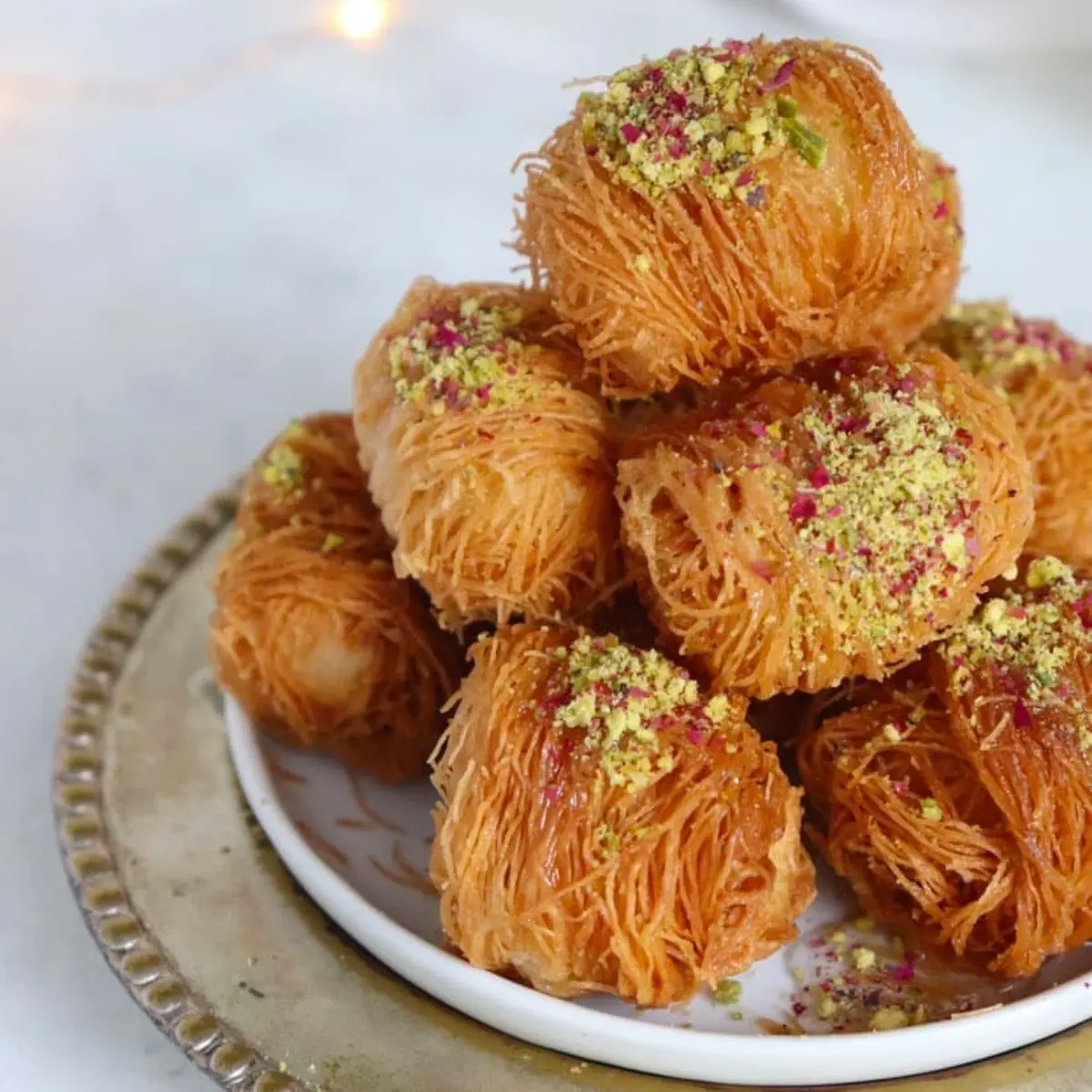
Kanafeh, konafa in Egypt, knafeh across the Levant, is a pastry built from kadaif, the fine shredded dough sometimes called angel hair, layered with cheese or cream, baked in ghee until the strands turn deep gold, and soaked in sugar syrup while still hot. Its origins are Levantine rather than African. The most commonly cited account places its invention in Damascus in the seventh century, and an early version appears in Kitab al-Tabikh, a thirteenth-century Andalusian cookery manuscript. From there it spread across the Ottoman world. In Egypt it has become genuinely Egyptian. Konafa is inseparable from Ramadan, sold by weight from bakery windows through the whole month, made at home in large trays, and eaten after iftar alongside qatayef. Egyptian versions lean towards cream, nuts and dried fruit as often as cheese, which distinguishes them from the Palestinian knafeh nabulsieh built on stretchy akkawi cheese and stained orange. The texture is the point of the dish, and it depends on a single rule: the syrup and the pastry must be at opposite temperatures. Hot syrup on hot pastry makes it soggy. Cool syrup poured over pastry straight from the oven keeps the strands crisp while the inside stays molten. Rose or orange blossom water in the syrup is standard, and crushed pistachio or walnut goes on top.
Note de Patrimoine AFN
Kanafeh's origins are traced to Damascus, with an early form recorded in the thirteenth-century Andalusian manuscript Kitab al-Tabikh. It spread through the Ottoman world and was absorbed into Egyptian tradition as konafa, where it is strongly associated with Ramadan.
Ingrédients
Les mentions alimentaires sont fournies par les contributeurs à titre indicatif. Elles ne sont pas vérifiées par AFN et dépendent des produits que vous achetez. En cas d’allergie grave, vérifiez vous-même chaque ingrédient. Cuisine, allergies et votre propre jugement
Préparation
- 1
Set the oven rack to the lower-middle position and preheat to 400°F (204°C)
- 2
In a medium bowl, combine the cheese and clotted cream and set aside
- 3
slice the shredded Kadaif crosswise into 1/4- to 1/2-inch lengths and transfer to a large bowl
- 4
Pour the melted butter over the Kadaif and, using your hands, toss and mix the Kadaif with the butter in a gentle rubbing motion to ensure that all the Kadaif shreds are evenly coated, about 5 minutes.
- 5
Transfer half the coated Kadaif to a 10-inch cast iron skillet, evenly distributing it along the bottom of the pan
- 6
Top this with the cheese mixture, spreading it evenly over the first Kadaif layer and leaving a 1/2-inch border along the rim
- 7
Spread the remaining Kadaif over the cheese and once again firmly pack it down
- 8
Bake in the preheated oven until deeply golden brown, about 40 minutes
- 9
For the Syrup:Prepare the syrup while the kanafeh bakes. In a medium sauce pot, add the sugar, lemon juice, and 1 cup of water
- 10
Simmer until the syrup reaches 234°F (112°C), or when a small amount dropped into ice water forms a soft ball
- 11
When the kanafeh is ready, finish the syrup by adding the rose and orange blossom waters.
- 12
Invert the pie onto a serving platter and drizzle with the remaining syrup. Sprinkle with chopped nuts and serve right away.
Notes de l’Africook
 Notes personnelles de Debbie Obierika
- Cool syrup onto hot pastry, or hot syrup onto cooled pastry, never both hot. This single rule decides whether it is crisp or soggy.
- Separate the kadaif strands by hand before you butter them. Clumped strands bake unevenly and stay pale in the middle.
- Use ghee rather than butter if you can. It has no water in it, so the pastry crisps rather than steams.
- Do not over-soak. Pour the syrup evenly and stop, the pastry will keep absorbing for several minutes after you think it is done.
- Serve it warm. Kanafeh with a cheese filling is at its best while the centre is still soft and pulling.
Questions fréquentes
Is kanafeh African or Middle Eastern?
Its origins are Levantine, most accounts place it in Damascus, and the earliest written version appears in a thirteenth-century Andalusian manuscript. It is included here as an Egyptian dish because konafa has been thoroughly absorbed into Egyptian food culture, particularly around Ramadan, where it is one of the two defining desserts of the month. The origin is Levantine; the Egyptian tradition is real and long-standing.
What is the difference between the cheese and cream versions?
Palestinian knafeh nabulsieh, from Nablus, is the famous cheese version, built on akkawi or nabulsi cheese, which stretches when hot, and usually coloured orange. Egyptian konafa is as likely to use cream, clotted cream or a milk custard, often with nuts and dried fruit. Both are traditional. The cheese version is the more dramatic to serve; the cream version is more forgiving to make.
What is kadaif?
Kadaif, also spelled kataifi, is a dough extruded into very fine strands, it looks like shredded wheat or fine vermicelli and is often called angel hair. It is sold frozen or chilled in Middle Eastern and Turkish grocers. It needs to be pulled apart and coated in melted ghee before baking so the strands crisp separately.
Why did my kanafeh go soggy?
Almost always the syrup temperature. If both the syrup and the pastry are hot, the pastry absorbs too much too quickly and collapses. Pour cool syrup over hot pastry, or hot syrup over pastry that has cooled. Too much syrup will do it too, pour evenly and stop before it looks fully soaked, because it continues absorbing.
Avis
3 avis
Vous Aimerez Aussi
Voir toutes les recettes Egypt →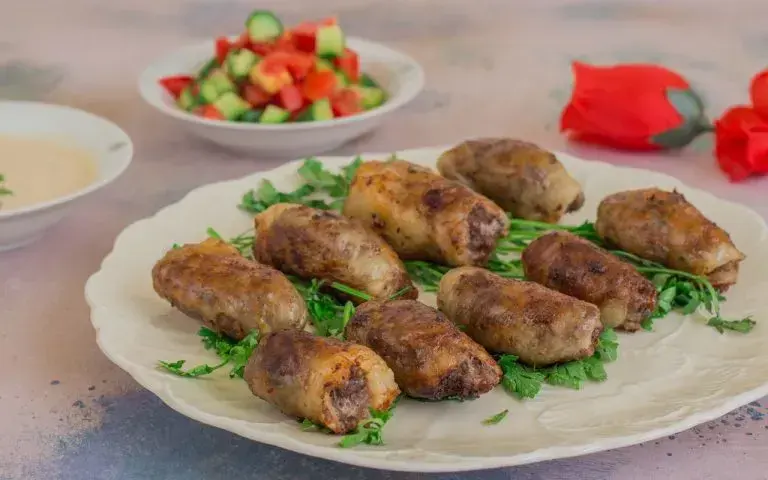
Tarb (Grilled Kofta Wrapped in Lamb Fat)
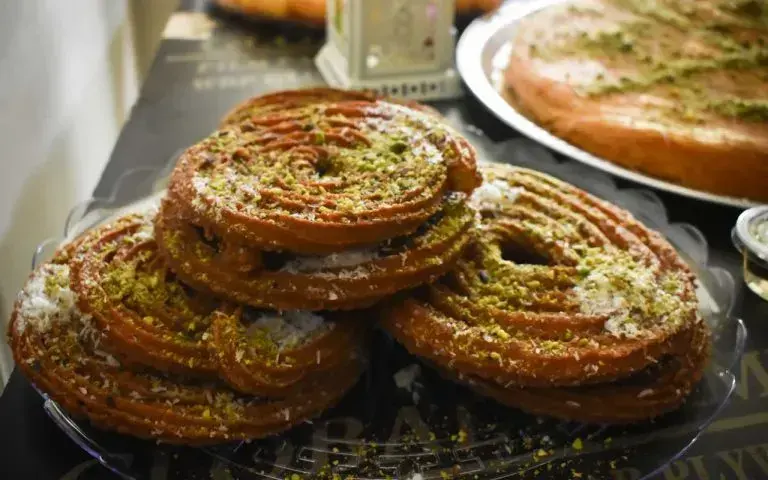
Egyptian Meshabek

I got the shredded kadaif and orange blossom water from Holy Land market here in Minneapolis. Mixing mozzarella with cream cheese was new for me, I was worried it might be too salty but abeg it melted so smoothly with the hot syrup. The floral smell when you pour the rose water syrup over the baked kadaif is everything. E sweet well well.
sourced the kadaif pastry at a Middle Eastern market near Glendale after checking three different shops. Baking this in my cast iron skillet at 400 degrees got the bottom proper crispy. That blend of mozzarella and cream cheese works surprisingly well for the stretch. Lekker dessert, tasted just like the ones in Egypt.
Rubbing that melted butter into the shredded kadaif dough took me almost 10 minutes o, my hands were fully glistening! I couldnt get rose water here in Abeokuta so I just made the syrup with extra lemon juice and sugar. The crispiness from the pan was top notch sha, cheese pull was crazy.