

Egyptian Meshabek
Aperçu
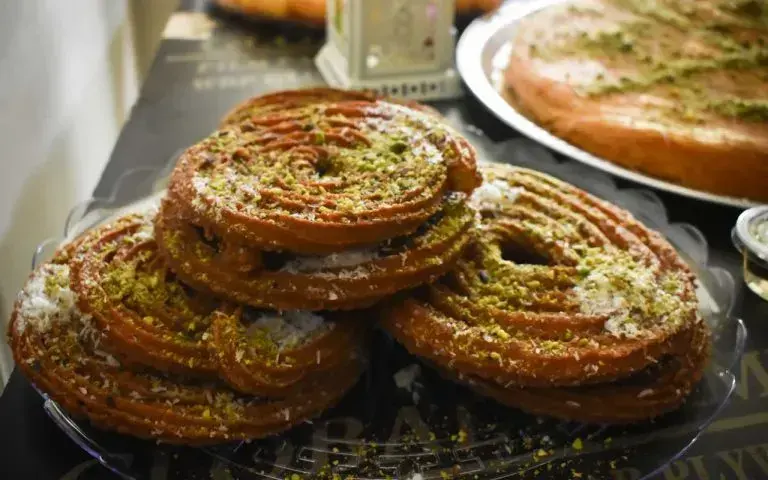
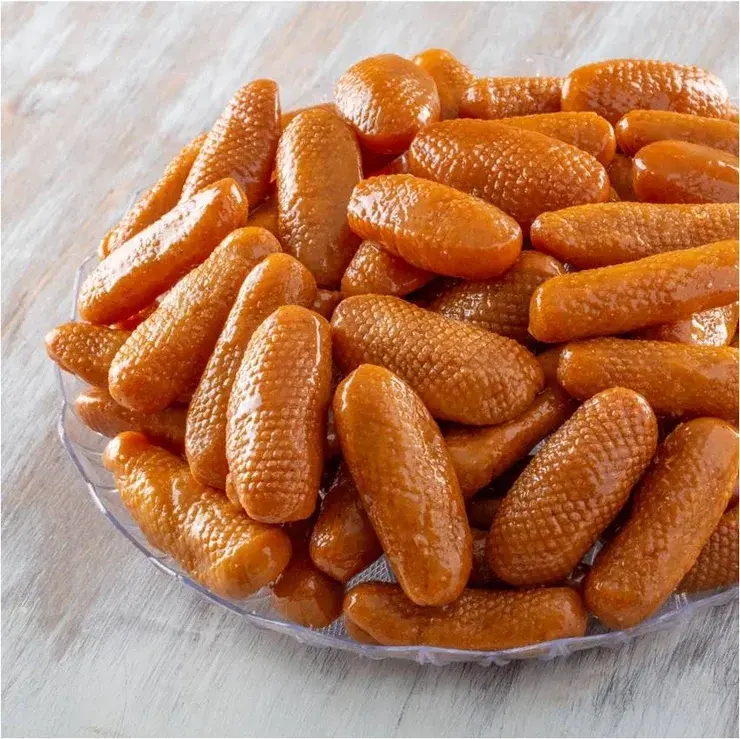
Meshabek is a fried batter sweet, piped into loops through a narrow nozzle, fried until it turns brittle, and dropped straight into cold syrup while still hot. The name translates as twisted, and that is precisely what it looks like: a tangle of thick threads holding syrup in every gap. It is street sweet rather than restaurant sweet, and it is cheap enough that half a kilo costs under a dollar in Egypt. Its documented origin points to Tanta and Damietta in the Nile Delta, from where it spread across the country, and it now turns up at sweet shops and street stalls nationwide. The hot into cold step is the technique and the whole reason it works. Batter fried to brittle and then plunged into cold syrup absorbs it in seconds without going soft, which is what gives meshabek its particular quality of being simultaneously crunchy and soaked. The same principle appears in fried syrup sweets across the Middle East, North Africa and South Asia. As with most Egyptian home sweets, the recipe moves between families rather than from books, which is why the proportions shift from one household to the next.
Note de Patrimoine AFN
Meshabek is documented as originating in Tanta and Damietta in the Nile Delta before spreading across Egypt. Its name derives from the Arabic for twisted, describing the piped and fried form, and it belongs to a wider family of fried batter sweets soaked in syrup found across the Middle East, North Africa and South Asia.
Ingrédients
Les mentions alimentaires sont fournies par les contributeurs à titre indicatif. Elles ne sont pas vérifiées par AFN et dépendent des produits que vous achetez. En cas d’allergie grave, vérifiez vous-même chaque ingrédient. Cuisine, allergies et votre propre jugement
Préparation
- 1
Mix the flour and corn starch, add the salt and sugar, and mix.
- 2
Make a well in the middle and add the yeast to it.
- 3
Pour in warm water gradually and mix until you have a creamy batter.
- 4
Leave the batter to rest for at least 2 hours.
- 5
For the syrup, combine the sugar, water, margarine, lemon juice, vanilla sugar and rose water in a pan. Bring to a boil for 2 minutes, then cool completely.
- 6
Heat vegetable oil until very hot.
- 7
Using a piping bag with a plain narrow round tip, pipe the batter into the hot oil in loops and spirals. Fry until golden.
- 8
Lift the meshabek out and put it immediately into the cold syrup, then remove to a clean dry plate.
Notes de l’Africook
- The syrup must be completely cold and the meshabek must go in straight from the oil. That contrast is what lets it absorb syrup without softening, and warm syrup will turn the whole batch limp.
- Leave it in the syrup for seconds, not minutes. Long enough to coat, short enough to stay crisp.
- The batter should be pourable and creamy rather than thick, or it will not move through a narrow nozzle cleanly.
- The lemon juice in the syrup is doing real work. It stops the sugar crystallising as it cools.
- Do not stack it while warm. Meshabek fresh from the syrup will fuse into a single mass if piled up.
Questions fréquentes
Why does the syrup have to be cold?
Because that temperature difference is what makes meshabek work. Batter fried until brittle and dropped into cold syrup takes up the syrup almost instantly without absorbing enough to go soft, so the finished sweet is crunchy and soaked at the same time. Warm syrup soaks in slowly and leaves you with a soggy sweet.
What if I do not have a piping bag?
A sturdy plastic bag with a small corner cut off works, though it gives less control. A squeeze bottle with a narrow nozzle is better. What matters is a narrow round opening, since the characteristic look comes from thin threads of batter piped in overlapping loops rather than from a wide stream.
How long does meshabek keep?
Two to three days at room temperature in a loosely covered container, and it softens as it sits. It is at its best within a few hours of being made, which is why Egyptian sweet shops make it in batches through the day. Do not refrigerate it, since the cold makes the syrup weep.
Can I make it without rose water?
Yes, it is marked optional and the sweet works without it. Rose water adds a floral note that is common across Egyptian and wider Middle Eastern syrup sweets. Orange blossom water is the usual alternative and is equally traditional. Vanilla alone is perfectly acceptable.
Avis
4 avis
Vous Aimerez Aussi
Voir toutes les recettes Egypt →
Tarb (Grilled Kofta Wrapped in Lamb Fat)
Egyptian Kofta
Batter fermentation is key here just like back home, though two hours is very fast compared to making ersho for injera! Had to run to the Mediterranean market here in town to find proper vanilla sugar and rose water for the syrup. The ratio of corn starch to wheat flour gives the exact crunch I remember from traveling through Egypt.
First time trying Egyptian sweets! The corn starch in the batter gives it such an amazing crunch. I was a bit skeptical about putting margarine directly into the sugar syrup, but it gave it a nice gloss. Let the batter rest for the full 2 hours while doing chores. My kids devoured them before they even fully cooled down.
Chale this one is just like our crunchy fried snacks but the syrup changes everything oo. Batter needs patience paa, if you dont wait the full 2 hours for the yeast to work it wont get those nice air bubbles when it hits the hot oil. Rose water aroma was strong in my kitchen!
Herh, two hours waiting for the batter to rest tested my patience paa, but it was worth it. Used a bit less rose water in the syrup because my family prefers more lemon juice taste. Very nice crispy texture from the corn starch. Perfect sweet bite for after evening prayers.