

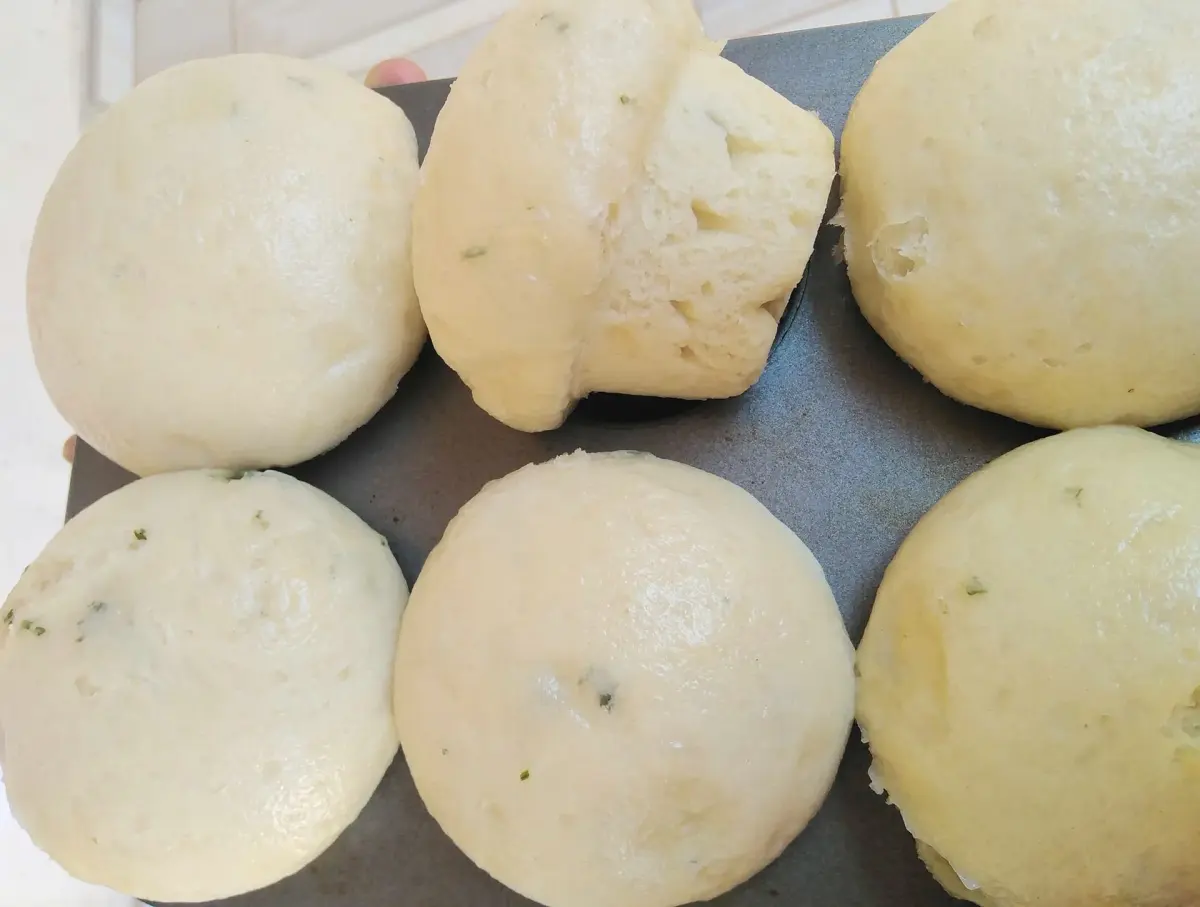
Dombolo (Dumplings or Steamed Bread)
Aperçu
Dombolo is South African steamed bread, and it occupies a particular place in the country's kitchens because it is bread that never sees an oven. Where a loaf is baked in dry heat, dombolo rises under a lid over water, and the result is soft, dense and slightly damp in a way no baked bread achieves. It belongs to the stew. Dombolo is not eaten alone and is not a side thought about separately. It arrives with chicken stew, beef stew, oxtail, lamb or tripe, and its job is to take up the gravy that the meat has spent hours building. In Zulu households the same technique produces jeqe, and the distinction between the two names is one that South Africans hold firmly even when it is drawn differently from one family to the next: broadly, jeqe is steamed as its own loaf, while dombolo is the dough set to rise over the pot the stew is already in. It is Sunday food and gathering food, made in quantity, cut into wedges at the table, and eaten with the hands.
Note de Patrimoine AFN
Steamed leavened bread is documented across southern African households as a domestic staple, and the isiZulu name jeqe is recorded for the loaf steamed separately from the stew. Its earliest documented date is uncertain.
Ingrédients
Les mentions alimentaires sont fournies par les contributeurs à titre indicatif. Elles ne sont pas vérifiées par AFN et dépendent des produits que vous achetez. En cas d’allergie grave, vérifiez vous-même chaque ingrédient. Cuisine, allergies et votre propre jugement
Préparation
- 1
Sift the flour and mix in the maize meal, yeast, sugar and salt.
- 2
Mix the beaten egg into the lukewarm liquid.
- 3
Add enough of the liquid to the dry ingredients to form a soft but pliable dough.
- 4
Knead for 10 minutes.
- 5
Cover the dough and leave to rise until doubled in size.
- 6
Knock the dough down and place it in a greased enamel bowl.
- 7
Leave to rise a second time until doubled.
- 8
Bring water to the boil in a pot large enough to hold the bowl.
- 9
Lower the bowl into the pot so the water comes a third of the way up its sides.
- 10
Seal the pot tightly and steam gently for 1 hour, topping up the water as needed. Do not lift the lid while it steams.
- 11
Turn the dombolo out and cut into wedges to serve.
Notes de l’Africook
 Notes personnelles de Amarachi Irobi
- Lifting the lid mid steam drops the temperature and the loaf sinks. Judge the water level by weight and sound rather than by looking.
- The second rise is the one people skip when they are in a hurry, and it is the one that decides the crumb. A dombolo that has only risen once is heavy.
- An enamel bowl transfers heat evenly and will not crack in the pot. Ceramic can, and plastic will not take the hour.
- Replacing the maize meal with flour gives a lighter, whiter loaf. Keeping it gives the slightly coarse crumb most South African households expect.
Questions fréquentes
What is the difference between dombolo and jeqe?
Both are steamed leavened dough, and South African households draw the line between the names differently. The most commonly stated distinction is that jeqe is the isiZulu word for dough steamed on its own as a loaf, while dombolo refers to dough set to steam over a pot of stew, cooking in the rising steam of the sauce. Some families use the two words interchangeably for the same loaf. Neither usage is wrong.
Can I make dombolo without a steamer?
Yes, and the recipe here does not use one. A large lidded pot with a heatproof bowl standing in a few inches of simmering water is the standard household method. What matters is that the pot seals well, the water does not touch the dough, and the water level is kept topped up for the full hour.
Why did my dombolo come out heavy and dense?
Three usual causes. The dough was under proved, most often because the second rise was cut short. The lid was lifted during steaming and the temperature dropped. Or the yeast was dead, which you can rule out by checking that the dough visibly doubles at the first rise before you go any further.
What is dombolo served with?
Stew, almost always, and a stew with plenty of gravy rather than a dry one. Chicken, beef, oxtail, lamb and tripe are the usual partners across South African households, and the bread exists to take up what the meat has spent hours building. It is cut into wedges at the table and eaten by hand rather than sliced and plated. It is rarely eaten on its own, and a dombolo without something to soak up is considered an incomplete plate.
Avis
8 avis
Vous Aimerez Aussi
Voir toutes les recettes South Africa →

Boeber (Cape Malay Sweet Milk Drink)
Tripe (Mogodu)
Why does my dombolo come out dense instead of light?
Two usual causes. The dough has not proved long enough, or the water went off the boil. Dombolo steams rather than bakes, so it needs steady steam for the whole time; lifting the lid to check drops the temperature and the dough sets before it has risen. Let the dough double properly, keep the water at a firm simmer, and do not open the pot for the first forty minutes.
Had to hunt down maize meal in the world food section at Sainsbury's for this. I used half milk and half lukewarm water for the liquid as suggested and the steamed dumplings turned out wonderfully fluffy, though they needed about 10 extra minutes of steaming on my hob to cook through completely.
I tried substituting the maize meal with fine cornmeal from the Safeway near my house since I cannot easily get proper mealie meal in Seattle. Letting the yeast proof properly for two full hours yielded a wonderfully spongy bread that picked up my beef berbere stew almost as well as injera.
Herh, that 1 cup of maize meal made the bread a bit too heavy and dense for my liking, chale. My friend from South Africa always uses pure flour for her dombolo so it stays soft paa. Next time I will use all white flour instead.
Kneading this dough for 10 minutes no be small thing o, my arms were tired! But mixing that beaten egg directly into the lukewarm milk made it so soft and pliable. We ate it steaming hot with rich stew, e sweet sha.
I love the Zulu dumplings when cooked on gravy meat.
Wonderful creatively designed menus. Excellent