

Egusi Soup
Aperçu
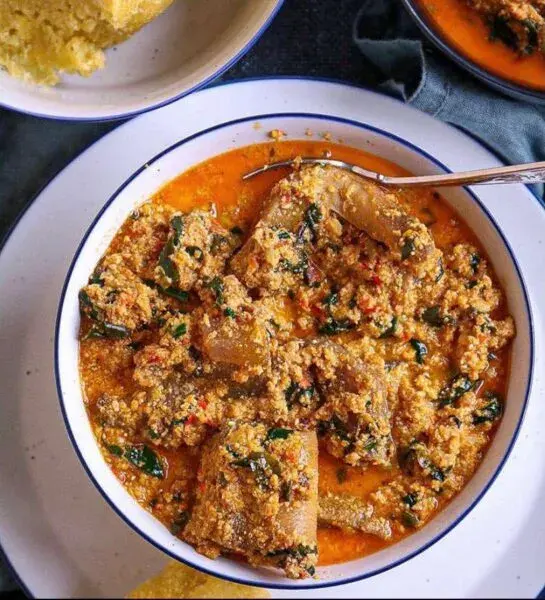
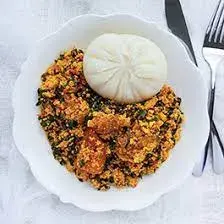
Egusi soup is eaten across every region of Nigeria, every ethnic group and every economic class, which is a claim very few dishes anywhere can support. Its name changes with the language and the dish does not: miyan gushi in Hausa, ofe egusi in Igbo, efo elegusi in Yoruba. Its defining ingredient is ground egusi, the dried seed of a gourd related to the watermelon, milled to a meal that thickens and enriches the soup around it. The seeds are ground dry, without water, until the powder turns to a paste under the blade. Nothing else produces the particular nutty, faintly bitter depth that egusi gives, which is why the soup is named for the seed rather than for the meat or the greens that also go into it. There is no single method. The caking approach lets the ground seed set into soft curds in the stock; the frying approach starts the egusi in palm oil; the moulding approach forms it into balls that are eaten like meat. Ijebu cooks in Ogun State make it with no vegetables at all. Every one of these is egusi soup, and Nigerians will argue for their own without seriously disputing anyone else's. It is eaten with pounded yam, fufu, eba, amala or any swallow at hand.
Note de Patrimoine AFN
Egusi seeds, from the Citrullus lanatus variety of gourd, have been cultivated in West Africa for at least 4,000 years, with evidence of their use documented at archaeological sites across the Sahel. The grinding and processing of egusi by hand remains a domestic skill passed primarily through women in Igbo, Yoruba and Efik households.
Ingrédients
Les mentions alimentaires sont fournies par les contributeurs à titre indicatif. Elles ne sont pas vérifiées par AFN et dépendent des produits que vous achetez. En cas d’allergie grave, vérifiez vous-même chaque ingrédient. Cuisine, allergies et votre propre jugement
Préparation
- 1
Soak the dried fish for about half an hour before you start.
- 2
If using very tough stockfish, boil it for 20 minutes and leave it in the hot water to soak for about an hour. Softer stockfish can simply be soaked in cool water until it breaks apart by hand.
- 3
Once the fish and stockfish are soft, debone them and break them into sizeable chunks.
- 4
Close to cooking time, grind the egusi in a dry mill. Grind the crayfish and dried pepper separately and set aside.
- 5
Wash the vegetables and cut them into small pieces.
- 6
Boil the shaki, stockfish and dried fish in 1 litre of water with the stock cubes until well done. The first sign that shaki is ready is that the cuts start to curl.
- 7
Wash the beef, add it to the pot and cook over medium heat until done.
- 8
Lift the meat, shaki and fish out of the stock and set them aside.
- 9
Add the ground egusi to the stock and stir. If the stock is not enough, add water until the mixture is about the consistency of evaporated milk or slightly thicker.
- 10
Cover and cook until the egusi cakes.
- 11
Stir, add a little more water, and watch closely so it does not catch. Repeat this, adding only a small quantity of water at a time.
- 12
After about 25 minutes clear egusi oil will rise to the surface.
- 13
Add the red palm oil and pepper to taste and cook for about 7 minutes, until the palm oil and egusi blend to a light yellow.
- 14
Add the cooked meat and fish. Add the pumpkin leaves or other soft vegetable at this point and stir.
- 15
Salt to taste, stir, and simmer for no more than 2 minutes. Turn off the heat.
- 16
Leave to stand for about 5 minutes before serving.
Notes de l’Africook
- Grind the egusi dry. Adding water at the mill gives a paste that will not cake properly in the pot, and caking is what produces the texture this method is built around.
- Add water a little at a time through the caking stage. Egusi burns readily once it has thickened, and a scorched pot carries through the whole soup.
- Hold the salt until the very end. The stock cubes, crayfish and stockfish all bring salt with them, and the stock will usually have brought you most of the way already.
- Palm oil is not interchangeable here. Vegetable oil produces a soup that is technically egusi and tastes wrong to anyone who knows the dish.
- Egusi Ijebu, from Ogun State, is made with no vegetables at all and is a recognised version rather than an omission. Toast the melon seed before grinding for that one.
Questions fréquentes
What is the difference between the caking, frying and moulding methods for egusi?
Caking, used here, stirs ground egusi into the stock and lets it set into soft curds, using less oil. Frying starts the egusi in hot palm oil before the stock goes in, which gives a deeper, oilier soup. Moulding forms the ground egusi into balls that cook whole in the soup and are eaten like pieces of meat. All three are standard and the choice is household preference.
What vegetables can I use in egusi soup?
Pumpkin leaf, called ugwu, is the most common. Bitter leaf, uziza, efo igbo and waterleaf, known in Yoruba as gbure, are all used, and spinach is the usual substitute outside Nigeria. Add soft leaves at the very end and cook them no more than two minutes, or they collapse and lose their colour.
Can I make egusi soup without palm oil?
You can skip it, and the soup will still work, because the egusi releases its own oil during the caking stage. What you lose is the colour and a specific depth that nothing else replaces. Almost nobody in Nigeria cooks it with vegetable oil. If palm oil is genuinely unavailable, make it without oil rather than substituting.
What is ogiri okpei and is it necessary?
Ogiri okpei is a fermented locust bean seasoning, pungent in the container and deeply savoury once cooked. It is marked optional here and the soup is good without it, but it is one of the things that makes a Nigerian pot taste Nigerian rather than generically West African. Iru and dawadawa are the same family of ingredient under other names.
Avis
2 avis
Vous Aimerez Aussi
Voir toutes les recettes Nigeria →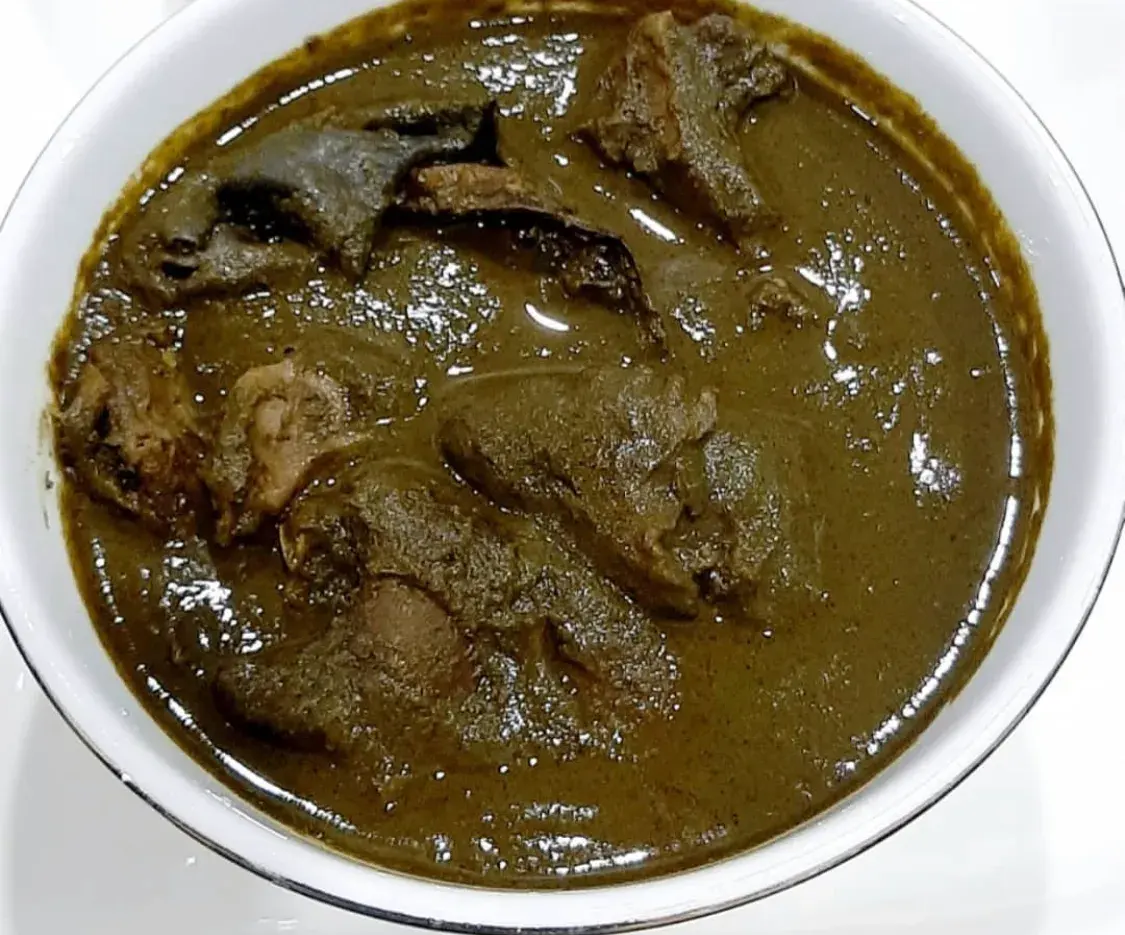
Edo Black Soup
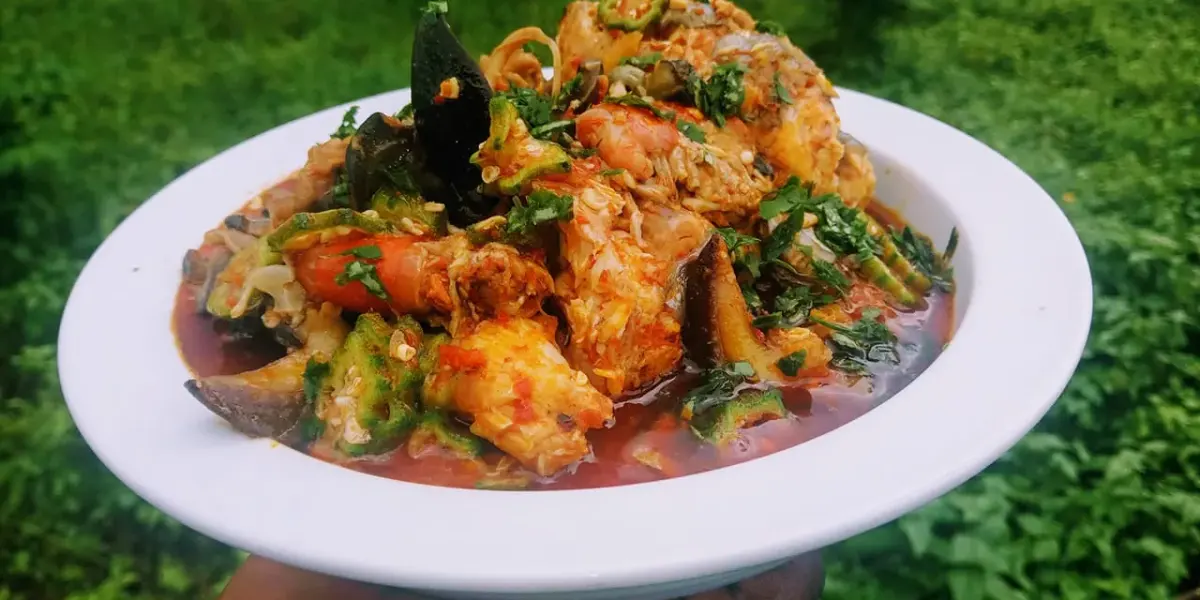
Nigerian Fisherman Soup
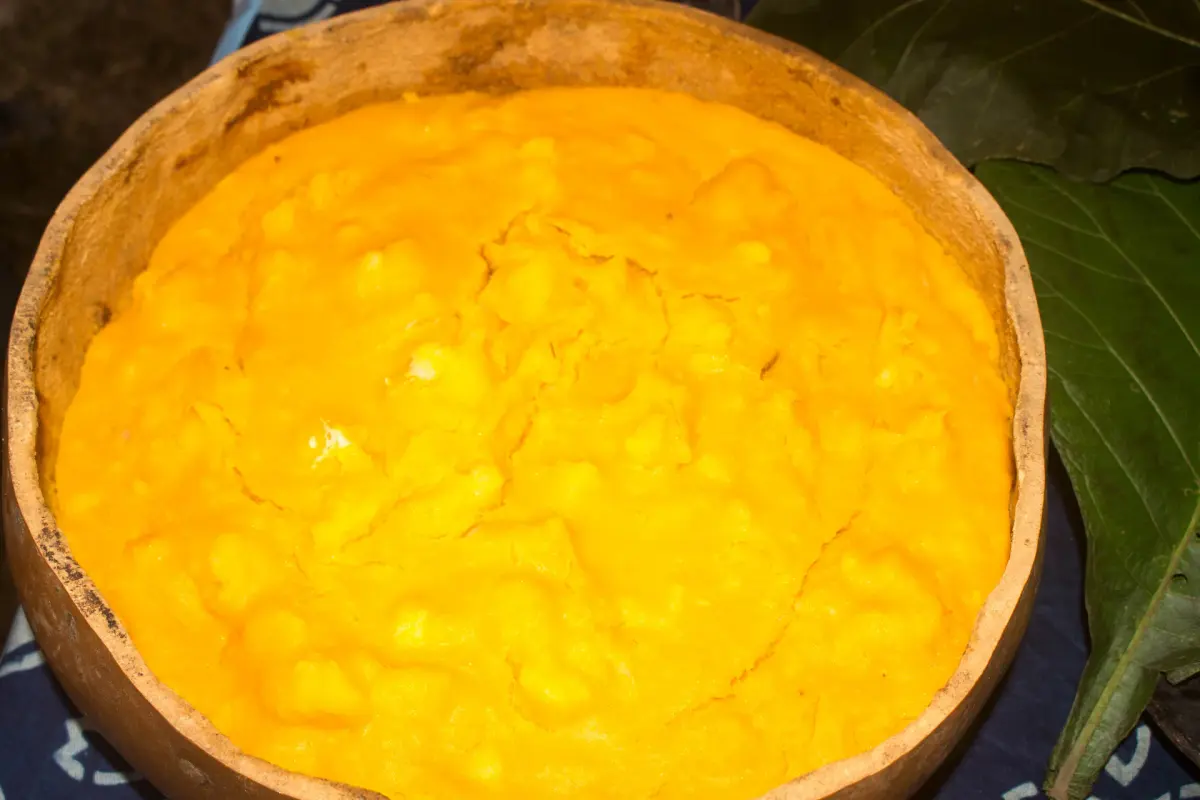
Igbo Yam Porridge
Made this last night for my husband and a couple friends who love trying new foods. Couldn't find ugwu here in Nashville so I used chopped spinach like suggested. Quick question though, is the soup supposed to turn super thick right after stirring in the ground melon seeds, or should I have added a little more broth? Tasted wonderful regardless!
Had to pop down to an international grocer on City Road in Cardiff to track down the egusi seeds and red palm oil, but I'm so glad I made the effort. Boiling the stockfish for twenty minutes first was definitely necessary because the pieces I bought were rock hard. Paired it with pounded yam for my partner and me, absolutely fantastic flavor.