

Abuja, Nigeria · Voir toutes les recettes
Aperçu
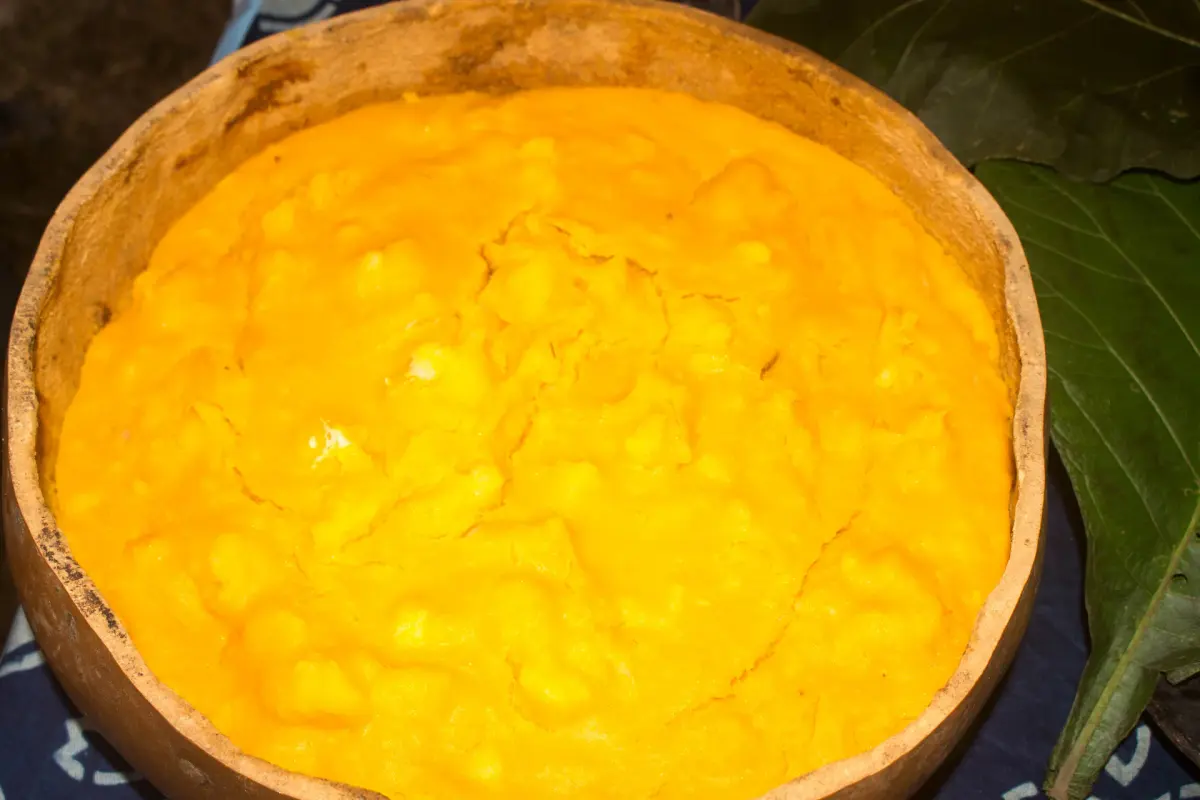
Yam is not simply a staple crop among the Igbo of south-eastern Nigeria. It is the crop, tied to land, status and the agricultural calendar in a way no other food is, and the yam that goes into this porridge carries that weight into an ordinary weekday meal. Yam porridge is the most direct way to eat it. Slices are cooked until they begin to break down and thicken their own liquid, so the dish is both the yam and the sauce it makes. What marks the version out as Igbo rather than as one of the several other Nigerian yam pottages is the seasoning: ogiri, the fermented seasoning made from oil bean or melon seed, and uziza leaves, whose peppery aroma goes in at the very end. Palm oil supplies the colour and the richness, crayfish the savoury base. Ogiri is the ingredient that decides the dish. Its fermented depth is what separates an Igbo yam porridge from a Yoruba or Hausa preparation of the same root, and households that leave it out are making something else. The porridge is eaten at breakfast and as a light lunch, and it belongs to ordinary domestic cooking rather than to any occasion.
Note de Patrimoine AFN
Yam has been cultivated in the West African yam belt, which includes Igboland in south-eastern Nigeria, for several thousand years, and its harvest remains marked by the Igbo new yam festival. Ogiri, the fermented seasoning used in this preparation, belongs to the wider West African tradition of fermented seed condiments alongside dawadawa and iru.
Ingrédients
Les mentions alimentaires sont fournies par les contributeurs à titre indicatif. Elles ne sont pas vérifiées par AFN et dépendent des produits que vous achetez. En cas d’allergie grave, vérifiez vous-même chaque ingrédient. Cuisine, allergies et votre propre jugement
Préparation
- 1
Boil the yam slices until soft but still firm.
- 2
Add the palm oil, crayfish, ogiri, seasoning cube and salt.
- 3
Stir thoroughly and simmer for 3 minutes.
- 4
Add the uziza leaves and onion, then take the pot off the heat.
- 5
Serve hot.
Notes de l’Africook
 Notes personnelles de Deborah Olayiwola
- Stop boiling the yam while the slices still hold their shape. They break down further once the palm oil and seasoning go in, and yam boiled to softness first will finish as a puree.
- Uziza goes in last and off the heat. Its aroma is volatile and several minutes of cooking removes most of what it was added for.
- Ogiri is powerfully strong and a little goes a long way. Half a cup is a generous household quantity; start with a third of that if you have not cooked with it before.
- White yam is the standard, but yellow, purple and water yam all work and each gives a slightly different colour and sweetness.
- Replace the palm oil with vegetable or coconut oil for a lighter version, and use fish, chicken or beef stock in place of the seasoning cube.
Questions fréquentes
What is ogiri and can I substitute it?
Ogiri is a fermented seasoning paste made from oil bean or melon seeds, used across Igbo cooking for its intense savoury depth. It is pungent in the jar and mellows completely in the pot. Iru or dawadawa, the fermented locust bean used in Yoruba and Hausa cooking, is the closest substitute and is more widely stocked. Without any of them the porridge will be noticeably flatter.
What kind of yam should I use for yam porridge?
White yam, the true African yam sold in long rough skinned tubers, is the standard and holds its shape best. Yellow yam and water yam both work, with water yam breaking down fastest and giving a thicker porridge. What will not work is sweet potato, which is a different plant entirely despite being sold as yam in some countries.
What is the difference between Igbo yam porridge and other Nigerian yam pottages?
The seasoning rather than the technique. The Igbo version is defined by ogiri and uziza, which give it a fermented depth and a peppery aromatic finish. Other Nigerian yam pottages use different combinations of pepper, vegetables and stock, and some include tomato, which this one does not.
Can I make yam porridge without palm oil?
You can use vegetable or coconut oil for a lighter dish, and Igbo households do this regularly. What you lose is the colour and a particular richness that palm oil brings. Since this porridge uses only two tablespoons, palm oil is a smaller commitment here than in most southern Nigerian dishes.
Avis
Soyez le premier à noter cette recette
Vous l’avez cuisinée ? Votre note aide la personne suivante à se décider.
2 avis
Vous Aimerez Aussi
Voir toutes les recettes Nigeria →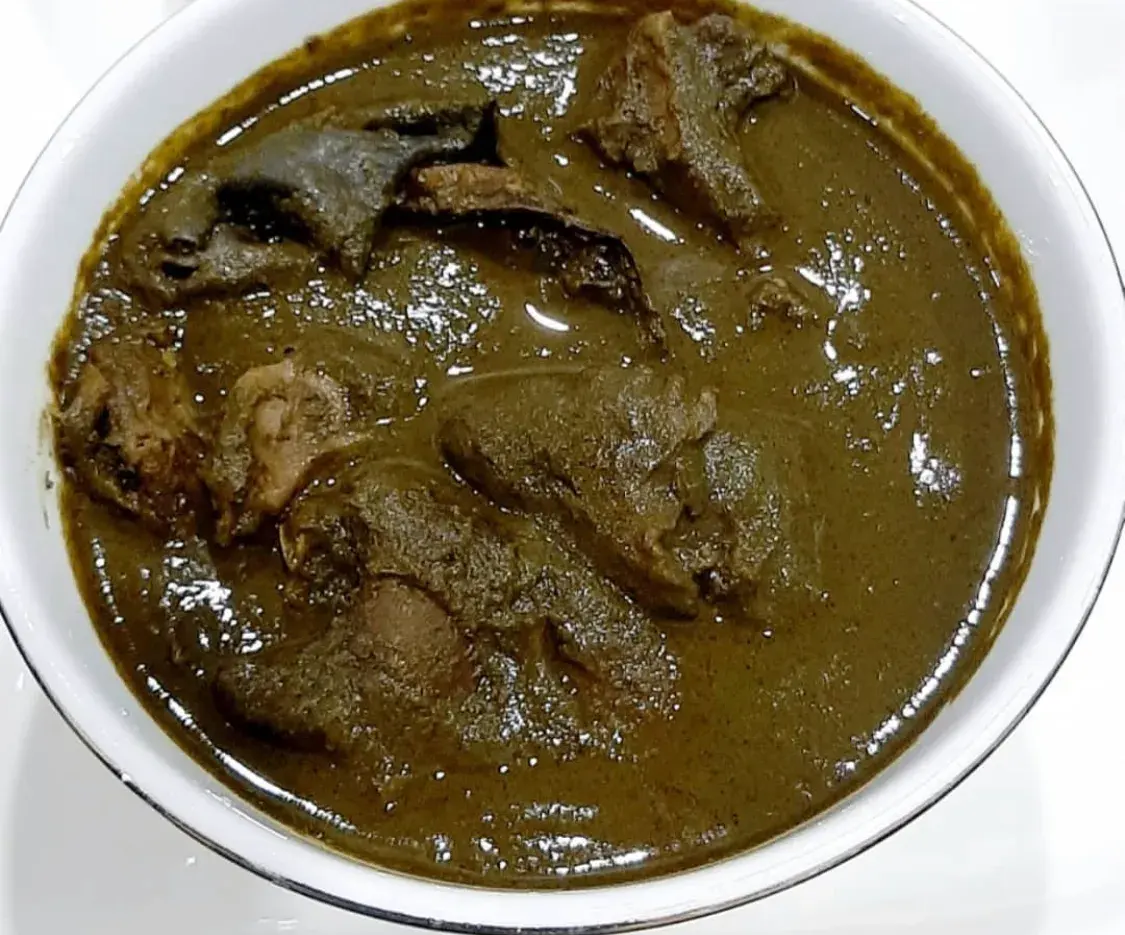
Edo Black Soup
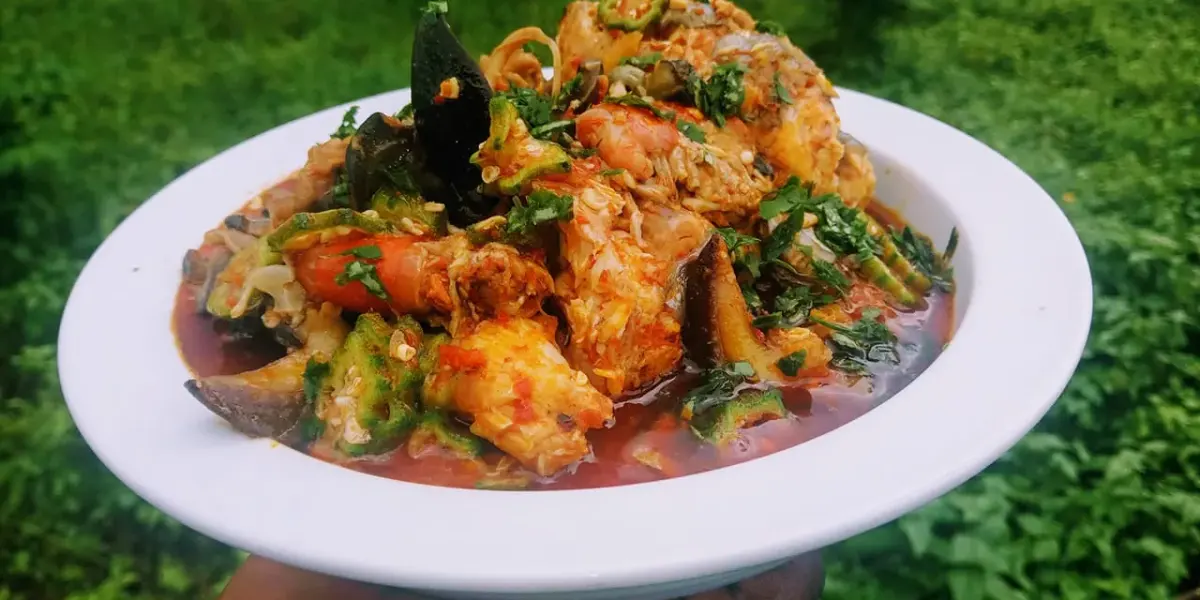
Nigerian Fisherman Soup
Semovita
Should the yam break down completely in yam porridge, or stay in pieces?
Both, and that is the point. Some pieces break down and thicken the pot while others hold their shape, which is what gives the dish its texture. Cut the yam into uneven pieces rather than perfectly even ones and let the smaller ones dissolve. If yours is entirely smooth it has been stirred too much; if it is entirely firm it needs longer.