

Nigerian Fisherman Soup
Aperçu
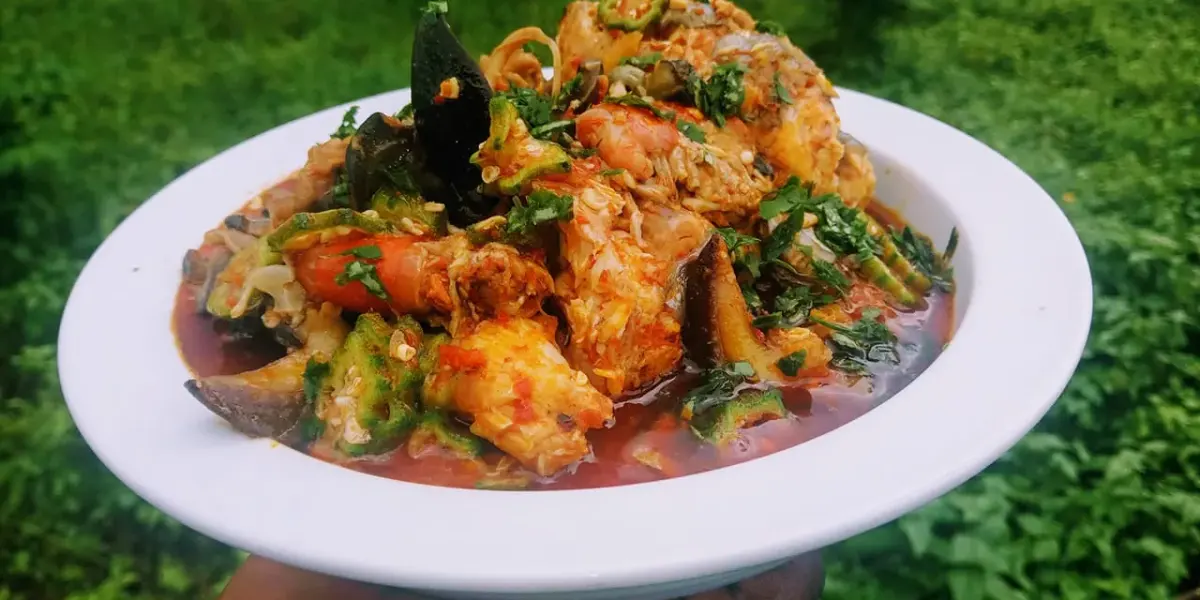
Fisherman soup belongs to Akwa Ibom and Cross River, the two Nigerian states where rivers run through the towns and villages and seafood is not an occasional purchase but the ordinary contents of the pot. Among the Efik it is called efere ndek iyak, and it is indigenous to them rather than adopted. What defines it is the range of what goes in. Fresh fish, prawns, snail, periwinkle, stockfish and dried fish appear together rather than in sequence, and the soup is a record of a single catch rather than a recipe with a fixed ingredient list. Periwinkle in particular, the small river snail sold in its shell across the south-south, is the ingredient outsiders notice and locals take for granted. The thickener is what makes the Efik version specific: pounded yam is added to the pot in lumps and dissolves into the broth, giving body without any flour or seed. Cocoyam does the same job in households that prefer it, and each thickener leaves its own trace on the taste. Every fishing culture in the world has arrived at a soup like this. This one is the version the Niger Delta arrived at.
Note de Patrimoine AFN
Fisherman soup is documented among the Efik of Akwa Ibom and Cross River States as efere ndek iyak, and belongs to the riverine foodways of Nigeria's south-south, where periwinkle, fresh river fish and preserved stockfish are established household ingredients.
Ingrédients
Les mentions alimentaires sont fournies par les contributeurs à titre indicatif. Elles ne sont pas vérifiées par AFN et dépendent des produits que vous achetez. En cas d’allergie grave, vérifiez vous-même chaque ingrédient. Cuisine, allergies et votre propre jugement
Préparation
- 1
Clean and wash the fresh fish and the seafood. Tilapia, catfish or any firm fleshed fish will work.
- 2
In a large pot, boil water with the fish, stockfish, snails and dried fish. Add the onion, pepper, ground uziza seed and ground crayfish, season, and simmer for 20 to 30 minutes.
- 3
Remove the fish and set it aside so it does not shred.
- 4
Bring the pot back to a boil, then add the palm oil and the pounded yam in lumps.
- 5
Cook until the soup thickens.
- 6
Gently return the fish to the pot, add the prawns, periwinkle and okra, and boil for a few minutes.
- 7
Add the shredded uziza leaf, stir and simmer for a minute before serving.
Notes de l’Africook
 Notes personnelles de Deborah Olayiwola
- Take the fish out once it is cooked and put it back at the very end. Fish left in a pot through the thickening stage disintegrates and you lose the pieces entirely.
- Add the pounded yam in small lumps rather than all at once, and give each addition time to dissolve before judging the thickness. Over thickened fisherman soup cannot be thinned back without diluting the flavour.
- Buy periwinkle already shelled if you can. Shelled periwinkle saves a long job at the table and makes the soup much easier to eat.
- Cocoyam paste is the standard alternative thickener and gives a slightly heavier, smoother body than pounded yam.
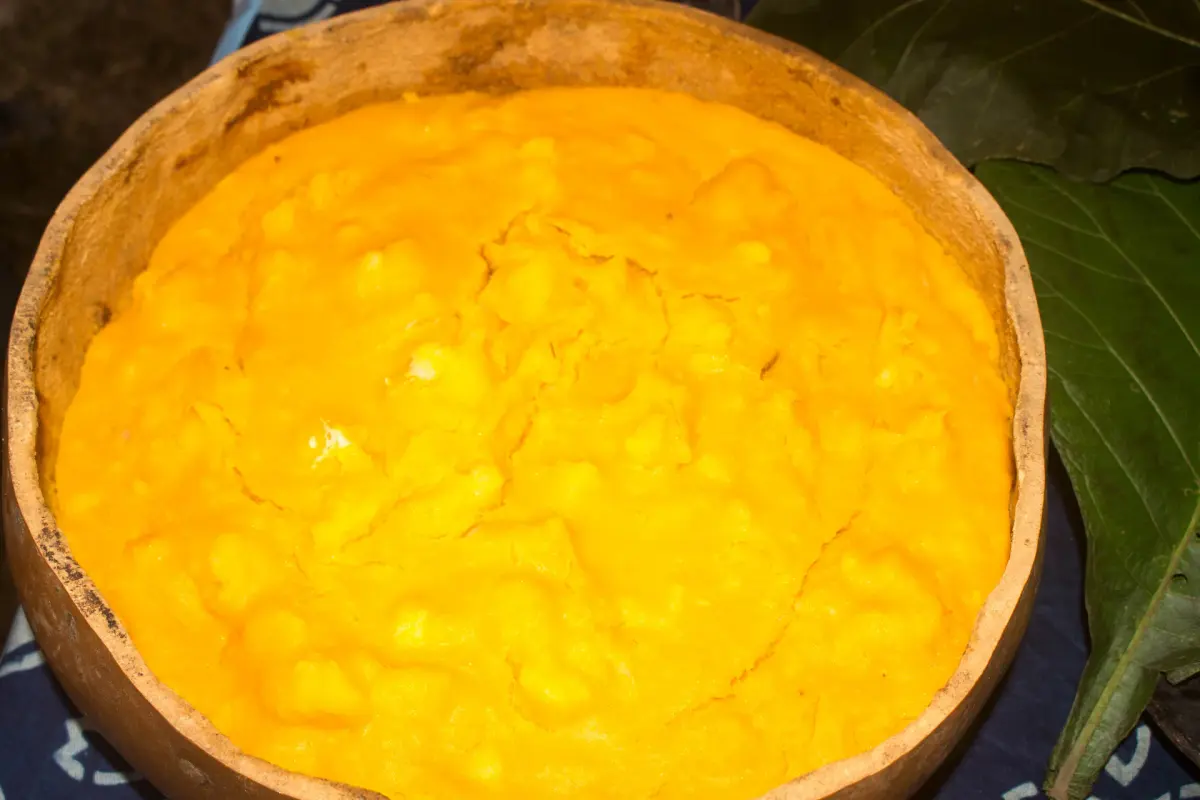
- Fufu or pounded yam is the usual accompaniment.
Questions fréquentes
What is periwinkle and can I make fisherman soup without it?
Periwinkle, known as isam in Efik, is a small edible river snail sold across Nigeria's south-south, usually still in its dark spiral shell. It adds a distinct briny chew rather than a strong flavour. You can leave it out and still have a good soup, but Efik cooks would consider it incomplete. Frozen shelled periwinkle is available from Nigerian grocers abroad.
What thickener is used in fisherman soup?
Pounded yam, added to the pot in lumps and allowed to dissolve, is the Efik standard. Cocoyam paste is the common alternative and gives a smoother, slightly heavier body. Unlike most Nigerian soups, fisherman soup uses no egusi, ogbono or flour, which is part of why the broth stays clean tasting against so much seafood.
What is the difference between fisherman soup and Nsala soup?
Both are Nigerian soups thickened with yam rather than seed, but they are from different traditions and taste different. Nsala, from Igbo cooking in the east, is a white soup built on catfish with uziza and utazi and no palm oil at all. Fisherman soup, from the south-south, uses palm oil and a much wider mix of seafood. Fisherman soup is sometimes described as a variation of Nsala, which understates how distinct they are.
Can I use frozen seafood for fisherman soup?
Yes, and most cooks outside Nigeria will have to. Thaw it fully and drain it well first, because the water released by frozen seafood will thin the broth you have spent time thickening. Add prawns and periwinkle at the very end regardless, since both toughen quickly under prolonged heat.
Avis
7 avis
My fisherman soup tastes flat even though I used fresh fish. Why?
Usually the stock. Fisherman soup gets its depth from the seafood being cooked in stages rather than all at once, so the liquid builds flavour before the delicate pieces go in. Start with the tougher items, let that liquid reduce and concentrate, and add the fish near the end so it is just cooked through. Adding everything together gives you poached seafood in water.
Had to trek down to an Afro-Caribbean store on Clifton Street in Cardiff to source the uziza seeds and stockfish. Was a bit skeptical about dropping whole lumps of pounded yam straight into the broth, but it melted down into the most incredible thick texture. Took me closer to 50 minutes to get the stockfish properly tender though.
i managed to get fresh catfish from the fishmonger near the robot by the taxi rank. used exactly 1/2 cup of pounded yam flour mixed with hot water for the lumps. taking the fish out early like you said was crucial so it didnt shred into pieces, soup was so lekker.
Taking out the fresh fish before adding the palm oil and pounded yam is what saved my pot abeg. Usually my catfish just scatters into pieces when the soup is boiling. The scent of the uziza seed and dried fish together, e sweet no be small thing o.
chale this soup is heavy oo! My nigerian sister in law makes her version with the periwinkle still in shell, but herh cleaning 1kg of isam takes so much patience paa. The combination of the crayfish broth and fresh prawns is really nice though.
The scotch bonnets made it way too hot for my family, and 35 minutes cook time is not realistic if your stockfish is tough. Mine took well over an hour to soften properly, which made the okra totally slimy by the end.