

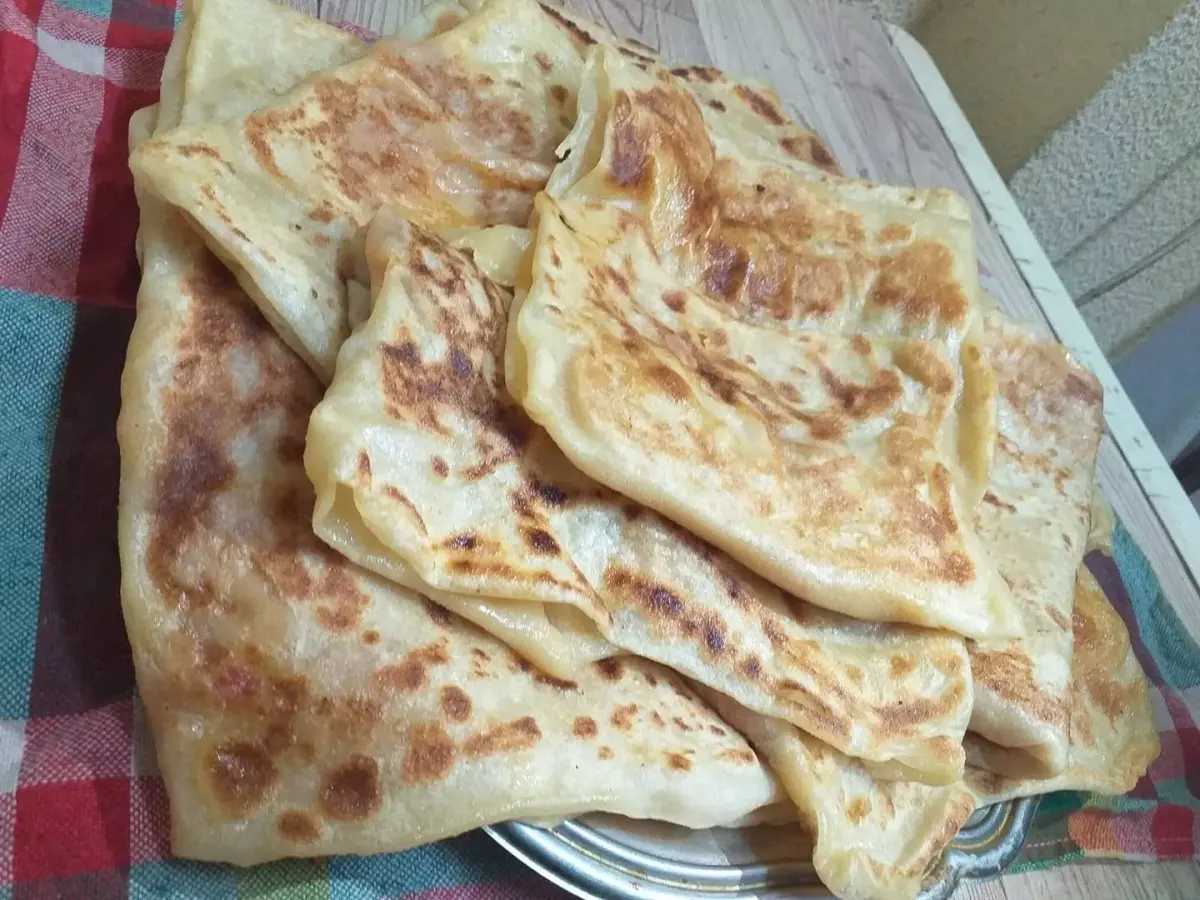
Mhajab - A Traditional North African Dish
Aperçu
Mhajab is a stuffed North African flatbread, and the technique is what makes it. A soft dough is stretched out until it is thin enough to see through, folded in from the sides and then from the top and bottom into a square parcel around a filling, and cooked flat on a griddle. The folding creates the layers, and the layers are the dish. It belongs to Algeria and Morocco and is closely related to the Moroccan msemen and rghaif, which use the same stretch and fold method without a filling. Mhajab is street food and it is household food for special occasions, which is a combination that usually indicates something that takes skill but not money. The filling is conventionally a cooked mixture of onion, tomato and pepper, sometimes with meat, and the version here uses beef with potato and carrot. Vegetable fillings are as common as meat ones. It is eaten on its own, or served alongside couscous, harira and salads with mint tea. Cooked on a griddle it comes out crisp outside and soft within; baked it is softer throughout and takes longer, which is the trade the source lays out honestly.
Note de Patrimoine AFN
Mhajab is documented as a stuffed flatbread of Algeria and Morocco, made by stretching dough until translucent and folding it into layers around a filling. It belongs to the same family of stretched and folded North African breads as msemen and rghaif.
Ingrédients
Les mentions alimentaires sont fournies par les contributeurs à titre indicatif. Elles ne sont pas vérifiées par AFN et dépendent des produits que vous achetez. En cas d’allergie grave, vérifiez vous-même chaque ingrédient. Cuisine, allergies et votre propre jugement
Préparation
- 1
Put the flour and salt in a large mixing bowl and gradually mix in the warm water to form a dough. Add the vegetable oil and lemon juice as the dough comes together.
- 2
Knead for 5 to 7 minutes until smooth, then divide into golf ball sized portions.
- 3
Brush each ball with oil, cover with plastic wrap on a tray, and rest for 30 minutes to an hour.
- 4
If you are using meat, heat a little oil in a pan over medium heat and brown the beef or lamb, breaking it up as it cooks. Season it with about a third of the cumin, paprika and turmeric and a little salt and pepper, and cook until no pink remains. Meat is optional in mhajeb, leave this step out for a vegetarian version and the filling still works.
- 5
Add the diced carrots and potatoes to the same pan with the chopped onion, the garlic and the remaining spices. Fry over medium heat until the vegetables are tender and the mixture looks dry, a wet filling steams the dough from the inside and stops it crisping. Stir in the chopped herbs, then leave the filling to cool completely before you fill the dough.
- 6
Flatten a dough ball and roll or stretch it into a thin translucent rectangle on a lightly oiled surface.
- 7
Spread the filling over the centre.
- 8
Fold the sides in to the centre, then fold the top and bottom in to create a smaller square parcel.
- 9
Cook on a lightly oiled non stick pan over medium heat for 2 to 3 minutes a side, until golden brown and crisp.
Notes de l’Africook
 Notes personnelles de Deborah Olayiwola
- Oil the work surface rather than flouring it. Mhajab dough is stretched, not rolled, and oil lets it slide and thin out where flour makes it grip and tear.
- The rest is what makes the dough stretchable. Thirty minutes is a minimum and an hour is better, since the gluten needs to relax before it will go translucent.
- Stretch it until you can see the surface through it. That thinness is what produces the layers when folded, and a thick sheet gives a dense bread.
- Cool the filling completely. Warm filling steams inside the parcel and makes the layers soggy.
- Baking is possible at around 190°C for 15 to 20 minutes and is lighter, but it produces a softer bread without the crisp exterior the griddle gives.
Questions fréquentes
How thin does the dough need to be?
Thin enough to see the work surface through it. That is the whole technique: an almost translucent sheet, folded twice, produces the many fine layers that define mhajab. A thick sheet gives a dense stuffed bread rather than a layered one. Oiling the surface rather than flouring it is what makes the stretching possible.
What fillings can I use?
The conventional filling is a cooked mixture of onion, tomato and pepper, and this version uses beef with potato and carrot. Vegetable fillings are as common as meat ones: spinach, potato and carrot all work. Soft cheeses such as feta are used in some versions. What matters is that the filling is cooked and cold before it goes in.
Should I fry or bake mhajab?
Pan frying on a lightly oiled griddle gives the crisp outside and soft interior the dish is known for, and takes 2 to 3 minutes a side. Baking at around 190°C for 15 to 20 minutes uses almost no oil and cooks more at once, but produces a softer bread without the crispness. Both are done.
What is mhajab served with?
It is eaten on its own as a snack or street food, and it is served alongside couscous, harira and salads as part of a larger meal. Mint tea is the standard drink with it. It is also common at special occasions, where it is made at home rather than bought.
Avis
6 avis

Dough took me a bit of muscle to knead for the full 7 minutes! My family loved the spice blend, though we usually eat sadza so this was a treat. Had to pop down to Dunstable Road in Luton for the lamb. Next time I will dice the potatoes much smaller so they cook at the same rate as the carrots.
My arms were definitely sore after kneading that dough, too! I made a batch for my wife last night, we are completely new to North African cooking, but it was amazing. I had never heard of sadza before, what is that like? Also, did you brown the lamb before folding it in? I just stuck to the basic tomato and onion filling for my first try.
making sure the carrots and potatoes are completely dry before stuffing was the key tip here. i picked up ground lamb from the halal market in richardson and used that with the cumin. folding those golf ball sized dough portions took some practice sha, but it fried up so crisp!
Yewande, you spoke the truth about keeping that filling dry! If there is any moisture at all, the thin dough will just tear while you are folding. That lamb and cumin combination e sweet o, glad your practice paid off and it fried up crisp.
Franchement, keeping the dough thin without tearing it was very hard. I am more used to making pondu and fufu back home, so this dough work took real effort. Sourced the spices in Silver Spring and the beef with turmeric tasted good, but my final result came out way too oily and heavy.
That tip to let the vegetable filling dry out in the pan before filling is so true abeg. I used minced beef for mine and the cumin smell with the onions was something else. Rested the dough balls for almost an hour so stretching was smooth. E sweet no be small thing o.