

Garantita
Aperçu
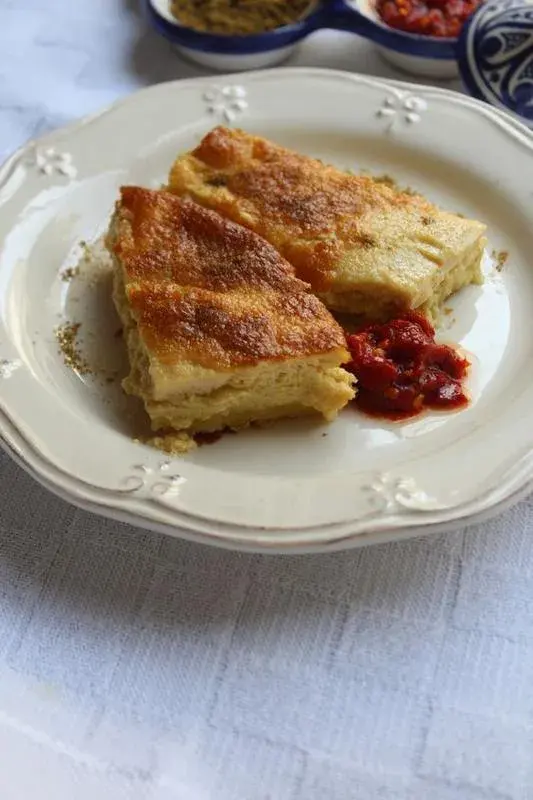
Garantita is a baked chickpea flour flan, sliced and eaten hot in a piece of baguette with cumin and harissa. It is Algerian street food in the most literal sense: sold from carts and small counters, cheap enough to be a default lunch, and eaten standing up. Its names change across the country. Garantita in Algiers, calentica in Oran, and karantita, karen or el hami in the west. In Algiers it also goes by el kebda el beida, the white liver, and it is described without embarrassment as the poor man's sandwich, which is a statement about price rather than quality. The origin story is a good one and should be treated as a story. It is said to come from Spanish soldiers at the fort of Santa Cruz in Oran in the 18th century, who ran out of provisions and had only chickpea flour, water and oil left, and whose cook combined them. The name is then traced to the Spanish caliente, meaning hot. The connection to Spanish chickpea cooking is real, since similar chickpea flour preparations exist across the western Mediterranean, but the specific tale of the soldiers is folklore rather than record. One rule is not negotiable: garantita is eaten hot, never cold.
Note de Patrimoine AFN
Garantita is documented as a street food of Algeria, known as calentica in Oran and by other regional names including karantita and el hami. It belongs to a wider western Mediterranean family of baked chickpea flour preparations, and its name is commonly traced to the Spanish caliente, meaning hot.
Ingrédients
Les mentions alimentaires sont fournies par les contributeurs à titre indicatif. Elles ne sont pas vérifiées par AFN et dépendent des produits que vous achetez. En cas d’allergie grave, vérifiez vous-même chaque ingrédient. Cuisine, allergies et votre propre jugement
Préparation
- 1
Combine the chickpea flour, water, oil, salt and pepper in a food processor until the mixture is smooth.
- 2
Pour into a glass or metal pan of at least 6 by 10 inches.
- 3
Pour the beaten egg over the top.
- 4
Bake at 190°C for 1 hour, or until the top is golden.
- 5
Sprinkle with cumin.
- 6
Slice and serve hot in a baguette, with harissa or another hot sauce.
Notes de l’Africook
- Blend the batter properly smooth before it goes in the pan. Chickpea flour lumps readily and lumps will still be there after an hour in the oven.
- The egg goes on top rather than into the batter. It sets into a thin golden layer, which is what garantita should look like.
- Serve it hot without exception. Algerians are firm on this: cold garantita is a different and much worse thing.
- Do not use olive oil. The recipe specifies a neutral oil, and olive oil is too assertive against a batter this plain.
- Cumin and harissa are not optional garnishes, they are how the dish is finished and seasoned. Sprinkle generously.
Questions fréquentes
What does garantita taste like?
Mild, savoury and slightly nutty from the chickpea flour, with a soft, custard like set and a thin golden egg layer on top. It is deliberately plain on its own, which is why it is always finished with cumin and harissa and eaten in bread. The seasoning at the table is what makes it.
Why is garantita called different things in Algeria?
Regional naming. It is garantita in Algiers, calentica in Oran, and karantita, karen or el hami in the west of the country. In Algiers it also carries the nickname el kebda el beida, meaning white liver. All refer to the same baked chickpea flour dish.
Is the Spanish origin story true?
It is a good story rather than a documented one. The account of Spanish soldiers at the fort of Santa Cruz in Oran running out of provisions and improvising with chickpea flour is widely repeated but unverified. What is real is the family resemblance to chickpea flour preparations across the western Mediterranean, and the likely derivation of the name from the Spanish caliente.
How should garantita be served?
Hot, sliced, and pushed into half a baguette, sprinkled with cumin, salt and pepper, with harissa for those who want it. It is street food and is eaten in the hand. It is never served cold, which Algerians treat as a firm rule rather than a preference.
Avis
5 avis
Whizzed everything in the food processor and had it in the oven in under five minutes. Was a bit worried about just pouring the beaten egg over the liquid batter before baking, but it creates the most incredible brown crust on top after an hour. Ate it straight out of the pan in crisp baguettes with extra cumin sprinkled over.
I was pure nervous pouring that beaten egg over such a runny batter, thought I'd ruined the whole thing! But it worked a treat and made that lovely brown crust just like you said. Stuffed mine into a warm crusty roll with harissa, unbelievable for my first go at Algerian food.
Mine needed about 10 extra minutes at 190C in my Pyrex glass dish to get that top egg layer properly golden brown. The 4 cups of water to 2 cups flour ratio looked way too runny when pouring, but it set into a soft savory custard texture inside the bread. Lekker lunch, will definitely make it again.
Finding proper chickpea flour in Baltimore was a hassle until I bought gram flour from the halal market near me. Doubled the cumin on top and slapped a thick layer inside a French baguette with plenty harissa. E sweet no be small thing! Tasted just like what I used to buy from street vendors.
Ah ah, 1 tablespoon of salt was far too much o! My mouth was dry for hours after eating. The method is very easy sha, blending the chickpea flour and oil took less than two minutes and the baked texture is soft like moi moi. Next time I will use half tablespoon of salt abeg.