

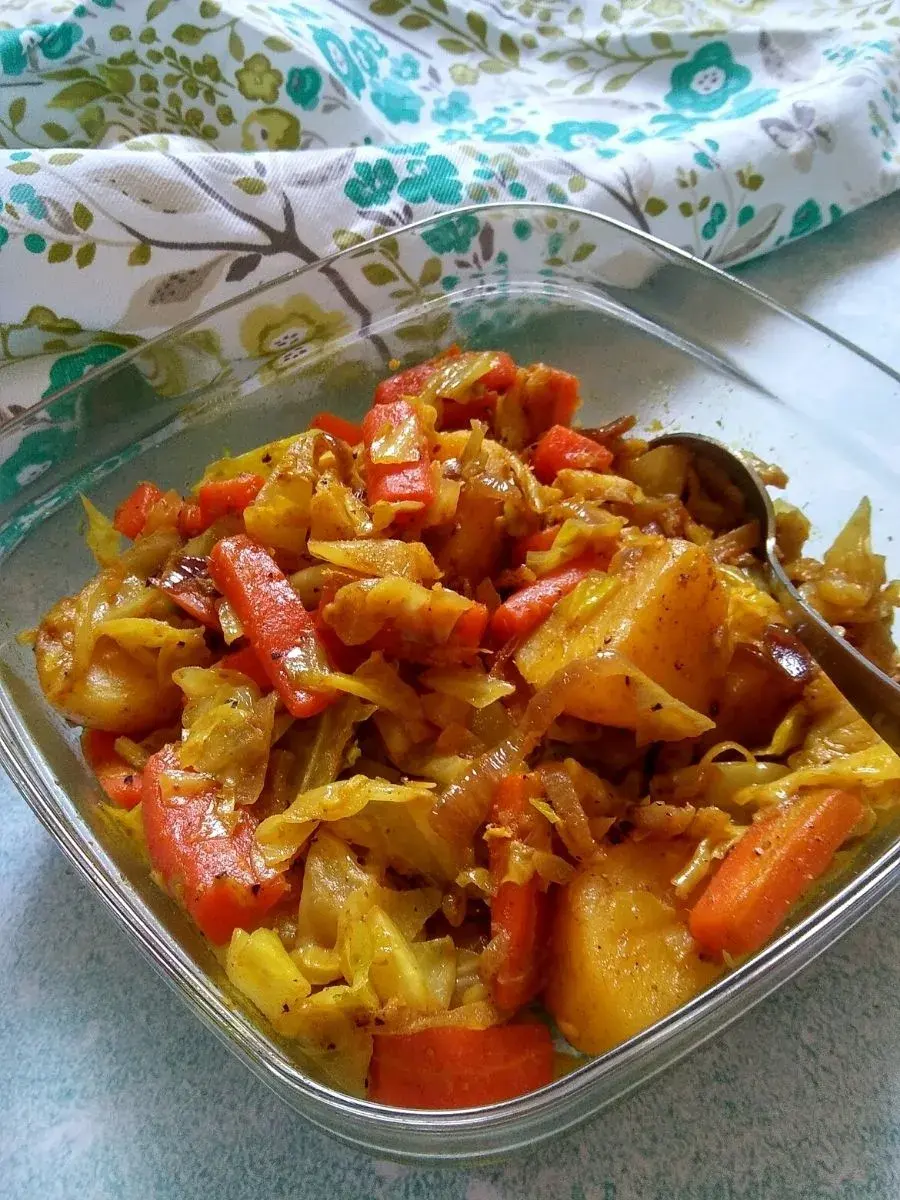
Ethiopian Berbere Cabbage - Atakilt Wat
Aperçu
Atakilt wat is the vegetable stew of the Ethiopian table: cabbage, carrot and potato cooked down with onion, garlic and spice until they are tender without collapsing. The name is Amharic, atakilt for vegetable and wat for stew, which describes it exactly. Its place is on the shared injera platter rather than on a plate of its own. An Ethiopian meal is served as several dishes arranged together on a single round of injera, and atakilt wat is almost always among them, providing a mild, sweet counterweight to the sharper and hotter wat alongside it. It is the dish that gives the platter its balance. That role also makes it central to fasting. The Ethiopian Orthodox calendar includes many days on which no animal products are eaten, and the country's vegan cooking is consequently deep and long practised rather than recent. Atakilt wat contains nothing animal at any point, which is why it appears as reliably during fasting periods as outside them. Berbere, the chilli and spice blend built on chilli, garlic, ginger, fenugreek and a long list of aromatics, is what carries it, though this version keeps the quantity modest so the vegetables stay forward.
Note de Patrimoine AFN
Atakilt wat takes its name from the Amharic atakilt, meaning vegetable, and wat, meaning stew. It belongs to the body of Ethiopian dishes containing no animal products, which developed in the context of the Ethiopian Orthodox fasting calendar and its many days of abstention from meat and dairy.
Ingrédients
Les mentions alimentaires sont fournies par les contributeurs à titre indicatif. Elles ne sont pas vérifiées par AFN et dépendent des produits que vous achetez. En cas d’allergie grave, vérifiez vous-même chaque ingrédient. Cuisine, allergies et votre propre jugement
Préparation
- 1
Heat the olive oil in a pan.
- 2
Add the chopped onion and minced garlic and fry until the onion is translucent and fragrant.
- 3
Add the berbere, turmeric and ginger powder and stir well to coat the onion and garlic.
- 4
Add the shredded cabbage, sliced carrots and potatoes. Stir to combine with the spice mixture, cover, and simmer for 10 to 15 minutes until the vegetables are tender but still have some bite.
- 5
Salt to taste and stir occasionally so nothing sticks.
- 6
Add water only if you want a looser stew. Left dry the vegetables stay crisper.
- 7
Serve hot as a side dish, or with injera for a complete meal.
Notes de l’Africook
 Notes personnelles de Deborah Olayiwola
- Stop while the vegetables still have some bite. Atakilt wat cooked to softness loses the texture that makes it work against the softer dishes on an injera platter.
- Cut the potato smaller than the carrot and the carrot smaller than the cabbage, so all three finish at the same time.
- Water is optional and changes the dish. Left out, the vegetables steam in their own moisture and stay firmer; added, you get a looser, saucier stew.
- Berbere varies enormously in heat between brands and between homemade batches. Start with less than the recipe says, taste, and build up.
- It is better the next day and is often made ahead for that reason. It also travels well, which is part of why it appears at gatherings.
Questions fréquentes
What is berbere and can I substitute it?
Berbere is the foundational Ethiopian spice blend, built on dried chilli with garlic, ginger, fenugreek, korarima, rue and a long list of other aromatics. It is hot, but the complexity matters more than the heat. There is no real substitute, since paprika and chilli powder give colour and heat without the aromatic depth. It is sold at Ethiopian and Middle Eastern grocers and online.
Is atakilt wat vegan?
Yes, entirely, and this is not incidental. The Ethiopian Orthodox fasting calendar includes many days on which no animal products are eaten, and a substantial body of Ethiopian cooking developed to meet that. Atakilt wat is one of the standard fasting dishes and contains no animal product at any stage. Check that the oil used is plant based and it is vegan as written.
What is atakilt wat served with?
Injera, the fermented teff flatbread, which serves as both plate and utensil. Atakilt wat is one of several dishes arranged together on a shared round of injera, where it provides a mild, slightly sweet counterweight to hotter stews such as doro wat or misir wat. It also works on its own as a side with rice.
Should atakilt wat be soupy or dry?
Either, and Ethiopian households differ. Cooked without added water the vegetables steam in their own moisture and the dish stays relatively dry, with more texture. Adding water gives a looser, saucier result that soaks into injera more readily. The recipe leaves it to you, and neither version is more correct.
Avis
4 avis
Vous Aimerez Aussi
Voir toutes les recettes Ethiopia →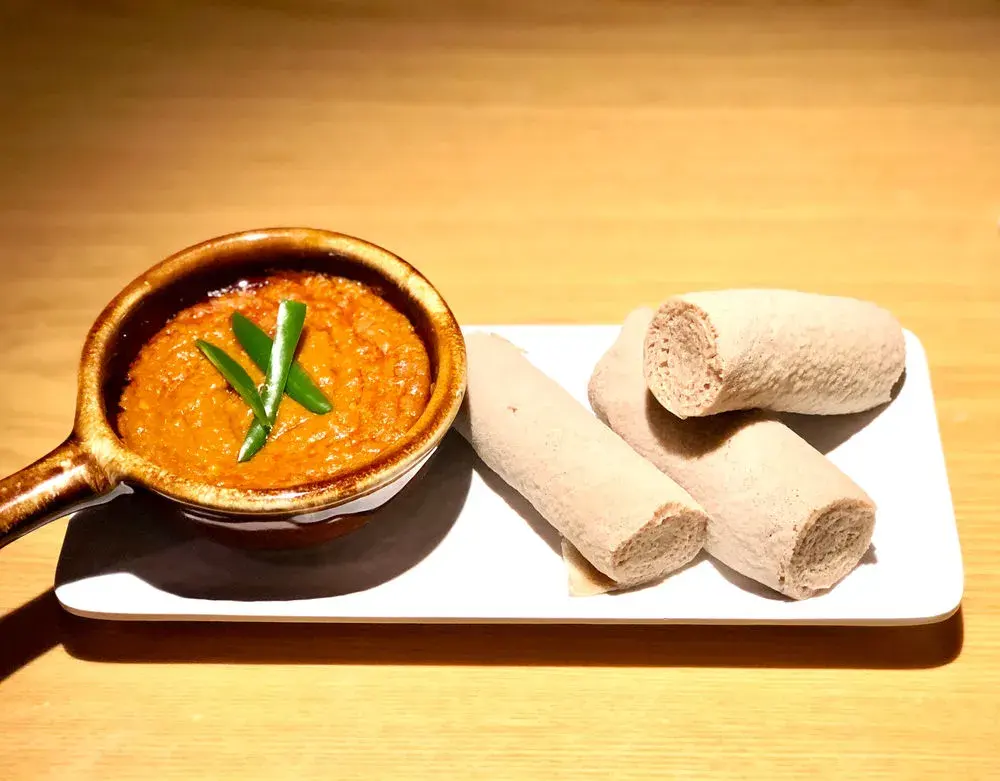
Shiro Wat (Ethiopian Chickpea Stew)
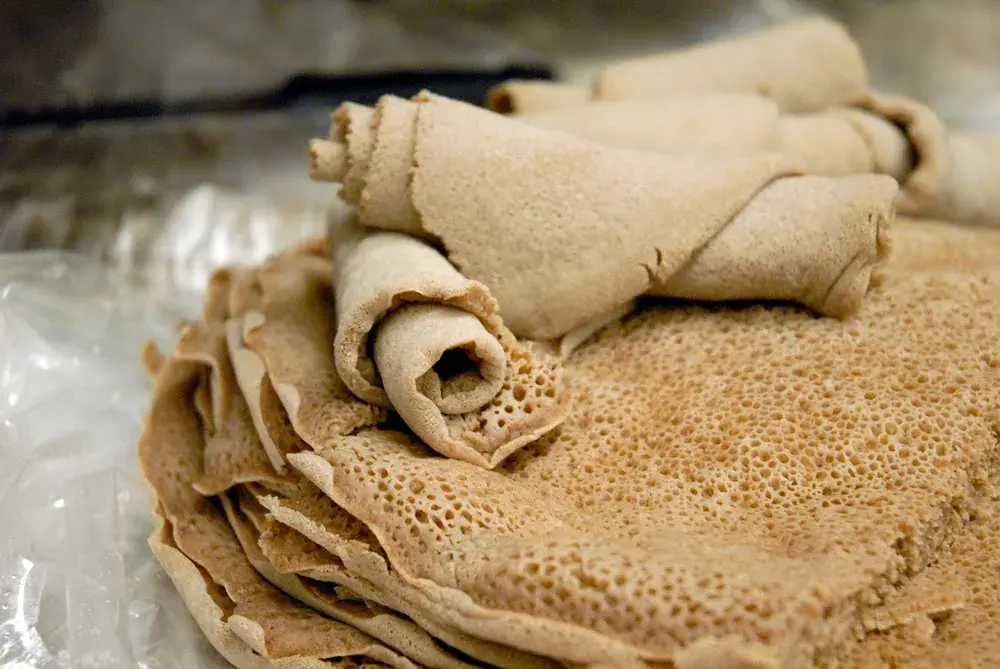
Injera (Ethiopian Flatbread)
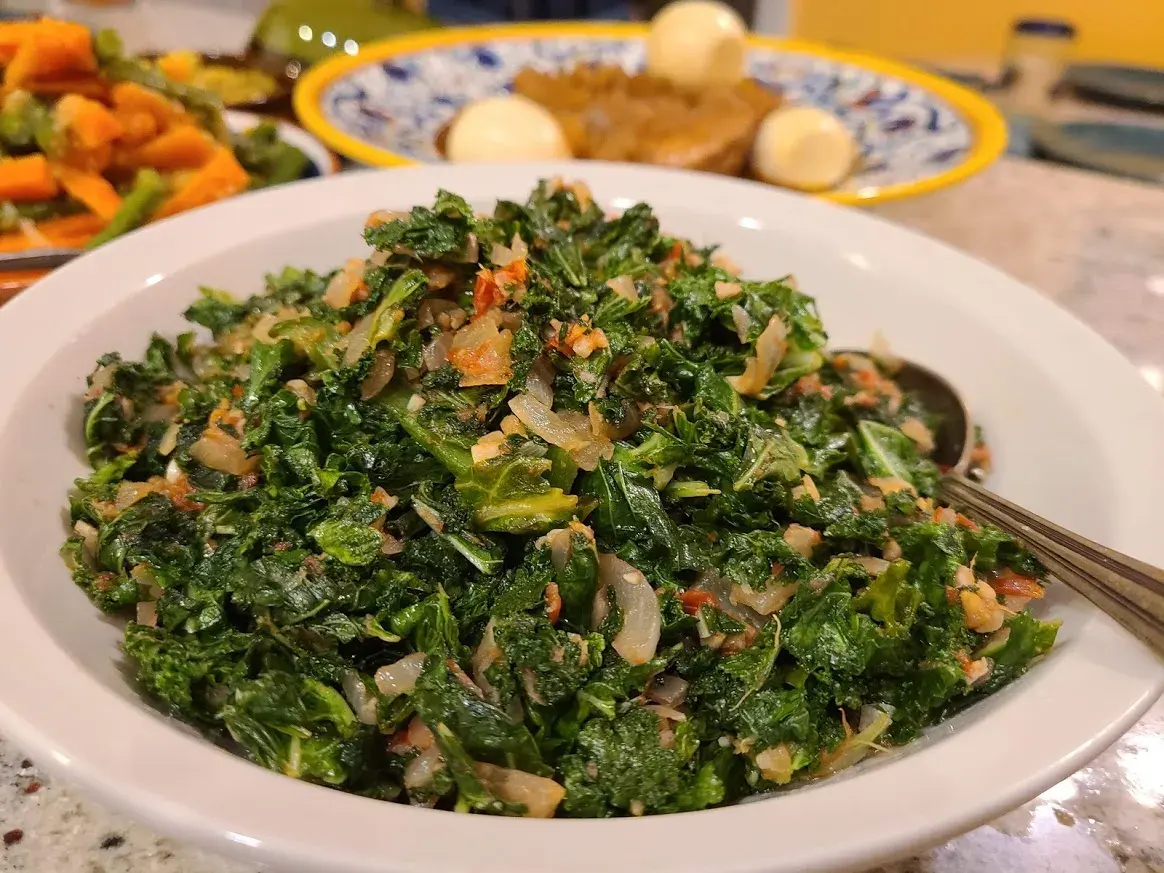
Ah, this smells just like the dish my old habesha roommate used to make for us! I could not find berbere at my local Safeway here in Silver Spring so I had to run to the Ethiopian store on Georgia Ave. I was worried the cabbage would get soft like when I make pondu, but keeping it simmered for just 12 minutes left the potatoes cooked through and the cabbage with a good crunch. Delicious with injera or even fufu on a cold night.
Made this yesterday afternoon. The turmeric gave the potatoes such a lovely yellow colour sha. My only small issue is that my small yellow potatoes took longer than 15 mins to soften up, so I had to cover the pan for another 8 minutes and the cabbage lost a bit of its bite. Next time I will cut the potatoes smaller before adding them to the oil o. But the heat from the berbere spice e sweet well well!
picked up some fresh berbere at the shop near Seven Sisters station just to try this. In my opinion, traditional atakilt wat usually relies mostly on turmeric for that bright yellow color rather than a whole tablespoon of berbere which made mine quite reddish! But chale, it was still very tasty. The ground cumin and ginger powder gave the carrots such a nice aroma while simmering.
herh, cabbage can release so much water when you cover the pan oo. Do you cut your cabbage thick or thin for this? When I fried the onions and garlic with the ginger and turmeric first, the oil smelled amazing in the kitchen, but I want to make sure my cabbage does not end up soggy when I make it tomorrow.