

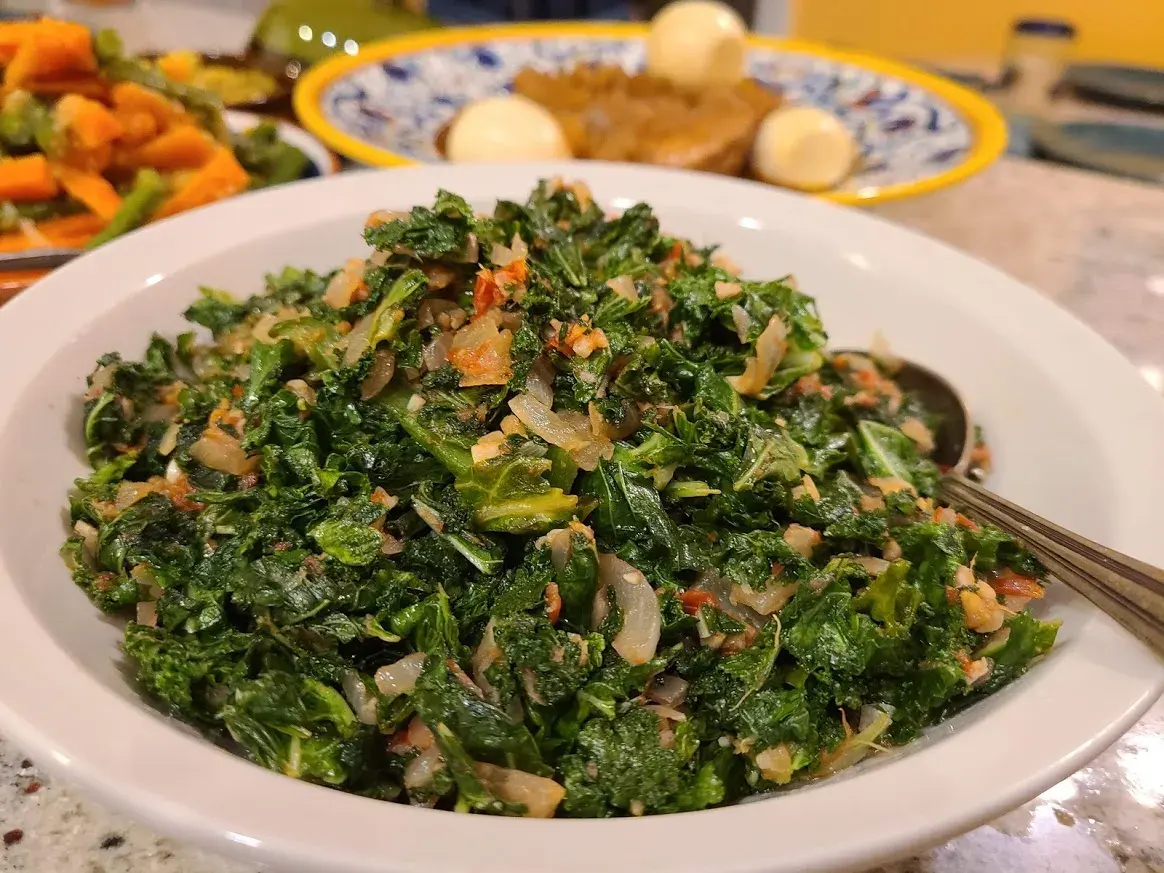
Gomen Wat (Ethiopian Collard Greens)
Aperçu
Gomen is the Ethiopian word for collard greens, and gomen wat is the dish made from them: greens braised down with onion, garlic, ginger and spice until they wilt but keep some bite. It appears on almost every Ethiopian platter, spooned onto injera alongside the meat and lentil stews. It is also called ye'abasha gomen or abesha gomen. Abesha is a term used collectively for Ethiopians and Eritreans, so the name translates roughly as Ethiopian collard greens, distinguishing the local variety and preparation from others. Collards are eaten widely across the continent and beyond, from Tanzania and Kenya to Brazil, Portugal and the southern United States, but the Ethiopian treatment is specific. Niter kibbeh is what makes it specific. It is clarified butter infused with herbs and spices during the clarifying, closely comparable to Indian ghee except for that infusion, and it is the fat almost all Ethiopian cooking is built on. Using plain butter or oil produces a perfectly good pan of greens; it does not produce gomen wat. Because of the butter, this is vegetarian rather than vegan, and a fasting version made with oil exists for the Orthodox fasting days when animal products are avoided.
Note de Patrimoine AFN
Gomen wat is an Ethiopian collard green dish, also known as ye'abasha gomen or abesha gomen, prepared with niter kibbeh, the spice-infused clarified butter that forms the base of much Ethiopian cooking.
Ingrédients
Les mentions alimentaires sont fournies par les contributeurs à titre indicatif. Elles ne sont pas vérifiées par AFN et dépendent des produits que vous achetez. En cas d’allergie grave, vérifiez vous-même chaque ingrédient. Cuisine, allergies et votre propre jugement
Préparation
- 1
Heat the niter kibbeh in a pan over medium-high heat. Add the onion and cook until soft and translucent, 5 to 7 minutes.
- 2
Add the garlic, ginger and spices and cook for 2 to 3 minutes.
- 3
Add the collard greens and another tablespoon of niter kibbeh, and cook until the collards turn bright green and are wilted but still slightly crisp, 5 to 7 minutes.
- 4
Adjust with more spices or niter kibbeh to taste and serve.
Notes de l’Africook
- Stop while the greens still have some bite. Overcooked collards go grey and limp, and the bright green is part of what the dish is judged on.
- Strip the thick central stems out before chopping. They stay tough long after the leaves have softened.
- Use niter kibbeh if you possibly can. Plain butter gives good greens but not gomen wat, since the infused spices are half the flavour.
- For a fasting or vegan version, use oil in place of the niter kibbeh, as Ethiopian cooks do during Orthodox fasts.
- Add the second spoonful of niter kibbeh with the greens rather than all at the start, so its aroma survives to the plate.
Questions fréquentes
What is niter kibbeh?
Clarified butter infused with herbs and spices while it clarifies, typically including cardamom, fenugreek, cumin, garlic and ginger. It closely resembles Indian ghee, the difference being that infusion. It is the fat most Ethiopian cooking is built on and is sold at Ethiopian grocers, or can be made at home from unsalted butter.
Can I use kale instead of collards?
Yes, and the recipe allows for it. Kale is a little more assertive in flavour and holds its texture slightly better, so it needs much the same cooking time. Whichever you use, strip out the thick stems and chop the leaves roughly rather than finely, so they keep some presence on the plate.
Is gomen wat vegan?
Not as written, because niter kibbeh is butter. A vegan version is entirely traditional though: Ethiopian Orthodox fasting days exclude all animal products, and cooks make gomen with oil instead. That fasting version is widely eaten and is what appears on a vegetarian Ethiopian platter during fasts.
What is gomen wat served with?
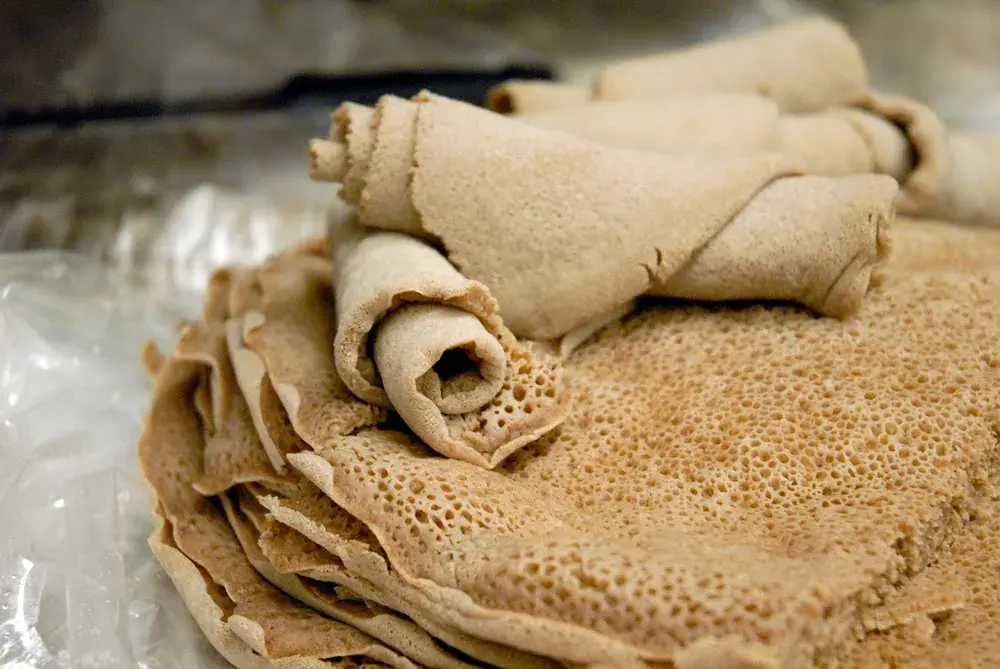
Injera, the fermented flatbread, which acts as both plate and cutlery. It is almost never eaten alone: it appears as one component of a shared platter alongside doro wat, misir wot, shiro and other stews, and diners tear injera to scoop from whichever they want.
Avis
5 avis
Vous Aimerez Aussi
Voir toutes les recettes Ethiopia →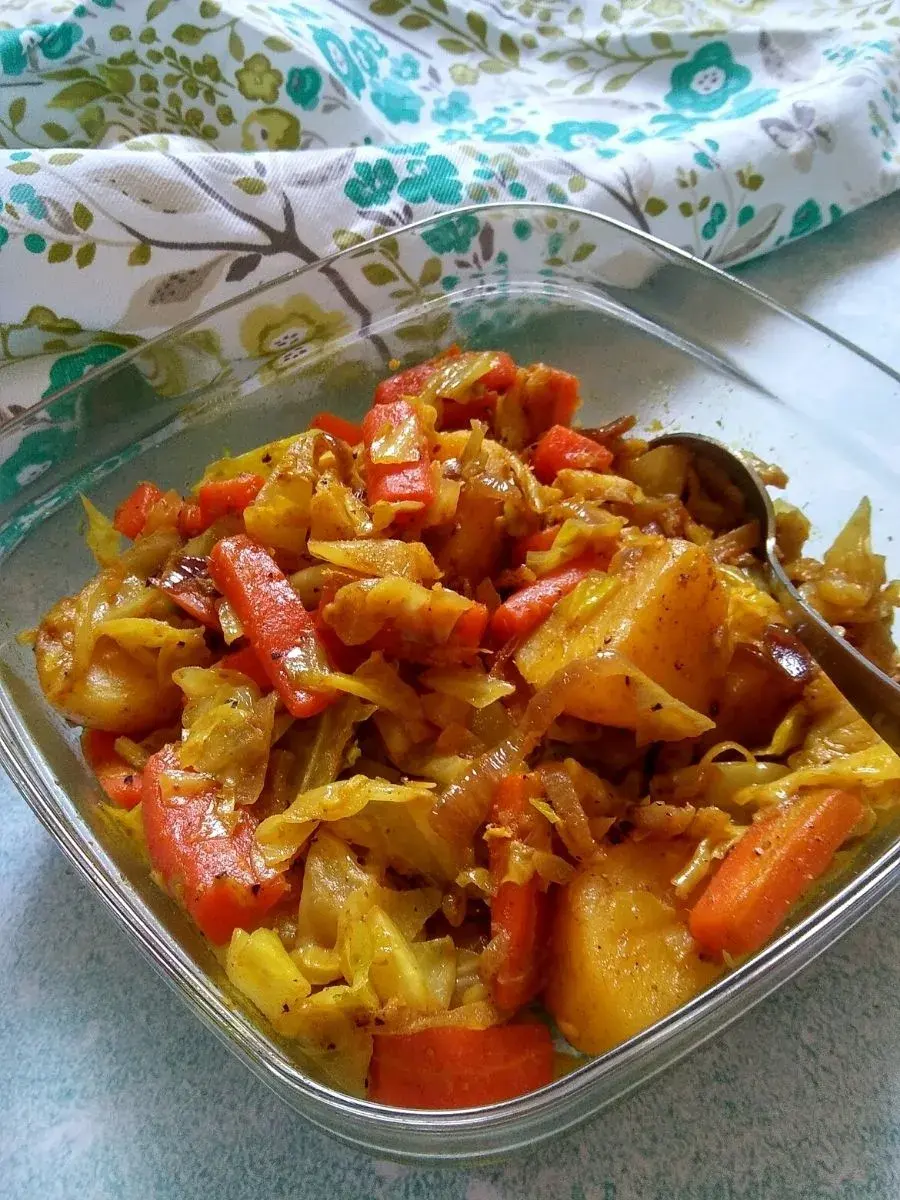
Ethiopian Berbere Cabbage - Atakilt Wat
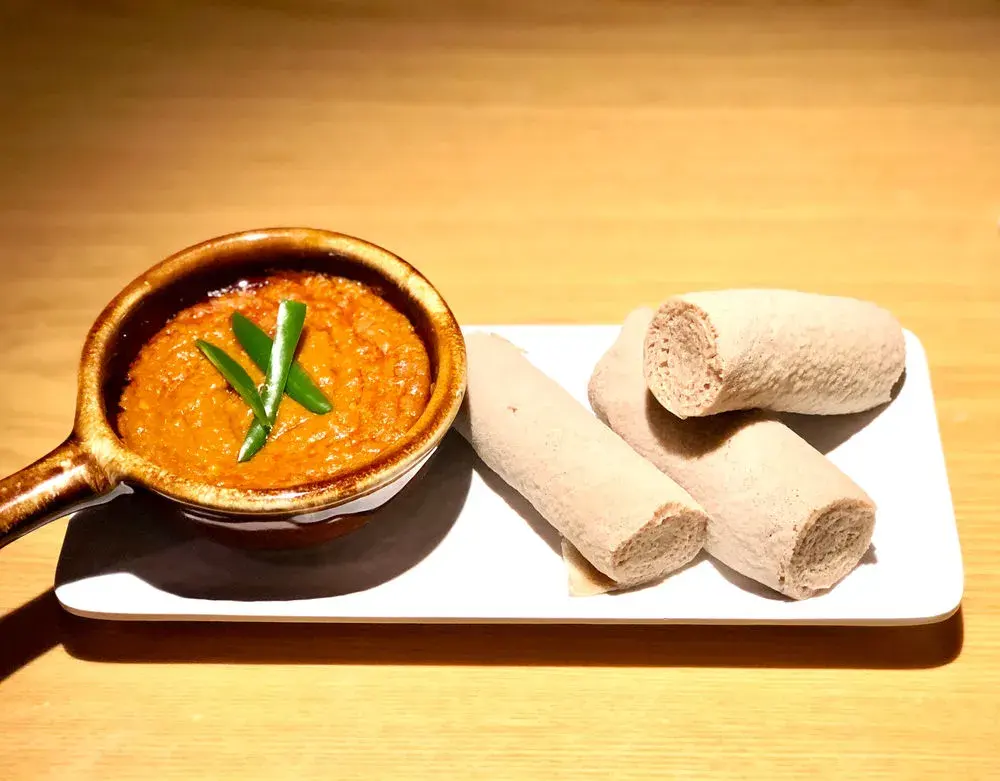
Shiro Wat (Ethiopian Chickpea Stew)
First time attempting any Ethiopian cooking at home. I made my own niter kibbeh beforehand and the coriander and cumin really elevated the collards beyond how I usually cook them with bacon. Quick question though - if I double the collards to 24 oz, should I double the cooking time in the pan or will they get soggy if left too long?
Sommer made this tonight because I had a bunch of kale sitting in the fridge doing nothing. That extra tablespoon of niter kibbeh tossed in right at the end makes all the difference my broer, gives it such a rich shine and taste. Reminds me a bit of how my auntie used to do her spinach but with much better spice.
20 minutes cook time was not enough for me. My yellow onions took almost 12 minutes just to get soft and translucent, not 5 to 7. Also 12 oz of collard greens needed way more than 1/2 teaspoon salt otherwise it tastes quite bland against the heavy cumin. Ended up adding more kibbeh just now to fix the flavor.
couldn't find proper collard greens at Checkers so I used 350g chopped kale instead. The cumin and ginger smelt incredible as soon as they hit the niter kibbeh in the pan. Served this next to our braai meat on Sunday and everyone said it was lekker, though I added an extra 1/2 tsp of salt at the end.
The smell of the ginger and garlic frying in that spiced butter filled the whole kitchen o! I was worried 5-7 minutes would leave the greens too tough, but they came out perfectly wilted with just a little crunch left. E sweet sha.