

Ndambé
Aperçu
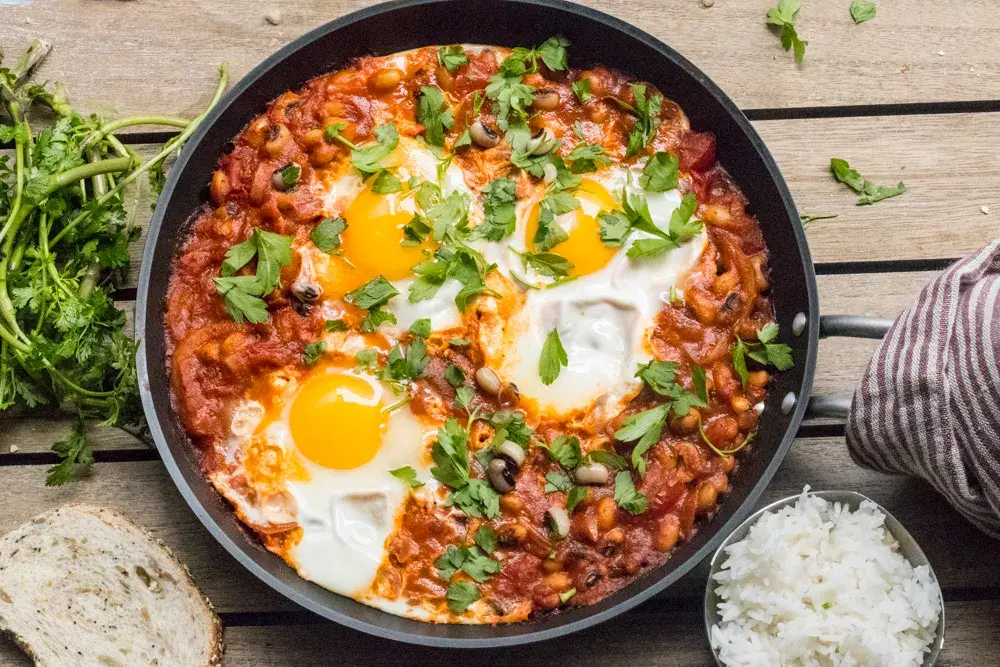
Ndambé is a Senegalese black eyed pea stew, and its most recognisable form is not a bowl at all. It is loaded into a split baguette and eaten as a sandwich from a roadside stand, which is what most Senegalese picture when the word comes up. The baguette is a colonial inheritance that Senegal has thoroughly made its own. French bread arrived with colonial administration and is now baked and eaten across the country in quantities that have nothing to do with France, and the ndambé sandwich is one of the clearest examples of what happened to it: a West African bean stew, spiced with chilli and thickened with tomato, packed into a European loaf and sold for very little money. It is breakfast and dinner food rather than lunch, and Senegalese describe it as winter food, which in Senegal means the cooler months rather than anything a European would call winter. Sweet potato goes in in some households, and meat, usually beef or lamb, in others, though the stew is entirely good without either. Beyond the sandwich it is served with rice, couscous or on its own.
Note de Patrimoine AFN
Ndambé is documented as a Senegalese preparation of black eyed peas, a legume long cultivated across West Africa, cooked with onion and tomato. It is commonly served in a baguette, a bread introduced through French colonial administration and since absorbed into Senegalese daily eating.
Ingrédients
Les mentions alimentaires sont fournies par les contributeurs à titre indicatif. Elles ne sont pas vérifiées par AFN et dépendent des produits que vous achetez. En cas d’allergie grave, vérifiez vous-même chaque ingrédient. Cuisine, allergies et votre propre jugement
Préparation
- 1
Prepare the black eyed peas and cook them in boiling water until tender, about 1 hour. Do not salt the water.
- 2
Put the beef into a pot with a cup of water. Cook for 10 minutes, then drain the broth and reserve it.
- 3
Add the oil to the pot with the beef, then add the onions. Brown them, stirring occasionally, for about 5 minutes.
- 4
Dilute the tomato paste with 1/4 cup of water. Add it to the pot, mix well and cook for 5 more minutes, stirring so it does not stick.
- 5
Add 1/2 cup of water, the chopped garlic, vinegar, stock cube, chilli, a pinch of salt and the black pepper.
- 6
Add the beans and the reserved broth.
- 7
Stir well and cook over medium heat for 15 minutes.
- 8
Spread the ndambé onto two split baguettes and cut each in half on the diagonal.
- 9
Serve warm.
Notes de l’Africook
- Do not salt the water the beans cook in. Salt added at that stage toughens the skins and they will refuse to soften however long you give them.
- Keep the beef broth. It carries the flavour of the meat into the beans and using plain water instead gives a noticeably thinner stew.
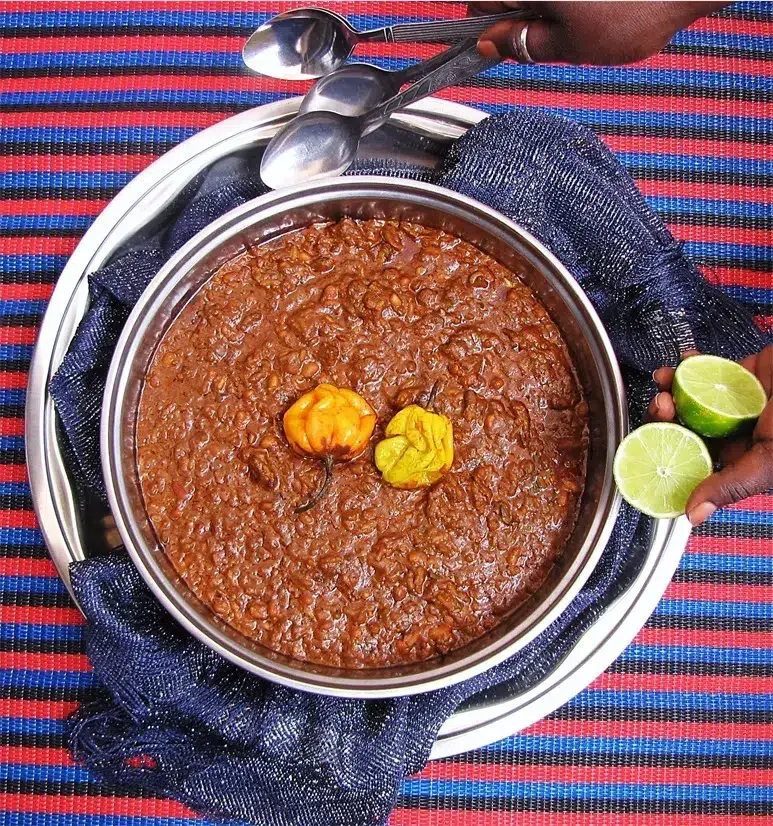
- Make it thicker than seems right if you are serving it in bread. A loose stew soaks the baguette through before anyone can eat it.
- It is easily made vegetarian: leave the beef out, use a vegetable stock cube, and add sweet potato for body. The bean and tomato base carries the dish.
- Beyond the sandwich it is served with rice, couscous or on its own, and it is eaten at breakfast as readily as at dinner.
Questions fréquentes
What are ndambé's main ingredients?
Black eyed peas above all, cooked until tender and combined with a sauce of onion and tomato paste, seasoned with garlic, bay leaf, stock cube, vinegar, chilli, salt and pepper. Sweet potato and meat, usually beef or lamb, are common additions rather than requirements. It is served most often in a split baguette.
Can ndambé be made vegetarian?
Yes, easily, and it is genuinely good that way. Leave out the meat, use a vegetable stock cube in place of the beef one, and consider adding sweet potato for body. The black eyed peas, onion and tomato base does all the work. This is a common way to eat it in Senegal, not a compromise.
Why is ndambé served in a baguette?
Because French bread is a normal part of Senegalese eating. Baguettes arrived through colonial administration and are now baked and sold everywhere in the country. The ndambé sandwich is street food built on that: a West African bean stew in a European loaf, sold cheaply from roadside stands, mostly at breakfast.
What beans should I use?
Black eyed peas are the traditional choice, sometimes called cornille beans in Francophone West Africa. Cowpeas of any kind work. Tinned black eyed peas cut the cooking time to almost nothing, though the texture is softer. Avoid beans that break down completely, since ndambé wants the peas to hold their shape in the sauce.
Avis
2 avis
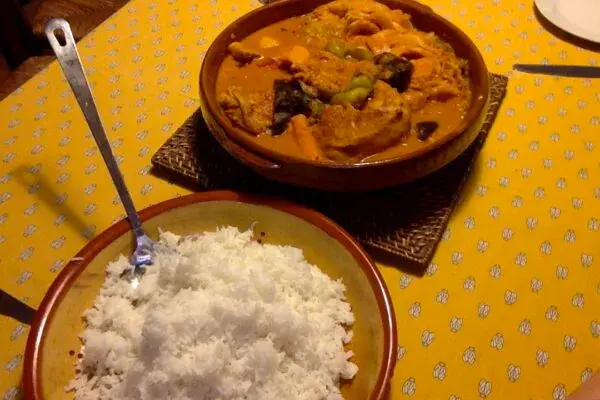
Herh, ndambé inside fresh bread for breakfast is top tier paa! My Senegalese neighbour in Accra used to make this for us all the time. Boiling the black eyed peas without salt first is very important oo, if you salt early they stay hard forever. Just added a little extra chilli powder because 2 teaspoons was not spicy enough for my household.
Tried this in the cast iron potjie over the coals yesterday. That little bit of vinegar added with the tomato paste and stock cube really gives the beef sauce a proper kick. Takes a good hour for those black eyed peas to get tender though, so don't rush it. Baie lekker meal.