

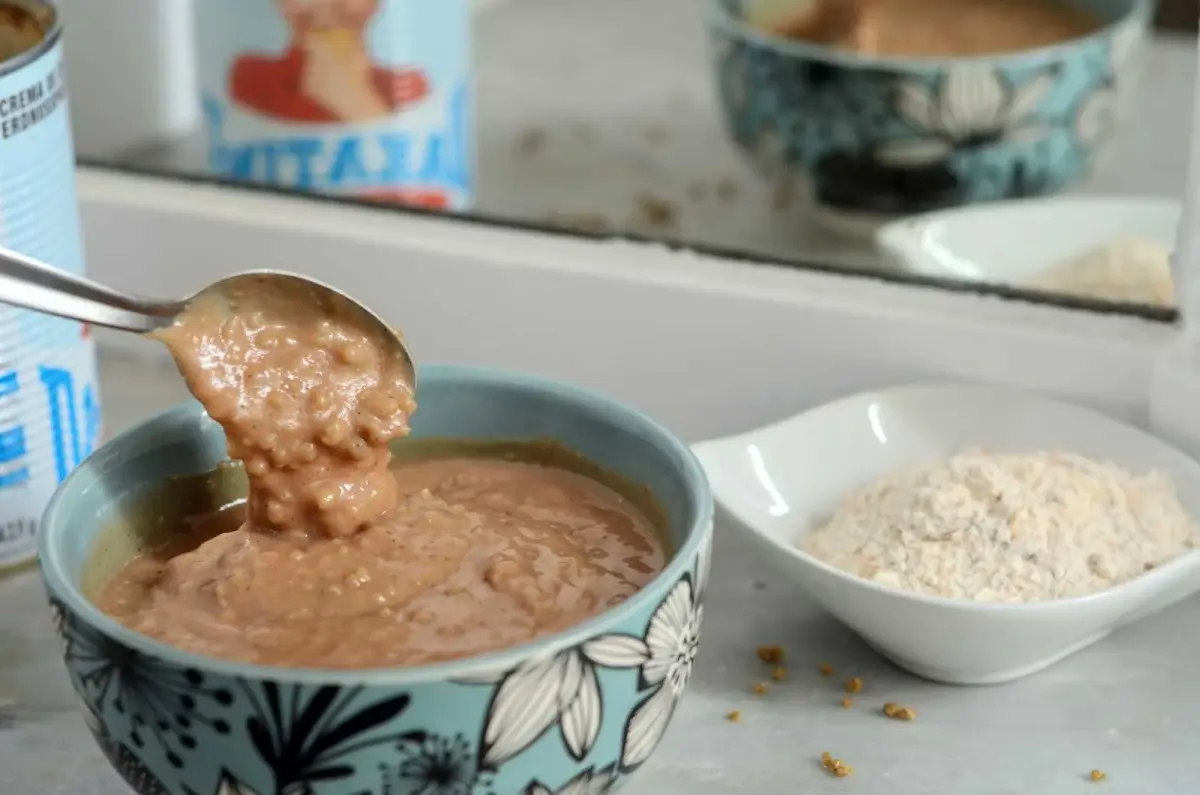
Ngalakh
Aperçu
Ngalakh is Senegal's Easter dish, and the sentence needs the qualification that in Senegal Easter is not primarily about chocolate or eggs. It is about ngalakh: a thick millet porridge bound with peanut paste and baobab fruit, made in quantity and sent out of the house. That last part is the dish. Ngalakh is prepared by Christian households and distributed to neighbours, friends and colleagues, most of whom are Muslim, in a country where the two communities live closely and intermarry. It is also served at Korité, marking the end of Ramadan, moving in the other direction. A dessert that exists to be given away across a religious line is doing something more than feeding people, and Senegalese describe it directly as an expression of teranga, the national value of hospitality and sharing. Its base is thiakry, the medium grain millet semolina, as distinct from thiéré, which is finer. The peanut paste supplies richness and the bouye, the powdered pulp of the baobab fruit, supplies a tart acidity that cuts it. That pairing of heavy and sharp is what makes ngalakh work where a sweet porridge alone would not. It is eaten cold, from large bowls, dusted with sugar.
Note de Patrimoine AFN
Ngalakh is documented as the dish prepared by Senegalese Christian households at Easter and distributed to Muslim neighbours and friends, and served in turn at Korité, the festival marking the end of Ramadan. It is described as a more elaborate development of lakh, the simpler preparation of thiakry with curds.
Ingrédients
Les mentions alimentaires sont fournies par les contributeurs à titre indicatif. Elles ne sont pas vérifiées par AFN et dépendent des produits que vous achetez. En cas d’allergie grave, vérifiez vous-même chaque ingrédient. Cuisine, allergies et votre propre jugement
Préparation
- 1
Pour a glass of hot water over the thiakry and let it absorb.
- 2
Steam the thiakry in a couscoussier for about ten minutes.
- 3
Spread the cooked thiakry in a large dish and work in the butter, grated coconut, raisins and nutmeg.
- 4
For the sauce, mix the bouye powder with 20cl of water in a dish until dissolved. Add another 30cl of water and the peanut paste.
- 5
Strain the liquid to remove excess bouye fibre. Flavour with the vanilla sugar and orange blossom water.
- 6
Pour the thiakry into a large dish and gradually work in the sauce until the texture is that of a thick porridge. Refrigerate before serving.
Notes de l’Africook
- Strain the baobab liquid properly. Bouye powder carries fibre and small pieces of husk, and unstrained sauce gives a gritty ngalakh.
- Add the sauce gradually and stop when the texture is right rather than when the sauce runs out. Millet semolina keeps absorbing liquid as it stands, so a mixture that looks correct while warm will be stiff once chilled.
- Make it a day ahead. It is served cold, and the flavours need time to settle into the grain.
- Orange blossom water varies considerably in strength between brands. Add half, taste, then decide.
- The recipe changes between families and generations. Rice or corn semolina sometimes replaces millet, and fruit is often added. None of these is a departure from the dish.
Questions fréquentes
What is bouye and can I substitute it?
Bouye is the dried pulp of the baobab fruit, sold as a pale powder across West Africa and by African grocers abroad. It is tart, faintly citrus, and it is what balances the richness of the peanut paste. There is no close substitute. Tamarind gets you acidity without the particular flavour, and a ngalakh without bouye is missing half of what makes it work.
What is the difference between thiakry and thiéré?
Grain size. Thiakry is medium millet semolina and thiéré is fine. Ngalakh uses thiakry, because the coarser grain holds its texture against the sauce rather than dissolving into it. Thiéré is used for couscous style dishes where a fine grain is wanted. Both are sold by West African grocers, so check which you are buying.
When is ngalakh eaten in Senegal?
At Easter above all, when Christian households make it in quantity and distribute it to neighbours, friends and colleagues across religious lines. It is also served at Korité, the festival marking the end of Ramadan. Outside those two occasions it is made as an ordinary dessert, but the sharing at Easter is what the dish is known for.
Should ngalakh be served hot or cold?
Cold, and that is not a matter of preference. It is refrigerated before serving and eaten chilled from large bowls, usually with sugar sprinkled over just before eating. The cold sharpens the baobab acidity and firms the texture. Served warm it reads as an unfinished porridge.
Avis
4 avis

The sauce turned out a bit too thick when I mixed the 100g peanut paste with the baobab liquid, so I had to splash in more warm water to loosen it. Otherwise e sweet o, coconut and nutmeg in the millet is a good touch.
Finding actual bouye powder was easy enough but straining out those hard fibres took forever sha! The mix of peanut paste and baobab is so rich, e sweet well well. Next time I will add a bit more nutmeg to the thiakry.
Tracked down the millet semolina and baobab powder in a shop in town. Never used orange blossom water before, the smell while mixing the sauce was gorgeous! Tasted brilliant served cold out of the fridge.
Made this for my roommates last night and we loved the tangy baobab and peanut flavor. Quick question, if I don't have a proper couscoussier, is ten minutes of steaming over a colander enough for the thiakry, or should the millet feel completely soft before adding the butter?