

Maafe
Aperçu
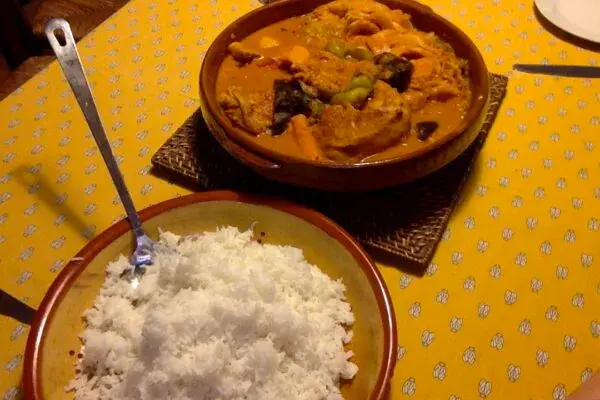
Maafe is the groundnut stew of West Africa, and its name comes from the Mandinka word for sauce. That plainness is accurate: maafe is a peanut sauce, thickened and enriched until it coats meat and vegetables, and it is one of the most recognisable things the region cooks. It traces to the Mandinka and Bambara of Mali, where it is called tigadegena in Bamanankan and domodah in Mandinka, and it spread from there into Senegal and across the rest of West Africa. Each country renamed it: maafe in Senegal, sauce d'arachide in Côte d'Ivoire, domoda in the Gambia. It also crossed the Atlantic, and peanut soups in parts of the American South carry a clear family resemblance. Its history has an economic layer. Peanut stews existed before the peanut, made with indigenous groundnuts, and the arrival of the American peanut in the 16th century gave them a better crop. What entrenched maafe was the colonial period, when groundnut cultivation was expanded enormously for export and West African kitchens found themselves with far more peanuts than they had previously used. A dish partly shaped by a cash crop economy is not a diminished dish, and Senegalese eat maafe communally from a shared platter with rice, which is the ordinary form of a Senegalese meal.
Note de Patrimoine AFN
Maafe traces to the Mandinka and Bambara peoples of Mali, where it is known as domodah and tigadegena, and spread from there across West Africa. Groundnut stews predate the arrival of the American peanut through 16th century Atlantic trade, and the dish became further entrenched during the colonial expansion of groundnut cultivation for export.
Ingrédients
Les mentions alimentaires sont fournies par les contributeurs à titre indicatif. Elles ne sont pas vérifiées par AFN et dépendent des produits que vous achetez. En cas d’allergie grave, vérifiez vous-même chaque ingrédient. Cuisine, allergies et votre propre jugement
Préparation
- 1
Cut the beef into small pieces and heat the oil in a large deep pan.
- 2
Fry the meat until it takes on a light brown colour.
- 3
Chop the onions and tomatoes. Add the onions first and fry briefly before adding the chopped tomatoes.
- 4
Add the tomato concentrate and cook for 2 to 3 minutes. Add about 1.5 litres of water so the meat is completely covered.
- 5
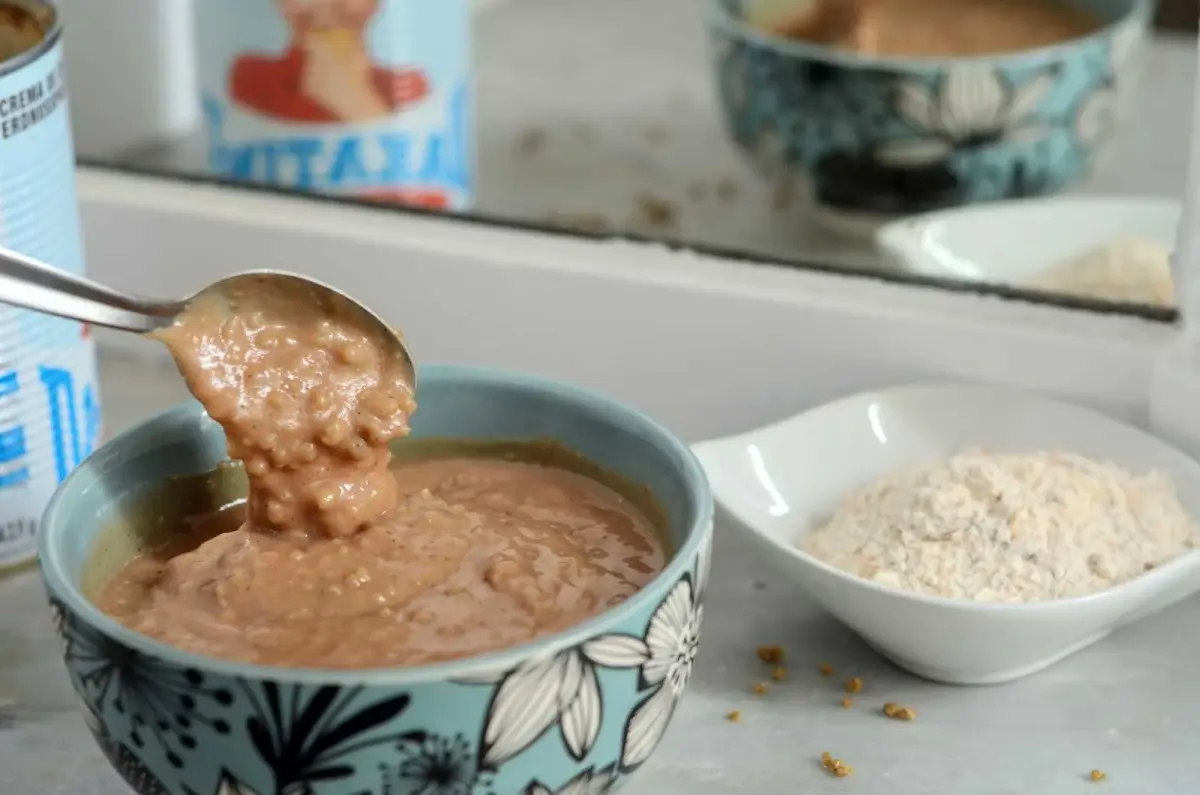
Add the peanut butter to the water and stir slowly until no lumps remain.
- 6
Chop the sweet potato, potatoes, aubergine, carrots and chilli into large pieces and add them with the bay leaf and stock cubes. Simmer over low heat for about 50 minutes.
- 7
Cook the white rice.
- 8
Serve the rice and the thickened maafe sauce together on one large platter. Season with salt and pepper as needed.
Notes de l’Africook
- Loosen the peanut butter with a ladle of the hot cooking liquid before it goes into the pot. Added straight it forms lumps that take a long time to disperse.
- Use 100 percent peanut butter with no added sugar or oil if you can. Sweetened commercial peanut butter pushes the stew in a direction it should not go.
- The consistency is a regional choice rather than a mistake. Thick maafe is served over rice, fufu or millet couscous; thinner, almost soupy versions are equally correct further along the coast.
- Cut the vegetables large. Fifty minutes of simmering will reduce small pieces to nothing, and the stew wants distinct chunks.
- For a vegetarian version, use sweet potato, aubergine, okra, squash, greens or chickpeas in place of the meat, and vegetable stock. The peanut sauce carries it.
Questions fréquentes
What is the difference between maafe, domoda and tigadegena?
They are the same dish under different languages. Tigadegena is Bamanankan, from Mali, and domodah is the Mandinka name; maafe is the Senegalese usage, from the Mandinka word for sauce. Sauce d'arachide is the French name used in Côte d'Ivoire, and domoda is the Gambian form. Preparations differ in detail between countries, but they are one family.
What meat is best for maafe?
Beef chuck and chicken thighs are the classic choices and both hold up to the long simmer. Oxtail and lamb shank suit it particularly well, since the collagen enriches the sauce. Avoid lean, quick cooking cuts, which will be dry by the time the peanut sauce has thickened properly.
Can maafe be made vegetarian?
Yes, and it works well, because the peanut sauce carries the dish rather than the meat. Sweet potato, aubergine, okra, squash, greens and chickpeas all suit it. Use vegetable stock in place of the cubes. The one thing to watch is salt, since without the meat the sauce needs more seasoning to reach the same depth.
How is maafe traditionally served in Senegal?
Communally. It is served over rice on a single large platter and eaten family style, with each person working the section in front of them. Traditionally it is eaten with the right hand, pinching the food and shaping it into a ball. Spoons are provided when the setting calls for them.
Avis
3 avis

Finding good halal beef rump in Minneapolis isn't hard if you go to Cedar-Riverside, but aubergine was so pricey this week so I just doubled the carrots. Stirring the peanut butter slowly into the warm water before leaving it to simmer stopped all the lumps, no stress at all sha. Taste took me right back, e sweet o.
my beef took way longer than 60 mins to get soft, had to simmer it for almost an hour and a half before dropping in the aubergine so it wouldn't turn to mush. used 5 big scoops of smooth black cat peanut butter instead of 4 to make the sauce proper thick and lekker. kids devoured the sweet potato.
Abeg 4 tablespoons of peanut butter is too small for 1.5 litres of water. My sauce was way too watery after adding the chopped tomatoes and water, I had to double the groundnut paste and let it boil down until the oil came to the top. Meat was tender though.