

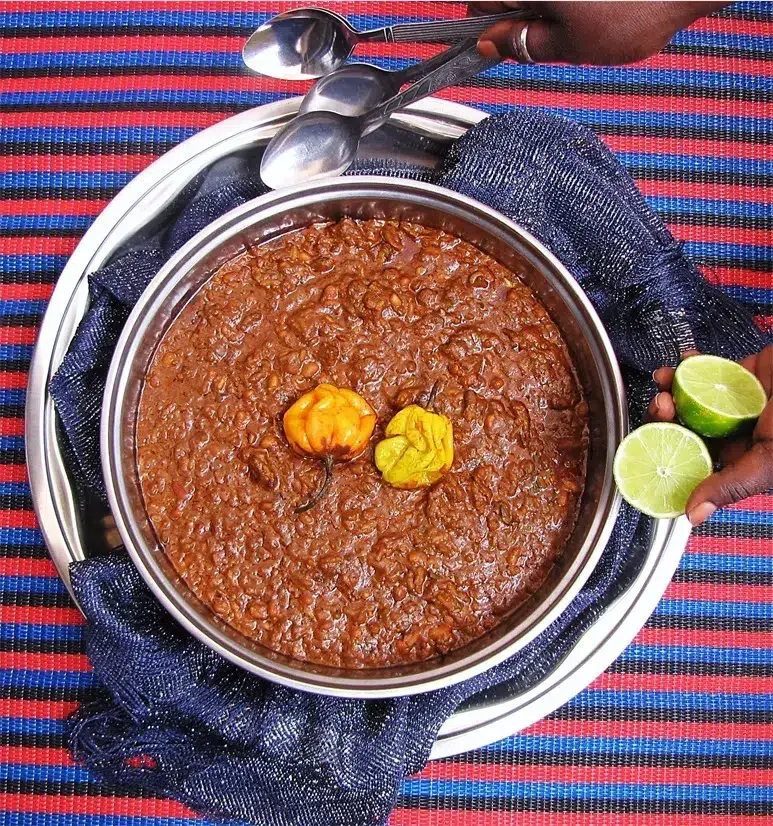
Dakhine
Aperçu
Dakhine is a Senegalese rice dish built on peanut paste, meat and tomato, and it belongs to the evening. Where thieboudienne opens the significant family lunch, dakhine is what Senegalese households eat at night, which gives it a domestic, unceremonious character that the country's more famous dishes do not have. Its economy is part of its identity. Rice, oil, peanut paste and vegetables are inexpensive and available everywhere in Senegal, and dakhine is understood as a dish that feeds a household well without costing much. It is also known as dakhine mbeup, and its closest relative is maafe, the peanut stew of the wider Mandinka region, from which dakhine differs by cooking the rice in the peanut sauce rather than serving the two separately. The rice matters. Senegalese cooks use a broken rice and take it to al dente rather than soft, so the grains stay distinct in a sauce that is deliberately kept loose. A dakhine that has gone dry is considered a failure. It is spiced with enough chilli that some Senegalese find it heavy for an evening meal, which is a complaint people make about a dish they nonetheless keep making.
Note de Patrimoine AFN
Dakhine belongs to the Senegalese family of peanut based dishes alongside maafe, and is documented as an evening meal in Senegalese households. Groundnuts became Senegal's dominant cash crop under French colonial cultivation from the 19th century, which established peanut paste as a staple of the national kitchen.
Ingrédients
Les mentions alimentaires sont fournies par les contributeurs à titre indicatif. Elles ne sont pas vérifiées par AFN et dépendent des produits que vous achetez. En cas d’allergie grave, vérifiez vous-même chaque ingrédient. Cuisine, allergies et votre propre jugement
Préparation
- 1
Put the rice in a bowl of water and leave it to stand.
- 2
Wash and cut the meat into small pieces. Season with pepper, salt, chilli, vinegar and minced garlic, and mix together.
- 3
Heat the oil in a pot. Add the meat and brown for 10 minutes.
- 4
Add the chopped onion, mix, and brown for 3 minutes.
- 5
Put the concentrated tomato in a bowl with half a glass of water and mix well. Add it to the meat, mix, and cook for 7 minutes. The colour should turn a deep dark red.
- 6
Add 1.5 litres of water, the stock cubes, a pinch of salt, chilli and pepper, and the bay leaves. Mix well, then add the peanut paste.
- 7
Cook for 40 minutes over medium heat.
- 8
Add the drained rice. Stir and adjust the seasoning to taste.
- 9
Cook for 15 minutes over medium heat, mix, then cook for a further 10 minutes over very low heat.
- 10
If there is too much sauce left, cook a few minutes more, but the rice should not go dry. Serve hot.
Notes de l’Africook
- Do not cook it dry. The rice should finish al dente in a sauce that is still loose, and a dakhine reduced to a dry pilaf has gone past the dish rather than towards it.
- Take the tomato paste to a genuinely dark red before any water goes in. That seven minute stage is where the depth of the sauce is built, and rushing it leaves a thin, sharp flavour.
- Broken rice is what Senegalese cooks use, and it takes up the peanut sauce far better than whole grain. Avoid basmati, which stays too separate.
- Loosen the peanut paste with a little of the hot cooking liquid before it goes into the pot, or it will sit in lumps that take a long time to disperse.
- The chilli level here is a Senegalese one. Reduce it if you are serving it in the evening and want to sleep.
Questions fréquentes
What is the difference between dakhine and maafe?
Both are West African peanut dishes and the difference is structural. Maafe is a peanut stew served alongside rice, cooked separately. Dakhine cooks the rice in the peanut sauce itself, so the grains absorb it and the two arrive as one dish. Dakhine is also more strongly associated with the evening meal in Senegal, while maafe is eaten at any hour.
What rice should I use for dakhine?
Broken rice is the Senegalese standard, sold as brisures de riz at West African grocers. It takes up the peanut sauce far more completely than whole grain and is what the dish is built around. Ordinary long grain works. Avoid basmati and jasmine, which stay separate when you want absorption.
Can I make dakhine without meat?
Yes. The peanut and tomato base carries the dish, and a vegetable version with sweet potato, carrot and cabbage cooked in the sauce works well. Use vegetable stock in place of the cubes. What you lose is the fat rendered from the beef at the browning stage, so start with slightly more oil to compensate.
Why is my dakhine bitter?
Usually the tomato paste caught and burnt during the seven minute reduction stage, which is the point at which the pot is most likely to catch. Keep the heat moderate and stir. The other cause is peanut paste that has gone rancid, which happens faster than people expect, so check it before it goes in.
Avis
7 avis

I had to walk to the African shop down the road just to get proper smooth peanut paste for this, no sweet peanut butter from Tesco sha! Cooking that tomato paste down for 7 minutes until it turned dark red brought out all the right aromas. Reminds me so much of the version my Senegalese neighbor made for us years ago. E sweet well well o.
Herh, you did very well avoiding that sweet Tesco peanut butter oo, it will just spoil the whole dish! But chale, that 7-minute tomato paste fry is the real secret. My Senegalese friend from Dakar always adds a bit of smoked fish right after the tomato turns dark red before putting the groundnut paste. Try that next time, the depth of flavor is proper paa.
Make sure your butcher gives you good soft halal beef o, because that 10 minutes browning in the oil is crucial. I used 2 stock cubes as written and the spice level with the chilli powder was spot on. Only thing is my tomato paste started catching at 5 minutes instead of 7, so abeg reduce your heat a bit when darkening the tomato base.
Herh, Halima, these UK electric hobs will burn your tomato paste before five minutes even pass oo! True word about reducing the heat. Chale, for the meat, I get mine from the halal butcher in Harehills here in Leeds, so soft paa, it browns nicely without turning into leather.
The 1 tablespoon of vinegar in the marinade really tenderises the beef before it hits the pot. I used 100g of smooth Black Cat peanut butter since I could not find plain peanut paste at Pick n Pay, and the flavour was still lekker. That tomato paste browning step until it turns deep dark red gives it such a rich base.
Chale, that tomato paste browning step is the real secret oo! But herh, Black Cat peanut butter has small sugar inside. Dakhine is Senegalese food, so if you find pure unsweetened groundnut paste next time, the flavour will balance even better paa.
I was a bit skeptical about mixing 100g of peanut paste right into a tomato sauce, but the flavor profile is amazing! The beef got super tender after browning it with the garlic and vinegar marinade. Quick question - do you keep the two bay leaves in when adding the rice, or pull them out first? Mine came out slightly thicker than expected, but my husband loved it.