

Tunisian Mloukhia
Aperçu
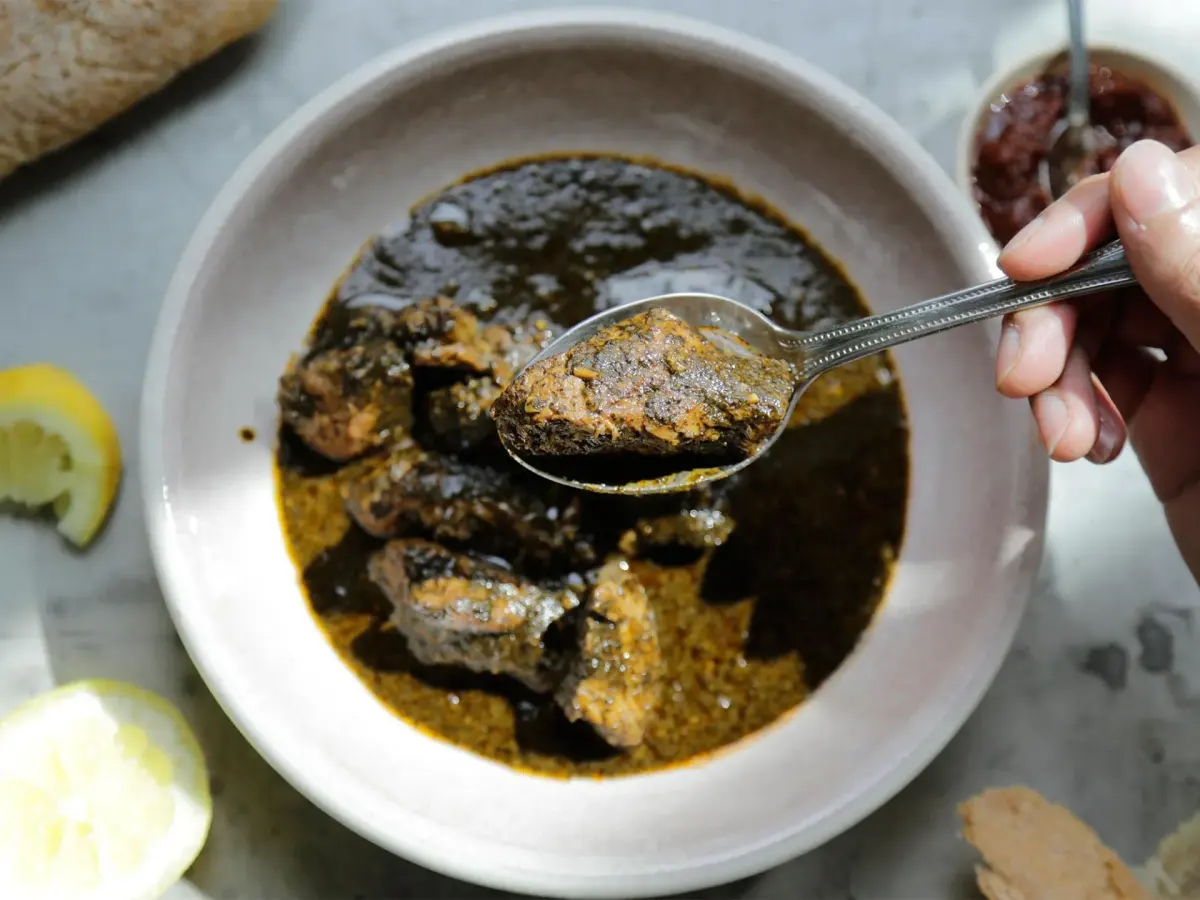
Tunisian mloukhia is not the dish of the same name eaten in Egypt, and the difference is fundamental. Egyptians cook the fresh leaves of jute mallow into a green soup. Tunisians dry the leaves, grind them to a powder, and cook that powder in oil for hours until it turns from green to deep brown and finally to something close to black. The two share a plant and almost nothing else. The name carries a claim. Mloukhia derives from the Arabic malik, meaning king, and in Tunisia the dish is called the delicacy of the king. It is cooked slowly over the low heat of a kanoun, a charcoal brazier, for at least eight hours in the traditional method, and it is not unusual for the paste to be started the evening before and finished the next day. Its occasions are precise and they cross religious lines. Tunisian Muslims eat it on Ras el am, the first day of the Hegira new year, so that the year begins under the sign of green, which is the colour of Islam and of hope. It appears at the end of mourning periods and on the first day of Eid al-Fitr. The Jews of Nabeul kept the same custom and now cook mloukhia for Rosh Hashanah. Tunisians say plainly that there is no middle position on it: you love it or you do not.
Note de Patrimoine AFN
The name mloukhia derives from the Arabic malik, meaning king, and the dish is known in Tunisia as the delicacy of the king. It is documented as the dish eaten on Ras el am, the first day of the Hegira new year, at the end of mourning periods and on the first day of Eid al-Fitr, and the Jewish community of Nabeul prepares it for Rosh Hashanah.
Ingrédients
Les mentions alimentaires sont fournies par les contributeurs à titre indicatif. Elles ne sont pas vérifiées par AFN et dépendent des produits que vous achetez. En cas d’allergie grave, vérifiez vous-même chaque ingrédient. Cuisine, allergies et votre propre jugement
Préparation
- 1
Put the mloukhia powder into a large pot on the stove. Add the oil, mix and stir to get the lumps out.
- 2
Add the hot water, leaving room at the top of the pot. Bring to a boil over medium high heat.
- 3
Add the bay leaves, then turn the pot down to a low simmer and cover for about 2 hours.
- 4
Prepare the meat, which can be done the night before. Mix the tabil, caraway, harissa or tomato paste, ground pepper and a pinch of salt in a small bowl.
- 5
Mash the garlic to a paste and add it to the spices. Rub the mixture into the lamb, cover and refrigerate.
- 6
After two hours, bring the mloukhia pot back to a boil and add the lamb. Let it boil briefly, then turn the heat down and simmer for a further 1.5 to 2 hours.
- 7
The meat should be tender and starting to fall off the bone, and the sauce should have darkened. Total cooking time is around 3.5 to 5 hours.
- 8
Serve with baguette.
Notes de l’Africook
- The long cook is the recipe. Mloukhia is slimy the moment water hits the powder, and hours of slow cooking is the only thing that removes that texture. There is no way to shorten it.
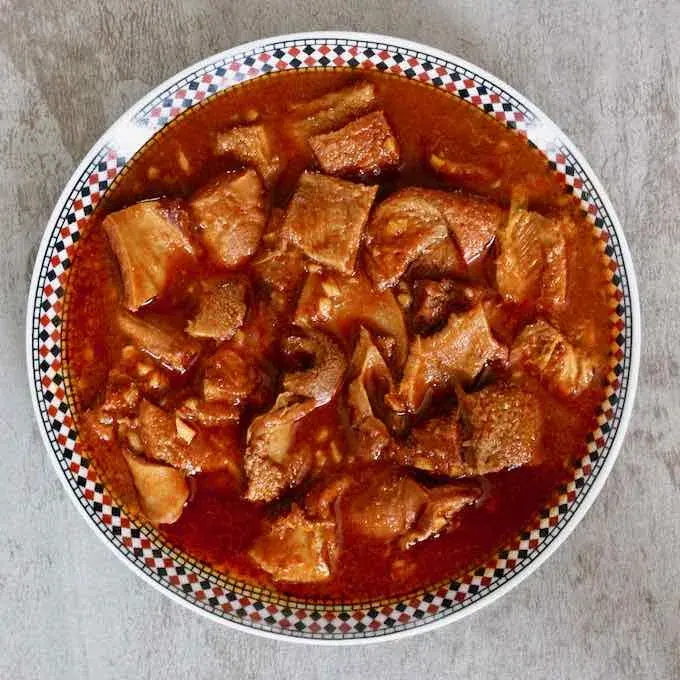
- Watch the colour rather than the clock. It goes green, then brown, then close to black, and it is not ready until it has made that journey.
- Get the lumps out at the start, while the powder is in the oil and before the water goes in. Once water is added, lumps set and stay.
- Start the paste the night before if you can. Many Tunisian households do exactly this and finish the stew the following day.
- Merguez sausage is a common addition alongside the lamb, and tripe is used in some households.
Questions fréquentes
What is the difference between Tunisian and Egyptian mloukhia?
Almost everything except the plant. Egyptian molokhia uses the fresh leaves of jute mallow, chopped and cooked briefly into a green soup. Tunisian mloukhia uses the leaves dried and ground to a powder, then cooked in oil for hours until the sauce turns from green to nearly black. They look, taste and eat completely differently.
Why does mloukhia take so long to cook?
Because of the texture. The moment water meets the powder the mixture turns slimy, and prolonged slow cooking is the only thing that breaks that down and develops the deep colour and flavour the dish is judged on. Traditionally it is cooked over charcoal for eight hours or more. Even a shortened version needs three and a half.
What is tabil?
Tabil is a Tunisian spice blend, typically ground coriander seed, caraway, garlic and dried chilli. It is one of the base seasonings of Tunisian cooking, used in stews and on meat. It is sold at North African grocers. If you cannot find it, ground coriander and caraway together with garlic powder gets you close.
When is mloukhia eaten in Tunisia?
On Ras el am, the first day of the Hegira new year, so the year starts green and therefore prosperous. It is also served at the end of mourning periods and on the first day of Eid al-Fitr. The Jewish community of Nabeul cooks it for Rosh Hashanah, keeping the same new year association across a different calendar.
Avis
8 avis
chale, mashing the fresh garlic into a paste with the caraway before rubbing it into the lamb is where the whole flavour comes from! We bought fresh halal lamb shoulder chops from our local butcher and left it in the fridge overnight with the harissa. The aroma when the pot was bubbling on low heat with the bay leaves was wonderful paa.
Rashida, you spoke the absolute truth about that garlic and caraway paste! Sourcing good halal lamb shoulder here in Chicago took me some searching, but marinating it overnight with harissa makes all the difference. That aroma when the pot is bubbling slowly on the stove for hours is no be small thing o.
Herh, the initial whisking when you add the oil to the powder needs real patience oo. If you rush it, heavy lumps will form paa. The tabil blend with the pounded garlic really cut through the oiliness. My Tunisian friend from university days used to leave the bay leaves in till the very end just like this.
Spot on about those lumps, bra. I measure out exactly 100ml of oil to 50g of powder and whisk it cold for a full four minutes before it touches the heat. That tabil and garlic mix is lekker for cutting the richness, and I leave two Robertsons bay leaves in the pot until the very end while it simmers.
two full cups of oil had me panicking at first sha, I thought it was a typo o! But once the mloukhia powder dissolved completely without lumps and simmered down with the lamb shoulder, everything made sense. Very dark and rich soup.
Adaeze, I had the exact same panic over that oil! But as you said, it is the only way that powder dissolves properly without lumps. Sourcing good mloukhia powder here in the US was no be small thing o, but once it simmers down with that lamb shoulder, the flavor is just amazing.
hunted all over woolwich for that 100g packet of mloukhia powder and finally found it in an Arabic supermarket. The caraway and tabil marinade on the lamb shoulder chops is incredible. simmered mine for 3 hours until the oil separated properly on top. my flatmates were confused by the deep green colour at first but the pot was completely wiped clean!
had to go to a local Arab market to get the tabil and powder. Look, the taste was okay but two hours simmer was not enough at all to get the oil to float to the top and lose that grassy raw smell. Took me almost 4 hours on low heat before the lamb became soft and the green color darkened properly. The time stated is way off abeg.