

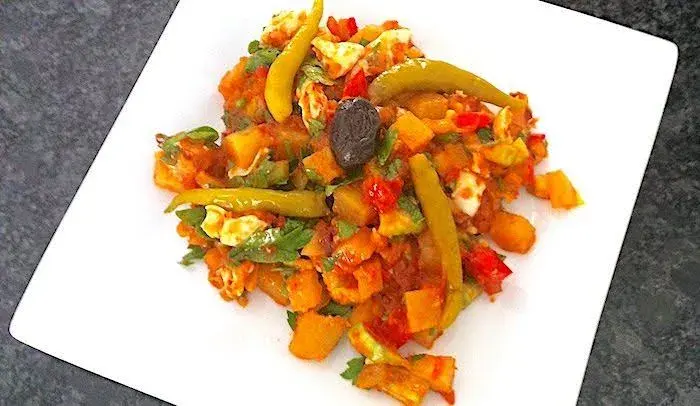
Kafteji
Aperçu
Kafteji is Tunisian street food built on a single idea: fry a range of vegetables separately so each one is properly cooked, then chop them together and serve the result with bread. Potato, courgette, pepper, tomato and aubergine are the usual cast, and the chopping at the end is what makes it kafteji rather than a plate of fried vegetables. It is sold from small counters and casse-croûte shops across Tunisia and eaten at any hour, most often stuffed into bread as a sandwich. It is inexpensive, which is part of its identity: kafteji is what you eat when you want something substantial and hot without a restaurant. Fried egg is a common addition, and in many Tunisian versions it is the only protein. The version here includes ground beef or lamb, which puts it at one end of a range. Kafteji is frequently made entirely without meat, and the vegetable only preparation is at least as common in Tunisia as the meat version. Harissa, olives and a squeeze of lemon are the usual finishing touches, and the dish is eaten from a shared plate with bread as the utensil.
Note de Patrimoine AFN
Kafteji belongs to the Tunisian tradition of casse-croûte street food, in which fried components are combined to order and served with bread. Its earliest documented date is uncertain.
Ingrédients
Les mentions alimentaires sont fournies par les contributeurs à titre indicatif. Elles ne sont pas vérifiées par AFN et dépendent des produits que vous achetez. En cas d’allergie grave, vérifiez vous-même chaque ingrédient. Cuisine, allergies et votre propre jugement
Préparation
- 1
Heat some olive oil in a large pot over medium heat. Add the chopped onion and minced garlic and fry until translucent.
- 2
Add the ground beef or lamb and cook until browned, breaking it up with a spoon. Stir in the tomato paste, cumin, paprika, salt and pepper, and cook for a few minutes.
- 3
In a separate deep pan, heat enough olive oil for deep frying. Fry the potato cubes until golden brown and crisp, then drain on paper towels. Repeat separately with the carrot, aubergine and green pepper, frying each until crisp.
- 4
Add the fried potato, carrot, aubergine and green pepper to the pot with the meat. Mix well and adjust the seasoning.
- 5
Simmer on low heat for about 10 minutes.
- 6
Serve hot with slices of baguette or crusty bread.
Notes de l’Africook
 Notes personnelles de Laila Yetunde
- Fry each vegetable separately. They have different densities and different cooking times, and frying them together gives you burnt pepper alongside raw potato. This is the step that makes the dish work and it is the one people skip.
- Chop the fried vegetables together roughly before serving rather than leaving them in cubes. The mingling of the chopped pieces is what distinguishes kafteji from a plate of fried vegetables.
- Salt the aubergine and leave it 20 minutes before frying, then pat it dry. It absorbs considerably less oil that way.
- A fried egg on top is standard in Tunisia and the meat can be left out entirely, which is at least as common as including it.
- Harissa, olives and a squeeze of lemon are the usual finishing touches. Stuffed into a baguette it becomes the standard Tunisian sandwich version.
Questions fréquentes
Can kafteji be made without meat?
Yes, and the vegetable only version is at least as common in Tunisia as the version with meat. Kafteji is fundamentally a fried vegetable dish, and the meat is an addition rather than a foundation. Leave it out and add a fried egg instead, which is the standard Tunisian treatment and keeps the dish substantial.
Do I have to deep fry the vegetables?
Deep frying is what gives kafteji its texture, and shallow frying in a generous amount of oil is the closest alternative. Roasting or air frying will give you a good vegetable dish but a noticeably different one, because the crisp exterior against a soft interior is much of the point. If you do use the oven, use a high temperature and plenty of oil.
What is kafteji served with?
Bread, always. It is eaten with baguette or crusty bread used as the utensil, and it is very commonly stuffed into a baguette as a sandwich, which is how it is sold from Tunisian street counters. Harissa and olives are usual on the side.
What vegetables go into kafteji?
Potato, courgette, pepper, tomato and aubergine are the standard cast, with carrot and onion frequently added. There is no fixed list, and Tunisian counters vary it by what is in season. What matters is the range of textures and that each is fried separately to its own doneness.
Avis
2 avis
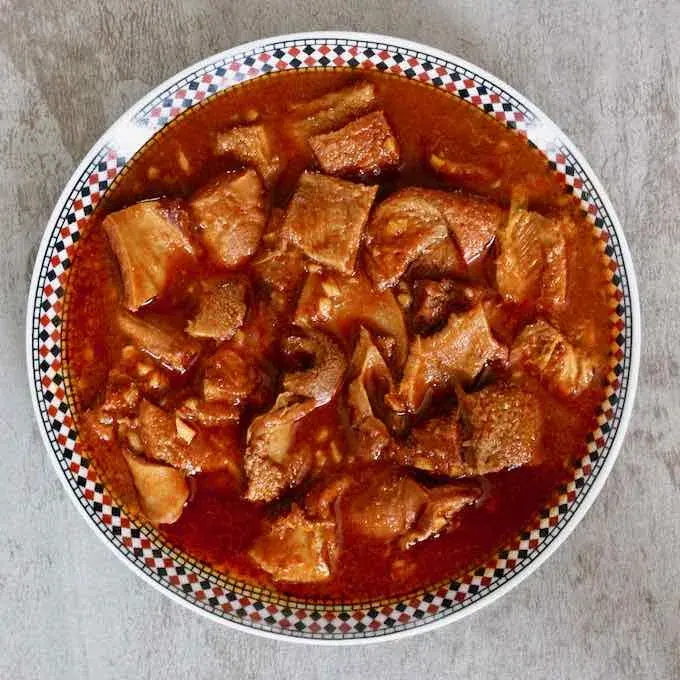
Made this with minced lamb for our iftar table, wallah it was so delicious. Deep frying the carrot and aubergine cubes separately is a bit of extra work at the stove, but that crisp texture before it simmers in the cumin meat sauce makes all the difference.
chale frying the carrots, potatoes and aubergine separately before joining everything with the meat takes time oo! Herh, my oil was almost finished by the end. But the flavor of the ground beef with the tomato paste and paprika is very nice paa.