

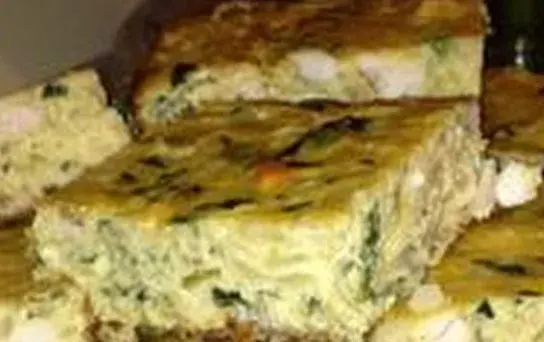
Tajin Sibnekh (Tunisian Chicken and Egg Bake)
Aperçu
A Tunisian tajine is not a Moroccan tagine, and this dish is the clearest illustration of the difference. Moroccan tagine means a stew cooked slowly in a clay pot under a conical lid. Tunisian tajin, or tajin sibnekh, means a baked egg dish, set firm and cut into squares, much closer to an Italian frittata or a Spanish tortilla. The confusion is entirely reasonable and entirely common. The same word travelled to two North African countries and attached itself to two different things. In Tunisia the dish is built from eggs beaten with whatever else is going: potatoes, chicken, spinach, peas, cheese, and the North African spices that mark it as Tunisian rather than European. Harissa and ras el hanout do that marking. Harissa is Tunisia's chilli paste and its most exported product; ras el hanout is the layered spice blend used across the Maghreb. Together they give an egg bake a warmth and heat that a frittata does not have. It is usually served as a starter, though it is substantial enough to be a meal, and it is as good cold the next day as it is hot, which makes it packed lunch and picnic food across the country.
Note de Patrimoine AFN
Tajin sibnekh is a Tunisian baked egg dish, distinct from the Moroccan tagine despite the shared name. It is seasoned with harissa and ras el hanout and conventionally served as a starter.
Ingrédients
Les mentions alimentaires sont fournies par les contributeurs à titre indicatif. Elles ne sont pas vérifiées par AFN et dépendent des produits que vous achetez. En cas d’allergie grave, vérifiez vous-même chaque ingrédient. Cuisine, allergies et votre propre jugement
Préparation
- 1
Preheat the oven to 200°C and grease a 9x13 inch baking dish.
- 2
Heat the vegetable oil in a large skillet over medium-high heat.
- 3
Fry the potatoes in the hot oil until golden brown and tender, about 7 minutes. Remove with a slotted spoon and drain on paper towels.
- 4
Stir the chicken into the remaining oil and cook until white on the outside but still pink inside, about 2 minutes.
- 5
Add the onion and continue cooking until softened and translucent, about 5 minutes.
- 6
Stir in the harissa, ras el hanout, water, tomato sauce and butter. Bring to a simmer, then stir in the spinach until wilted. Remove from the heat and set aside.
- 7
Beat the eggs in a large mixing bowl until smooth, then stir in the peas, Parmesan and fried potatoes.
- 8
Stir in the chicken mixture a spoonful at a time, season with salt and pepper, and pour into the prepared dish.
- 9
Bake until the mixture is firm and golden brown, 15 to 20 minutes.
- 10
Cool slightly, cut into 12 squares and serve warm.
Notes de l’Africook
- Add the hot chicken mixture to the beaten eggs a spoonful at a time. Tipped in all at once it scrambles the eggs before they reach the oven.
- Fry the potatoes properly first. Raw potato will not cook through in the fifteen to twenty minutes the eggs need.
- Reheat gently and briefly. Overheated egg goes rubbery: a minute in the microwave under a damp paper towel is the source's advice and it is sound.
- It is as good cold as hot, which is why it travels well for packed lunches and picnics.
- Omit the chicken for a vegetarian version, or swap in fish or another meat. The egg, potato and spice base carries any of them.
Questions fréquentes
Is this the same as a Moroccan tagine?
No, and the shared name causes real confusion. A Moroccan tagine is a stew cooked slowly in a conical clay pot. A Tunisian tajin is a baked egg dish, set firm and cut into squares, much closer to an Italian frittata or a Spanish tortilla. Same word, two countries, two entirely different dishes.
What is ras el hanout?
A layered North African spice blend whose name translates roughly as head of the shop, meaning the best a spice merchant has. Composition varies widely and can run to a dozen or more spices, typically including cumin, coriander, cinnamon, ginger and cardamom. It is sold ready mixed at North African and Middle Eastern grocers.
Can I make it vegetarian?
Yes, easily. Leave out the chicken and the dish still works, since the potatoes, peas, spinach, eggs and spices carry it. The source suggests exactly this. You could add mushrooms or courgette in place of the chicken for more substance, and the harissa and ras el hanout keep the character intact.
Can it be made ahead?
Yes, and it is designed for it. It is eaten hot or cold across Tunisia and is standard picnic and packed lunch food the following day. Refrigerate it covered for up to three days. If reheating, do it gently and briefly, because egg toughens fast under too much heat.
Avis
5 avis
Grabbed ras el hanout from the Middle Eastern shop near Northgate after asking around. Frying the potato cubes in the oil first before mixing with the chicken and wilted spinach gives it the best texture. Warm aroma reminded me slightly of spice blends back home. Took about 35 minutes in my oven and set perfectly.
Chale 35 mins at 200C was too long for my baking dish, the bottom egg layer got slightly scorched before the middle was fully set. I will lower to 180 next time. The spicy kick from the harissa and ras el hanout was proper though.
I was a bit skeptical about putting frozen peas inside egg bake o, but it actually worked well. Sourced harissa paste at Devon market here in Chicago. The 8 eggs held the whole mix together nicely, very filling dinner.
I reduced the vegetable oil for frying the potatoes because 1/3 cup felt a bit much for my pan. Fresh spinach wilted down nicely into the tomato sauce and chicken breast. Good quick meal for weeknight.
my husband loved this! I couldn't get ras el hanout in my local shop in Woolwich so i improvised with cumin and allspice. frying those diced potatoes before adding the chicken is key, e sweet sha.