

Ta'ameya (Egyptian Falafel)
Aperçu
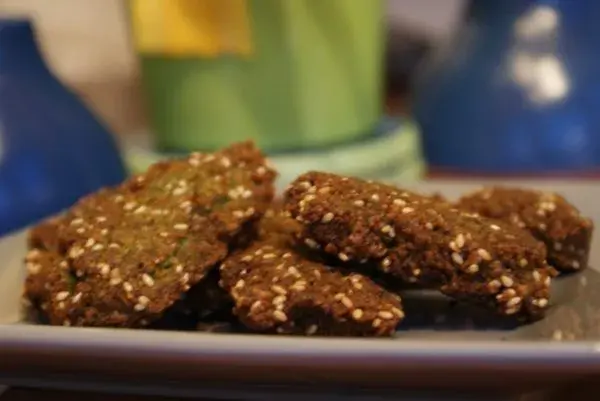
Ta'ameya is Egyptian falafel, and the difference from every other falafel is the bean. Egypt makes it from dried split fava beans; Lebanon, Israel and most of the Levant use chickpeas, or a mixture. The fava gives a paler, softer, greener interior and a distinctly different flavour, and Egyptians will tell you theirs came first. It is breakfast food above all. Ful wa ta'ameya, fava bean stew with falafel, is the standard Egyptian morning meal, and the phrase names the pair together. The ful is cooked overnight in a large round pot called a qedra, and the ta'ameya is fried fresh in the early hours, so the smell of hot oil on the way to school or work is a shared memory rather than an individual one. Herbs are the other distinction. Parsley, coriander and dill go into the paste in quantity, which is what gives the interior its green colour, and the whole mixture is traditionally pounded in a large stone mortar. Sesame seeds are pressed onto the outside before frying in many versions, giving a crust that chickpea falafel does not have. It is eaten with tahini and baladi bread, and it is one of the cheapest complete meals in the country.
Note de Patrimoine AFN
Ta'ameya is the Egyptian form of falafel, distinguished from Levantine versions by its use of dried split fava beans rather than chickpeas. It is conventionally eaten at breakfast alongside ful, as ful wa ta'ameya.
Ingrédients
Les mentions alimentaires sont fournies par les contributeurs à titre indicatif. Elles ne sont pas vérifiées par AFN et dépendent des produits que vous achetez. En cas d’allergie grave, vérifiez vous-même chaque ingrédient. Cuisine, allergies et votre propre jugement
Préparation
- 1
Place the fava beans in a large bowl and cover with several inches of water.
- 2
Leave to soak for 8 hours or overnight, then drain.
- 3
Combine the soaked fava beans, onion, parsley, coriander, dill, garlic, ground coriander, salt and cumin in a food processor and process to a dough-like consistency.
- 4
Heat a skillet over medium heat, add the sesame seeds and cook, stirring occasionally, until toasted, about 5 minutes. Transfer to a large plate.
- 5
Shape the fava bean mixture into balls.
- 6
Roll each in the sesame seeds to coat.
- 7
Fill a large saucepan a quarter full with oil and heat over medium heat.
- 8
Fry the balls in batches until golden brown, 3 to 5 minutes.
- 9
Drain on paper towels and serve.
Notes de l’Africook
- Use dried split fava beans soaked overnight, never tinned or cooked beans. Cooked beans give a wet paste that falls apart in the oil, and this is the single most common failure.
- Do not over-process. The mixture should be a coarse paste that holds together, not a smooth purée.
- Chill the shaped balls for half an hour before frying if the mixture feels soft. It helps them hold together.
- Keep the oil at a steady medium heat. Too hot and the outside darkens before the inside cooks through.
- Fry a single test ball first. If it disintegrates, the mixture is too wet and needs a little more processing or a rest in the fridge.
- They are at their best within minutes of frying, which is why Egyptian sellers make them to order all morning.
Questions fréquentes
What is the difference between ta'ameya and falafel?
The bean. Ta'ameya is made from dried split fava beans, giving a paler, softer, distinctly green interior. Falafel elsewhere in the Middle East is usually made from chickpeas, or a mixture of chickpeas and fava. Egyptian ta'ameya also carries far more fresh herb, parsley, coriander and dill, which is where the green colour comes from.
Can I use tinned fava beans?
No. The beans must be dried, split and soaked, never cooked. Soaking rehydrates them while leaving the starch intact, which is what binds the paste. Tinned or pre-cooked beans give a wet mixture that disintegrates the moment it hits the oil, and no amount of flour will rescue it.
Why do my ta'ameya fall apart when frying?
The mixture was too wet or too finely processed. Drain the soaked beans thoroughly, process to a coarse paste rather than a smooth purée, and chill the shaped balls before frying. Fry one as a test before committing the batch, and if it breaks up, rest the mixture in the fridge for longer.
What is ta'ameya eaten with?
Ful, the slow cooked fava bean stew, above all. Ful wa ta'ameya is the standard Egyptian breakfast and the two are named as a pair. It is also served with tahini, baladi bread, and a salad of tomato, cucumber and onion, either stuffed into the bread or eaten alongside.
Avis
4 avis
Vous Aimerez Aussi
Voir toutes les recettes Egypt →
Tarb (Grilled Kofta Wrapped in Lamb Fat)
Egyptian Meshabek
I usually get the dried split fava beans from the halal grocer on St Mark's Road here in Bristol. Back home in Gambia we make akara with cowpeas, but using fava beans with all this fresh dill and parsley gives it such a vibrant green colour inside. Left them soaking for a good 10 hours overnight and the texture turned out perfect after frying.
Herh chale this is very similar to our koose in Ghana but with fava beans instead of black-eyed peas oo! The dill aroma is strong paa. Just one thing, you wrote to shape the mixture into balls at the end, but you didn't mention how long to deep fry them in the oil? We fried ours for about 4 minutes until dark golden brown.
First time making falafel from scratch using fava beans instead of canned chickpeas! I was terrified the mixture would turn to pure paste in the food processor, but I pulsed it carefully and it held together brilliant. Toasting the sesame seeds in the pan before rolling the balls gave them such a lovely nutty crunch.
I would like to thank you for the efforts and offering an easy recipe for making Ta'ameya and at the same time I want to mention Ta'ameya is like the poor people’s burger and It’s quite common in the breakfast.