

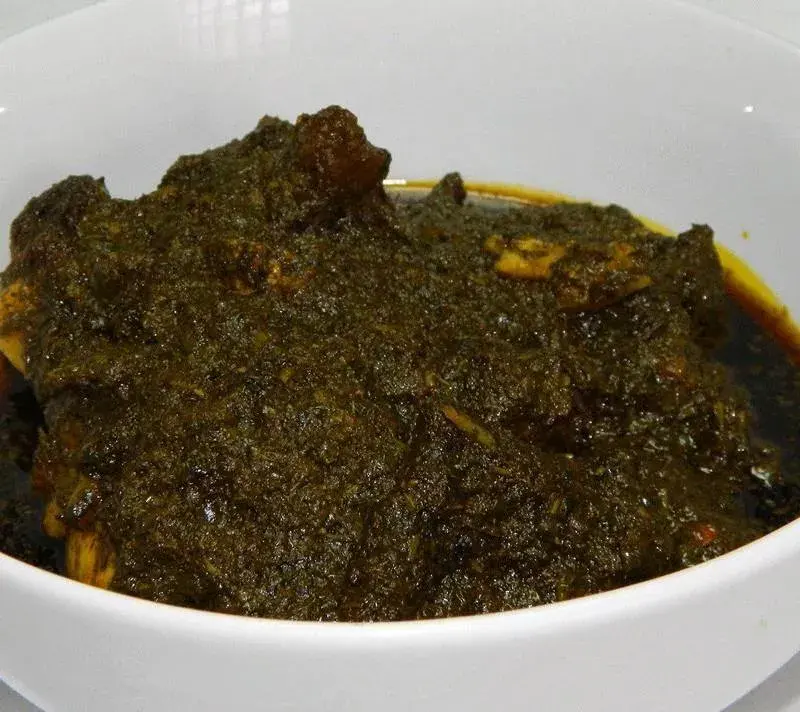
Cassava Leaf Soup with Peanut Butter
Aperçu
Cassava leaf soup is eaten across West and Central Africa, and its names map the geography: saka saka and pondu in the Congo basin, and simply cassava leaf in Liberia, Sierra Leone and Guinea. Wherever cassava is grown for its root, the leaves are eaten too, and a great many countries have arrived at some version of this independently. The West African version this recipe follows is built on groundnut. Peanut butter goes in with the leaves and palm oil, which gives a thicker, richer, nuttier result than the Central African versions that lean on palm oil alone. Smoked turkey, fish or chicken supplies the savoury depth, and scotch bonnet supplies the heat. The leaves themselves carry very little flavour, which is precisely why the dish works: they absorb whatever they are cooked with, so the palm oil, the groundnut and the smoked protein are doing all the talking. That also means the quality of those three decides the pot. It is served over rice, and the one non negotiable is cooking: cassava leaves must be thoroughly cooked, since they are not safe raw. Frozen leaves sold commercially have generally been blanched already, which is why this version cooks relatively briefly.
Note de Patrimoine AFN
Cassava leaf soup is documented across West and Central Africa, known as saka saka and pondu in the Congo basin and as cassava leaf in Liberia, Sierra Leone and Guinea. Cassava was carried to Africa from South America through Portuguese Atlantic trade from the 16th century, and its leaves entered regional cooking alongside its root.
Ingrédients
Les mentions alimentaires sont fournies par les contributeurs à titre indicatif. Elles ne sont pas vérifiées par AFN et dépendent des produits que vous achetez. En cas d’allergie grave, vérifiez vous-même chaque ingrédient. Cuisine, allergies et votre propre jugement
Préparation
- 1
If using fresh cassava leaves, wash them thoroughly and remove any tough stems or veins. Finely chop the leaves.
- 2
In a large bowl, combine the chopped cassava leaves, chopped onion, minced garlic, minced scotch bonnet peppers and peanut butter.
- 3
Heat the palm oil in a large heavy bottomed pot over medium heat.
- 4
Add the cassava leaf mixture and fry for 10 to 15 minutes, stirring frequently, until the leaves wilt and the peanut butter melts into the mixture.
- 5
Reduce the heat to low, cover and simmer for a further 15 to 20 minutes, stirring occasionally. Add water or broth as needed so it does not stick.
- 6
In a separate large pot, heat 2 to 3 tablespoons of vegetable oil over medium high heat.
- 7
Add the chopped onion and minced garlic and fry until translucent.
- 8
Add the protein and brown it on all sides.
- 9
Add chicken broth to your preferred consistency, and crumble in the stock cubes if using.
- 10
Bring to a boil, then reduce to a simmer and cook for about 20 minutes.
- 11
Once the protein is cooked, add the cassava leaf paste and stir well to combine.
- 12
Simmer for a further 10 minutes, adjusting the seasoning with salt and pepper.
- 13
Serve hot over rice or with fufu.
Notes de l’Africook
 Notes personnelles de Deborah Olayiwola
- Frozen pounded cassava leaves are the practical route and are what most cooks use. They are sold by African and Caribbean grocers, already pounded and generally blanched.
- If starting from genuinely fresh leaves, boil them for at least 45 minutes first and discard that water. Raw cassava leaves contain naturally occurring cyanogenic compounds and are not safe undercooked.
- Loosen the peanut butter with a ladle of hot liquid before it goes in, or it will sit in lumps.
- Smoked protein does most of the flavour work. Smoked turkey or smoked fish gives a considerably deeper result than fresh meat alone.
- Dried cassava leaves, rehydrated, are an acceptable substitute where fresh or frozen are unavailable.
Questions fréquentes
Is this the same as saka saka and pondu?
The same dish under different names. Saka saka and pondu are the Congo basin terms. The West African versions from Liberia, Sierra Leone and Guinea generally include groundnut paste, which gives a thicker and nuttier result, while Central African versions lean more on palm oil alone. The base of cooked cassava leaves is common to all.
Where do I buy cassava leaves?
Frozen, from African, Caribbean and some Asian grocers, usually already pounded in one pound bags. That is what most cooks use, including in West Africa, since the pounding is laborious. Dried cassava leaves, rehydrated before use, are the other option. Genuinely fresh leaves are hard to find outside growing regions.
Is it safe to eat cassava leaves?
Yes, once thoroughly cooked. Raw cassava leaves contain naturally occurring cyanogenic compounds, which cooking removes. Commercially frozen leaves have generally been blanched already, which is why the cooking time here is relatively short. If you start from fresh leaves, boil them for at least 45 minutes and throw that water away.
Can I make it without peanut butter?
You can, and the result is closer to the Central African versions, which rely on palm oil rather than groundnut. It will be thinner and less rich. If you are avoiding peanuts entirely, increasing the palm oil and the smoked fish compensates to some degree for the body the groundnut would have given.
Avis
3 avis
Vous Aimerez Aussi
Voir toutes les recettes Liberia →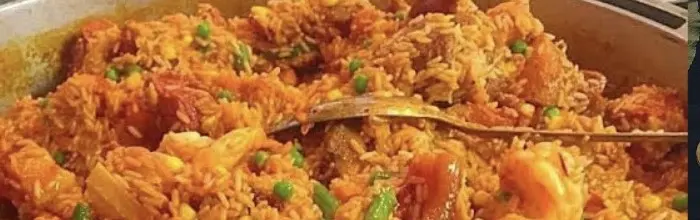
Liberian Jollof Rice
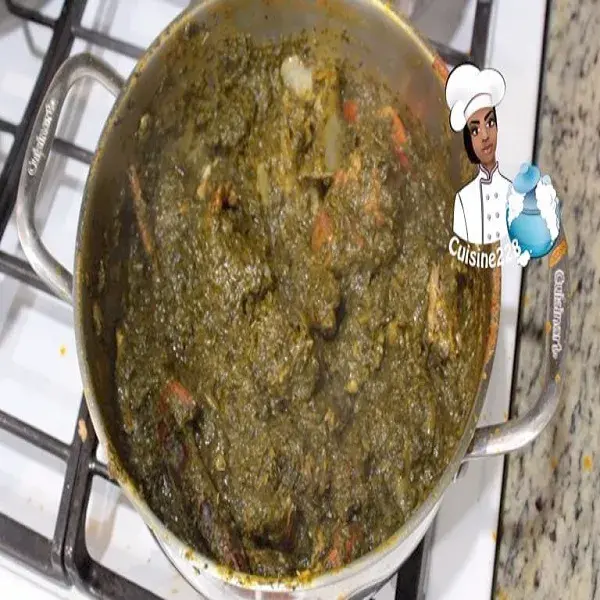
Cassava Leaf Soup
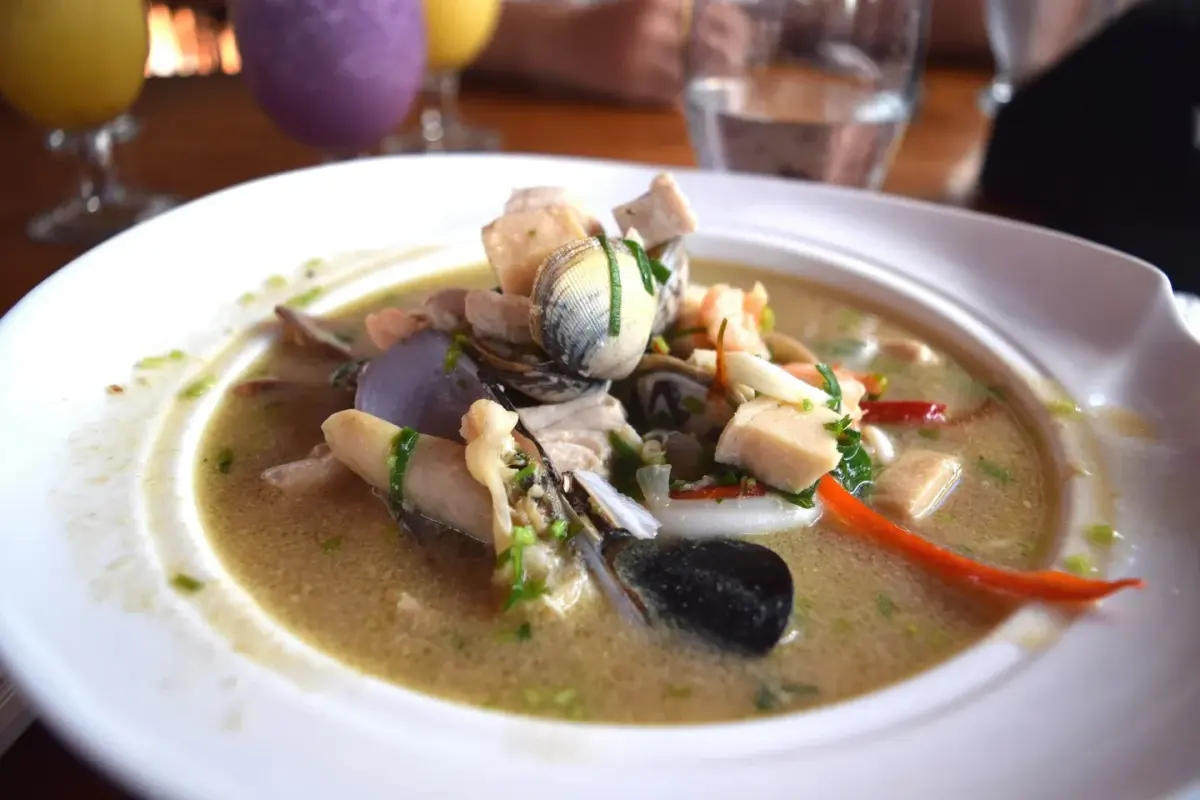
Eddoe Soup
fresh cassava leaves are impossible to find here in manchester so I used the frozen ground ones from the afro shop in cheetham hill. mixing the peanut butter directly with the leaves before putting in the palm oil worked surprisingly well, reminded me of home sha. did you use smooth or crunchy peanut butter? smooth gave me a really rich texture.
Made this last night with chicken thighs and chunky peanut butter. I could only find frozen cassava leaves in the shop on Moore Street so I thawed them out first. The scotch bonnets gave it a serious kick! Was worried about 1/4 cup of palm oil at first but it tied the whole sauce together nicely.
Frying the peanut butter together with the palm oil and chopped leaves right at the start was new to me, but e sweet o! I used beef and smoked fish for mine. Just had to keep adding small small broth while simmering so the bottom wouldnt scorch.