
Algerian Hariri
Abuja, Nigeria · Voir toutes les recettes
Aperçu
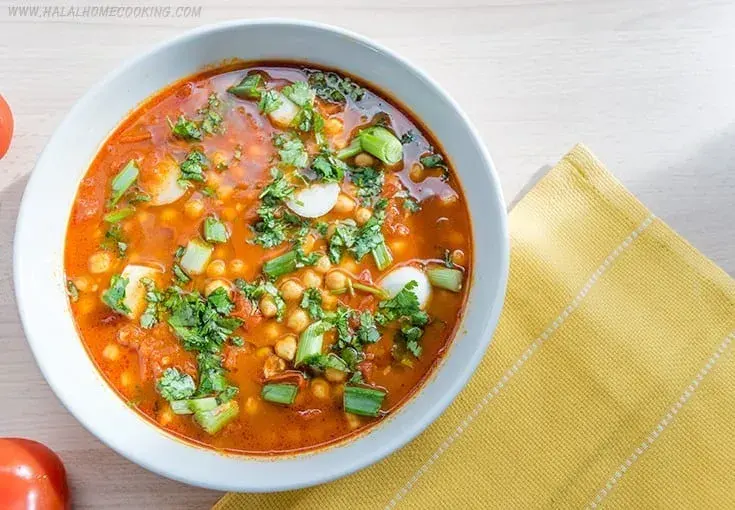
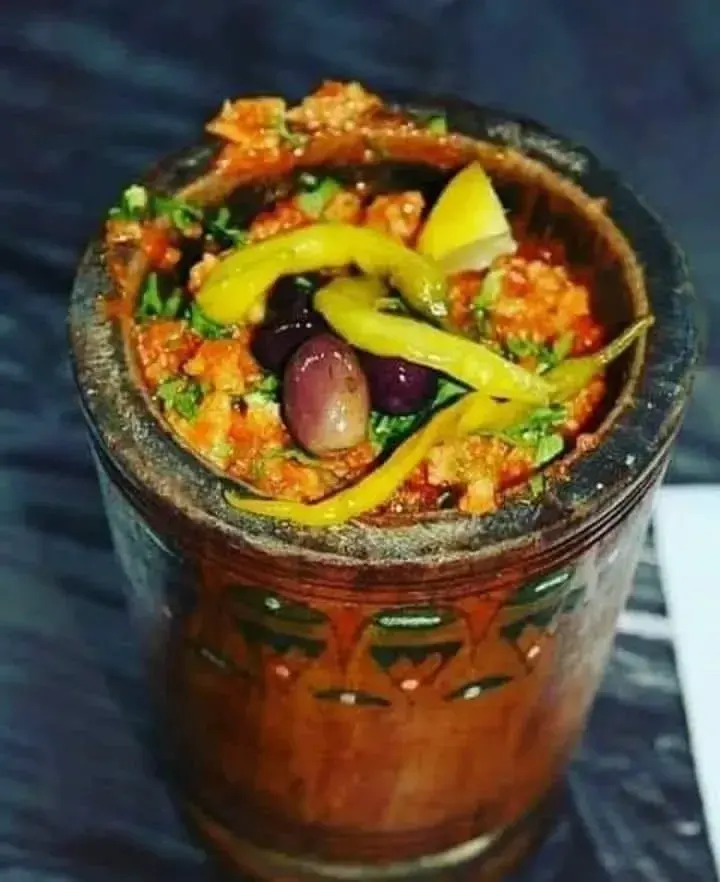
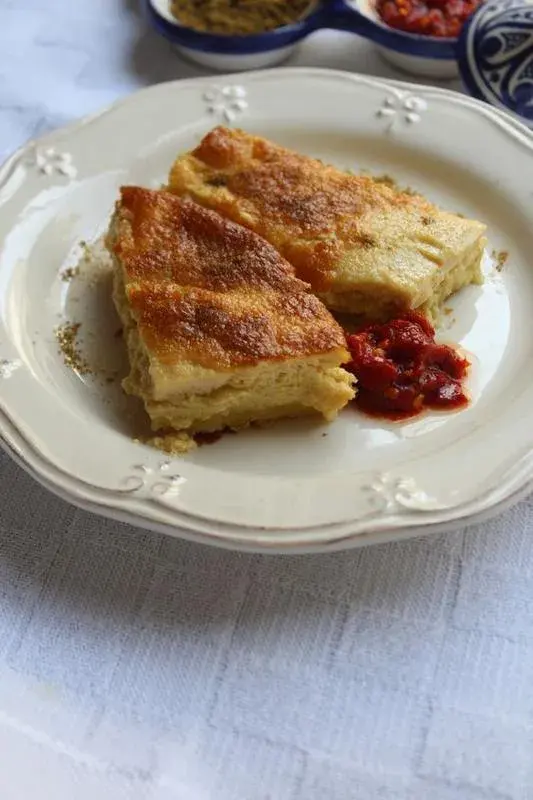
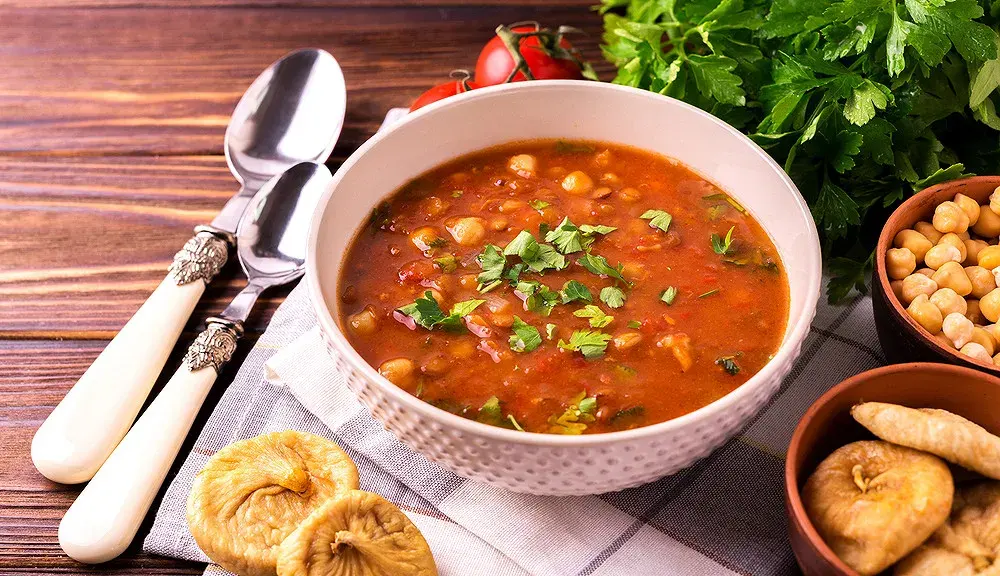
Hariri is a rich North African soup made in both Algeria and Morocco, and the Algerian version differs from its Moroccan neighbour in one clear respect: it contains no lentils. Lamb, chickpeas, tomato and a heavy hand of warm spices carry it instead. Ramadan is when it matters most. Hariri is iftar food, the substantial thing eaten to break a day's fast, and it is made in quantity across Algeria through the month. It is also eaten at other times as a starter or a light meal in its own right, and it is served with potatoes or rice as well as on its own. It is not a quick soup, and the source is direct about starting early: the total cooking time runs to around two hours and twenty minutes, most of it slow and unattended, which is what softens the lamb and lets the spices settle into the broth. The spicing is characteristic rather than fierce: turmeric, cinnamon, ginger, paprika and black pepper together, with coriander added near the end so its aroma survives, and lemon wedges served alongside for a sharpness that cuts the richness.
Note de Patrimoine AFN
Hariri is a North African soup prepared in Algeria and Morocco, the Algerian version distinguished by the absence of lentils. It is conventionally served at iftar during Ramadan.
Ingrédients
Les mentions alimentaires sont fournies par les contributeurs à titre indicatif. Elles ne sont pas vérifiées par AFN et dépendent des produits que vous achetez. En cas d’allergie grave, vérifiez vous-même chaque ingrédient. Cuisine, allergies et votre propre jugement
Préparation
- 1
Put a pot or casserole over heat, melt the butter and add the onions.
- 2
Fry until the onions are translucent.
- 3
Add the lamb and fry for about 15 minutes.
- 4
Add all the spices, stir, and fry for a further 5 minutes.
- 5
Pour in the blended tomatoes and the tomato purée, bring to a boil and simmer for about 15 minutes.
- 6
Pour in water and cover the pot. Let it cook and simmer slowly for 2 hours.
- 7
About 15 minutes before the end, add the chickpeas and the coriander.
- 8
Serve hot, garnished with lemon wedges.
Notes de l’Africook
 Notes personnelles de Debbie Obierika
- Start early. The full cooking time is over two hours and most of it is an unattended simmer that cannot be shortened without leaving the lamb tough.
- Fry the spices in the fat for the full five minutes before any liquid goes in. That step is what separates a rich hariri from a thin one.
- Add the coriander near the end. Its aroma is volatile and two hours of simmering destroys it.
- Use tinned chickpeas late as the recipe directs, or soak dried ones overnight and add them earlier so they soften.
- The lemon is not decoration. Its sharpness cuts the fat from the lamb and butter, and the soup is noticeably flatter without it.
Questions fréquentes
What is the difference between Algerian and Moroccan hariri?
Lentils. Moroccan harira contains them; the Algerian version does not, relying on chickpeas alone for body. The two are otherwise close relatives, both built on lamb, tomato and warm spices, and both associated with breaking the fast during Ramadan. Regional variation within each country is considerable as well.
Why does it take so long?
The lamb needs it. Two hours of slow simmering is what breaks down the connective tissue and lets the spices settle through the broth. Shortening it leaves tough meat in a thin, sharp-tasting soup. Almost all of that time is unattended, so it is a long recipe rather than a demanding one.
Can I use beef or chicken instead?
Yes. Beef works well and takes a similar time; chicken cooks much faster, so reduce the long simmer to about 45 minutes or the meat falls apart entirely. Lamb is the traditional choice and its fat contributes a good deal to the richness the soup is known for.
What is hariri served with?
On its own as a starter, or with potatoes or rice for a fuller meal. During Ramadan it appears at iftar alongside dates and bread. Lemon wedges are served with it as standard, and squeezing one in just before eating is part of how the soup is meant to taste.
Avis
Soyez le premier à noter cette recette
Vous l’avez cuisinée ? Votre note aide la personne suivante à se décider.
Aucun avis sur cette recette pour le moment. Si vous l’avez cuisinée, le vôtre serait le premier.