

Angwa Moo
Aperçu
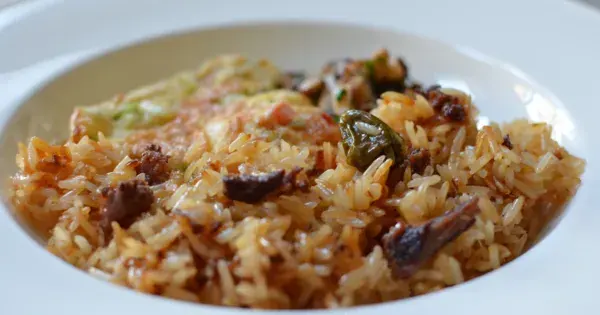
Angwa moo is oiled rice, and the Akan name says it plainly. Onions are browned in oil, rice goes in and is fried briefly, then water is added and the whole thing cooks together. The result is golden, faintly sweet from the caramelised onion, and unlike fried rice in one important respect: the rice is raw when it enters the oil rather than cooked and cooled. Ghanaians treat it as the emergency dish, and they are cheerful about saying so. It is what a child cooks when a parent is not home, what a young man living alone makes because it needs almost nothing, and what gets made when there is no time and no plan. That does not make it lesser. The browning of the onion is doing real work, and a well made angwa moo has a depth that its ingredient list does not predict. The traditional accompaniment is ground pepper made in an earthenware asanka, with tinned sardines or fried eggs alongside, and that combination is the version most Ghanaians picture. The salted beef known as tolobeef, cured at home over two days, is the more considered addition. The crisp scorched layer at the bottom of the pot is prized and fought over, which is the case for rice dishes across the continent, and the way to get it is to let the rice finish in its own steam without stirring.
Note de Patrimoine AFN
Angwa moo is documented as an Akan dish of Ghana, its name translating from Twi as oiled rice. It is distinguished from fried rice by frying the raw grain before liquid is added, rather than frying rice that has already been cooked.
Ingrédients
Les mentions alimentaires sont fournies par les contributeurs à titre indicatif. Elles ne sont pas vérifiées par AFN et dépendent des produits que vous achetez. En cas d’allergie grave, vérifiez vous-même chaque ingrédient. Cuisine, allergies et votre propre jugement
Préparation
- 1
To make the tolobeef, put the beef in a container with a lid and sprinkle over the sea salt.
- 2
Rub the salt into the beef, then add the bay leaves.
- 3
Cover and leave in a warm place for 24 hours.
- 4
Drain off the liquid, cover again and leave in a warm place for a further 24 hours.
- 5
Chop half the onions and set the rest aside.
- 6
Heat the oil in a pot and fry the chopped onions until golden brown, then add the salted beef and fry well.
- 7
Wash and drain the rice. Add it to the pot and fry over medium heat for 2 minutes.
- 8
Add the seasoning cube, hot pepper and salt to taste, and mix.
- 9
Pour in the water and stir properly.
- 10
Add the remaining onion and cook for a further 5 minutes, checking for softness.
- 11
Remove from the heat and leave covered to steam through before serving.
Notes de l’Africook
 Notes personnelles de Jennifer Ezeokoli
- Brown the onions properly and do not rush them. That caramelisation is where the colour and the sweetness of the dish come from, and pale onions give pale, flat rice.
- Fry the raw rice in the oil for a full two minutes before any water goes in. This is what separates angwa moo from fried rice and it coats each grain so it stays separate.
- Let it finish in its own steam with the lid on and do not stir. That is how the crisp scorched layer forms at the bottom of the pot, which is the part people want.
- The tolobeef takes two days and can be made well ahead. If you have not got it, fried tinned sardines or fried eggs are the standard alternative and are what most people actually eat with it.
- Ground pepper made in an earthenware asanka is the traditional accompaniment and takes two minutes.
Questions fréquentes
What is the difference between angwa moo and fried rice?
When the rice meets the oil. In fried rice, rice is cooked first, cooled, and then fried. In angwa moo the raw grain is fried in the oil with the browned onions and only then does water go in, so the rice cooks in the oil and onion flavour from the start. The results taste and look quite different.
What is tolobeef?
Tolobeef is salted beef cured at home, made by rubbing beef with sea salt and bay leaves and leaving it in a warm place for two days, draining the liquid partway through. It is chopped and fried with the onions, adding a salty, concentrated depth. It takes planning, which is why most everyday angwa moo is made without it.
What is angwa moo eaten with?
Ground pepper made in an earthenware asanka, with tinned sardines or fried eggs, is the classic combination and the one most Ghanaians would name. Fried fish and a simple tomato and onion salad also work. It is often eaten on its own, since the dish carries enough flavour to stand alone.
How do I get the crispy bottom layer?
Leave it alone. Once the water is in and the pot is covered, do not stir, and let the rice finish in its own steam over low heat. The layer in contact with the base scorches lightly and forms a crust. Turning the heat up to hurry it produces burnt rice rather than crisp rice.
Avis
3 avis
Vous Aimerez Aussi
Voir toutes les recettes Ghana →
Easy and Simple Way to Make Banku
Garden Egg Stew (Earthenware Bowl Method)
Kontomire Stew
making your own tolobeef from scratch for this is top tier. most people just buy from the market, but leaving the sirloin with the bay leaves for two full days gives the rice a very deep flavor oo. just make sure you fry the onions properly until they brown before adding the water, that's the secret paa.
I was skeptical about waiting 48 hours just to salt the beef sha, but abeg the smell when that salted beef hits the hot peanut oil is something else. My wife and I wiped the pot clean. Next time I'll add extra red pepper for more heat o.
I love what you do coming across foods from different tribe is amazing