

Kenkey
Aperçu
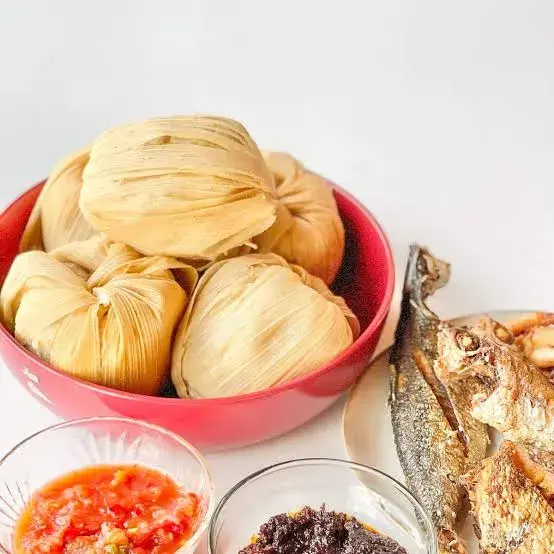
Kenkey is fermented maize dough, wrapped in banana leaf or corn husk and steamed into firm parcels. It is sour, and the sourness is the whole character of it. The fermentation runs one to three days before anything is cooked, and a kenkey that has been rushed is immediately identifiable to anyone who eats it regularly. It comes from the Ga people of Accra and the surrounding coast, who have been making it for centuries, and it has spread across Ghana without losing that origin. Ga kenkey and Fante kenkey are recognised as distinct: the wrapping differs, and so does the ratio of fermented to fresh dough, which changes how sour the finished parcel is. Kenkey is street food in the most functional sense. It is bought in its wrapping, which serves as the plate, and eaten with fried fish, shito and a raw pepper and tomato grind, standing up or sitting on a bench. The wrapping is not presentation; it is what the dough is steamed in and what keeps it for days without refrigeration. That combination of sour dough, hot pepper and fried fish is one of the most recognisable plates in West Africa.
Note de Patrimoine AFN
Kenkey originates with the Ga people of coastal Ghana, among whom it is documented as an established staple, and is distinguished regionally into Ga and Fante forms that differ in wrapping and in the proportion of fermented dough. Maize, its base, reached West Africa through Atlantic trade from the 16th century.
Ingrédients
Les mentions alimentaires sont fournies par les contributeurs à titre indicatif. Elles ne sont pas vérifiées par AFN et dépendent des produits que vous achetez. En cas d’allergie grave, vérifiez vous-même chaque ingrédient. Cuisine, allergies et votre propre jugement
Préparation
- 1
Mix the white cornmeal, corn dough and salt together in a large bowl.
- 2
Gradually add water while stirring. The consistency should be thick but pourable. Keep adding water until it is right.
- 3
Cover the bowl and leave the mixture to ferment for 1 to 3 days. It will develop a slightly sour taste and a distinct aroma.
- 4
After fermentation, prepare the wrapping. Cut banana leaves or corn husks into rectangles and wash them thoroughly.
- 5
Place a portion of the fermented dough in the centre of a piece of wrapping. Fold the wrapping over the dough into a tight bundle.
- 6
Repeat with the remaining dough.
- 7
Bring a large pot of water to the boil and carefully lower in the wrapped bundles.
- 8
Reduce the heat to low, cover the pot and steam for 2 to 3 hours. The kenkey is done when it is firm and separates easily from the wrapping.
- 9
Remove from the pot and cool slightly before unwrapping.
- 10
Serve hot with your choice of sauce or side.
Notes de l’Africook
 Notes personnelles de Laila Yetunde
- Fermentation time decides the flavour and it is weather dependent. One day in a hot kitchen can equal three in a cold one. Judge by smell and taste rather than by the calendar.
- Wrap the bundles tightly. A loose parcel takes on water during the long steam and gives you a soggy kenkey rather than a firm one.
- Banana leaves need softening before they will fold without cracking. Pass them briefly over a flame or dip them in boiling water.
- It keeps for days in its wrapping without refrigeration, which is one of the reasons it exists in the form it does. That is a genuine practical property rather than a piece of folklore.
- Fried fish, shito and a raw pepper and tomato grind are the standard accompaniments.
Questions fréquentes
What is the difference between Ga kenkey and Fante kenkey?
The wrapping and the sourness. Ga kenkey, also called komi, is wrapped in corn husks and is the more sour of the two, because a higher proportion of the dough is fermented. Fante kenkey, also called dokono, is wrapped in banana leaves, is milder and is often slightly softer. Both are steamed the same way and both are correct.
How long should kenkey dough ferment?
One to three days, depending on temperature. The dough is ready when it smells clearly sour and has developed a distinct aroma. Under fermented dough gives a bland kenkey, which is the most common fault. In a cold kitchen leave it longer rather than proceeding on schedule.
What is kenkey eaten with?
Fried or grilled fish, shito, and a raw grind of pepper, tomato and onion are the standard combination. Fried plantain is common alongside. The sour dough against the pepper and the fried fish is the pairing the dish is built around, and it is eaten with the hands from the wrapping.
Can I make kenkey without banana leaves or corn husks?
You can steam it in foil or in parchment and it will cook, but the wrapping contributes flavour as well as function, particularly banana leaf, which scents the dough. Dried corn husks are sold for tamales in Latin American grocers and are the easier substitute to source. Banana leaves are stocked frozen at most African and Asian grocers.
Avis
3 avis
Vous Aimerez Aussi
Voir toutes les recettes Ghana →
Easy and Simple Way to Make Banku
Garden Egg Stew (Earthenware Bowl Method)
Kontomire Stew
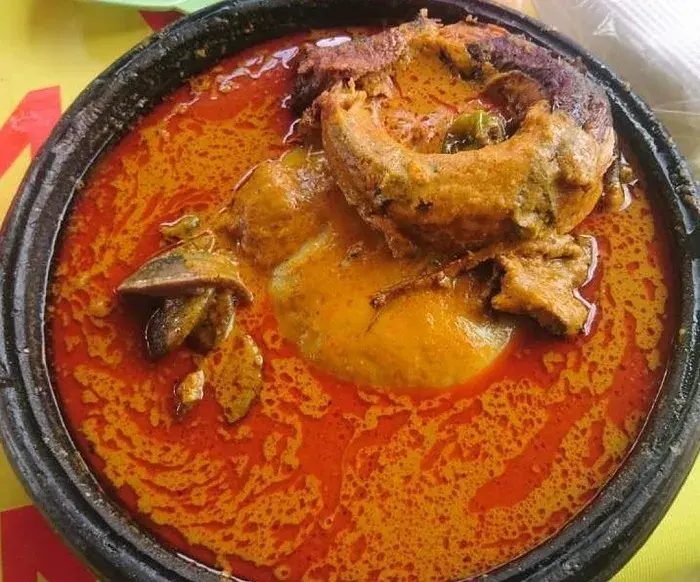
couldn't find fresh banana leaves anywhere here in LA so I had to use dried tamale corn husks from Vallarta market. soaked them in water first. 3 days fermentation was spot on, gave it that proper lekker sour tang.
left my corn dough to ferment for 2 full days on the kitchen counter before wrapping in corn husks. the sour smell was very strong at first but once boiled and served with hot pepper e sweet o.
abeg is 40 mins really enough cooking time? i boiled mine for almost an hour because the middle was still too wet after 40 minutes. taste was good sha, very authentic sourness.