

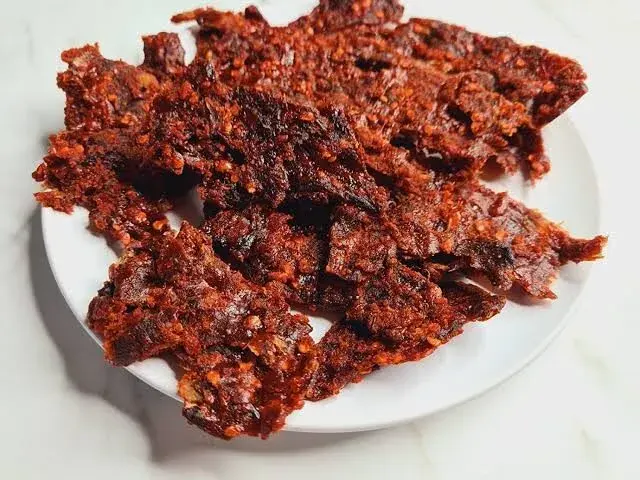
Killishi (Beef Jerky)
Aperçu
Kilishi is Northern Nigerian dried meat, and it is a considerably more deliberate thing than the jerky it is usually compared to. Beef is sliced thin enough to be translucent, dried, coated in a paste built on ground groundnuts and spices, dried again, and briefly finished over heat. The groundnut coating is what separates kilishi from every other dried meat in the world. It is a preservation technology first. In the Sahel, where refrigeration was not available and the dry season is long, thin slicing and sun drying kept meat edible for months, and the spice paste added flavour while doing further preservation work. That the result is now sold as a delicacy rather than as survival food does not change what it was built for. Kilishi is Hausa, sold in markets across the north and increasingly across the whole of Nigeria and among the diaspora, where it travels well precisely because it was designed to. It is eaten as a snack rather than as part of a meal, torn into pieces, often with a cold drink. The heat level varies by maker, and the yaji spice logic that runs through northern Nigerian cooking, the same groundnut and pepper base used on suya, is visible in it.
Note de Patrimoine AFN
Kilishi is documented as a Hausa preparation of Northern Nigeria, in which thinly sliced beef is dried, coated in a groundnut and spice paste and dried again, a method developed for preserving meat without refrigeration in the Sahel. It shares its groundnut and spice base with the yaji used on suya.
Ingrédients
Les mentions alimentaires sont fournies par les contributeurs à titre indicatif. Elles ne sont pas vérifiées par AFN et dépendent des produits que vous achetez. En cas d’allergie grave, vérifiez vous-même chaque ingrédient. Cuisine, allergies et votre propre jugement
Préparation
- 1
Trim any excess fat from the beef and slice it very thinly. Thin slices are essential to the drying.
- 2
In a mixing bowl, combine the peanut powder, oil, cayenne pepper, paprika, garlic powder, onion powder, ginger powder, nutmeg, cloves and salt into a paste.
- 3
Add the sliced beef to the bowl and coat every piece, massaging the paste into the meat by hand.
- 4
Cover and marinate for at least 4 to 6 hours, or overnight in the refrigerator.
- 5
Take the beef out and let it come to room temperature for about 30 minutes. Preheat the oven to its lowest setting, around 65°C.
- 6
Lay the slices on a wire rack or a lined baking sheet, not touching each other. Put them in the oven with the door slightly open so moisture can escape. Drying takes several hours depending on thickness. The kilishi is ready when it is dry and chewy.
- 7
Cool completely, then store in an airtight container or zip lock bags.
Notes de l’Africook
 Notes personnelles de Laila Yetunde
- Slice as thin as you physically can. Freezing the beef for 30 to 45 minutes firms it enough to get slices near translucent, which is what the traditional product looks like.
- Leave the oven door ajar. This is a drying process, not a roast, and a sealed oven traps moisture and steams the meat instead.
- Do not let the slices touch. Anything overlapping stays damp underneath and will spoil in storage.
- Trim the fat off properly. Fat does not dry, it goes rancid, and it is the main reason home made kilishi does not keep.
- Use it within a week or two if home dried. Commercial kilishi is dried much harder and keeps considerably longer.
Questions fréquentes
What is the difference between kilishi and ordinary beef jerky?
The groundnut coating. Jerky is marinated, dried meat. Kilishi is dried, then coated in a thick paste of ground peanuts, spices and oil, then dried again, which gives it a distinctive nutty crust and a much more complex flavour. Kilishi is also sliced far thinner, often nearly translucent, where jerky is usually cut in strips.
Can I make kilishi without an oven?
Traditionally it is sun dried, which is the original method and works where you have consistent heat and low humidity. A dehydrator is the best modern alternative and gives more even results than an oven. Whatever you use, the requirement is the same: low steady heat with moisture able to escape, over several hours.
How long does kilishi keep?
One to two weeks for home made, stored in an airtight container. Commercial kilishi is dried much harder and keeps for months, which is what it was developed for. The limiting factor is fat, which goes rancid rather than drying, so trim thoroughly. If it feels at all damp or pliable rather than dry, it has not been dried far enough.
How spicy is kilishi?
It varies considerably by maker, from mildly warm to genuinely hot. The heat comes from cayenne and chilli in the coating paste, and the quantity is entirely a matter of preference. The groundnut base takes the edge off, so kilishi generally reads as less aggressive than the same quantity of pepper would elsewhere.
Avis
5 avis
Vous Aimerez Aussi
Voir toutes les recettes Nigeria →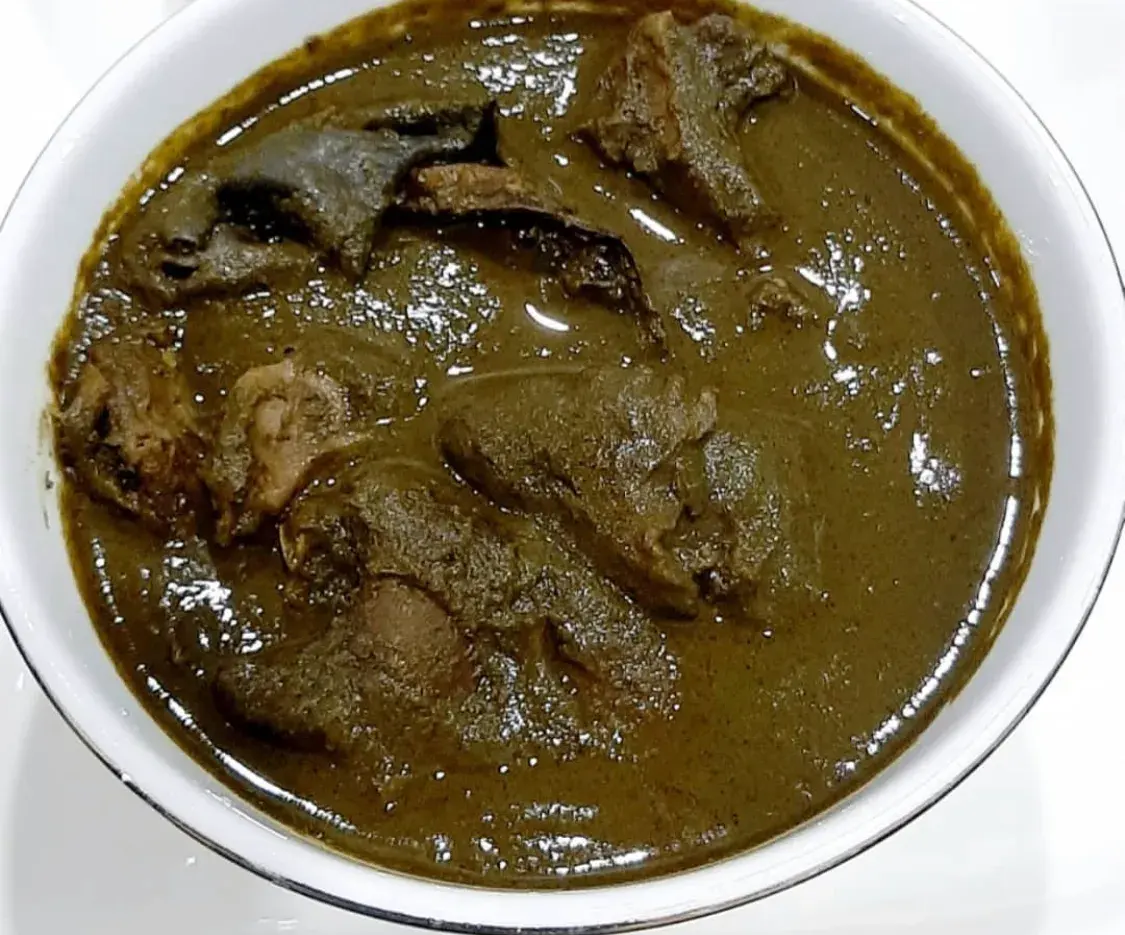
Edo Black Soup
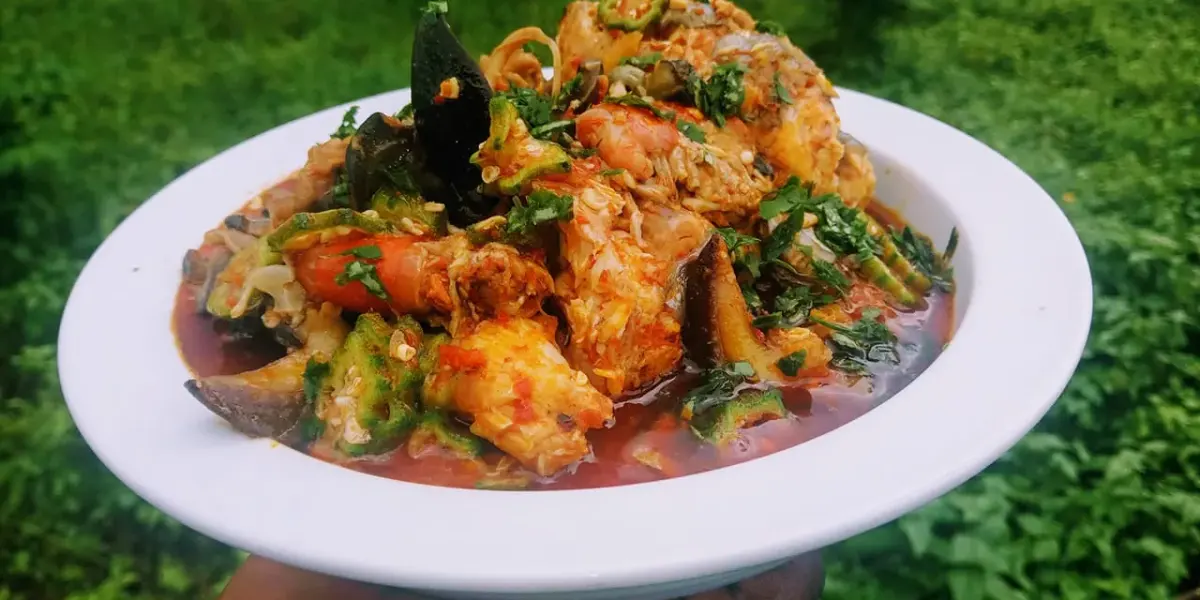
Nigerian Fisherman Soup
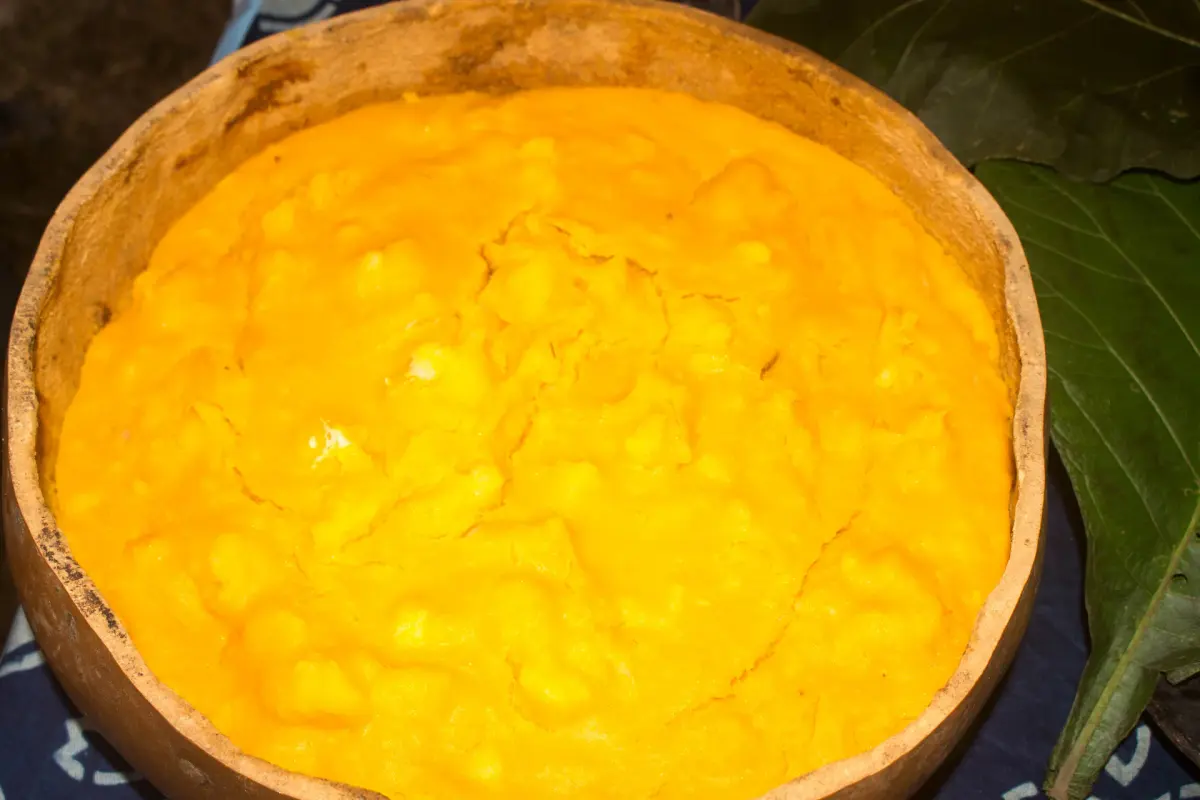
Igbo Yam Porridge
sliced 500g of beef topside as thin as I could manage with my sharpest knife. couldnt find peanut powder at woolies so ground my own unsalted peanuts fine. left it in the oven at 65°C for about 5 hours and it came out lekker! next time ill add slightly more than 1 tsp of ground cloves for that extra kick.
Abeg the cayenne pepper amount in this recipe is not a joke! I used the full teaspoon and my lips were burning o. Very good flavor though, the peanut paste coated the 500g beef nicely after sitting overnight in the fridge. Tastes just like what we buy at Area 1 here.
sliced the beef paper thin after putting it in the freezer for 20 mins first. finding pure groundnut powder here in the uk was tough, had to get it from an afro shop in Peckham. dried it on the lowest rack for 5 hours. e sweet sha, almost like the one from Kano.
The spice mixture is spot on, especially the clove and ginger punch. But 300 mins in my oven wasn't enough because my butcher cut the meat a bit too thick. Next time I will slice it myself so it actually dries crisp like proper Arewa killishi.
my oven lowest temp is 70c so it took just under 5 hours. that spice paste with the ginger, nutmeg and peanut powder smelled incredible while drying. tastes proper lekker, nice twist if you like biltong.