
Moroccan Chicken Tagine
Abuja, Nigeria · Voir toutes les recettes
Aperçu
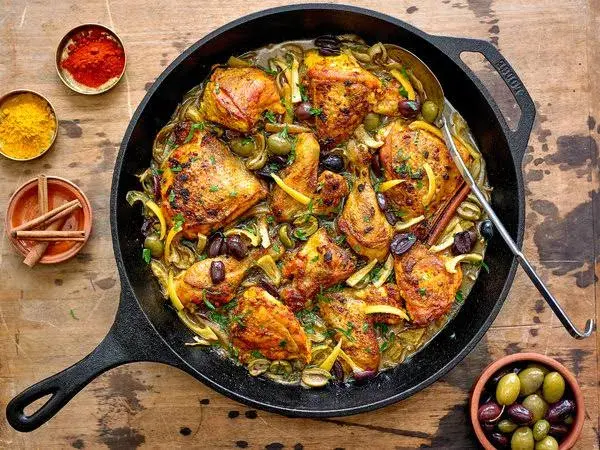
Chicken tagine is Moroccan slow cooking at its most recognisable: chicken with preserved lemon, olives, onion and a warm spice blend, cooked gently until the meat falls apart. The name belongs to the vessel as much as the dish. A tagine is a shallow ceramic or unglazed clay pot with a tall conical lid. The cone is not decorative: steam rises, condenses against the cone and runs back down into the base, so the dish cooks in its own recirculating moisture with very little added liquid. It works like a slow cooker and gives the same result, meat that is tender and a sauce that has concentrated rather than evaporated. The spice profile is the Moroccan signature: paprika, cumin, ginger, coriander, cinnamon and cayenne together, with honey for balance and lemon for sharpness. Cracked green olives and preserved lemon go in at the end so they keep their character. It can be made in a tagine, in a Dutch oven, or on the stovetop, and this recipe uses the last. If you cook in an actual tagine on a hob, use the lowest setting you can: raising the heat cracks the clay.
Note de Patrimoine AFN
A tagine is both a Moroccan earthenware cooking vessel with a conical lid and the slow-cooked dish made in it. The cone returns condensed moisture to the base, allowing long cooking with very little added liquid.
Ingrédients
Les mentions alimentaires sont fournies par les contributeurs à titre indicatif. Elles ne sont pas vérifiées par AFN et dépendent des produits que vous achetez. En cas d’allergie grave, vérifiez vous-même chaque ingrédient. Cuisine, allergies et votre propre jugement
Préparation
- 1
Combine the spices in a small bowl and set aside. Zest the lemon.
- 2
Combine 1 teaspoon of the lemon zest with 1 minced garlic clove and set aside.
- 3
Season both sides of the chicken with 2 teaspoons salt and 1/2 teaspoon pepper.
- 4
Heat the oil in a large heavy-bottomed Dutch oven or pan over medium-high heat until just beginning to smoke.
- 5
Brown the chicken skin side down in a single layer until deep golden, about 5 minutes, then flip and brown the other side, about 4 minutes more.
- 6
Transfer the chicken to a plate. When cool enough to handle, peel off the skin and discard it.
- 7
Pour off all but a tablespoon of fat from the pan.
- 8
Reduce the heat to medium, add the onion and cook, stirring occasionally, until browned at the edges but still holding their shape, 5 to 7 minutes. Add a few tablespoons of water if the pan gets too dark.
- 9
Add the remaining garlic and cook until fragrant, about 30 seconds.
- 10
Add the spices and flour and cook, stirring constantly, until fragrant, about 30 seconds.
- 11
Stir in the broth, honey, remaining lemon zest and 1/4 teaspoon salt, scraping the bottom of the pan to loosen the browned bits.
- 12
Return the chicken with any juices, reduce the heat to medium-low, cover and simmer for 10 minutes.
- 13
Add the carrots, cover, and simmer until the chicken is cooked through and the carrots are tender-crisp, about 10 minutes more.
- 14
Stir in the olives, the reserved lemon zest and garlic mixture, the coriander and a tablespoon of lemon juice. Taste and adjust.
- 15
Serve with couscous.
Notes de l’Africook
 Notes personnelles de Amarachi Irobi
- Brown the chicken properly and then discard the skin. The skin gives up its fat and flavour during browning and would go flabby during the braise.
- Add the olives and the reserved lemon and garlic at the very end. Cooked in from the start they lose all their sharpness.
- Cook the spices and flour in the fat for thirty seconds before the liquid. It removes the raw flour taste and blooms the spices.
- If cooking in an actual clay tagine on a hob, use the lowest setting. Raising the heat cracks the clay, and most tagines need a diffuser.
- Preserved lemon in place of, or alongside, the fresh zest gives a far more authentically Moroccan result. Use the peel only.
- The carrots should be tender-crisp rather than soft, so add them for the final ten minutes only.
Questions fréquentes
What is a tagine?
Both a dish and the pot it is cooked in. The pot is shallow ceramic or unglazed clay with a tall conical lid; steam rises, condenses on the cone and runs back into the base, so food cooks in recirculating moisture with very little added liquid. The dish takes its name from the vessel.
Do I need an actual tagine to make it?
No. A Dutch oven, a heavy lidded pan or a stovetop pot all work, and this recipe uses one. The tagine's advantage is moisture recirculation, which a tightly lidded heavy pot approximates well. If you do use a clay tagine on a hob, keep the heat very low and use a diffuser.
What can I use instead of preserved lemon?
Fresh lemon zest and juice, which is what this recipe uses, gives brightness without the fermented depth. Preserved lemon is lemon packed in salt for weeks and its peel is what carries the flavour; if you can find it, use the peel finely chopped and reduce the added salt accordingly.
What is it served with?
Couscous, most traditionally, which soaks up the sauce. Bread is equally standard for the same reason, and rice works perfectly well. A tagine is not usually served with anything elaborate alongside, since the vegetables are already cooked in the pot with the meat. A simple salad such as shlada, the Moroccan chopped tomato and cucumber salad, is the usual accompaniment if anything is served at all.
Avis
Soyez le premier à noter cette recette
Vous l’avez cuisinée ? Votre note aide la personne suivante à se décider.
Aucun avis sur cette recette pour le moment. Si vous l’avez cuisinée, le vôtre serait le premier.
Vous Aimerez Aussi
Voir toutes les recettes Morocco →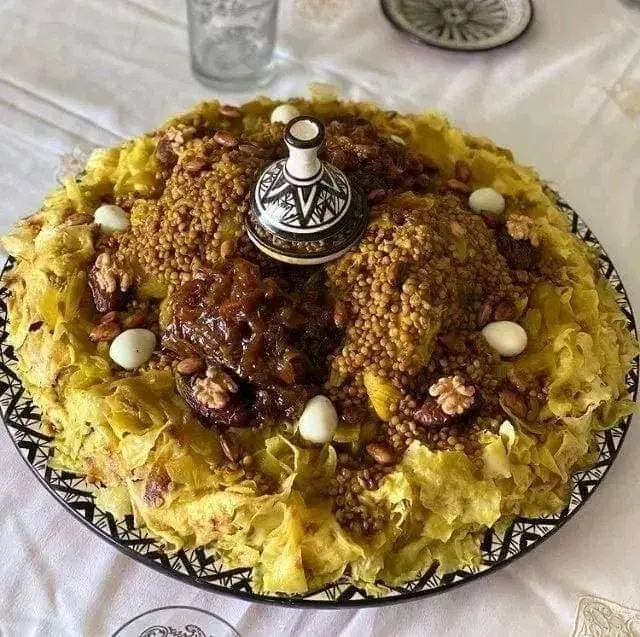
Moroccan Chicken Rfissa
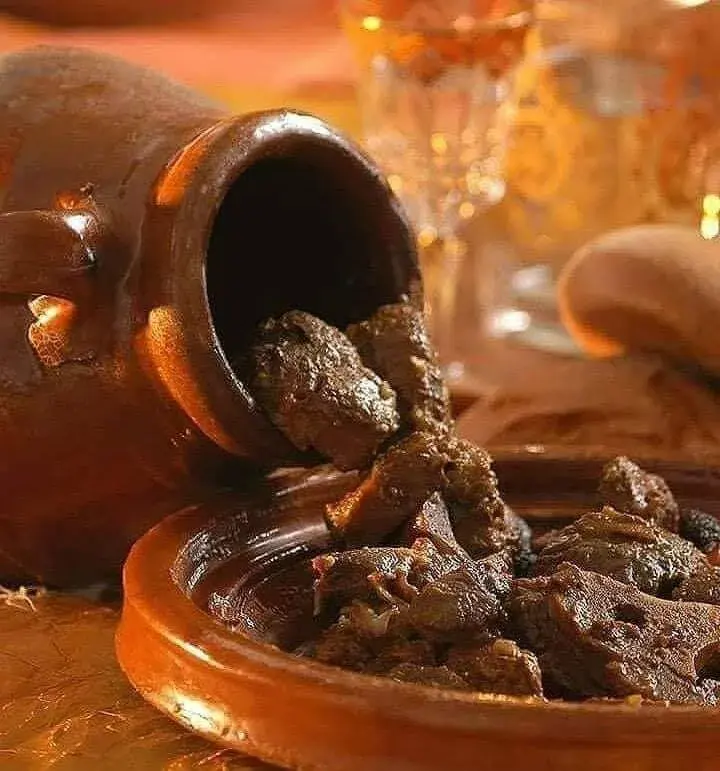
Tanjia Marrakchia

Chebakia (Moroccan Sesame Cookies)