

Tanjia Marrakchia
Aperçu
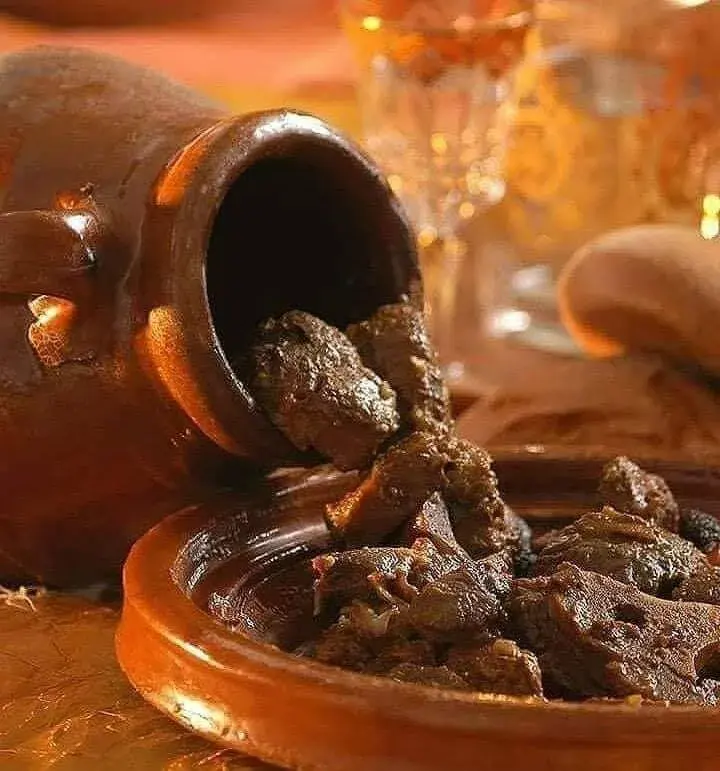
Tanjia Marrakchia belongs to Marrakech specifically, and it is named after the pot rather than the food. The tanjia is a tall, narrow clay urn with a small neck, and the dish cannot properly be separated from it: meat, spices and a little water go in, the neck is sealed with parchment and clay, and the whole vessel is buried in the embers of a hammam furnace to cook for hours. That cooking method is the reason it exists. The hammam, the public bathhouse, kept a wood fire burning to heat its water, and the ashes were free heat available to anyone who brought a pot. Labourers and workers would leave a tanjia with the furnace attendant in the morning and collect it cooked at the end of the day, which made it food for men working away from a kitchen. It is still called the bachelor's dish in Marrakech for that reason, though it now appears at celebrations, religious occasions and family gatherings as well. Beef or lamb is standard, with cumin, ginger, saffron, turmeric and paprika, and preserved lemon and olives in some households. Without a hammam the substitute is a very low oven over several hours, which gets the tenderness but not the smoke.
Note de Patrimoine AFN
Tanjia Marrakchia is documented as originating with labourers and workers in Marrakech, who cooked it in the embers of the hammam furnace. It takes its name from the tanjia, the tall narrow clay pot it is cooked and served in.
Ingrédients
Les mentions alimentaires sont fournies par les contributeurs à titre indicatif. Elles ne sont pas vérifiées par AFN et dépendent des produits que vous achetez. En cas d’allergie grave, vérifiez vous-même chaque ingrédient. Cuisine, allergies et votre propre jugement
Préparation
- 1
Trim the beef or lamb of excess fat and gristle and set the meat aside.
- 2
In a large bowl, combine the minced garlic, ginger powder, olive oil, turmeric, ground saffron, paprika, cumin, coriander and a pinch of salt.
- 3
Mix the marinade well, then add the meat cubes and toss until every piece is evenly coated. Cover and leave to marinate.
- 4
Peel and slice the onion into thin rings and lay them across the bottom of the tanjia pot. They add flavour and stop the meat catching.
- 5
Add the marinated meat in an even layer over the onion.
- 6
Season with a little more salt, and more cumin or paprika if you want it.
- 7
Pour in about 2 cups of water, enough to cover the meat.
- 8
Add a handful of chopped parsley or coriander.
- 9
Lay parchment paper or foil over the mouth of the pot and seal the lid tightly, or seal it with a cone of clay in the traditional way.
- 10
If you have access to a hammam, bury the sealed pot in the hot ashes and embers and cook until the meat is completely tender.
- 11
Otherwise, cook in an oven at about 120°C for several hours until the meat is tender and has taken up the spices.
- 12
Remove carefully and serve with Moroccan flatbread or couscous.
Notes de l’Africook
 Notes personnelles de Deborah Olayiwola
- A heavy Dutch oven with a tight lid is the workable substitute for a tanjia pot. It will not give you the smoke, but it holds the moisture, which is the other half of the job.
- Seal the pot properly. The whole method depends on almost no steam escaping over several hours.
- Keep the oven very low, around 120°C. This is not a braise to be hurried, and higher heat toughens the meat before it has a chance to soften.
- Lay the onion rings on the bottom rather than mixing them through. They insulate the meat from direct heat and give up their liquid slowly.
- Only two cups of water go in for two and a half pounds of meat. It is meant to be a concentrated, slightly sticky sauce rather than a stew.
Questions fréquentes
What is a tanjia pot and do I need one?
The tanjia is a tall, narrow clay urn with a small neck, designed so its contents cook slowly buried in embers. It gives the dish its name. You do not strictly need one: a heavy Dutch oven with a tight fitting lid holds moisture the same way. What you lose is the smoky note the hammam ashes give, which cannot be reproduced in an oven.
Why is it called the bachelor's dish?
Because of where it was cooked. Labourers in Marrakech left a sealed tanjia with the hammam furnace attendant in the morning and collected it cooked at the end of the working day, so it required no kitchen and no attention. It became associated with men cooking for themselves, and the name has stuck even though it is now made for celebrations and family gatherings.
What is the difference between tanjia and tagine?
The vessel and the method. A tagine is a shallow dish with a conical lid, cooked over direct heat with the cook present, stirring and adding as it goes. A tanjia is sealed, unattended and cooked by buried heat for hours. The results are quite different: tagine gives a sauced dish, tanjia a concentrated, very tender one.
How long does it need?
Several hours at minimum. In the hammam it was left for the length of a working day. In a domestic oven at 120°C, four to six hours is the usual range, and there is little risk in going longer. The meat should be yielding completely rather than merely tender.
Avis
4 avis
Vous Aimerez Aussi
Voir toutes les recettes Morocco →
Moroccan Chicken Rfissa
Chebakia (Moroccan Sesame Cookies)
Maakouda (Moroccan Potato Cakes)
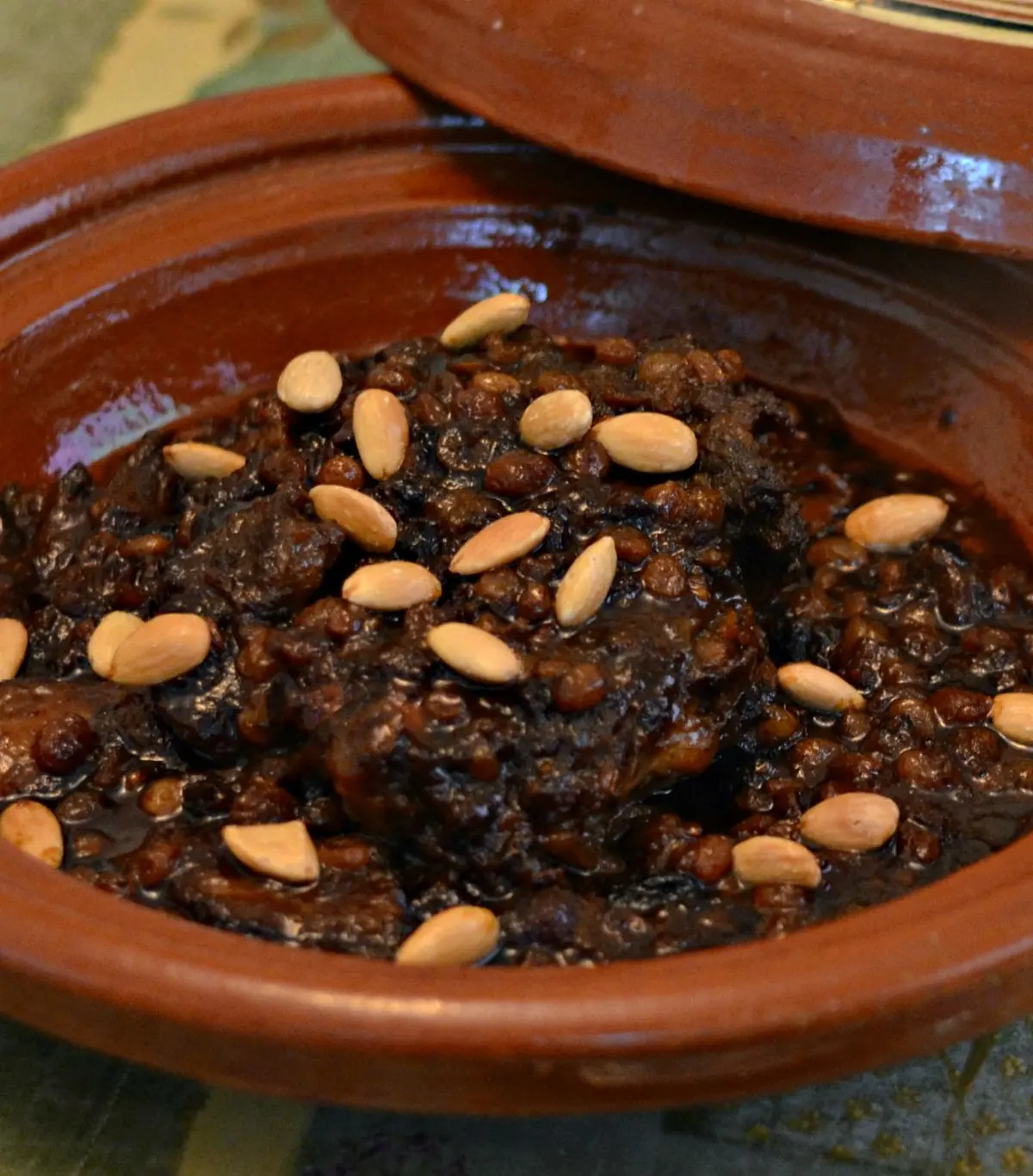
Didn't have an authentic clay pot so I used my size 3 potjie pot over low coals for the full 300 minutes. Layering that sliced onion right at the bottom is pure genius, stopped the lamb from catching while it cooked down. My family cleared the whole 1.1kg of meat in minutes. Absolute lekker flavour from the ground saffron and cumin.
my onion rings at the bottom got totally burnt before the beef even reached 3 hours, let alone the 5 hours stated. Maybe my heat was too high or my pot was too thin, but that bitter burnt onion taste spoiled the marinade. Next time I will lower the fire completely because the cumin and garlic smelled so good at first.
Ah, five hours on low heat no be small thing o, but the meat soft die! Used fresh beef cubes from the butcher and followed the marinade exactly with the paprika, coriander, and cumin. That trick of lining the bottom of the pot with sliced onion rings saved the meat from burning. E sweet well well.
about to try this for Sunday lunch but saffron is ridiculously expensive here at Woolies. Can I swap the ground saffron for extra turmeric, or will it ruin the whole marinade? I already bought 1.2kg beef stewing steak and the ginger powder.