

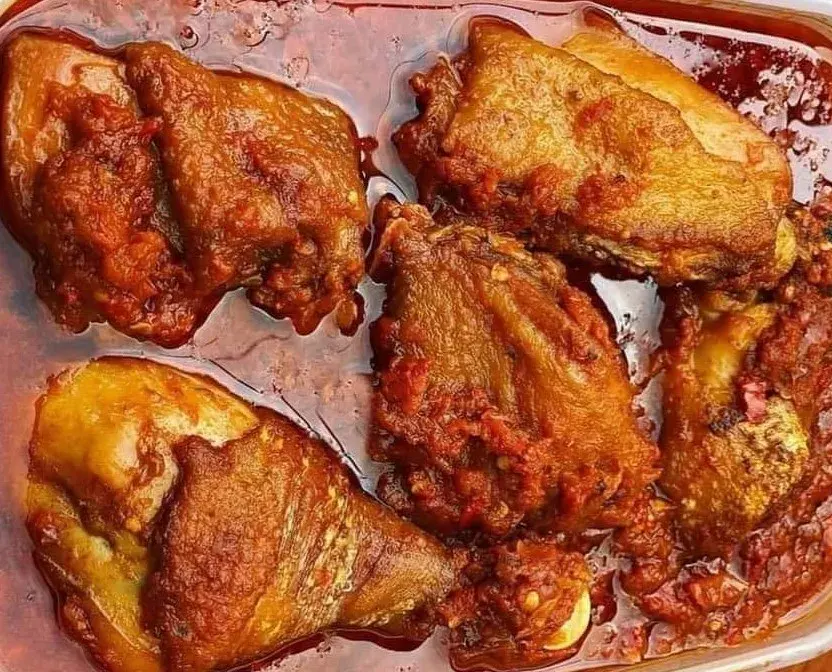
Nigerian Chicken Stew
Aperçu
Nigerian stew is the base layer of the country's cooking, and the chicken version is the one made most often. Tomato, tatashe and scotch bonnet are blended and reduced hard in oil until the raw edge is gone and the oil separates and floats, then chicken that has already been simmered and fried goes in to finish. That reduction is the whole technique. A Nigerian stew that has not been cooked past the point where the oil rises tastes sharp and raw, and the difference between a good one and a poor one is almost entirely how long the cook was willing to stand over the pot. Everything else is adjustable: the pepper ratio, the protein, the thyme and curry that most households include. Its versatility is why it matters so much. The same pot of stew goes over white rice, with yam, with plantain, with bread, with beans, and it keeps in the fridge for the week and freezes well beyond that. Nigerian households make it in quantity for exactly that reason. Local chicken, the older hard birds, are preferred for flavour despite being tougher, and boiling before frying is the standard sequence, which also produces the broth that goes back into the stew.
Note de Patrimoine AFN
Nigerian stew is built on tomato and pepper reduced in oil, a base shared across West African cooking. Tomatoes and chilli peppers both reached West Africa through Atlantic trade following the Columbian exchange and were absorbed into an older tradition of pepper based sauces.
Ingrédients
Les mentions alimentaires sont fournies par les contributeurs à titre indicatif. Elles ne sont pas vérifiées par AFN et dépendent des produits que vous achetez. En cas d’allergie grave, vérifiez vous-même chaque ingrédient. Cuisine, allergies et votre propre jugement
Préparation
- 1
Wash and clean the chicken and set it aside.
- 2
Chop the onions finely.
- 3
In a bowl, mix the garlic powder, ginger powder, thyme, curry powder and crumbled seasoning cubes.
- 4
Boil the chicken with enough water to cover it, until fully cooked. Remove the chicken and reserve the broth.
- 5
Fry the boiled chicken until browned, then set aside.
- 6
Heat oil in a large pot over medium heat.
- 7
Add the chopped onions and fry until translucent and slightly golden.
- 8
Add the spice mixture and cook, stirring, until the spices release their aroma.
- 9
Stir in the tomato paste, ground scotch bonnet, fresh tomatoes and tatashe.
- 10
Cook for 10 to 15 minutes, stirring frequently, until the oil separates from the tomato mixture.
- 11
Add the fried chicken and fry for a few minutes until well coated with the sauce.
- 12
Add reserved chicken broth gradually to reach the consistency you want.
- 13
Simmer for 20 to 30 minutes on low heat.
- 14
Serve hot with rice, yam or plantains.
Notes de l’Africook
 Notes personnelles de Deborah Olayiwola
- Cook the tomato base until the oil visibly separates and rises. This is the single thing that separates a good Nigerian stew from a raw tasting one, and it takes longer than most people expect.
- Boil the chicken first and fry it second. That gives you tender meat, a browned surface and a broth that goes back into the stew.
- Use the reserved broth rather than water to adjust the consistency. It is carrying a great deal of flavour.
- Two cups of ground scotch bonnet is a Nigerian heat level. Reduce it and increase the tatashe if you want the colour without the heat.
- It keeps a week refrigerated and freezes for months, which is why Nigerian households make it in large batches.
Questions fréquentes
How do I know when Nigerian stew is properly cooked?
When the oil separates and floats to the surface. Until that happens the tomato is still raw and the stew tastes sharp. It generally takes 10 to 15 minutes of frying the blended base at a steady heat with frequent stirring, and there is no way to shortcut it. That visual cue is what Nigerian cooks watch for.
Why is Nigerian chicken tough?
Because local chickens are older and more active than commercial broilers, and they are prized for flavour rather than tenderness. The answer is time: boil them until genuinely soft before frying, which can take considerably longer than a supermarket bird. A pressure cooker helps. The trade off is a much better broth and a deeper flavour.
What is the difference between Nigerian stew and jollof rice?
Jollof is rice cooked in the tomato base so the grains absorb it. Stew is the base itself, cooked down with a protein and served alongside plain white rice or another starch rather than cooked into it. They share a foundation and are eaten quite differently.
What is Nigerian chicken stew served with?
White rice above all. Beyond that: boiled yam, fried or boiled plantain, bread, beans, boiled potatoes or any swallow. Its versatility is much of the point, and Nigerian households make a large pot at the weekend to eat with different things through the week.
Avis
4 avis
Vous Aimerez Aussi
Voir toutes les recettes Nigeria →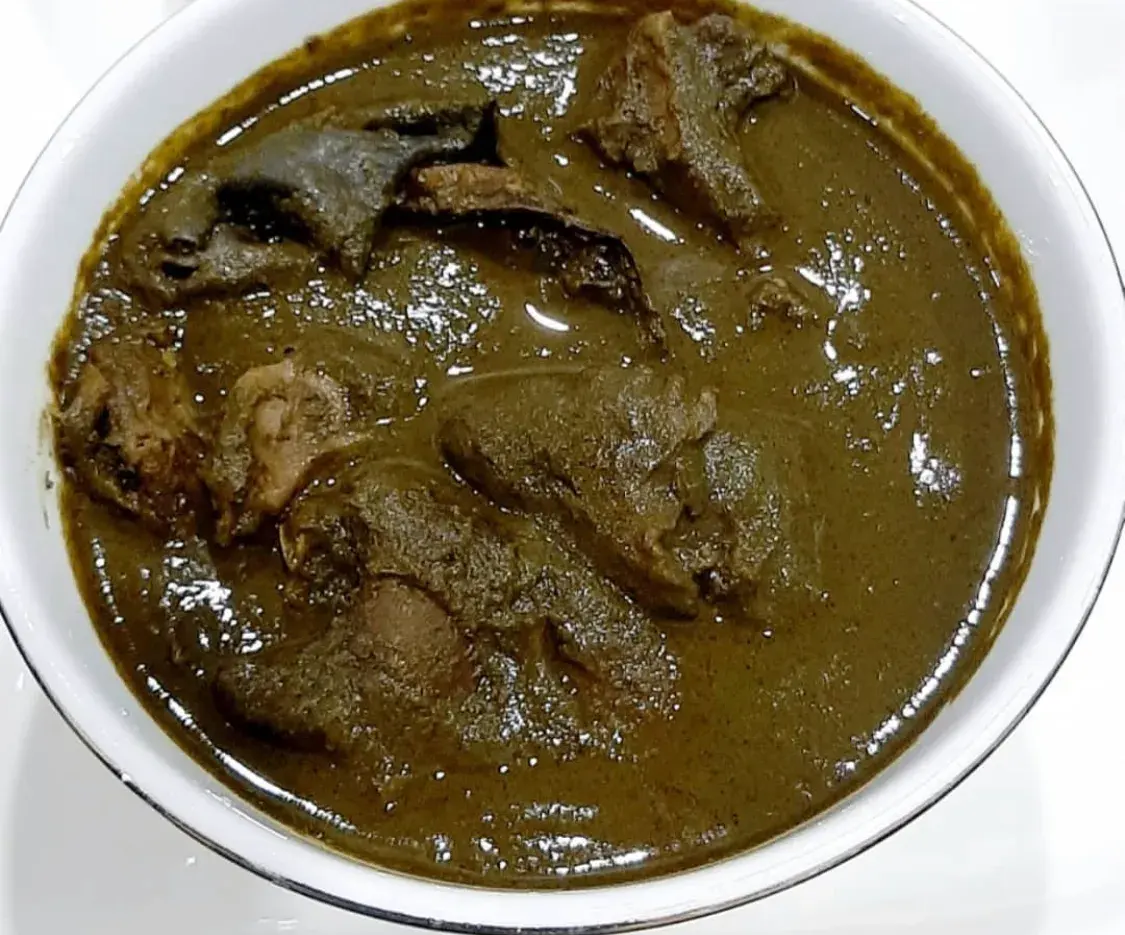
Edo Black Soup
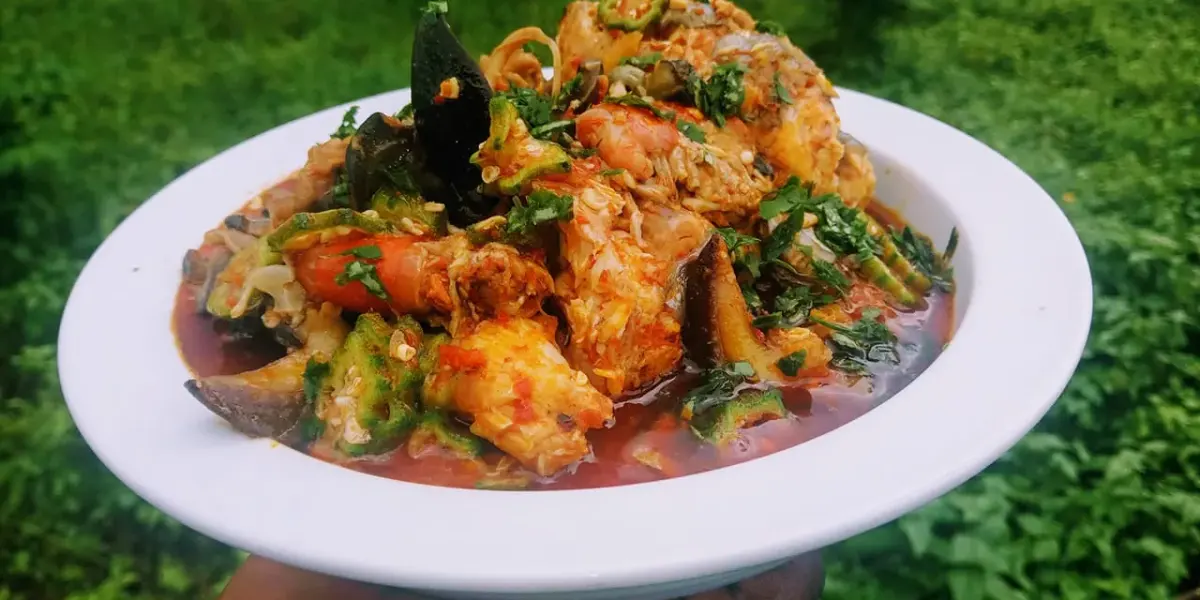
Nigerian Fisherman Soup
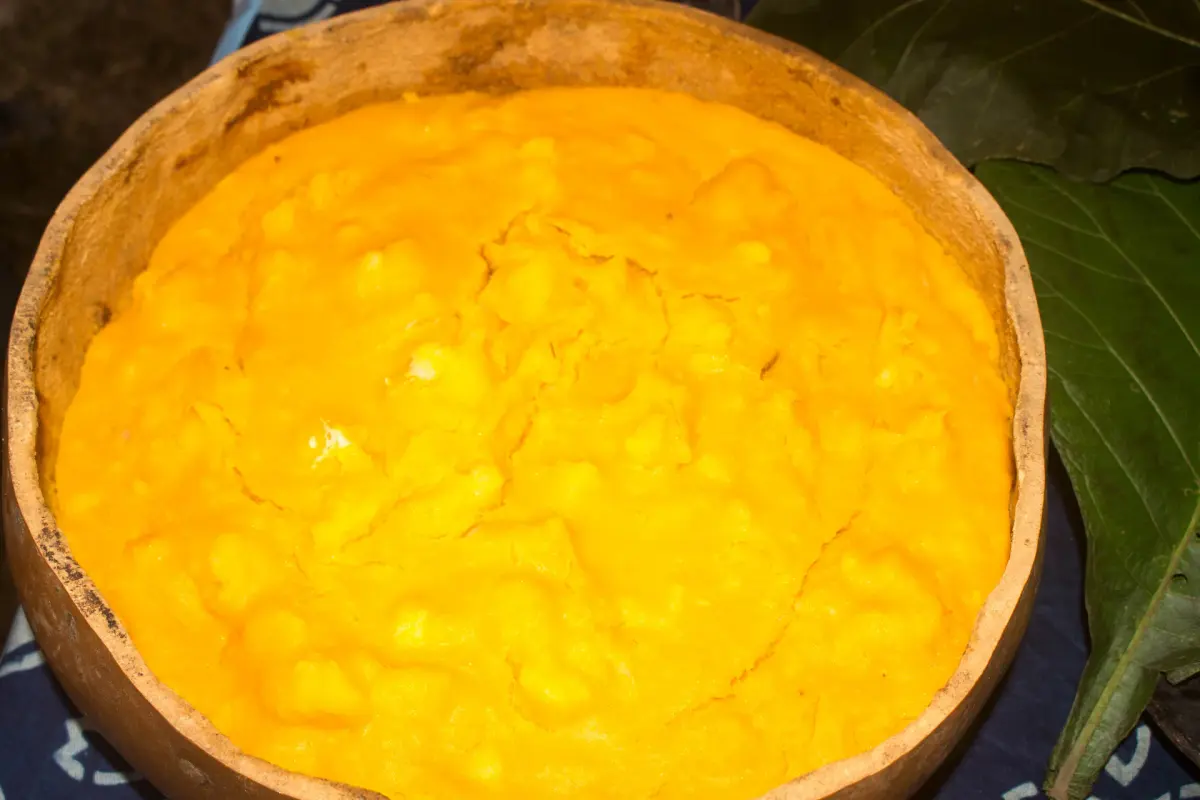
Igbo Yam Porridge
Finding real tatashe here in Chicago is impossible so I just blended two red bell peppers with habaneros from Pete's. Boiling the chicken with the thyme and curry first gave me that exact wedding stew broth taste. Fried the chicken till brown before adding back to the stew base, e sweet sharp o.
I couldn't get scotch bonnets at LuLu so I used regular red chillies, but the flavor was still poa. Searing the nyama after boiling made a huge difference in texture so it didn't disintegrate in the tomato base. Next time I will add more garlic powder as 2 tsp felt a bit lost.
2 cups of ground scotch bonnet for just 1 cup of tomatoes? Ah abeg this pepper is way too much o! My mouth was burning. I had to add two more cans of tomato paste to save the stew. The curry and thyme season on the fried chicken was good sha, but check that pepper ratio.
my broer made this for Sunday lunch and we sommer wiped the pot clean! Boiling the chicken with the thyme and curry powder first makes the broth so full of flavour, then frying it gives that nice crispy skin. Reminds me of my auntie's kitchen on a Sunday afternoon.