

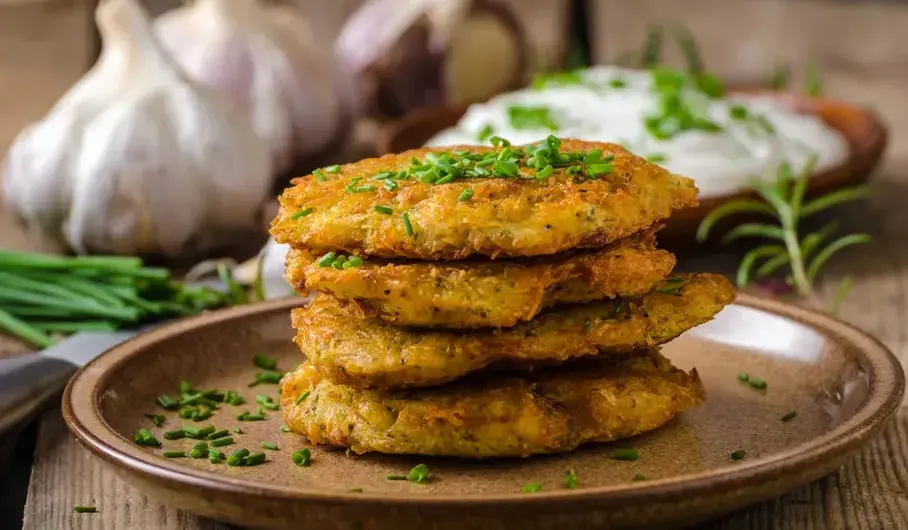
Maakouda (Moroccan Potato Cakes)
Aperçu
Maakouda is a Moroccan potato cake, mashed potato bound with egg and herbs, floured and deep fried until the outside crisps and the inside stays soft. It is street food, sold cheap and eaten either on its own or stuffed into a small baguette. Meknes is where it is most associated, and the city is described as the wine capital of North Africa. Maakouda is sold from stalls there and across the country, and it appears in Algeria and Tunisia too under the same set of spellings: maaqouda, maqouda, makouda. The comparison the source draws is with falafel, and it holds up: a cheap fried snack, sold from a stall, eaten in bread. It has simply never travelled the way falafel has. Ras el hanout is what marks it as Moroccan rather than a generic potato cake. The blend is optional in this recipe and the source strongly recommends it, and turmeric gives the colour. It is also a practical way to use up leftover mashed or baked potato, which is much of how it is made at home. Deep frying is traditional; the oven and the air fryer both work and are given as alternatives.
Note de Patrimoine AFN
Maakouda is a Moroccan fried potato cake associated particularly with Meknes, and eaten across Morocco, Algeria and Tunisia. It is also written maaqouda, maqouda and makouda.
Ingrédients
Les mentions alimentaires sont fournies par les contributeurs à titre indicatif. Elles ne sont pas vérifiées par AFN et dépendent des produits que vous achetez. En cas d’allergie grave, vérifiez vous-même chaque ingrédient. Cuisine, allergies et votre propre jugement
Préparation
- 1
Peel and dice the potatoes into roughly 1 inch cubes. Cook until soft, either in a covered microwave-safe bowl on high for about 8 minutes, or in boiling water.
- 2
Finely chop the coriander, or another fresh herb you prefer, and set aside.
- 3
Let the potatoes cool enough to handle, then mash until completely smooth.
- 4
Add the egg and chopped coriander to the cooled mashed potato.
- 5
Add the salt, turmeric, ras el hanout, pepper and baking powder and mix thoroughly.
- 6
Put half the flour on a plate, keeping the rest to hand.
- 7
Shape equal amounts of the mixture into balls and flatten slightly.
- 8
Coat each flattened cake in flour and set aside. Repeat until the mixture is used up.
- 9
Heat the frying oil in a small pot, wok or saucepan over medium-high heat.
- 10
Fry 3 or 4 at a time, turning until golden, about 3 minutes.
- 11
Drain on a cooling rack and continue with the next batch.
Notes de l’Africook
- Let the potatoes cool before the egg goes in. Added to hot mash the egg begins to set and the texture turns rubbery.
- Mash completely smooth. Lumps break the cakes apart in the oil.
- Coat in flour just before frying rather than in advance, since the flour draws moisture out and turns pasty as it sits.
- Fry 3 or 4 at a time. Crowding the pan drops the oil temperature and they absorb oil rather than crisping.
- Baked at 200°C for about 25 minutes, or in an air fryer turned frequently, they crisp well without deep frying.
- Harissa stirred into yoghurt makes a quick dip, and they are excellent in a crusty sandwich.
Questions fréquentes
What is ras el hanout and do I need it?
Ras el hanout is a North African spice blend whose name means head of the shop, meaning the best a merchant has. Composition varies widely and often runs to a dozen or more spices. It is optional here and strongly recommended, since it is what makes the cakes taste Moroccan rather than like generic potato fritters.
Can I use leftover mashed potato?
Yes, and the source suggests exactly that. Leftover mashed or baked potato works well provided it is not already heavily seasoned or loaded with butter and milk, which makes the mixture too soft to hold. If it is loose, work in a little extra flour before shaping.
Can I bake them instead of frying?
Yes. The oven at 200°C for about 25 minutes until crisp and golden works well, and so does an air fryer, turning them frequently if yours has no moving paddle. You lose some of the crisp shell that deep frying gives, but the result is genuinely good and considerably lighter.
What are they served with?
On their own as an appetizer or side, or stuffed into a small baguette, which is how they are most often sold on the street in Morocco. Harissa mixed into yoghurt is a good dip. They are eaten hot and are noticeably less good once cooled.
Avis
2 avis
Vous Aimerez Aussi
Voir toutes les recettes Morocco →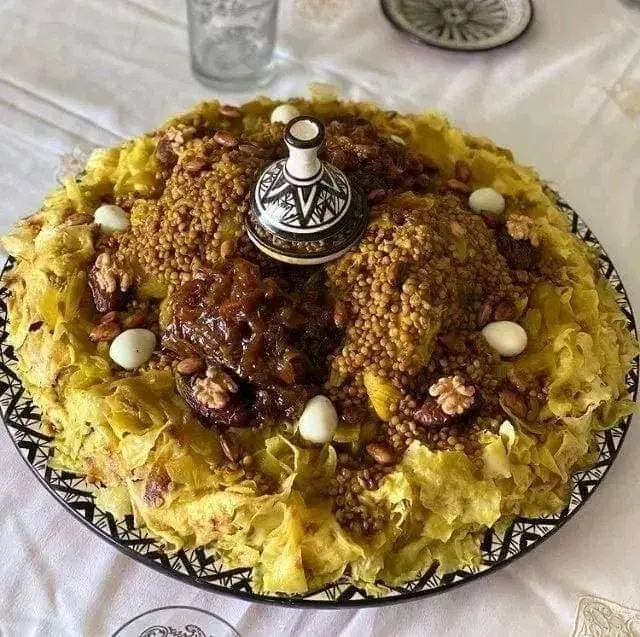
Moroccan Chicken Rfissa
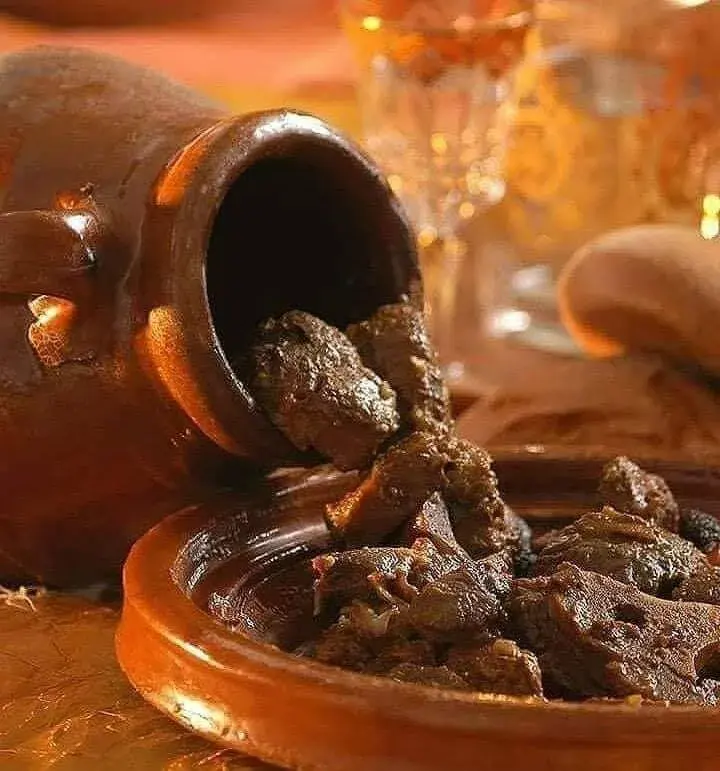
Tanjia Marrakchia
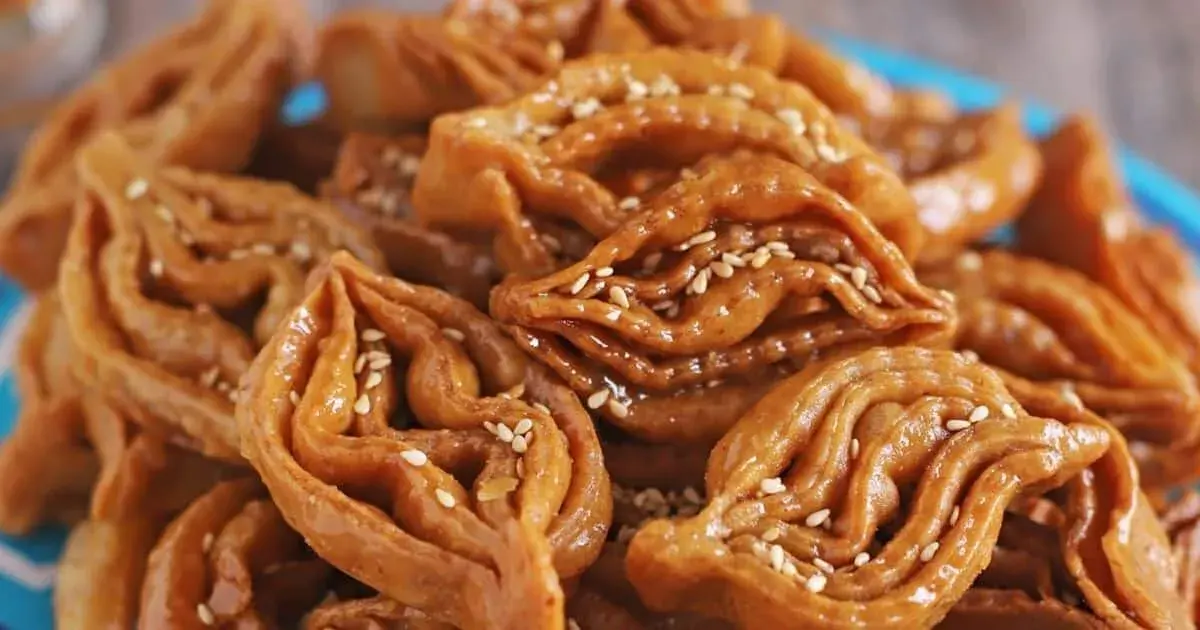
Chebakia (Moroccan Sesame Cookies)
Made these for Iftar yesterday to serve alongside our usual koesisters. The turmeric gives them such a lovely yellow colour. Only thing is 1/4 tsp of ras el hanout was a bit too mild for our taste, so I will double the spice next time, but adding baking powder into the potato mash made them so light.
couldn't get ras el hanout at the heb near me so I had to go to the halal grocery in Richardson. used cilantro instead of coriander. that 1 tsp of baking powder is the secret, made the potato mash puff up so nice in the oil! e sweet sha, we finished everything before it even cooled down.