
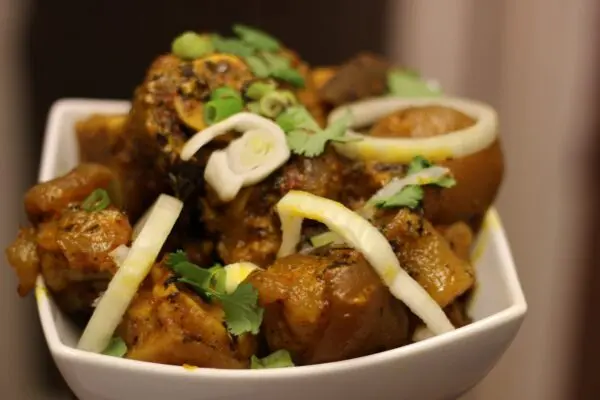
Nkwobi (Spicy Cow Foot)
Aperçu
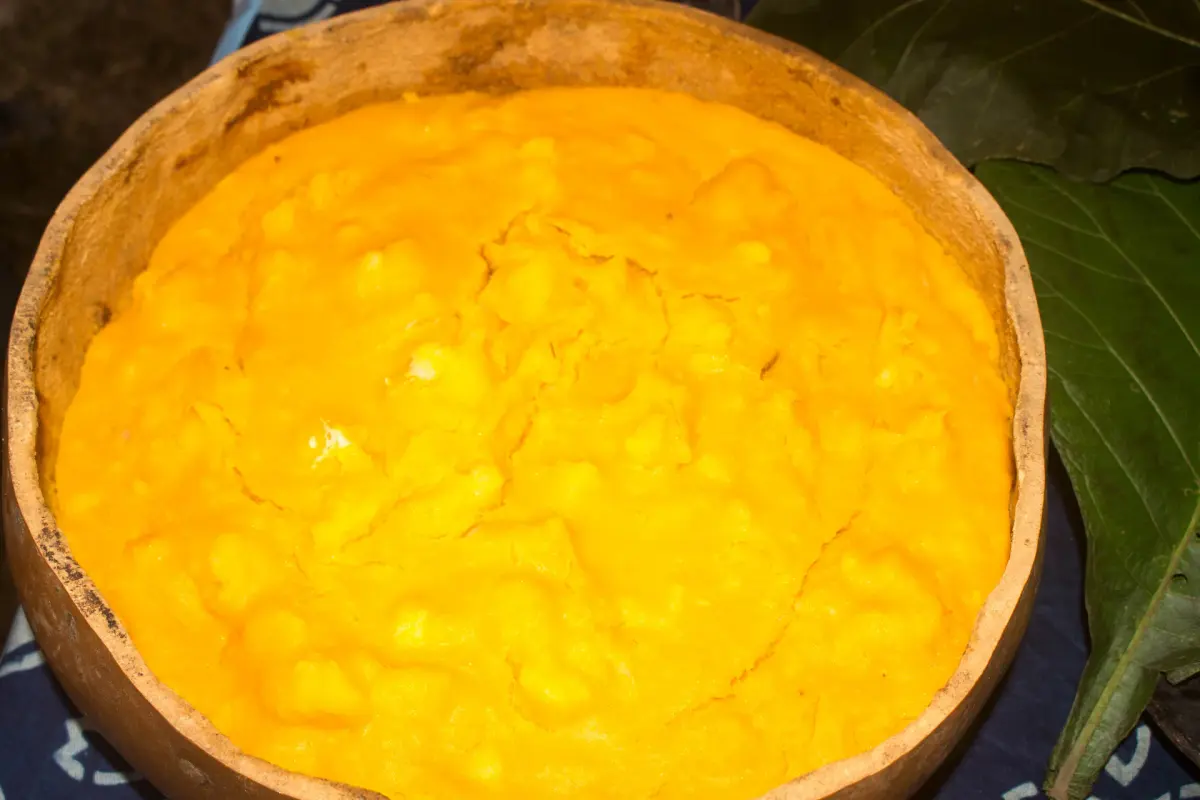
Nkwobi is cow foot cooked until gelatinous, then dressed in a thick, spiced palm oil paste and served warm in a wooden bowl. It is Igbo, and it is the definitive Nigerian beer-parlour dish. Its reputation is as something ordered out rather than made at home, a dish for exclusive restaurants and drinking spots, eaten in the evening with a cold beer. That reputation is partly deserved and partly an accident of presentation: it arrives looking elaborate, and the technique is genuinely simple. The paste is what defines it. Palm oil is emulsified with akanwu, potash, also called kaun or edible limestone, which thickens it into a smooth yellow cream rather than leaving it as oil. That reaction is the trick of the dish and is what separates nkwobi from cow foot in sauce. It is commonly confused with isi ewu, which is the same treatment applied to goat head. The paste and the presentation are near identical; the meat is entirely different. Utazi leaf, sliced very fine, goes on top, along with sliced onion. **Uses potash.** Culinary quantities are traditional, but it should be used precisely rather than by eye.
Note de Patrimoine AFN
Nkwobi is an Igbo dish in which palm oil is emulsified with akanwu, potash or edible limestone, into a thick paste that coats slow-cooked cow foot. The same preparation applied to goat head produces isi ewu.
Ingrédients
Les mentions alimentaires sont fournies par les contributeurs à titre indicatif. Elles ne sont pas vérifiées par AFN et dépendent des produits que vous achetez. En cas d’allergie grave, vérifiez vous-même chaque ingrédient. Cuisine, allergies et votre propre jugement
Préparation
- 1
Cut the cow foot into medium chunks.
- 2
Put the powdered potash into a bowl.
- 3
Add a small quantity of water (about 4 table spoons) and stir well.
- 4
Pass it through a fine sieve and set the liquid aside.
- 5
Cut 1 onion into 4 big chunks.
- 6
Pound the pepper with a mortar and pestle or blitz it.
- 7
Grind the crayfish.
- 8
Crack and remove the outer shell of the ehu then grind with a dry mill eg coffee grinder.
- 9
Wash and put the cow foot chunks in a pot.
- 10
Add the stock cubes (crushed) and the chunks of onion.
- 11
Add a small quantity of water and start cooking at medium heat till well cooked.
- 12
Add just enough water to prevent burning as you cook. There should not be any stock (water) in the pot when the meat is done.
- 13
While the meat is cooking, pour the palm oil into a clean dry pot.
- 14
Pour in the potash mixture (sieved) into the oil.
- 15
Stir with a wooden spatula as you pour the potash. You'll notice the palm oil begin to curdle and turn yellow.
- 16
Keep stirring till all the oil has turned yellow.
- 17
Add the ground crayfish, pepper and ehu seeds.
- 18
Stir very well till they are all incorporated.
- 19
When the meat is done, add salt.stir and cook till all the water has dried.
- 20
Add the well done cow foot to the palm oil paste and stir very well with the wooden spatula.
- 21
Put it back on the stove/cooker and heat till the Nkwobi is piping hot, stirring all the time to make sure it does not burn.
- 22
To prepare the garnish, cut the onions into rings and cut the utazi into long thin slices.
- 23
Serve the Nkwobi in a wooden mortar.
- 24
Add the thin slices of utazi and onion rings on top for the full effects.
Notes de l’Africook
- Cook the cow foot until genuinely soft and gelatinous. Undercooked, it is unpleasant to eat and no sauce rescues it.
- Dissolve the potash in a little water and strain it before use, undissolved grit ruins the texture.
- Add the potash solution gradually while stirring the palm oil. It thickens as you go and is easy to overshoot.
- Slice the utazi extremely fine. It is strongly bitter and a heavy hand overwhelms the dish.
Questions fréquentes
What is the difference between nkwobi and isi ewu?
The meat. Nkwobi uses cow foot; isi ewu uses goat head. The palm oil and potash paste, the utazi garnish and the wooden-bowl presentation are essentially the same, which is why the two are so often confused. People who eat both will tell you the goat head version is the richer of the two.
What is potash and is it safe?
Potash, akanwu, kaun, edible limestone, is a traditional alkaline salt used across West African cooking to tenderise, to emulsify and to soften beans. It is used in small culinary quantities and has a long history of such use. It should be measured rather than estimated, dissolved and strained before use, and not used heavily.
Can I make the paste without potash?
Not the real thing. The emulsion between palm oil and potash is what turns the oil into a thick pale paste, and nothing else reproduces it. Some cooks use baking soda as a substitute with mixed results. Without it you will have cow foot in palm oil, which is a different and much looser dish.
Avis
Soyez le premier à noter cette recette
Vous l’avez cuisinée ? Votre note aide la personne suivante à se décider.
Aucun avis sur cette recette pour le moment. Si vous l’avez cuisinée, le vôtre serait le premier.
Vous Aimerez Aussi
Voir toutes les recettes Nigeria →
Edo Black Soup
Nigerian Fisherman Soup
Igbo Yam Porridge