
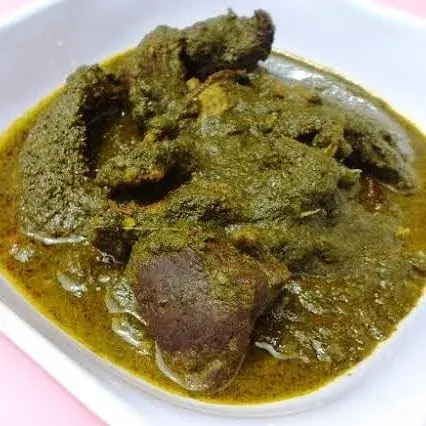
Marugbo Soup (Obe Eweta)
Abuja, Nigeria · Voir toutes les recettes
Aperçu
Marugbo soup is a dark, almost black vegetable soup built on dried and ground marugbo leaves, with goat meat, smoked fish and palm oil. It belongs to the Ondo people of southwestern Nigeria, and is also called obe marugbo or obe eweta. The colour comes from one ingredient. Marugbo is the Yoruba name for *Clerodendrum volubile*, a tropical vine that grows across West Africa; the leaves are dried and ground to a powder before use, which both concentrates them and deepens the colour. Fresh leaves would give a green soup. Dried and ground, they give the blackish-green that the dish is known for. It is one of several West African soups described as black soup, and they are not the same dish. Edo black soup, from Edo State, uses a different combination of leaves entirely. Both are on this site, which is a genuine cannibalisation risk worth flagging, but they are distinct regional dishes rather than duplicates. The taste is bitter and herbal, which is the point rather than a flaw. Efirin, scent leaf, goes in alongside to lift it. The source makes medicinal claims for marugbo leaves. Those have not been carried across. It is a distinctive regional soup, and that is reason enough to cook it.
Note de Patrimoine AFN
Marugbo soup, also called obe marugbo or obe eweta, is a dark vegetable soup of the Ondo people of southwestern Nigeria. Its colour and bitterness come from the dried and ground leaves of Clerodendrum volubile, known in Yoruba as marugbo.
Ingrédients
Les mentions alimentaires sont fournies par les contributeurs à titre indicatif. Elles ne sont pas vérifiées par AFN et dépendent des produits que vous achetez. En cas d’allergie grave, vérifiez vous-même chaque ingrédient. Cuisine, allergies et votre propre jugement
Préparation
- 1
Put the goat meat in a pot with 4 cups of water and bring it to the boil over high heat.
- 2
Mix in the smoked fish, crayfish, onion, habanero, ginger, palm oil, seasoning cubes and salt.
- 3
Combine the dried marugbo and efirin leaves in a blender with half a cup of water and blend to a smooth paste.
- 4
Work the leaf paste into the soup pot and mix well.
- 5
Cook gently for 15 minutes so the flavours infuse. Taste and adjust the seasoning.
- 6
Serve hot with eba, pupuru or rice.
Notes de l’Africook
 Notes personnelles de Deborah Olayiwola
- Use dried and ground leaves, not fresh. Drying concentrates both the flavour and the colour, and fresh marugbo gives a green soup rather than a black one.
- Blend the leaf powder with water into a paste before it goes in, so it disperses rather than clumping.
- The bitterness is the dish. It is meant to be herbal and bitter, and balancing it is what the efirin and palm oil are doing.
- It thickens as it stands. Loosen it with water when reheating.
- Pupuru, fermented cassava, is the Ondo accompaniment and the most authentic pairing.
- African markets stock dried marugbo, sometimes as leaf powder. There is no substitute that gives the same colour.
Questions fréquentes
What is marugbo?
The Yoruba name for Clerodendrum volubile, a tropical vine that grows across West Africa. The leaves are bitter and herbal, and for this soup they are dried and then ground to a powder, which concentrates their flavour and deepens their colour. That processing is what gives marugbo soup its characteristic blackish-green rather than the plain green a fresh leaf would produce. African markets sell it dried or as powder.
Is this the same as Edo black soup?
No. Several West African soups are described as black soup and they use different leaves and belong to different peoples. Edo black soup comes from Edo State and uses its own combination of leaves; marugbo soup is from Ondo and is built on marugbo. Both are on this site as separate pages, which does mean they compete for some of the same searches, but they are genuinely different regional dishes.
Why is it bitter?
Because marugbo leaves are, and that is the character of the dish rather than a flaw to be corrected. Bitter greens run through West African cooking, bitterleaf soup is built on the same principle, and the bitterness is balanced rather than removed. Here the efirin, the palm oil and the smoked fish all work against it. If you find it too much, use slightly less leaf powder rather than trying to sweeten it.
What is it served with?
Eba, pupuru or rice. Pupuru, fermented cassava, dried and reconstituted, is the Ondo accompaniment and the most regionally authentic pairing. Eba, made from garri, is the more widely available option. Any swallow works; the soup is thick and strongly flavoured, so its job is to be carried rather than to carry anything itself.
Avis
Soyez le premier à noter cette recette
Vous l’avez cuisinée ? Votre note aide la personne suivante à se décider.
Aucun avis sur cette recette pour le moment. Si vous l’avez cuisinée, le vôtre serait le premier.
Vous Aimerez Aussi
Voir toutes les recettes Nigeria →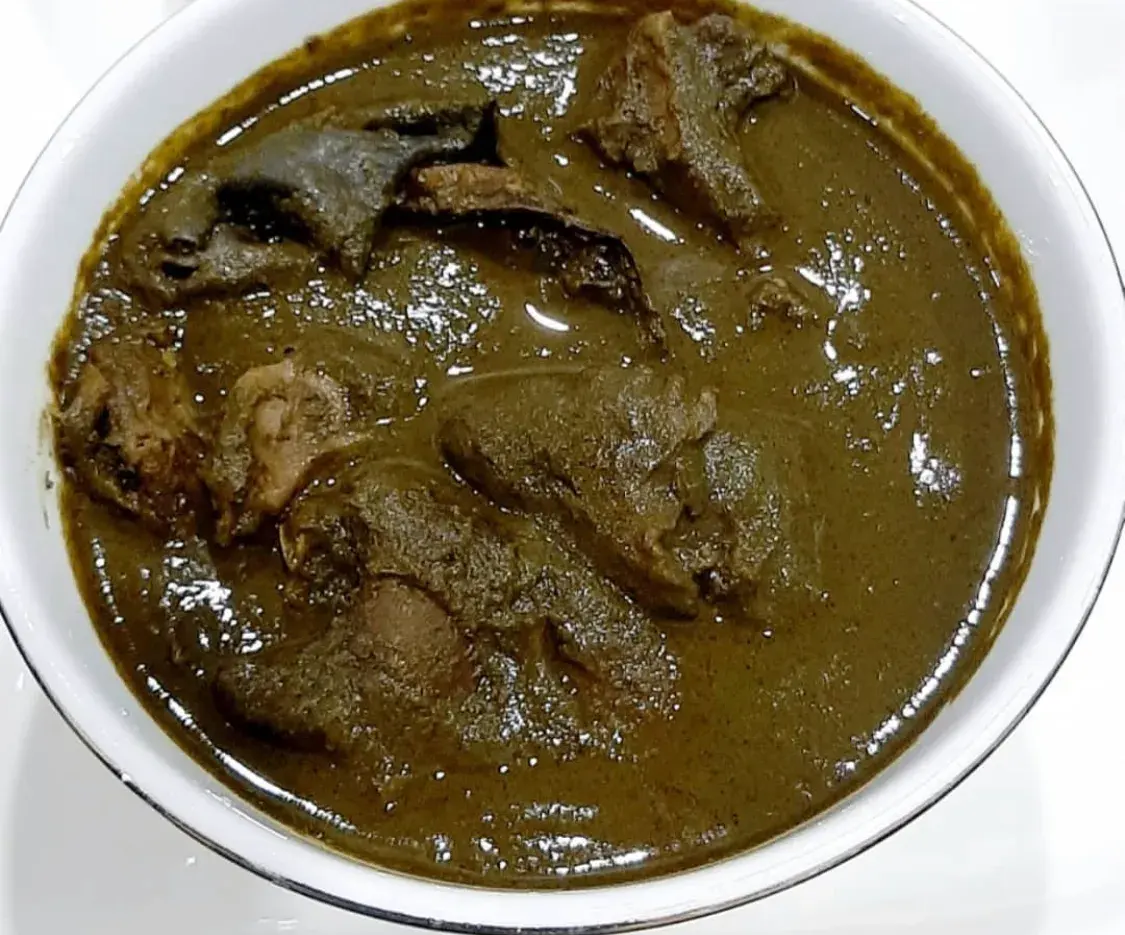
Edo Black Soup

Nigerian Fisherman Soup
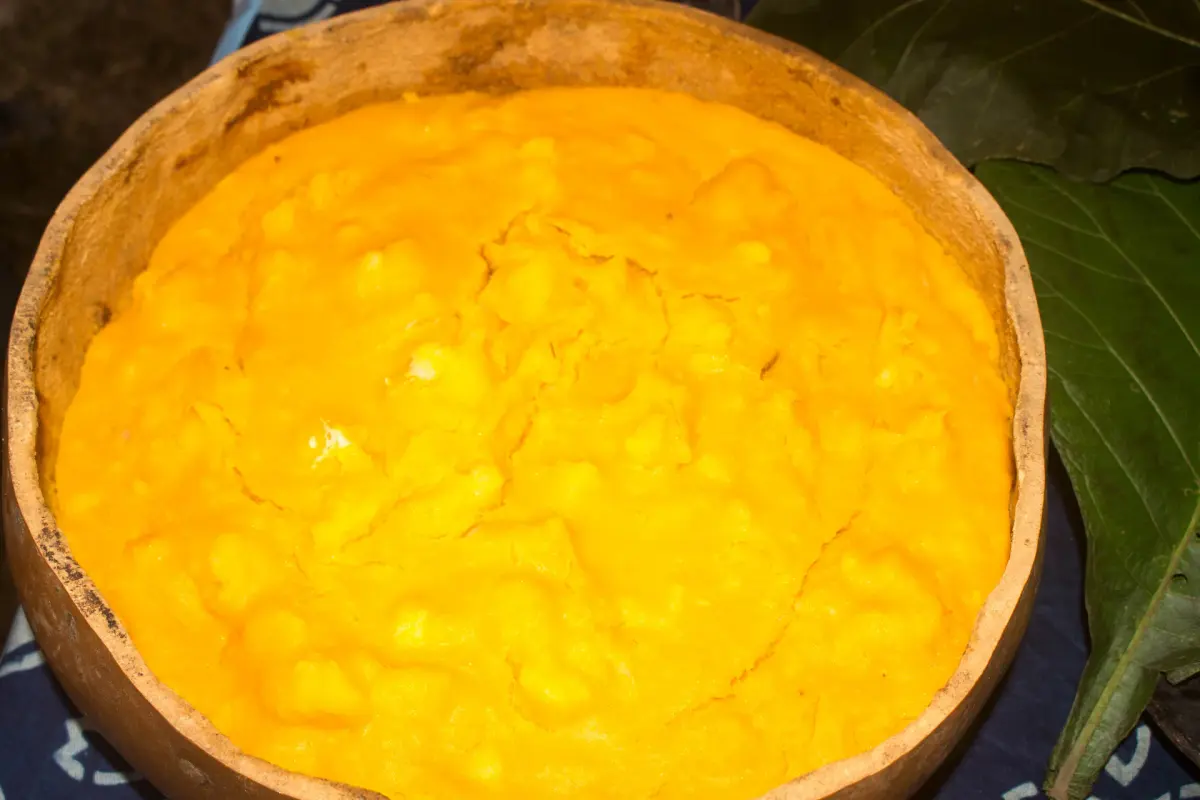
Igbo Yam Porridge