
Ekpang Nkwukwo (Cocoyam Wrapped in Leaves)
Aperçu
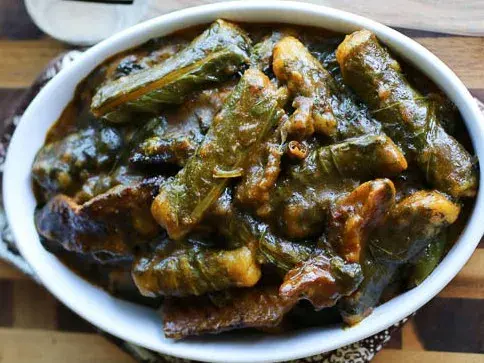
Ekpang nkwukwo is grated cocoyam wrapped in cocoyam leaves, packed into a pot lined with palm oil and cooked slowly with periwinkles, meat, fish and crayfish until the parcels set into soft, cohesive bundles. It belongs to the Efik and Ibibio of Cross River and Akwa Ibom in southeastern Nigeria, and it is dish for special occasions rather than everyday food. The reason it is occasion food is the labour. Every single parcel is wrapped by hand, one small scoop of grated cocoyam at a time, and a pot holds a great many. There is no shortcut and no machine, which is exactly why it signals effort and hospitality when it appears. Two details in the method are structural rather than decorative. The pot is rubbed generously with palm oil before anything goes in, which stops the parcels catching and burning on the base. And unshelled periwinkles are laid at the bottom as a physical layer between the pot and the food, which is a neat piece of traditional engineering. The dish crosses the border. It is called ekwang in Cameroon, where it is particularly associated with the Bakweri, and the two versions are essentially the same preparation under two names. The source's health claims about cocoyam have not been carried across.
Note de Patrimoine AFN
Ekpang nkwukwo is a dish of the Efik and Ibibio peoples of Cross River and Akwa Ibom states in southeastern Nigeria, in which grated cocoyam is wrapped in cocoyam leaves and cooked with palm oil, periwinkles, meat and fish. It is known as ekwang in Cameroon, where it is associated particularly with the Bakweri.
Ingrédients
Les mentions alimentaires sont fournies par les contributeurs à titre indicatif. Elles ne sont pas vérifiées par AFN et dépendent des produits que vous achetez. En cas d’allergie grave, vérifiez vous-même chaque ingrédient. Cuisine, allergies et votre propre jugement
Préparation
- 1
Rinse and cook the beef, offal and dried fish with the stock cubes and seasoning until tender.
- 2
Peel, wash and grate the cocoyam and the water yam if using, and combine the two.
- 3
Rub the inside of the pot generously with red palm oil. This is not optional, it is what stops the parcels catching on the base.
- 4
Rinse the tender cocoyam leaves and tear them into medium pieces. Wash the pumpkin leaves and set them aside.
- 5
Blend the pepper and crayfish together and set aside.
- 6
Wash the periwinkles, shelled or unshelled.
- 7
Rinse the scent leaves and slice them finely.
- 8
If you have unshelled periwinkles, lay them across the base of the oiled pot as a protective layer.
- 9
Scoop a small quantity of the grated cocoyam into a torn cocoyam leaf or a pumpkin leaf, wrap it into a parcel and set it in the pot. Repeat until all the cocoyam is used.
- 10
Tip in the pepper and crayfish blend, the onions, the shelled periwinkles and the cooked meat.
- 11
Pour in hot water to the level of the contents and cook over medium heat for 20 minutes without stirring.
- 12
Finally add the scent leaves, a generous quantity of palm oil and salt to taste.
- 13
Cook for a further 5 minutes, then leave it to stand for 5 minutes before mixing gently and serving.
Notes de l’Africook
- Oil the pot properly before anything goes in. Ekpang burns on the base very easily and this is the whole defence against it.
- Lay unshelled periwinkles across the bottom if you have them. They act as a physical barrier between the parcels and the heat.
- Do not stir while it cooks. The parcels are fragile until they have set and stirring breaks them apart.
- Grate the cocoyam finely. Coarse gratings do not bind and the parcels fall apart.
- Add hot water rather than cold, so the cooking does not stall.
- Set aside proper time for the wrapping. It is the slow part and it cannot be hurried or skipped.
Questions fréquentes
Why is ekpang nkwukwo considered special occasion food?
Because of the labour. Every parcel is wrapped individually by hand, a small scoop of grated cocoyam into a torn leaf, folded, placed in the pot, and a full pot holds a great many of them. There is no machine and no shortcut. That effort is precisely what makes it appropriate for celebrations and for honoured guests among the Efik and Ibibio; serving it says something that a quicker dish cannot.
What is the difference between ekpang nkwukwo and ekwang?
Essentially nothing but the name and the border. Ekpang nkwukwo is the Nigerian name, used by the Efik and Ibibio of Cross River and Akwa Ibom; ekwang is the Cameroonian name, particularly associated with the Bakweri. The preparation is the same, grated cocoyam wrapped in cocoyam leaves and cooked in palm oil with periwinkles, meat and fish. Details vary between cooks more than they vary between the two countries.
What are periwinkles doing in it?
Two jobs. Shelled periwinkles are eaten as part of the dish, contributing a distinctly briny, chewy element that is characteristic of Cross River and Akwa Ibom cooking. Unshelled ones are laid across the base of the pot as a physical barrier between the parcels and the direct heat, which stops them burning, a neat piece of traditional engineering that also happens to be delicious.
Can I use spinach instead of cocoyam leaves?
For wrapping, not really, cocoyam leaves are large, strong and flexible enough to hold a parcel through a long cook, and spinach tears. Pumpkin leaves are the traditional alternative and the recipe already allows for them. If neither is available, banana leaves will hold the shape though they contribute a different flavour. Frozen cocoyam and pumpkin leaves are sold at African grocers and are the better option.
Avis
Soyez le premier à noter cette recette
Vous l’avez cuisinée ? Votre note aide la personne suivante à se décider.
Aucun avis sur cette recette pour le moment. Si vous l’avez cuisinée, le vôtre serait le premier.
Vous Aimerez Aussi
Voir toutes les recettes Nigeria →
Edo Black Soup
Nigerian Fisherman Soup
Igbo Yam Porridge