

African Salad (Abacha and Ugba)
Aperçu
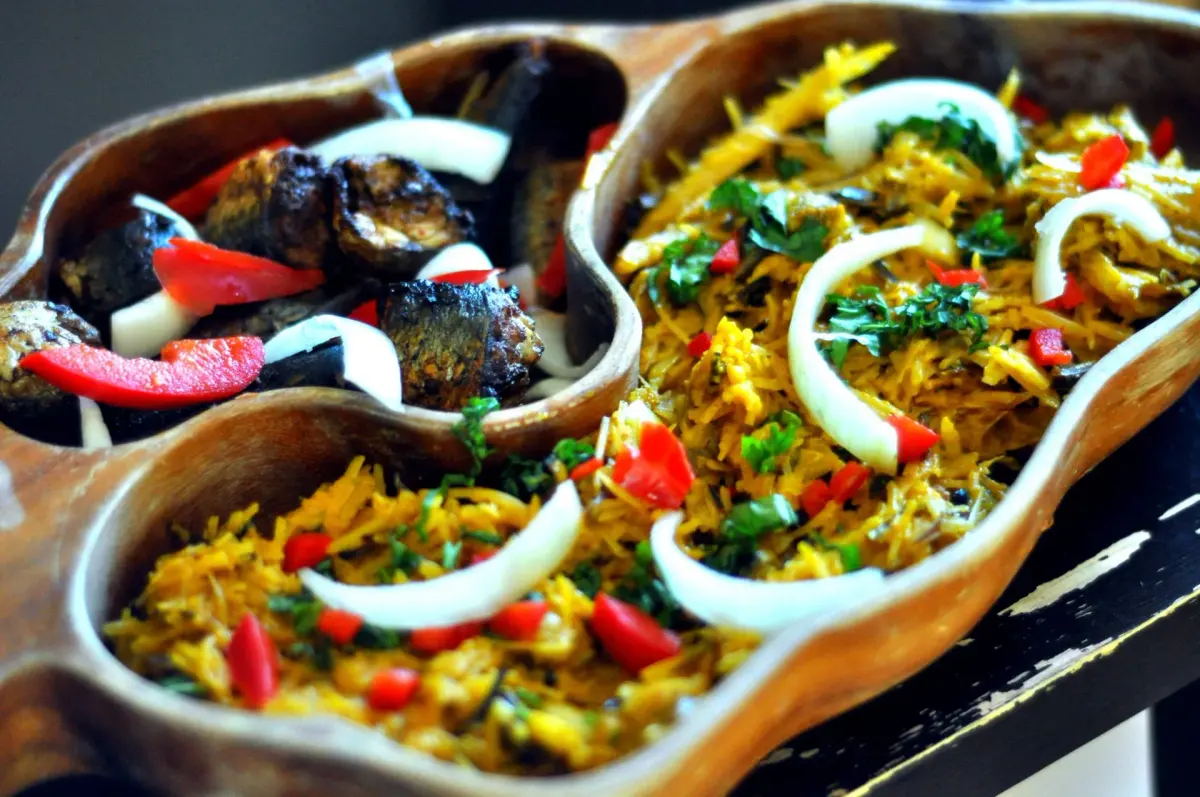
African salad is the Igbo dish of abacha and ugba, and it is a salad only in the loosest sense. Abacha is cassava that has been cooked, shredded on a special grater, soaked overnight, rinsed and dried in the sun. Ugba is fermented oil bean seed, cooked for hours, sliced, rinsed and left to ferment. Neither is cooked when the dish is assembled. That is the striking thing about it: almost the entire preparation happens off the stove. Palm oil is turned into a thick yellow paste by working it with potash solution, and everything else is folded into that paste in sequence. The order matters, and Igbo cooks are firm about it, because the components will not distribute evenly if they all go in together. It belongs to ceremony. At an Igbo wedding, abacha is reserved for the important guests, and it is served with chilled palm wine, which is the pairing anyone from the region will name. Despite being filling enough to be a meal, it is treated as a snack rather than a main course. It can be served cold or warmed briefly, and the choice between the two is a matter of household preference rather than correctness.
Note de Patrimoine AFN
Abacha and ugba is a dish of the Igbo people of southeastern Nigeria, made from shredded dried cassava and fermented oil bean seed. It is served at ceremonies, where it is conventionally offered to honoured guests with palm wine.
Ingrédients
Les mentions alimentaires sont fournies par les contributeurs à titre indicatif. Elles ne sont pas vérifiées par AFN et dépendent des produits que vous achetez. En cas d’allergie grave, vérifiez vous-même chaque ingrédient. Cuisine, allergies et votre propre jugement
Préparation
- 1
Roast, peel and grind the ehu seeds with a dry mill.
- 2
If using kanda or cow skin, cook it until done and cut it into small pieces.
- 3
Fry or roast the mackerel, soak the stockfish in water and debone the dry fish, using whichever you prefer or all three.
- 4
Wash and cut the vegetables into small pieces. Dice the large onion and slice the medium one into rings.
- 5
Wash the garden eggs and set them aside whole.
- 6
Grind the crayfish and pepper.
- 7
Soak the abacha in cold water and rinse the ugba in lukewarm water.
- 8
Once the abacha has softened, drain it in a sieve.
- 9
Put the powdered potash in a bowl with about a cup of cold water and stir well.
- 10
Pour the palm oil into a good sized pot. The quantity is deliberate, so the abacha does not eat dry.
- 11
Pour in the potash water, taking care to leave the sediment behind, and stir hard until the oil turns into a yellow paste.
- 12
Add the ground pepper, ground ehu, crushed stock cubes, crayfish, diced onion and ugba, and stir very well. All of this is done off the heat.
- 13
Add the ogiri or iru and mix it through thoroughly.
- 14
Add the diced kanda or ponmo and stir well.
- 15
Add the soaked and drained abacha and stir until it is fully coated in the palm oil paste.
- 16
Add the sliced utazi and salt to taste, and stir. Salt goes in last, because the seasoning may already be enough.
- 17
To serve warm, put the pot on a low to medium heat and warm it through, then stir in the sliced garden egg leaves and serve.
- 18
To serve cold, stir the garden egg leaves through without heating and serve with garden eggs, fish and onion rings.
Notes de l’Africook
- Add the ingredients one at a time and stir between each. Tipping everything in together makes an even blend almost impossible, which is why the method reads as repetitive.
- Pour off the potash water and leave the sediment in the bowl. The sediment is gritty and does nothing useful.
- Do not reduce the palm oil. It is what stops the abacha eating dry, and this is the most common complaint about a poorly made version.
- Salt goes in last. Between the stock cubes, crayfish, ogiri and fish there may already be enough, and salting early is hard to undo.
- Neither abacha nor ugba is cooked in this dish. Do not attempt to boil or fry them.
- Chilled palm wine is the traditional accompaniment. Any cold drink works, but that is the pairing Igbo people will name.
Questions fréquentes
What is abacha?
Abacha is cassava that has been boiled, shredded on a special grater into fine strands, soaked in cold water overnight, rinsed and dried in the sun. It is sold dried at Nigerian grocers and only needs soaking to soften before use. In its dried form it keeps for a long time, which is much of why it exists.
What is ugba and can I leave it out?
Ugba, also called ukpaka, is fermented African oil bean seed, boiled for several hours then sliced, rinsed and fermented. It brings a pungent, deeply savoury quality that is essential to the dish, and Igbo cooks consider it non negotiable. Abacha without ugba is a different and much plainer thing.
What does the potash do?
Potash, akanwu, is an alkaline salt dissolved in water and worked into the palm oil. It emulsifies the oil into a thick yellow paste that coats the abacha, which plain palm oil will not do. Use the dissolved liquid and leave the sediment behind, and keep the quantity to what the recipe gives.
Is it served hot or cold?
Either, and it is a matter of household preference. Some warm the assembled dish briefly over a low heat before adding the garden egg leaves; others serve it entirely cold. Nothing about the dish is cooked at this stage in either case, so warming is only about temperature.
Avis
4 avis
Vous Aimerez Aussi
Voir toutes les recettes Nigeria →
Edo Black Soup
Nigerian Fisherman Soup
Igbo Yam Porridge
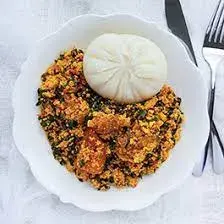
Tried making this after buying dried cassava strips and palm oil from a West African shop in PE. The ehu seeds got a bit too burnt when I roasted them for 5 mins on my gas stove, made the whole dish taste bitter alongside the utazi. Also took me way longer than 25 mins prep to debone all the stockfish properly. Next time I'll stick to fried mackerel only.
Had to drive down to the African market in Dekalb to get the dry abacha and fermented ugba. Couldnt find fresh utazi leaves here in Atlanta so I used a tiny bit of chopped bitter leaf I had in the freezer. Still came out very close to what my auntie used to make in Enugu. Just go easy on the potash solution so it doesnt ruin the palm oil texture.
The secret really is roasting that ehu seed properly before grinding, the aroma filled my whole kitchen! I added extra utazi because my husband loves the bitter taste with the soft ugba. Just make sure you mix the akanwu water well with the palm oil until it turns thick yellow, otherwise it wont coat the abacha right. Sweet die o.
my mother always insisted on using ogiri instead of iru for abacha, so that's what I used here. the chewiness of the diced kanda mixed with that soft soaked abacha is spot on. smelled just like home when the crayfish and warm palm oil hit the bowl. e sweet no be small thing.