
Butter Chicken (Murgh Makhani)
London, United Kingdom · Voir toutes les recettes
Aperçu
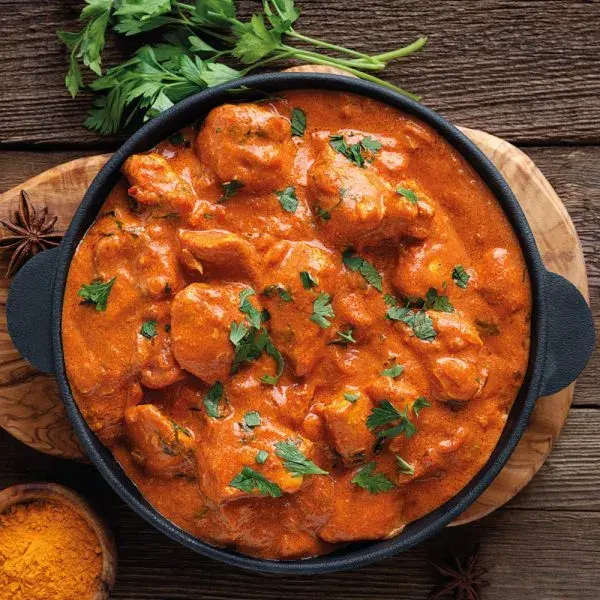
Butter chicken, or murgh makhani, is marinated chicken in a spiced tomato and butter sauce. It is Indian, specifically Delhi, and it has an unusually well-documented origin for a dish of its age. It was created at the Moti Mahal restaurant in Delhi in the 1950s by Kundan Lal Jaggi and Kundan Lal Gujral, and the account of how is credible rather than folkloric: leftover tandoori chicken, drying out as it sat, was revived in a gravy of tomato, butter and cream. That is a restaurant solving a waste problem, and the dish that resulted became one of the most widely eaten Indian dishes in the world. The English term butter chicken appears in print by 1975. It travels remarkably well, and Africa is part of that. Butter chicken is widely cooked across East and Southern Africa, where large South Asian communities have shaped local cooking for generations, and it appears on restaurant menus from Nairobi to Durban. It has also been absorbed into pizza toppings, wraps and pies in Canada, Australia and New Zealand. The marinade is the part people skip and should not. Yoghurt, lemon, chilli and garam masala over several hours is what tenderises the chicken and puts flavour into the meat rather than only around it. The source's ingredient list is badly scrambled and has been rebuilt from its method.
Note de Patrimoine AFN
Butter chicken, or murgh makhani, was created at the Moti Mahal restaurant in Delhi in the 1950s by Kundan Lal Jaggi and Kundan Lal Gujral, reportedly by reviving leftover tandoori chicken in a tomato and butter gravy. The English name appears in print by 1975.
Ingrédients
Préparation
- 1
Combine the lemon juice, yoghurt, cumin, paprika, chilli powder and half the garam masala in a bowl with some seasoning.
- 2
Cut the chicken into bite-sized pieces and turn them through the marinade until coated. Cover and chill for at least an hour, or overnight, this is where most of the flavour and all of the tenderising happens.
- 3
Warm the oil in a large heavy saucepan. Cook the onion, garlic, green chilli and ginger over medium heat for about 10 minutes, until soft and beginning to colour.
- 4
Work in the remaining garam masala, the ground fenugreek and the tomato purée, and cook for a further 2 minutes until fragrant.
- 5
Pour in the stock and the marinated chicken, along with any marinade left in the bowl.
- 6
Cook for about 15 minutes, then let it bubble gently for a further 5 until the sauce has thickened and the chicken is cooked through.
- 7
Scatter with toasted flaked almonds and serve with basmati rice, naan, chutney, coriander and lime wedges.
Notes de l’Africook
 Notes personnelles de Nympha Nzeribe
- Marinate properly. An hour is the minimum and overnight is much better, the yoghurt and lemon do real work on the texture of the meat.
- Use thighs rather than breast. They stay moist through the cooking where breast dries out and goes stringy.
- Fenugreek is the flavour people cannot place in butter chicken. A teaspoon of the ground leaf or seed is what makes it taste like the restaurant version.
- Cook the onions long enough. Ten minutes is not padding; underdone onion leaves the sauce sharp and thin.
- For a richer sauce, finish with a splash of cream. The source omits it, but makhani means buttery and cream is traditional.
- It is better the next day, once the spices have settled into the sauce.
Questions fréquentes
Where does butter chicken come from?
Delhi, in the 1950s, at the Moti Mahal restaurant, created by Kundan Lal Jaggi and Kundan Lal Gujral. The account is that leftover tandoori chicken, drying out as it sat, was revived in a gravy of tomato, butter and cream, a restaurant solving a waste problem. Unusually for a dish of its fame, this origin is reasonably well documented rather than legendary. The English name butter chicken appears in print by 1975.
Is it the same as chicken tikka masala?
They are close but not identical, and they have different origins. Both use marinated chicken in a creamy tomato sauce, but butter chicken is Delhi in origin and leans on butter, fenugreek and a smoother, sweeter sauce. Chicken tikka masala is generally credited to British Indian restaurants and tends to be spicier, with more visible onion and pepper in the sauce. The two are frequently confused, including on restaurant menus.
Is butter chicken eaten in Africa?
Widely, particularly in East and Southern Africa, where long-established South Asian communities have shaped local cooking for generations. It appears on restaurant menus from Nairobi to Dar es Salaam to Durban and is cooked in homes across the region. That does not make it an African dish, it is Indian and filed here under South Asian, but its presence in African kitchens is real and not incidental.
Do I have to marinate the chicken?
You can skip it and the dish will still work, but you will lose most of what makes it good. The yoghurt and lemon tenderise the meat and carry the spices into it rather than leaving them on the surface, which is the difference between chicken in a sauce and butter chicken. An hour helps; overnight is noticeably better. It is also the step that can be done in advance, which makes the cooking itself quick.
Avis
Soyez le premier à noter cette recette
Vous l’avez cuisinée ? Votre note aide la personne suivante à se décider.
Aucun avis sur cette recette pour le moment. Si vous l’avez cuisinée, le vôtre serait le premier.