

Sago Pudding
Aperçu
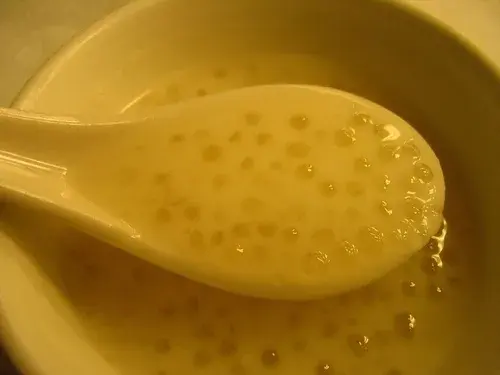
Sago pudding is made from sago pearls cooked in milk or water with sugar, and it belongs to no single country. The source names none, and the honest answer is that versions of it exist across Southeast Asia, the Pacific and Britain, each quite different from the others. Sago itself is the starch extracted from the pith of the sago palm trunk, and most of the world's supply comes from Indonesia and Malaysia. The extracted starch is worked into a dough, forced through a sieve to form pearls and dried. In Malaysia the pudding is sago gula melaka, served with palm sugar syrup and coconut milk. In Papua New Guinea it is a staple preparation. In Britain it became a nursery pudding thickened with egg or cornflour, which is the version this recipe follows. It is often confused with tapioca, and the two are related but not identical. Tapioca pearls come from cassava root rather than palm pith, and while they can usually be substituted for one another they are not the same starch. Cassava has its own African history, carried by Portuguese ships from South America to West Africa, Asia and the West Indies, but that is a story about tapioca rather than about sago.
Ingrédients
Les mentions alimentaires sont fournies par les contributeurs à titre indicatif. Elles ne sont pas vérifiées par AFN et dépendent des produits que vous achetez. En cas d’allergie grave, vérifiez vous-même chaque ingrédient. Cuisine, allergies et votre propre jugement
Préparation
- 1
Pour the milk into a large microwaveable dish, add the sago and let it soak for 1 hour.
- 2
Microwave on high for 4 minutes, then stir.
- 3
Microwave on high for a further 4 minutes and stir again.
- 4
Microwave on medium for 5 minutes. The mixture should now be thick, with glassy beads of sago showing through. If not, continue on medium a minute at a time until cooked.
- 5
Beat the eggs, sugar and vanilla together in a cup, then quickly stir them into the hot sago mixture.
- 6
Microwave on medium for 2 minutes and serve hot.
Notes de l’Africook
 Notes personnelles de Nympha Nzeribe
- Do not skip the hour of soaking. Sago pearls need to hydrate before cooking or the centres stay hard and chalky.
- Stir at every stage. Sago settles and catches, and unstirred pudding cooks unevenly with a solid layer at the bottom.
- The pearls should be translucent all the way through with no white dot in the middle. That is the only reliable test for doneness.
- Add the egg mixture quickly and stir hard. Poured in slowly it scrambles rather than thickening the pudding.
- It thickens considerably as it cools, so take it off slightly looser than you want it.
- For the Malaysian version, skip the egg and serve the cooked sago with palm sugar syrup and coconut milk instead.
Questions fréquentes
Is sago the same as tapioca?
No, though they behave similarly and can usually be substituted. Sago is starch from the pith of the sago palm trunk; tapioca comes from cassava root. Both are sold as small dried pearls that turn translucent when cooked. The flavours are close to neutral in each, so a swap works in most recipes, but they are different plants and different starches.
Why is my sago still hard in the middle?
It was not soaked long enough, or not cooked long enough after soaking. Sago needs a full hour in liquid before heat is applied, and then enough cooking for the pearls to go completely translucent. A white dot in the centre of a pearl means it is not done, and no amount of standing will fix it.
Can I make it without a microwave?
Yes. Soak the sago in the milk as directed, then cook it in a heavy saucepan over low heat, stirring almost constantly, for about 20 minutes until the pearls are clear. Temper the beaten egg mixture with a little of the hot pudding before stirring it back in, then cook gently for a further two minutes.
What is it served with?
In Britain, with jam or stewed fruit. In Malaysia, where it is sago gula melaka, with palm sugar syrup and coconut milk, which is a considerably better dessert in most people's view. A sprinkle of cinnamon, nutmeg or cardamom just before serving works with either.
Avis
5 avis
Vous Aimerez Aussi
Isombe
Tripe (Mogodu)
Garden Egg Stew (Earthenware Bowl Method)

Herh, making sago pudding in a microwave felt like cheating oo! Picked up the sago pearls at the Asian market near Seven Sisters station. Soaking it in the milk for the whole 1 hour is really crucial though. The glassy beads appeared right on time after the 5 mins on medium power. Very comforting.
Never cooked with sago before so I was skeptical about microwaving it, but that 1 hour soak in skim milk really softened the pearls up. Had to run my microwave for an extra minute on medium to get all the beads completely glassy. Served it warm with vanilla ice cream and the kids devoured it.
My gran always baked her sago pudding with cinnamon sugar, so making this in the microwave felt odd! Followed the 4 mins high, stir, 4 mins high routine exact. The beads went perfectly clear. Very lekker quick dessert, just added a dollop of Clover butter with the vanilla at the end.
Got a bag of sago from LuLu hypermarket yesterday to try this. Was afraid skimmed milk wouldn't be rich enough but once you beat the eggs and vanilla together and mix it into the hot dish it becomes proper custard. Taste is poa, reminds me of home.
chale when you are pouring the beaten egg and sugar mixture into the hot sago you have to stir fast paa or you will get sweet scrambled eggs in your milk! turned out nice in the end though.