

Dan Wake
Aperçu
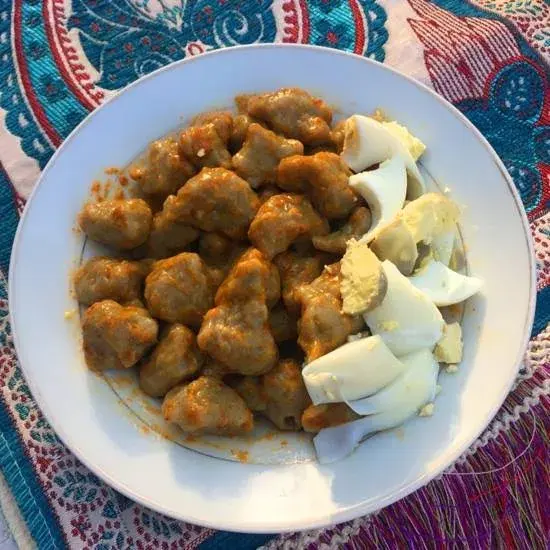
Dan wake is a northern Nigerian dish of dumplings made from bean flour and kuka, the powdered leaf of the baobab tree. The name translates from Hausa as son of beans, and the dumplings cook in water until they float, then are drained and dressed with oil and spice, and eaten with a salad of raw vegetables and hard egg. Kuka is what colours it and what makes it northern. Baobab leaf powder is used across the Sahel as a thickener and a green vegetable, and its slightly mucilaginous quality helps bind the bean flour dough. Potash, kanwa, is the third component, a traditional alkaline salt used across West African cooking to soften and to alter texture, and it is what gives dan wake its particular chew. It is deliberately plain on its own. The dumplings carry almost no seasoning and rely entirely on what is put on them: yaji, the peanut based suya spice, fried oil, sliced onion, cabbage, tomato and cucumber, and often a sauce alongside. That construction, a neutral base plus an assertive dressing, is common across northern Nigerian street food and it is why dan wake is sold from stalls rather than mainly cooked at home.
Note de Patrimoine AFN
Dan wake is associated with the Hausa of northern Nigeria and its name translates as son of beans. It is made from bean flour with kuka, powdered baobab leaf, and traditionally uses kanwa, an alkaline potash salt used across West African cooking.
Ingrédients
Les mentions alimentaires sont fournies par les contributeurs à titre indicatif. Elles ne sont pas vérifiées par AFN et dépendent des produits que vous achetez. En cas d’allergie grave, vérifiez vous-même chaque ingrédient. Cuisine, allergies et votre propre jugement
Préparation
- 1
Mix the dan wake flour with a little water to make a thick paste.
- 2
Bring a pot of water to the boil.
- 3
As the water boils, form the paste into small balls and drop them into the water.
- 4
Boil for about 10 minutes. The balls rise to the top when they are done.
- 5
Strain off all the water and rinse the dumplings once in cold water.
- 6
Strain again and turn out onto a plate.
- 7
Sprinkle over some already fried oil and suya spice or yaji.
- 8
Serve with a vegetable salad, boiled egg or cucumber and fresh tomato.
Notes de l’Africook
 Notes personnelles de Nympha Nzeribe
- If you use edible potash the dumplings may be slow to rise to the surface. Stir them so they do not stick to the bottom of the pot, and judge doneness by time as well as by floating.
- Keep the paste thick. A loose mixture will not hold its shape and the dumplings disperse in the water.
- Rinse the boiled dumplings in cold water. It stops them sticking together as they sit.
- Dan wake is nearly tasteless on its own, by design. The yaji, oil and salad are not garnishes but the actual flavour of the dish.
- Potash is an alkaline salt and should be used in the small quantity given. It is traditional here, but it is not an ingredient to be generous with.
- Yaji contains ground peanut, so the dish as served is not safe for anyone with a peanut allergy even though the dumplings themselves are.
Questions fréquentes
What does dan wake mean?
Son of beans, in Hausa. The name describes the main ingredient: the dumplings are made from ground bean flour. It is a straightforward and rather affectionate piece of naming, and the dish is sometimes simply described in English as Nigerian dumplings, which captures the form but none of the character.
What is kuka?
Kuka is powdered baobab leaf, used across the Sahel as both a thickener and a green vegetable. In dan wake it colours the dough and its slightly mucilaginous quality helps bind the bean flour. It is the same ingredient that makes miyan kuka, the northern Nigerian baobab leaf soup, and it is sold at Nigerian grocers.
Is potash necessary and is it safe?
Kanwa, or potash, is traditional here and gives dan wake its characteristic chew by altering the texture of the dough. It is an alkaline salt used across West African cooking in small quantities and the teaspoon specified is the proportion to keep to. If you would rather not use it, the dumplings will still work but will be softer and less springy.
What is dan wake eaten with?
Yaji, the peanut based suya spice, is the standard dressing, along with fried oil, sliced onion, cabbage, tomato and cucumber. Boiled eggs are common and a vegetable or beef sauce is often served alongside. The dumplings are plain by design and the accompaniments carry the whole flavour of the meal.
Avis
5 avis
Vous Aimerez Aussi
Voir toutes les recettes Nigeria →
Edo Black Soup
Nigerian Fisherman Soup
Igbo Yam Porridge
Had to order the kuka powder online because none of the international markets here in Portland carried it. My dumplings took closer to 13 minutes to float to the top, but tossing them in the warm vegetable oil with the yaji spice and hard boiled eggs was fantastic. Quick question though, is the texture supposed to be slightly chewy inside?
Finding the powdered baobab leaf in Silver Spring was non pas facile, but the little market near Wheaton had it. These bean flour dumplings are quite different from the fufu or pondu I grew up with back home, but sprinkling the maggi cube and suya pepper over the fried oil gives it such a wonderful taste.
Couldn't source proper kanwa here in LA so I had to improvise with a tiny pinch of baking soda. The 10 minute boil time was spot on and they floated right up when done. Dusting them with ground cayenne, raw onions, and cucumber made for an absolutely lekker lunch.
Baie good flavor from the yaji and kuka powder. Rinsing the dumplings in cold water right after straining is the key step here, keeps them from sticking together into a giant lump. Served mine with sliced tomatoes and extra fried oil.
Dan wake without plenty sliced cabbage and boiled egg is incomplete abeg! The kanwa measurement here is very accurate, if you put too much it will ruin the whole batch. E sweet sha, took me straight back to my school days in Kaduna.