

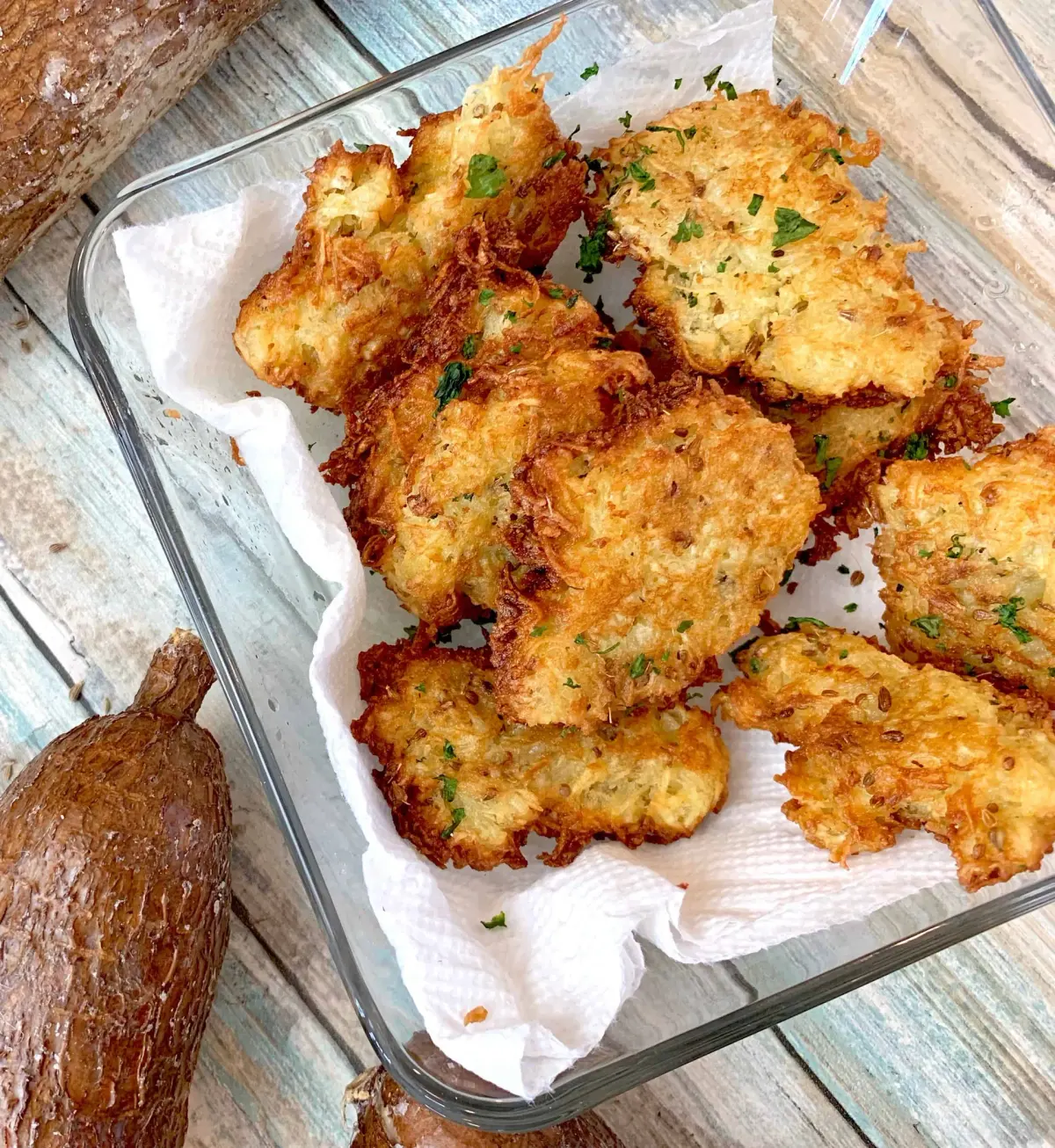
Cassava Fritters
Aperçu
Cassava fritters are grated cassava bound with a little flour, seasoned and shallow fried, and they are street food across a wide stretch of the world. The source names no country, and that is defensible here in a way it is not for most dishes: cassava fritters are made across West Africa, Central Africa, the Caribbean, Brazil and Southeast Asia in closely related forms. Cassava itself is not African in origin. It came from South America and reached West Africa through Portuguese Atlantic trade from the sixteenth century, where it was adopted so completely that it is now the continent's second most important source of dietary energy. Nigeria grows more of it than any other country in the world. The texture is the point: crisp on the outside, chewy and slightly dense inside, quite unlike a potato fritter. That chewiness comes from cassava's starch behaving differently from potato's under heat. Gram flour binds it here, which is one option among several. The fibrous woody core running down the centre of each root has to come out, and so does the skin, which is thick and tough and needs a firm hand with a peeler.
Note de Patrimoine AFN
Cassava originated in South America and reached West Africa through Portuguese Atlantic trade from the 16th century, becoming one of the continent's principal staple crops. Fritters of grated cassava are made in closely related forms across West and Central Africa, the Caribbean, Brazil and Southeast Asia.
Ingrédients
Les mentions alimentaires sont fournies par les contributeurs à titre indicatif. Elles ne sont pas vérifiées par AFN et dépendent des produits que vous achetez. En cas d’allergie grave, vérifiez vous-même chaque ingrédient. Cuisine, allergies et votre propre jugement
Préparation
- 1
Cut the ends off the cassava, then cut the rest crosswise into manageable lengths of about 15cm.
- 2
Peel the pieces with a potato peeler. The skin is thick and tough, so expect it to take some effort. Alternatively stand each piece on a cut end and slice the skin away with a sharp knife, turning as you go.
- 3
Slice each piece in half lengthways and remove the fibrous, woody centre.
- 4
Grate the cassava into a large bowl and mix in the chopped onion, seasoning, chilli flakes and gram flour.
- 5
Form fritters about 6cm across.
- 6
Heat oil in a large frying pan and shallow fry the fritters over low to medium heat, 5 to 8 minutes on the first side and about 5 minutes on the second, until golden brown.
- 7
Fry in two or three batches depending on the size of your pan, adding a little more oil before each batch.
- 8
Transfer to a dish lined with kitchen paper to drain.
- 9
Serve as they are, or with tomato salsa and a mixed salad.
Notes de l’Africook
 Notes personnelles de Nympha Nzeribe
- Remove the woody core from every piece. It does not soften with cooking and it is unpleasant to bite into.
- Squeeze the grated cassava in a cloth to remove excess liquid before mixing. Wet cassava gives soggy fritters that will not hold together.
- Keep the heat low to medium. Cassava needs time to cook through, and a hot pan browns the outside before the inside is done.
- Do not skip the flour entirely. Cassava has little binding of its own and the fritters fall apart without something to hold them.
- Cassava must be cooked through and never eaten raw. Fry until the interior is soft, not just until the outside colours.
- They are best straight from the pan and soften noticeably as they sit.
Questions fréquentes
Where are cassava fritters from?
No single place, which is why no country is claimed here. Closely related fritters of grated cassava are made across West and Central Africa, the Caribbean, Brazil and Southeast Asia. Cassava itself came from South America and reached West Africa through Portuguese trade from the sixteenth century, and the fritter travelled with the crop rather than from one origin.
Is raw cassava dangerous?
Cassava must be peeled and cooked thoroughly before eating and should never be consumed raw. Cooking it through is a genuine requirement rather than a preference. In these fritters that means frying over a low to medium heat long enough for the interior to soften, not just until the outside has browned.
Why are my fritters falling apart?
Either the grated cassava was too wet or there was not enough binder. Squeeze the gratings in a clean cloth before mixing, and add a little more gram flour if the mixture will not hold a shape when pressed. Pressing each fritter firmly before it goes into the pan also helps.
Can I use frozen grated cassava?
Yes, and it saves the hardest part of the job. Frozen grated cassava is sold at African, Caribbean and Asian grocers. Thaw it fully and squeeze out the water, which will be considerable, before mixing. The result is close to fresh and the peeling and coring are already done.
Avis
3 avis
Vous Aimerez Aussi
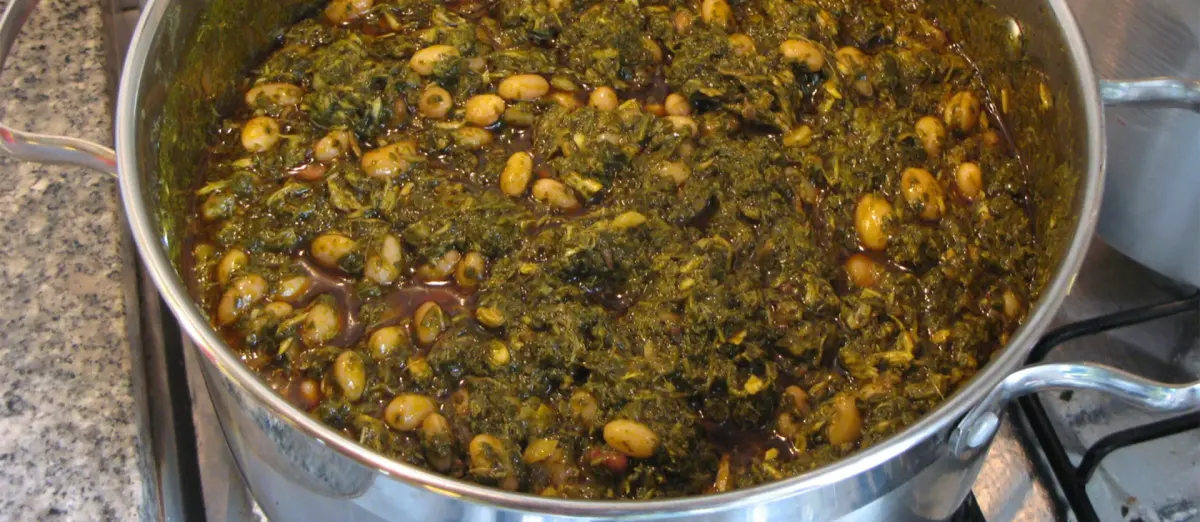
Kizaca
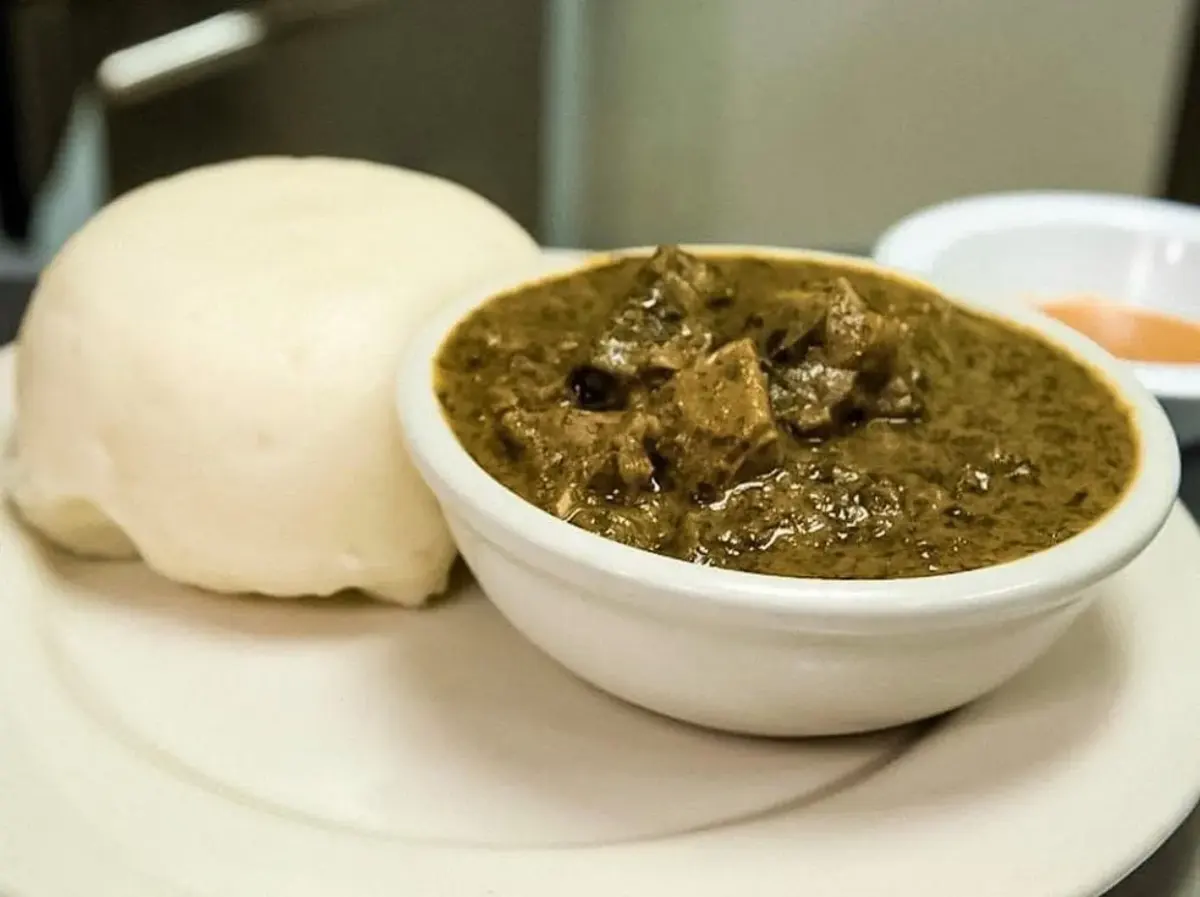
Isombe
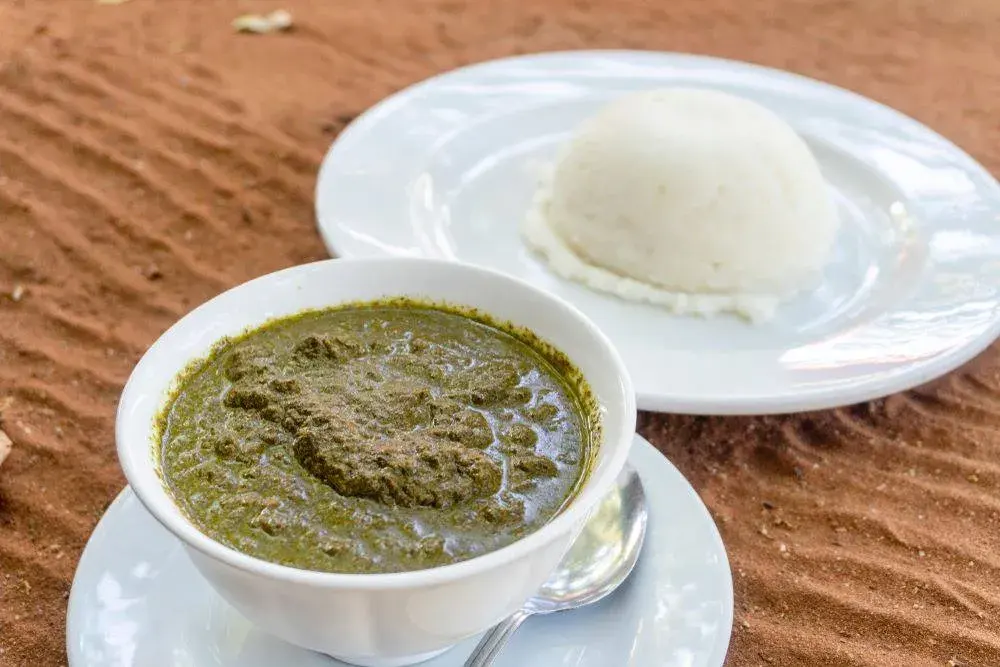
Mozambique Matapa Recipe
Finding fresh cassava is tough here so I bought frozen yuca from the Latino market. Squeezed out the excess water after thawing, then took out that woody stem before grating. The chickpea flour bound it well sha, though my mom used cassava starch back home. Crispy and e sweet o! Just took a bit longer than 25 mins prep because of thawing the frozen root.
reminds me sommer of my aunty kitchen. we used to get so tired grating the cassava by hand! the gram flour is a great tip because mine usually break apart when frying in the oil. made a batch with extra chopped onion for my brothers today and every single one was finished.
my wrists were aching after peeling that thick yuca skin with a knife! standing it on the cut end worked way better than the potato peeler for sure. removing the woody center was easy enough once sliced lengthways. the chilli flakes give it a nice little kick with the chickpea flour. quick question though, do you think these would hold up if i shaped the raw patties ahead of time and kept them in the fridge overnight before frying?