

Tunisian Makrouna
Overview
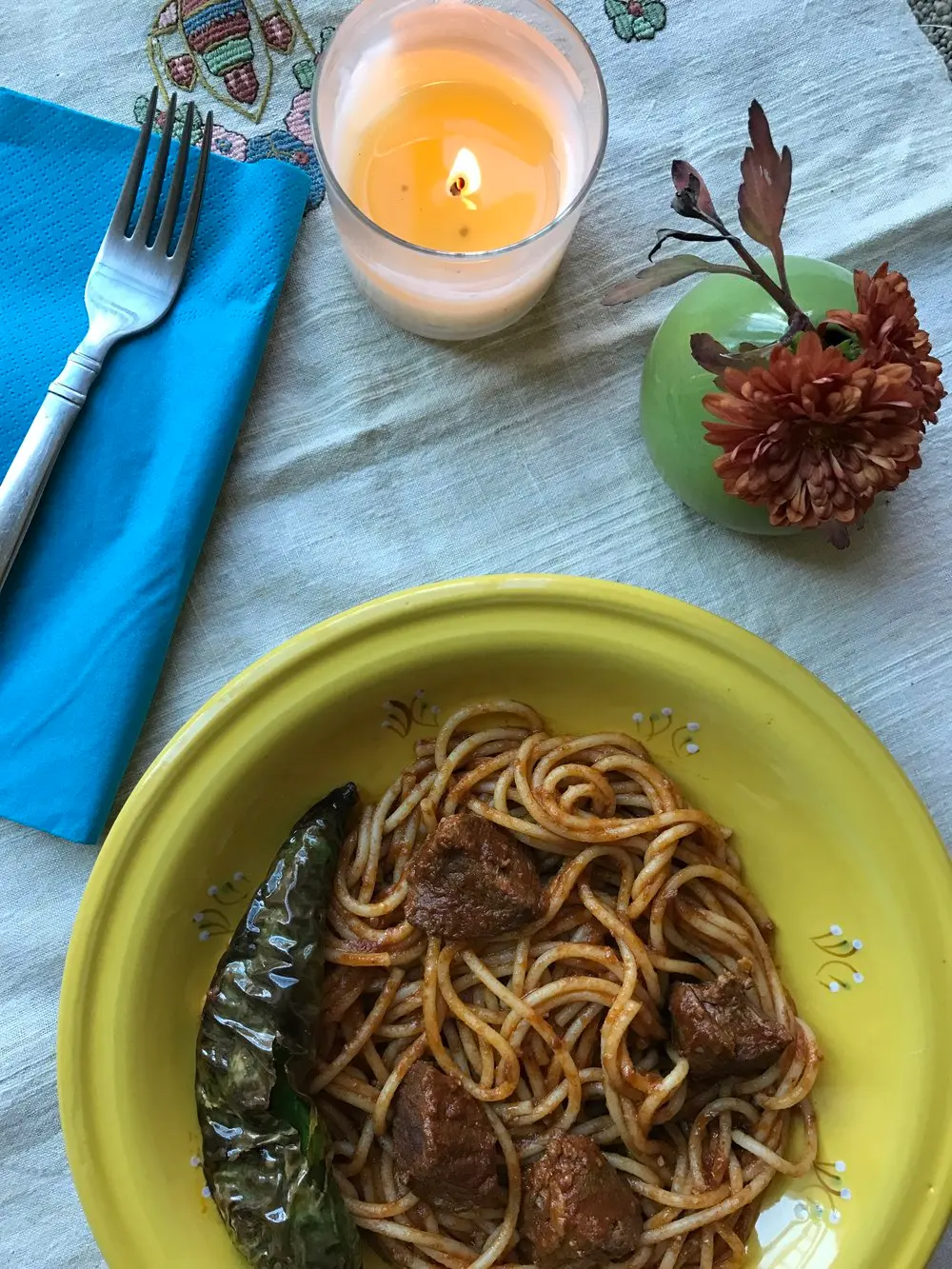
Makrouna is Tunisian pasta, and calling it that undersells how thoroughly Tunisia has made pasta its own. Tunisians are among the heaviest pasta eaters in the world, second only to Italy by consumption per head, and makrouna is the everyday expression of that, a dish cooked in most households, taught mother to daughter, and served at Sunday tables. The Italian connection is real and close. Tunisia sits directly across the Mediterranean from Sicily, and the two coasts have exchanged food, people and language for centuries. But what Tunisia did with pasta is not an imitation of an Italian sauce. Makrouna is built on tomato paste cooked down hard in oil until it darkens, and on harissa, the fermented chilli paste that is Tunisia's defining condiment. The result is deeper, redder and considerably hotter than an Italian tomato sauce. Spicing follows the Tunisian rather than the Italian pattern: tabil, caraway, coriander seed, sometimes cinnamon in the versions cooked with lamb. The pasta itself is usually a tubular shape that holds sauce, and it is finished in the sauce rather than dressed with it, so it takes on colour and heat all the way through. Meat varies by household and occasion, lamb, beef, merguez or chicken, and the dish is often built around whatever the week allows.
AFN Heritage Note
Tunisia records among the highest per-capita pasta consumption in the world, second to Italy, reflecting centuries of exchange across the narrow strait between Tunisia and Sicily. The dish is distinguished from Italian preparations by its harissa and tabil base.
Ingredients
Dietary tags are provided by contributors as a guide, not verified by AFN, and they depend on the products you buy. If you have a serious allergy, check every ingredient yourself. Cooking, allergies and your own judgement
Directions
- 1
In a small food processor add the garlic, coriander, salt, and tomato paste, and then grind them together. (This will allow the spices and the garlic to release the flavor in the tomato paste).
- 2
In a large pot in medium heat, add the olive oil, wait for a minute or two for the oil to heat a little bit but not too much. Then, add the garlic and spices mix. Mix it well then add the chickpeas, peas, chicken, and bay leaves. Mix it well for about 3 minutes so that the chicken gets marinated and the tomato paste looses its sourness.
- 3
Add the tomato sauce and one cup of hot water. Let the sauce heat for about 4 minutes and then add the rest of the water.
- 4
Cook for about 40 minutes or till the chicken is cooked and the sauce has thickened a bit.
- 5
Cook the pasta according to package instructions, then add as much sauce as you desire. Mix it well. Then, add the rest of the sauce and top it with the chicken and some chickpeas and peas.
Africook’s Notes
- Cook the tomato paste properly. It needs several minutes in hot oil until it darkens and the raw edge disappears, this is where the depth comes from and it cannot be rushed.
- Finish the pasta in the sauce. Drain it a couple of minutes early and let it complete cooking in the tomato base so it absorbs colour and heat.
- Harissa varies enormously in strength between brands and households. Add half of what you think you need, then taste.
- Keep a cup of the pasta water. It loosens the sauce without diluting the flavour.
- Tabil is the spice blend that makes it read as Tunisian rather than generic, worth seeking out rather than substituting.
Questions cooks ask
How is Tunisian makrouna different from Italian pasta dishes?
The base is different in two specific ways. Tunisian makrouna cooks tomato paste down hard in oil until it darkens, rather than using fresh tomatoes or a light passata, which gives a much deeper and more concentrated red sauce. And it is built on harissa, the Tunisian fermented chilli paste, so it is genuinely spicy. The spicing follows North African patterns, tabil, caraway, coriander, rather than the basil and oregano of Italian cooking.
What is tabil?
Tabil is a Tunisian spice blend, usually built on coriander seed, caraway, garlic and dried chilli. The word also means coriander in Tunisian Arabic, which causes some confusion in translated recipes. It is what gives Tunisian cooking much of its particular character, and while you can approximate it, the blend is widely sold and worth buying if you cook North African food regularly.
Which pasta shape should I use?
A tubular shape that traps sauce works best, penne, rigatoni or the local macaroni the dish is named for. Because the pasta is finished in the sauce rather than dressed with it, shapes with ridges and hollows carry the flavour better than smooth ones. Long pasta is used in some households but is less typical.
Can it be made without meat?
Yes. Vegetable versions exist and the sauce carries the dish, so it works perfectly well on its own or with chickpeas or potatoes added. Meat versions with lamb, beef, merguez or chicken are more common at a Sunday table, but there is nothing unusual about a meatless makrouna on a weeknight.
Reviews
3 reviews
That step where you stir the tomato paste with the garlic mix for 3 minutes to remove the sour taste is spot on. I didn't have harissa so I used paprika like you suggested. E sweet no be small thing o! Abeg can I use beef next time or chicken thigh is strictly recommended?
made this last night and grinding the garlic, coriander and tomato paste together in the food processor first makes a massive difference. used the full 1/3 cup olive oil. sauce took just over 40 mins to reduce properly on my stove, super lekker meal.
Chale the sweet peas and chickpeas inside pasta sauce sounded strange to me at first, but it works so well oo. The harissa gives it a proper kick that cuts through the richness. My drumsticks cooked right through in 40 mins, tender paa.