
Qamar al-Deen (Apricot Pudding)
Abuja, Nigeria · View all recipes
Overview
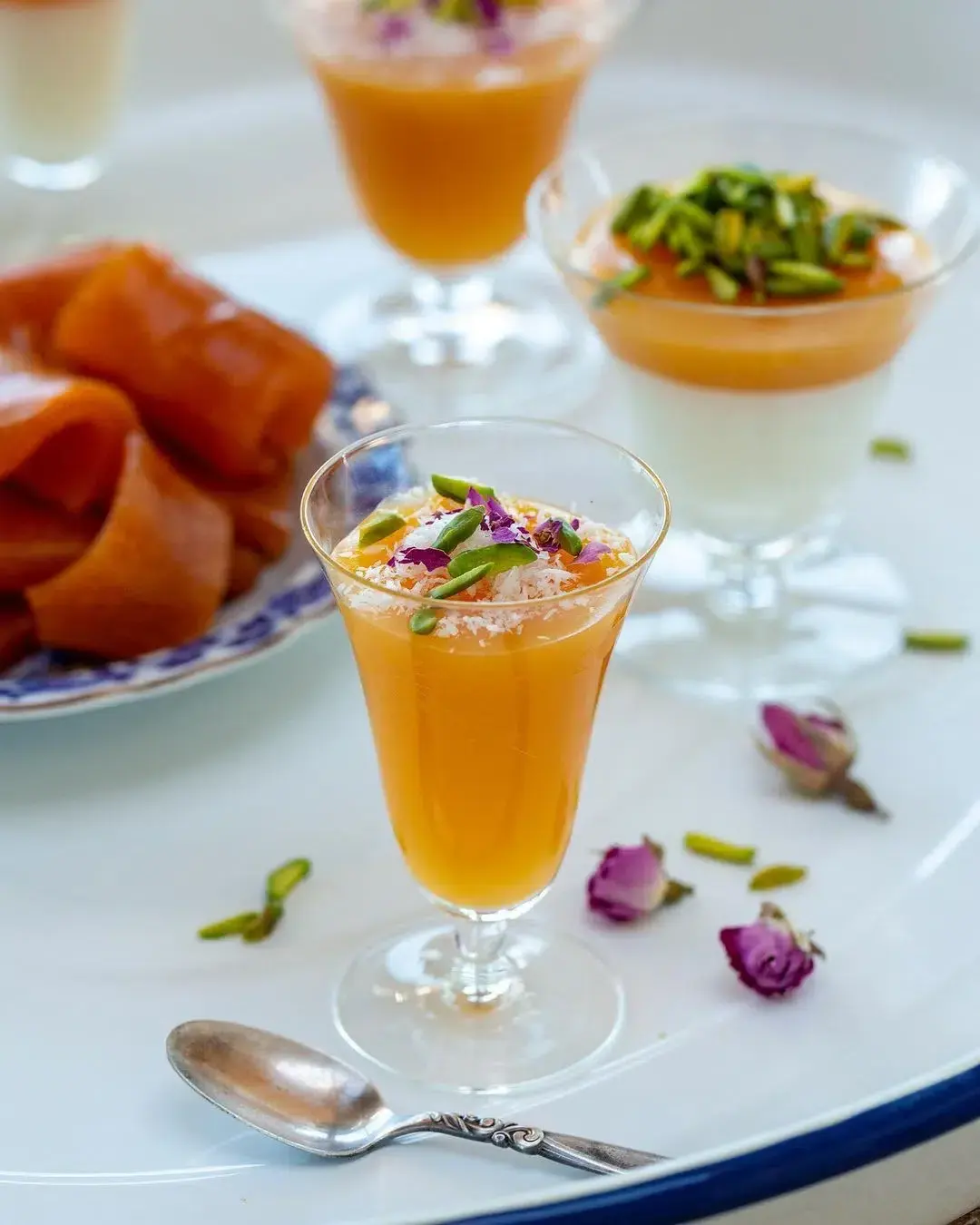
Qamar al-deen pudding is two layers set separately and poured one over the other: a milk pudding thickened with cornflour and scented with mastic, and an apricot layer made from qamar al-deen juice. It is eaten across Egypt and the Levant, and it belongs above all to Ramadan. Qamar al-deen itself is the ingredient rather than the dish. It is apricot purée dried into sheets, sold as a leather, or as a concentrate, and it has been a Ramadan staple for centuries because it reconstitutes into a sweet, intensely fruity drink that restores sugar quickly after a day of fasting. The name means moon of the faith. Most households drink it; this recipe sets it. Mastic is the ingredient that makes the milk layer worth the trouble. It is a resin from the mastic tree of Chios, ground to a powder, with a pine-and-camphor aroma that appears throughout Levantine and Egyptian milk puddings and has no substitute. A quarter teaspoon flavours a litre. The source is honest that the result is extremely sweet, since shop-bought qamar al-deen is already sweetened. Taste before adding sugar. Its ingredient list is scrambled and its brand references have been described generically.
AFN Heritage Note
Qamar al-deen is apricot purée dried into sheets, reconstituted as a drink or a pudding and eaten across Egypt and the Levant, particularly during Ramadan. The name means moon of the faith. The pudding sets the apricot layer over a milk pudding scented with mastic.
Ingredients
Dietary tags are provided by contributors as a guide, not verified by AFN, and they depend on the products you buy. If you have a serious allergy, check every ingredient yourself. Cooking, allergies and your own judgement
Directions
- 1
Pour the litre of milk into a saucepan and sweeten with the sugar, adding more to taste.
- 2
Mix in the mastic powder or pods and stir until the sugar and mastic have dissolved.
- 3
Bring the milk to the boil.
- 4
Meanwhile, mix the cup of cold milk with the 5 tablespoons of cornflour until completely smooth.
- 5
When the milk comes to its first boil, pour in the cornflour mixture, stirring constantly until it thickens.
- 6
Pour the milk pudding into serving dishes or cups and set aside to cool.
- 7
For the apricot layer, reserve one cup of the qamar al-deen juice and pour the rest into a saucepan. Sweeten to taste, go carefully, since shop-bought juice is already sweet.
- 8
Mix the reserved cup of juice with the 4 tablespoons of cornflour.
- 9
Once the juice bubbles, pour in the reserved juice and cornflour mixture, stirring until it thickens. Mix in the orange blossom water.
- 10
Take it off the heat and pour the thickened apricot layer over the cooled milk pudding.
- 11
Let it come to room temperature on the counter, then cover with cling film and refrigerate until serving.
Africook’s Notes
- Let the milk layer cool before the apricot goes on. Poured over a warm pudding the two layers merge instead of staying distinct.
- Mix the cornflour into cold liquid, never hot. Cornflour tipped into a boiling pan seizes into lumps that never disperse.
- Taste before sweetening the apricot layer. Shop-bought qamar al-deen juice is already very sweet.
- Mastic has no substitute. A quarter teaspoon flavours a litre, and more than that turns bitter and medicinal.
- Orange blossom water goes in off the heat, the aroma evaporates if it boils.
- It needs several hours in the fridge to set properly, so make it well ahead.
Questions cooks ask
What is qamar al-deen?
Apricot purée dried into thin sheets, sold as a leather or as a concentrate. The name means moon of the faith, and it has been a Ramadan staple for centuries, soaked in water it reconstitutes into an intensely fruity drink that restores sugar quickly after a day of fasting. Most households drink it; this recipe uses it as the basis of a set pudding instead. Middle Eastern grocers stock both the sheets and ready-made juice.
What is mastic?
A resin harvested from the mastic tree, which grows principally on the Greek island of Chios, dried into small translucent tears and ground to a powder before use. It has a distinctive pine and camphor aroma and appears throughout Levantine, Egyptian and Turkish milk puddings and ice creams. There is no substitute for it. Use it sparingly, a quarter teaspoon flavours a litre of milk and more turns medicinal.
Why are the layers made separately?
Because they set at different rates and would merge into a single muddy layer if combined. The milk pudding is poured first and allowed to cool and firm, and the apricot layer goes over it afterwards. That gives the clean two-tone division the dessert is known for. Pouring hot apricot over warm milk pudding is the usual mistake, and it produces something that tastes fine and looks wrong.
How sweet is it?
Very, and the source says so. Shop-bought qamar al-deen juice is already heavily sweetened, so the four tablespoons of sugar in the milk layer plus whatever goes into the apricot layer produces something for a serious sweet tooth. Taste the juice before adding any sugar to it at all, many people find it needs none. This is characteristic of Ramadan desserts generally, which are meant to restore energy quickly.
Reviews
Be the first to rate this recipe
Cooked it? Your rating helps the next person decide whether to try it.
No reviews on this one yet. If you have cooked it, yours would be the first.