
Ukwa
London, United Kingdom · Voir toutes les recettes
Aperçu
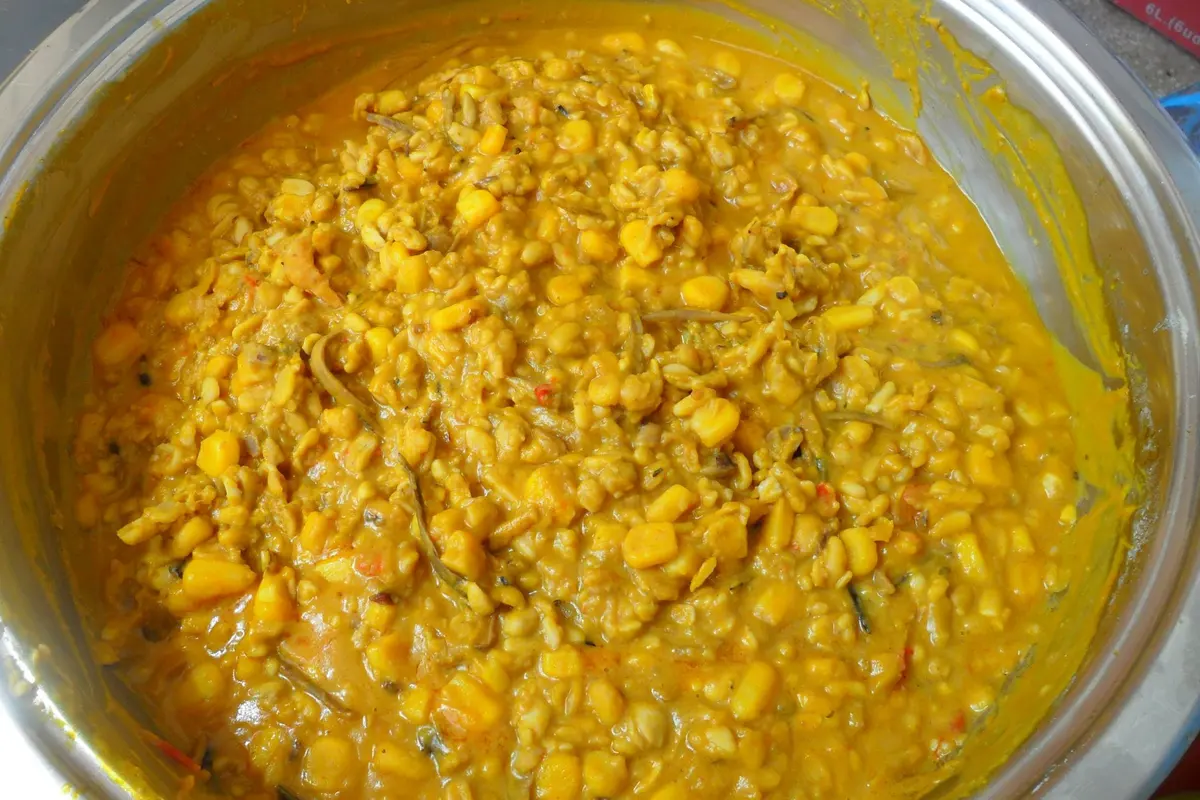
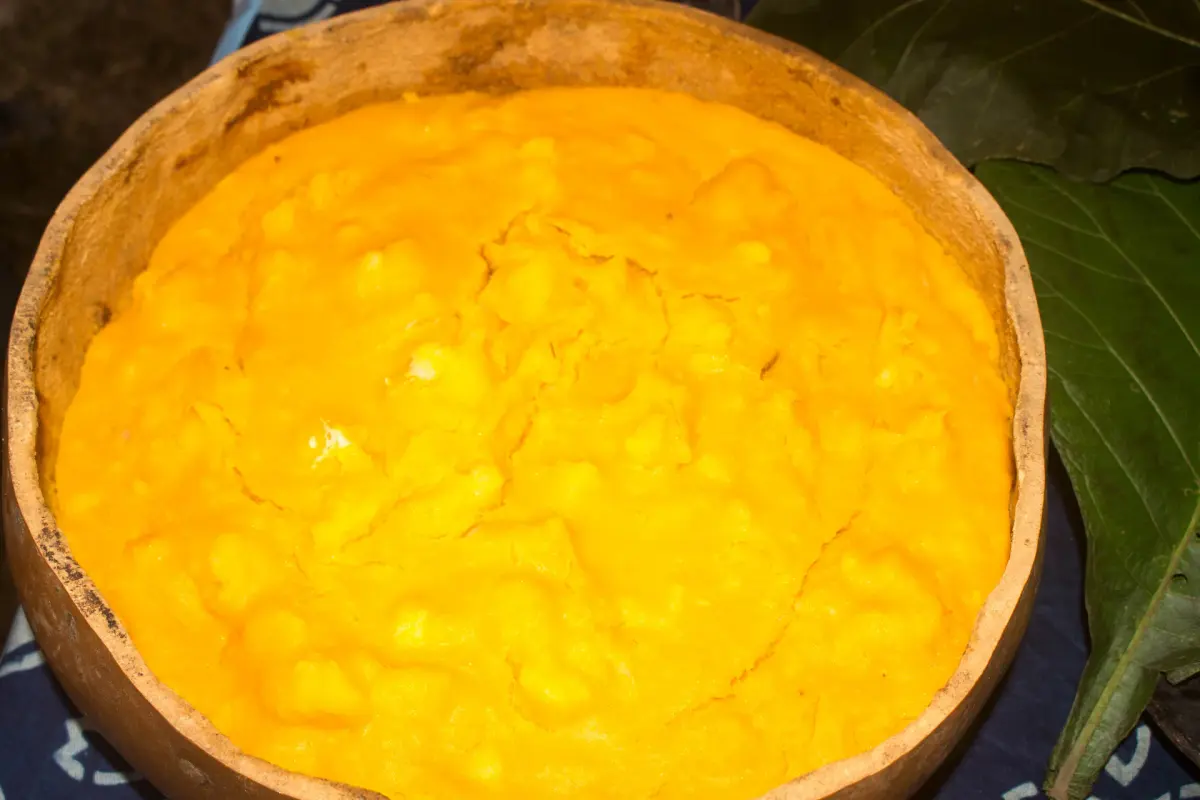
Ukwa is African breadfruit, the seeds rather than the flesh, boiled until soft and eaten as a main course, most closely associated with Igbo cooking in southeastern Nigeria. The tree is not originally African. Breadfruit came from the Pacific Islands and travelled, and the African species now grown across West Africa produces a fruit with prickly skin and lumpy green flesh packed with seeds. It is a relative of jackfruit, and the seeds are what matter here: high in protein, starchy, and with a texture much closer to a potato or a bean than to fruit. Its reputation among people who eat it rests on a particular claim, which the source makes plainly, ukwa cooked fresh is good enough to eat with nothing added at all, not even salt. That is unusual, and it is why the dish is often kept simple rather than dressed up. Cooked longer it collapses into a thick porridge, which is the more common preparation, usually finished with palm oil, pepper and sometimes dried fish. Fresh ukwa cooks considerably faster than dried.
Note de Patrimoine AFN
African breadfruit, known as ukwa in Igbo, originates in the Pacific Islands and was carried to Africa, where the seeds rather than the flesh became the food. It is eaten as a main course in southeastern Nigeria.
Ingrédients
Les mentions alimentaires sont fournies par les contributeurs à titre indicatif. Elles ne sont pas vérifiées par AFN et dépendent des produits que vous achetez. En cas d’allergie grave, vérifiez vous-même chaque ingrédient. Cuisine, allergies et votre propre jugement
Préparation
- 1
Put your thoroughly washed ukwa in a pot.
- 2
Pour enough water to cover the ukwa. The level of water should be about an inch above the level of the ukwa.
- 3
Add your potash. Add the dry fish or stock fish, cover the pot and cook till well done.
- 4
The ukwa is done when the seeds melt when pressed.
- 5
Add enough palm oil to the done ukwa, add pepper, stock cubes and salt to taste.
- 6
Stir, cover and cook on medium heat till the palm oil changes colour from red to yellow. Then stir and add the bitter leaves.
- 7
Enjoy your meal!
Notes de l’Africook
 Notes personnelles de Nympha Nzeribe
- Fresh ukwa cooks far faster than dried. Dried needs long soaking and patient boiling.
- Add potash sparingly if using it to soften the seeds, too much affects the taste and the texture.
- Do not add salt too early. It slows the seeds softening, as with beans.
- Palm oil goes in near the end so it stays bright rather than cooking dull.
Questions fréquentes
Is ukwa the fruit or the seed?
The seed. African breadfruit produces a large prickly fruit with lumpy green flesh, and inside are the seeds that are extracted, dried or used fresh, and cooked. The flesh is not what is eaten in this dish. This is a point of difference from Pacific breadfruit traditions, where the flesh is the food.
Is it related to jackfruit?
Yes, they are relatives, and the fruits look broadly similar from the outside. The African breadfruit is used quite differently, for its protein-rich seeds rather than its flesh, and the seeds have a starchy, slightly nutty character with a texture closer to a firm bean than to fruit.
Can it really be cooked with nothing added?
That is the claim people who eat it make, and it is worth taking seriously with genuinely fresh ukwa, which has enough flavour of its own. Most cooking adds palm oil, pepper and often dried fish, and cooks it down into a thick porridge. Both are normal, the plain version is a mark of good fresh seeds.
Avis
Soyez le premier à noter cette recette
Vous l’avez cuisinée ? Votre note aide la personne suivante à se décider.
Aucun avis sur cette recette pour le moment. Si vous l’avez cuisinée, le vôtre serait le premier.
Vous Aimerez Aussi
Voir toutes les recettes Nigeria →
Edo Black Soup
Nigerian Fisherman Soup
Igbo Yam Porridge