

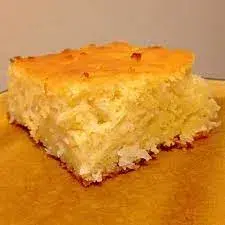
Baseema
Aperçu
Baseema is a Sudanese semolina-style coconut cake soaked in sugar syrup, and the name means scrumptious in Sudanese Arabic. It is one of the country's best regarded sweets, made for guests and for occasions, and it belongs to the wider family of syrup-soaked cakes found across North Africa and the Middle East. Desiccated coconut is what distinguishes it. Egyptian basbousa and Levantine namoura are close relatives built on the same principle of a dense cake flooded with syrup while hot, but baseema leans on coconut and yoghurt for its flavour and its texture, giving something moister and less grainy than a straight semolina cake. Vanilla and cinnamon carry it, alongside rose water in some households. The syrup is the whole technique and the timing is unforgiving. It is prepared first and left to cool while the cake bakes, then poured over the moment the cake leaves the oven, so that hot cake meets cool syrup and drinks it in rather than sitting in a pool. Getting that the wrong way round, or letting the cake cool first, is how baseema fails. Everything else about it is straightforward, which is much of why Sudanese cooks make it often.
Note de Patrimoine AFN
Baseema is a Sudanese syrup-soaked coconut cake whose name derives from the Sudanese Arabic for scrumptious. It belongs to the family of syrup-soaked semolina and coconut cakes found across North Africa and the Middle East, alongside Egyptian basbousa and Levantine namoura.
Ingrédients
Les mentions alimentaires sont fournies par les contributeurs à titre indicatif. Elles ne sont pas vérifiées par AFN et dépendent des produits que vous achetez. En cas d’allergie grave, vérifiez vous-même chaque ingrédient. Cuisine, allergies et votre propre jugement
Préparation
- 1
Make the sugar syrup first by combining the sugar, water and lemon juice. Cook until the sugar has dissolved, then set aside to cool.
- 2
Preheat the oven to 180°C and grease a cake tin.
- 3
Beat the eggs and icing sugar together until pale and frothy.
- 4
Mix in the butter, oil, yoghurt and vanilla.
- 5
Sift the flour and baking powder together and gently fold them into the wet ingredients along with the coconut.
- 6
Pour the batter into the prepared tin.
- 7
Bake for 35 to 40 minutes, or until a toothpick inserted into the centre comes out clean.
- 8
As soon as the cake comes out of the oven, pour the cooled syrup evenly over it.
- 9
Let it stand until the syrup is absorbed, then slice and serve.
Notes de l’Africook
 Notes personnelles de Nympha Nzeribe
- Cool syrup onto a hot cake. That temperature difference is what makes it absorb rather than pool, and reversing it is the most common way this cake fails.
- Make the syrup first so it has time to cool while the cake bakes.
- The lemon juice in the syrup is not for flavour. It stops the sugar crystallising as the syrup cools.
- Score the cake into diamonds or squares before it goes into the oven, in the traditional way, so the syrup reaches every cut surface.
- Do not overmix once the flour goes in. Fold gently, or the cake tightens and takes up less syrup.
- It keeps four to five days covered at room temperature and gets moister rather than staler.
Questions fréquentes
What does baseema mean?
Scrumptious, in Sudanese Arabic. The name is a straightforward description of what the cake is meant to be, and Sudanese cooks quote it approvingly. It is a common naming pattern for celebratory sweets across the region, where the name states the intended verdict rather than describing the ingredients.
How is baseema different from basbousa?
The coconut and the yoghurt. Egyptian basbousa is built primarily on semolina and is drier and grainier in texture. Baseema uses desiccated coconut and a substantial quantity of yoghurt, giving a moister, softer crumb. Both are flooded with sugar syrup straight from the oven, which is the technique they share.
Why must the syrup be cool and the cake hot?
So the cake absorbs the syrup instead of sitting in it. A hot cake is porous and open and will draw cool syrup right through; a cooled cake has set and the syrup runs off and pools underneath. Pouring hot syrup onto a hot cake makes it collapse and go soggy rather than moist.
Can I add rose water?
Yes, and some Sudanese households do, usually stirred into the syrup rather than the batter. Start with about a teaspoon, since rose water is assertive and easily dominates the coconut and vanilla. Orange blossom water is used in the same way in related cakes across the region.
Avis
5 avis
After eating sadza and beef for dinner my family always wants a treat. Reminds me a bit of the coconut traybakes back home. Buying desiccated coconut here in Luton is easy enough at the international stores. Only issue was I didn't cool the sugar syrup enough before pouring so it made one side slightly soggy. My fault though, taste was lovely.
Had to run down to the Asian supermarket on City Road in Cardiff to get the desiccated coconut as Asda was completely out. The cake came out lovely and moist from all that yoghurt, though 40 minutes in my fan oven was a bit too long, top got quite dark. Will check at 30 mins next time.
My kids wanted dessert after we ate our pondu and rice tonight so I tried this. I had to convert 180C to 350F for my stove here in Maryland. Used vanilla essence and plain Greek yogurt from Giant food store. Le gâteau is very moist with the coconut and icing sugar, truly delicious.
Used plain Greek yoghurt from the Pakistani shop on Alum Rock road because I could not get proper curd. The coconut smell while baking was no be small thing! Drizzled the cooled lemon syrup while the cake was still warm and it soaked up every drop. E sweet o.
Ah, five eggs seemed like a lot at first but it made the sponge so rich sha. I grabbed plain whole milk yogurt from Trader Joe's instead of curd. That lemon syrup drizzled over the top really balanced out all the icing sugar. Very nice sweet treat.