
Vetkoek (South African Fried Bread)
Aperçu
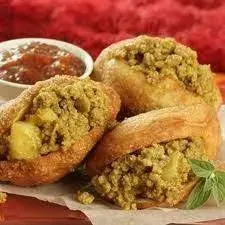
Vetkoek is a yeasted dough, flattened by hand and deep-fried until it is crisp outside and soft as bread inside. The Afrikaans name translates literally as fat cake, and the isiZulu and isiXhosa name is amagwinya. It is one of the most widely eaten things in South Africa. Its lineage is Dutch. Fried yeast dough came to the Cape with Dutch settlers, and vetkoek belongs to the same broad family as the Dutch oliebol, the Caribbean johnnycake and Mexican sopaipillas. What happened to it afterwards is what makes it South African: it became township food and street food, sold from stalls and windows across the country, and its usual filling, curried beef mince, is itself a product of the Cape's Indian and Cape Malay influence. It is eaten both ways round. Split and stuffed with curried mince, cheese, polony, tinned fish or slaw, it is lunch. Split and spread with syrup, honey or jam, it is a sweet snack with tea. Neither version is more authentic than the other. Note that this page covers plain vetkoek. The filled version with beef mince curry has a separate page on this site, and the two are meant to complement rather than replace each other.
Note de Patrimoine AFN
Vetkoek is a South African deep-fried yeast bread whose Afrikaans name means fat cake, known as amagwinya in isiZulu and isiXhosa. Fried yeast dough arrived at the Cape with Dutch settlers, and the food became a staple of township and street vending across South Africa.
Ingrédients
Les mentions alimentaires sont fournies par les contributeurs à titre indicatif. Elles ne sont pas vérifiées par AFN et dépendent des produits que vous achetez. En cas d’allergie grave, vérifiez vous-même chaque ingrédient. Cuisine, allergies et votre propre jugement
Préparation
- 1
Combine the lukewarm water, sugar and yeast in a small bowl.
- 2
Leave it to stand for about 5 minutes, until the yeast softens and begins to foam. If it does not foam, the yeast is dead and the dough will not rise.
- 3
Sift the flour and salt together in a large bowl.
- 4
Pour the yeast mixture over the flour and knead until the dough is smooth and elastic, 5 to 7 minutes.
- 5
Cover the bowl with a clean cloth and leave the dough to rise until doubled in size, about 45 minutes.
- 6
Pinch off a piece of dough roughly the size of a tennis ball and roll it smooth.
- 7
Flatten the ball to about the size of your palm and set it aside on a floured surface. Repeat with the rest of the dough.
- 8
Bring the oil to 350°F / 175°C in a deep pan or fryer.
- 9
Fry two or three pieces at a time until deep golden, about 3 minutes per side. Do not crowd the pan.
- 10
Drain on kitchen paper and serve warm, split and filled or spread as you like.
Notes de l’Africook
- Check that the yeast foams before you commit the flour. Five minutes of waiting saves seven cups of wasted flour.
- Get the oil temperature right. Too cool and the vetkoek soaks up fat and turns greasy; too hot and the outside colours before the inside is cooked.
- Fry in small batches. Overcrowding drops the oil temperature, which causes exactly the greasiness you are trying to avoid.
- Flatten them by hand rather than rolling. A rolled vetkoek is denser and does not puff the same way.
- They are at their best within an hour or two of frying. Reheat leftovers in an oven rather than a microwave, which makes them chewy.
- Make them small for parties and large for a meal. The dough is the same either way.
Questions fréquentes
What does vetkoek mean?
It is Afrikaans and translates literally as fat cake, referring to the deep frying rather than to the dough being especially rich. In isiZulu and isiXhosa the same food is called amagwinya, and both names are in everyday use across South Africa depending on the region and the speaker. The dough itself is a plain yeasted bread dough with a little sugar, flour, water, yeast and salt.
Where does vetkoek come from?
Fried yeast dough came to the Cape with Dutch settlers, and vetkoek belongs to the same family as the Dutch oliebol, Caribbean johnnycake and Mexican sopaipillas. What made it South African is what happened next: it became township and street food sold across the country, and its most common filling, curried beef mince, reflects the Cape's Indian and Cape Malay culinary influence. It is now eaten by every community in South Africa.
What do you fill vetkoek with?
Curried beef mince is the classic and the most common by a distance. Grated cheese, polony, tinned fish with mayonnaise, chakalaka and slaw are all standard. It also works sweet, split and spread with golden syrup, honey or apricot jam, eaten with tea. Neither the savoury nor the sweet version is more traditional; both are eaten widely and often by the same people at different times of day.
Why are mine greasy?
Almost certainly the oil temperature. Below about 175°C the dough absorbs oil instead of sealing quickly, and you end up with a heavy, saturated vetkoek. Use a thermometer if you have one, fry only two or three at a time so the temperature does not crash when they go in, and let the oil come back up between batches. Draining on kitchen paper immediately also helps.
Avis
Soyez le premier à noter cette recette
Vous l’avez cuisinée ? Votre note aide la personne suivante à se décider.
Aucun avis sur cette recette pour le moment. Si vous l’avez cuisinée, le vôtre serait le premier.
Vous Aimerez Aussi
Voir toutes les recettes South Africa →
Dombolo (Dumplings or Steamed Bread)

Boeber (Cape Malay Sweet Milk Drink)