
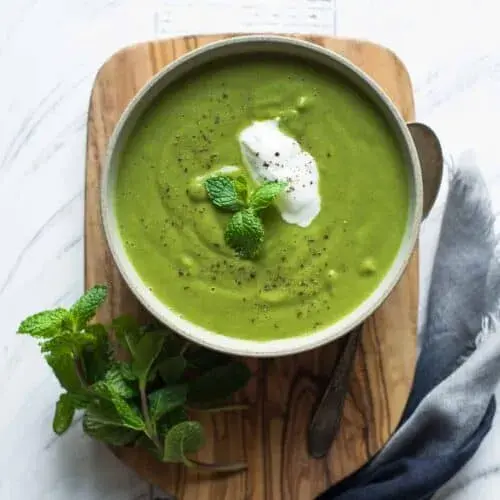
Pea and Mint Soup
London, United Kingdom · Voir toutes les recettes
Aperçu
Peas cooked briefly in a potato and stock base, blended with mint and lemon and finished with buttermilk. It is a British spring soup, and no country is claimed. The short cooking is the entire technique. Peas lose their colour and their fresh sweetness rapidly once they are cooked, chlorophyll degrades with heat and acid, and the sugars that make young peas taste of anything begin converting to starch. Five minutes is what the recipe allows, and the instruction is explicit that longer will cost you the flavour. Everything else in the pot, the potato, the onions, the garlic, is cooked through first, and the peas go in at the very end. The potato is doing structural work. It breaks down under the blender and thickens the soup, which is why no flour or cream is needed for body. Buttermilk rather than cream is the other choice worth noting. It brings richness with acidity behind it, which lifts the whole thing where cream would flatten it. The trade-off is that it curdles at a rolling heat, so the soup must be warmed through gently. It works hot or cold. Served cold it will thicken as it chills and needs loosening with more stock.
Ingrédients
Préparation
- 1
Put the spring onions in a large pan with the potato, garlic and stock. Bring to the boil, lower the heat and cook for 15 minutes, or until the potato is very soft.
- 2
For the garnish, blanch 3 tablespoons of the shelled peas in boiling water for 2 to 3 minutes, drain, drop them into cold water and set aside.
- 3
Put the remaining peas into the soup base and cook for 5 minutes, no longer, or you lose the fresh flavour and the colour.
- 4
Mix in the mint, sugar and lemon or lime juice, let it cool slightly, then blend until as smooth as you like.
- 5
Mix in half the buttermilk or soured cream, then taste and season with salt and pepper.
- 6
To serve cold, cool it quickly and then chill. It thickens as it cools, so you may need more stock before serving.
- 7
To serve hot, return it to the rinsed pan and reheat gently without letting it boil, buttermilk and soured cream curdle at a boil.
- 8
Serve in bowls, garnished with the remaining buttermilk and the drained blanched peas.
Notes de l’Africook
 Notes personnelles de Nympha Nzeribe
- Five minutes for the peas, no more. This is the one instruction that decides whether the soup tastes fresh or flat.
- Cook everything else first. The potato needs fifteen minutes and the peas need five, so they cannot go in together.
- Never boil it after the buttermilk goes in. It curdles, and there is no fixing it.
- The potato is the thickener. No flour or cream is needed for body, which is why the soup stays light.
- Frozen peas work perfectly well and are often sweeter than fresh ones that have sat around.
- Chilled, it thickens noticeably. Loosen it with extra stock before serving cold.
Questions fréquentes
Why cook the peas for only five minutes?
Because peas lose both their colour and their sweetness quickly under heat. Chlorophyll degrades, turning bright green to olive, and the sugars that make young peas taste sweet begin converting to starch. Five minutes is enough to cook them through and no longer. Everything else in the pot, potato, spring onions, garlic, is cooked properly first, precisely so the peas can go in at the very end.
Can I use frozen peas?
Yes, and they are often the better choice. Frozen peas are picked and frozen within hours, which locks in the sugars; fresh peas that have sat in a shop for days have already begun converting those sugars to starch and can be noticeably less sweet. Use the same weight of frozen peas as the shelled quantity, and reduce the cooking time slightly since they are already blanched.
Why buttermilk instead of cream?
Because it adds richness with acidity behind it, which lifts the soup where cream would flatten it. Pea and mint is already a delicate combination and heavy cream tends to bury both. The trade-off is that buttermilk and soured cream curdle when boiled, so the soup has to be reheated gently and never allowed to bubble. Cream is more forgiving but gives a duller result.
Should it be served hot or cold?
Either, it works both ways, which is unusual for a soup. Hot, it is a light spring starter; cold, it is closer to a vichyssoise and very good in warm weather. If serving it cold, cool it quickly and chill it thoroughly, and expect it to thicken considerably as it cools. You will probably need to thin it with extra stock before it goes to the table.
Avis
Soyez le premier à noter cette recette
Vous l’avez cuisinée ? Votre note aide la personne suivante à se décider.
Aucun avis sur cette recette pour le moment. Si vous l’avez cuisinée, le vôtre serait le premier.